


Early Release of Terror Convict in London Stabbings Stirs Controversy

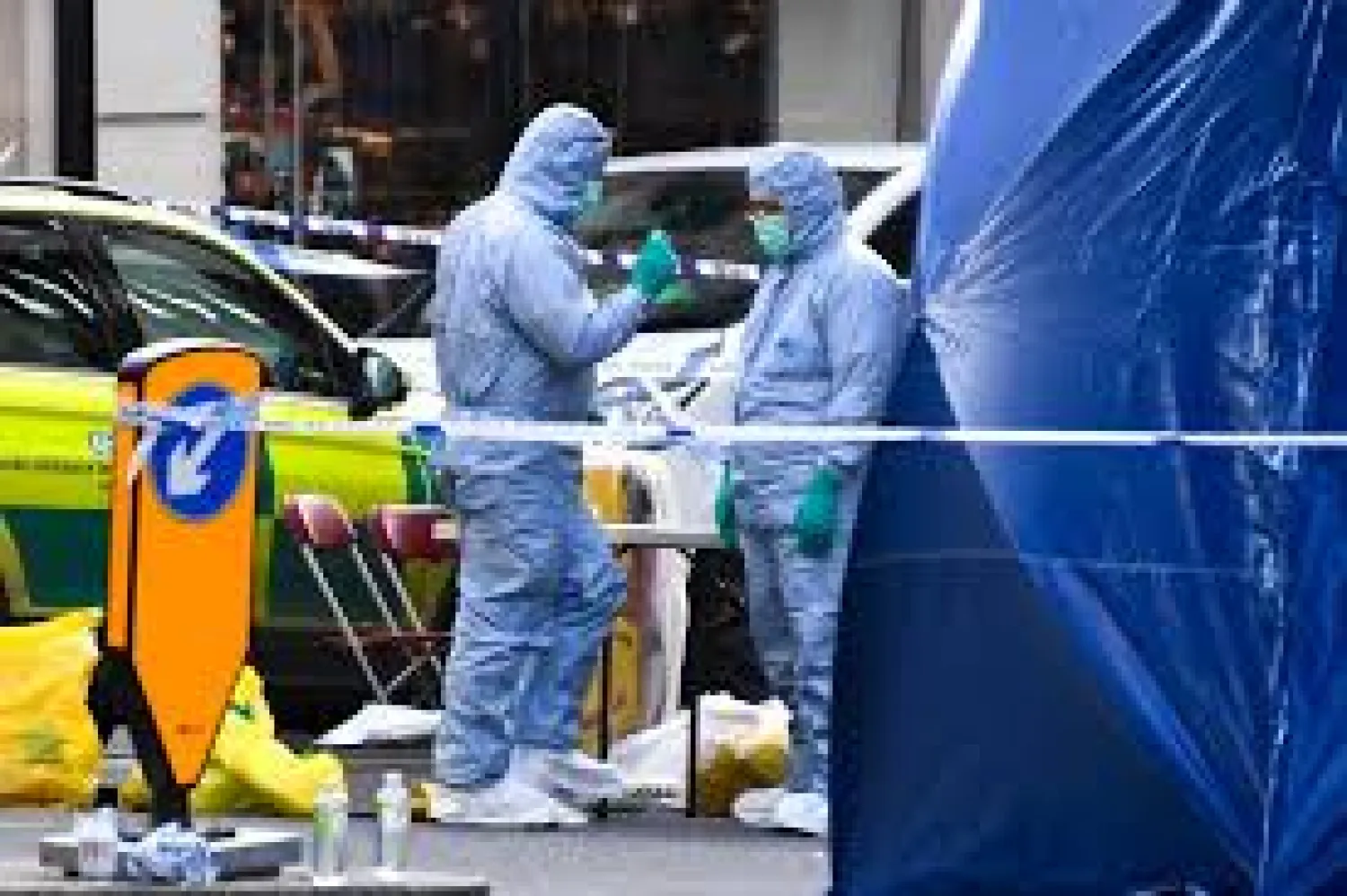
Forensic workers attend the scene on London Bridge in London, Saturday, Nov. 30, 2019. UK counterterrorism police on Saturday searched for clues into how a man imprisoned for terrorism offenses before his release last year managed to stab several people before being tackled by bystanders and shot dead by officers on London Bridge. Two people were killed and three wounded. (AP Photo/Alberto Pezzali)
TT

Early Release of Terror Convict in London Stabbings Stirs Controversy

Forensic workers attend the scene on London Bridge in London, Saturday, Nov. 30, 2019. UK counterterrorism police on Saturday searched for clues into how a man imprisoned for terrorism offenses before his release last year managed to stab several people before being tackled by bystanders and shot dead by officers on London Bridge. Two people were killed and three wounded. (AP Photo/Alberto Pezzali)

Usman Khan was convicted on terrorism charges but let out of prison early. He attended a "Learning Together" conference for ex-offenders, and used the event to launch a bloody attack, stabbing two people to death and wounding three others.

Police shot him dead after he flashed what seemed to be a suicide vest. Khan is gone, but the questions remain: Why was he let out early? Did authorities believe he no longer believed in radical ideologies? Why didn´t the conditions imposed on his release prevent the carnage?

Britons looked for answers Saturday as national politicians sought to pin the blame elsewhere for what was obviously a breakdown in the security system, which had kept London largely free of extremist violence for more than two years.

Police said Khan was convicted in 2012 of terrorism offenses and released in December 2018 "on license," which means he had to meet certain conditions or face recall to prison. Several British media outlets reported that he was wearing an electronic ankle bracelet that allowed police to track his movements at the time of the attack.

Authorities seemed quick to blame "the system" rather than any one component.

The Parole Board said it had played no role in Khan´s early release. It said the convict "appears to have been released automatically on license (as required by law), without ever being referred to the board."

Neil Basu, the Metropolitan Police counterterrorism police, said Saturday afternoon that the conditions of Khan´s release had been complied with. He didn´t spell out what those conditions were or why they failed to prevent him from killing two people.

The automatic release program apparently means no agency was given the task of determining if Khan still believed in radical views he had embraced when he was first imprisoned for plotting to attack a number of sites and individuals in London.

It is not yet known whether he took part in any of the "de-radicalization" programs used by British authorities to try and reform known militants.

The former head of Britain´s National Counter Terrorism Security Office, Chris Phillips, said it is unreasonable to ask police and security services to keep the country safe while at the same time letting people out of prison when they are still a threat.

"We're playing Russian roulette with people's lives, letting convicted, known, radicalized militant criminals walk about our streets," he said.

Khan had been convicted as part of an al-Qaida linked group that was accused of plotting to target major sites including Parliament, the US Embassy and individuals including Prime Minister Boris Johnson, then the mayor of London, the dean of St. Paul´s Cathedral in London and two rabbis.

Khan admitted to a lesser charge of engaging in conduct for the preparation of acts of terrorism. He had been secretly taped plotting attacks and talking about martyrdom as a possibility.

Khan and his accomplices had links to radical preacher Anjem Choudary, one of the highest-profile faces of radicalism in Britain. A mobile phone seized at the time contained material related to a banned group that Choudary founded. The preacher was released from prison in 2018 but is under heavy surveillance and a curfew.

Several people who attended Choudary´s rallies when he was under no controls have been convicted of attacks, including the two al-Qaida-inspired killers who ran over British soldier Lee Rigby and stabbed him to death in 2013.

The two chief contenders in the Dec. 12 election - Johnson and Labour Party leader Jeremy Corbyn - condemned the system Saturday.

Johnson, who visited the scene Saturday, said he had "long argued" that it was a "mistake to allow serious and violent criminals to come out of prison early." He said the criminal justice system "simply isn´t working."

Johnson spoke Saturday with US President Donald Trump, who offered his condolences following the attack, according to White House spokesman Judd Deere.

Corbyn said it is not clear if the Probation Office was involved at all and questioned whether the Parole Board should have been given a role.

"We have to ensure that the public are safe," he said. "That means supervision of prisoners in prison but it also means supervision of ex-prisoners when they are released ahead of the completion of their sentence, to have tough supervision of them to make sure this kind of danger is not played out on the public in the future."

He stopped short of blaming Johnson, who was not in office when Khan was set free.

Police said 28-year-old Khan was attending a program that works to educate prisoners when he launched Friday´s attack just yards from the site of a deadly 2017 van and knife rampage.

Basu, the top counterterrorism police officer, said the suspect appeared to be wearing a bomb vest but it turned out to be "a hoax explosive device." He said police believe Khan was acting alone.

The ISIS group claimed responsibility for the attack, saying Khan was one of its fighters. The group´s statement, however, didn´t provide any evidence.

One of the victims was named in British media reports as Jack Merritt, a graduate of Cambridge University who was helping organize the conference where the attack began. His father David Merritt tweeted that his son had been killed and had a "beautiful spirit."

Basu said he could not name the victims until they had been formally identified by the coroner. He asked the public for help with video, photos, and information about the attack.

Health officials said two of the wounded were stable and the third had less serious injuries. A victim who had been in critical condition has improved and is now listed as stable, officials said.

Police on Saturday were searching an apartment block in Stafford, 150 miles (240 kilometers) northwest of London, for clues. Khan was believed to have lived in the area after his release from prison. Police also conducted searches in Stoke-on-Trent.

Learning Together, a Cambridge University-backed prison education program, was holding a conference at the hall when the attack started.

Footage from the attack showed several passers-by - including one armed with a narwhal tusk apparently taken from the hall and another with a fire extinguisher - fighting with the suspect before police arrived.

Queen Elizabeth II said in a statement that she and her husband, Prince Philip, were sending their thoughts to everyone affected by the "terrible violence." She thanked police and emergency services "as well as the brave individuals who put their own lives at risk to selflessly help and protect others."



Netanyahu Skeptical of an Iran Breakthrough

Israel's Prime Minister Benjamin Netanyahu leaves after a meeting with US President Donald Trump at the White House February 11, 2026, in Washington, DC. (Photo by Brendan Smialowski / AFP)
TT

Netanyahu Skeptical of an Iran Breakthrough

Israel's Prime Minister Benjamin Netanyahu leaves after a meeting with US President Donald Trump at the White House February 11, 2026, in Washington, DC. (Photo by Brendan Smialowski / AFP)

Israeli Prime Minister Benjamin Netanyahu said he was skeptical that US nuclear talks with Iran will lead to a breakthrough but described his meeting with US President Donald Trump at the White House as “excellent.”

Speaking to reporters Thursday in Washington before boarding a plane to return to Israel, Netanyahu said Trump’s terms and Iran’s “understanding that they made a mistake the last time when they did not reach an agreement, may lead them to agree to conditions that will enable a good agreement to be reached.”

While he said he did “not hide my general skepticism” about any deal, he stressed that any agreement must include concessions about Iran’s ballistic missiles program and support for militant proxies.

He added that the conversation Wednesday with Trump, which lasted more than two hours, included a number of other subjects, including Gaza and regional developments but focused on the negotiations with Iran.


German Court Rejects Palestinian's Claim over Weapons Exports

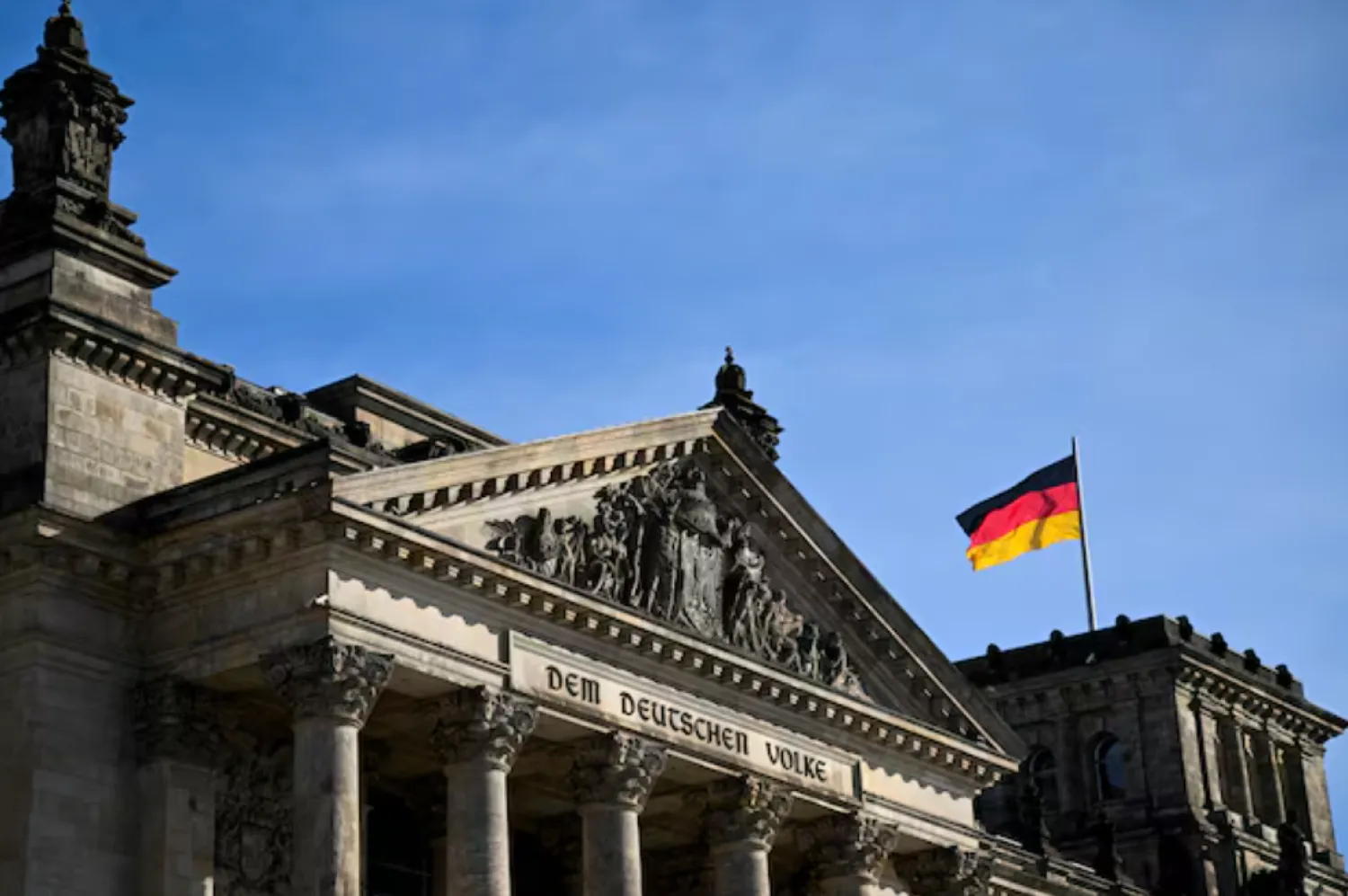
A view shows the front of the Reichstag building, the seat of the German parliament, the Bundestag, in Berlin, Germany March 5, 2025. REUTERS/Annegret Hilse/File Photo
TT

German Court Rejects Palestinian's Claim over Weapons Exports

A view shows the front of the Reichstag building, the seat of the German parliament, the Bundestag, in Berlin, Germany March 5, 2025. REUTERS/Annegret Hilse/File Photo

Germany's highest court on Thursday threw out a case brought by a Palestinian civilian from Gaza seeking to sue the German government over its weapons exports to Israel.

The complainant, supported by the European Center for Constitutional and Human Rights (ECCHR), had been seeking to challenge export licences for German parts used in Israeli tanks deployed in Gaza.

After his case was rejected by lower courts in 2024 and 2025, he had appealed to the Federal Constitutional Court.

But the court in Karlsruhe dismissed the case, stating that "the complainant has not sufficiently substantiated that the specialized courts misjudged or arbitrarily denied a possible duty to protect him", AFP reported.

While Germany is obliged to protect human rights and respect international humanitarian law, this does not mean the state is necessarily obliged to take specific action on behalf of individuals, the court said.

"It is fundamentally the responsibility of the state authorities themselves to decide how they fulfil their general duty of protection," it added.

The ECCHR called the decision "a setback for civilian access to justice".

"The court acknowledges the duty to protect but only in the abstract and refuses to ensure its practical enforcement," said Alexander Schwarz, co-director of the NGO's International Crimes and Legal Accountability program.

"For people whose lives are endangered by the consequences of German arms exports, access to justice remains effectively closed," he said.

The ECCHR had been hoping for a successful appeal after the Constitutional Court ruled last year that Germany had "a general duty to protect fundamental human rights and the core norms of international humanitarian law, even in cases involving foreign countries".

In that case, two Yemenis had been seeking to sue Berlin over the role of the US Ramstein airbase in a 2012 drone attack.

The complainant was one of five Palestinians who initially brought their case against the German government in 2024.


2 Israelis Charged with Using Classified Military Information to Place Bets

The Israeli Iron Dome air defense system intercepts missiles during an Iranian attack on Tel Aviv, Israel, June 18, 2025. (AP Photo/Leo Correa, File)
TT

2 Israelis Charged with Using Classified Military Information to Place Bets

The Israeli Iron Dome air defense system intercepts missiles during an Iranian attack on Tel Aviv, Israel, June 18, 2025. (AP Photo/Leo Correa, File)

Two Israelis have been charged with using classified military information to place bets on how future events will unfold, Israeli authorities said Thursday, accusing the individuals of “serious security offenses.”

A joint statement by the Israeli Ministry of Defense, domestic security service Shin Bet and police said that a civilian and a reservist are suspected of placing bets on the US-based prediction market Polymarket on future military operations based on information that the reservist had access to, The AP news reported.

Israel’s Attorney General’s Office decided to prosecute the two individuals following a joint investigation by police, military intelligence and other security agencies that resulted in several arrests. The two face charges including bribery and obstruction of justice.

Authorities offered no details on the identity of the two individuals or the reservist's rank or position in the Israeli military but warned that such actions posed a “real security risk” for the military and the Israeli state.

Israel’s public broadcaster Kan had reported earlier that the bets were placed in June ahead of Israel’s war with Iran and that the winnings were roughly $150,000.

Israel's military and security services “view the acts attributed to the defendants very seriously and will act resolutely to thwart and bring to justice any person involved in the activity of using classified information illegally,” the statement said.

The accused will remain in custody until the end of legal proceedings against them, the Prosecutor's Office said.

Prediction markets are comprised of typically yes-or-no questions called event contracts, with the prices connected to what traders are willing to pay, which theoretically indicates the perceived probability of an event occurring.

Their use has skyrocketed in recent years, but despite some eye-catching windfalls, traders still lose money everyday. In the US, the trades are categorized differently than traditional forms of gambling, raising questions about transparency and risk.