


Rob McCracken: ‘Anthony Joshua Knows There’s No Room for Error’

GB Boxing’s performance director, who also trains the former world heavyweight champion, has overseen major changes in the men’s and women’s games over the past 10 years

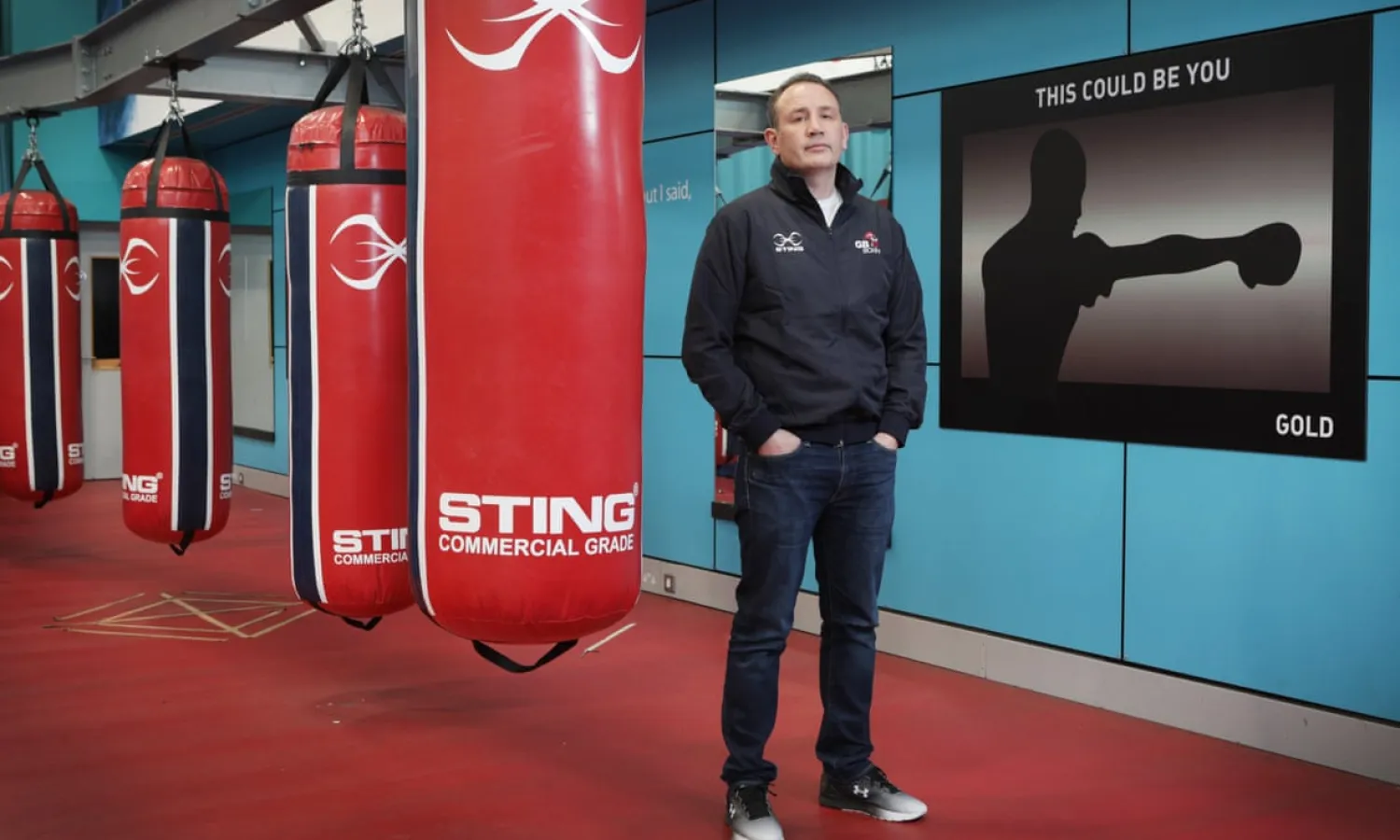
Robert McCracken, performance director of the GB Boxing amateur programme at the Sheffield Institute of Sport. has overseen a huge improvement in the men’s and women’s game over his 10 years in the job. Photograph: Gary Calton/The Guardian
TT

Rob McCracken: ‘Anthony Joshua Knows There’s No Room for Error’

Robert McCracken, performance director of the GB Boxing amateur programme at the Sheffield Institute of Sport. has overseen a huge improvement in the men’s and women’s game over his 10 years in the job. Photograph: Gary Calton/The Guardian

While Rob McCracken sits through a meeting that is partly about Anthony Joshua’s ring walk before he fights Andy Ruiz Jr in their intriguing rematch on 7 December, there is time to wander around the Sheffield dream factory where he has been the understated foreman for the past 10 years. McCracken was appointed the performance director of GB Boxing in November 2009 and the transformation over the past decade has been staggering.

When he was offered the job McCracken was best known as being Carl Froch’s trainer – just as he now comes under fierce scrutiny in Joshua’s corner. The way in which McCracken has managed to blend the contrasting worlds of amateur and professional boxing, for the benefit of all his fighters, is just one of the fascinating features in a story which reaches another milestone period.

Apart from his 10-year anniversary in Sheffield, where he runs such a successful program at the English Institute of Sport, McCracken faces a defining test in Saudi Arabia as Joshua tries to win back the WBA, IBF and WBO world heavyweight titles he lost so shockingly against Ruiz in New York during the summer.

McCracken is too modest to talk up his achievements with GB and so, while meeting a few of his current boxers in the gleaming gym and adjoining training facilities, it helps to check the bare statistics. In the past 10 years GB’s male boxers have won 52 medals at 14 major competitions. Before he took over, from 2000 to 2008 the country’s best amateur fighters had won only 12 medals in 13 major competitions. There was no female boxing program until 2010 but, since then, GB’s men and women have won 81 major medals between them.

Under McCracken’s leadership GB Boxing won eight Olympic medals at London 2012 and Rio 2016. This matches their boxing medal count at the previous eight Olympics, from Moscow in 1980 to Beijing in 2008.

The fighters he has helped to produce in Sheffield include world champions and top-10 boxers in the professional ranks – from Joshua, Josh Taylor, Callum Smith, Luke Campbell and Nicola Adams to Charlie Edwards, Khalid Yafai, Joe Joyce, Daniel Dubois, and Lawrence Okolie.

The meeting about the gaudy ring walk in Saudi breaks up and, for the next 45 minutes, McCracken talks engagingly about his decade in the job and the compelling rematch with Ruiz. We start with him being asked in 2009 by Derek Mapp, the then chairman of GB Boxing, to take charge of the country’s elite amateur boxers. “Derek was a no-nonsense businessman and the first thing he said was: ‘What do you need for the boxers? Whatever the boxer needs, that’s what we’ll do.’ That was his strategy and it worked fantastically well. It’s been run really well and I have been allowed to get on and work with the team here, the coaches, the support staff. Obviously the boxers come first and we’ve been able to get on with it.”

In his typically downbeat way, McCracken lets slip a wry smile as he enjoys a slurp of his tea before taking a bite of a chocolate bar. It’s one way of celebrating sustained success. “I always tell my boxers you’re only as good as your last tournament – and that was the world championships in Russia [last month],” McCracken adds in his familiar Birmingham accent.

What were his impressions of Joshua when they began working together in Sheffield? “He arrived here in October 2010 with Anthony Farrell. They had just won the national championships and the Commonwealth Games were on the horizon in Delhi but we felt they lacked international experience and they weren’t selected. That was my first conversation with big Josh. He accepted my decision and got on with it.

“I took him to the European Championships in 2011 in Turkey. He wasn’t super fit but I thought I’ll let him know how hard this sport is, we’ll see if he wants it. He did better than we thought and had three bouts in five days – which was more than he’d had in the previous three months. He got tired in the third bout and lost in the quarters. He said to me on the plane afterwards: ‘I’m going to get fit so that won’t happen again.’ He was really driven and, unlike your normal kid, really believed in himself.

“The thing that sticks out with Anthony is when they did the 2012 Olympic draw in London. I said to the other coaches: ‘I want him to avoid the Cuban but I know he’ll get him.’ He drew the Cuban. Luke Campbell was a little concerned about drawing a tough Italian but Josh just said: ‘What time are we eating?’ He didn’t care who he drew. That’s rare.”

Campbell and Joshua won gold in London but, as a heavyweight, the big man’s life changed fundamentally. As a world champion for three years he has earned stratospheric amounts of money and fame.

“But he’s still the same person on the inside,” McCracken says. “I know it’s difficult to get that type of exposure. I remember him boxing Joseph Parker and the crowd was full of non-boxing fans. Josh has got the crossover appeal and he’s done fantastically well but he’s been through a lot as well.”

Ruiz cut a portly figure when he stepped into the ring against Joshua as a substitute for Jarrell Miller, who had failed a drug test, and he was dismissed by most people. But McCracken argued before the fight that Ruiz was dangerous. “I was happy for Josh to box in the UK, where he feels comfortable,” he says now. “Going to the States was always a challenge. He was very motivated to fight Miller as it was personal between them. He changes five weeks before, when Ruiz comes in. Ruiz is an exceptional fighter. Yeah, he’s a tubby guy but all the Hispanic fighters, like Canelo [Álvarez], rate him highly. But people on the internet are saying: ‘Oh, this bloke is hopeless.’ The main thing for me was Miller pulling out. Until then Josh was smack on target but a change at that stage is difficult.”

Did he argue against choosing Ruiz as a replacement? “I wasn’t keen on Ruiz. I much preferred a couple of other opponents.”

McCracken was criticized vehemently as the losing trainer on social media. There were demands he should be sacked while Joshua also suffered verbal abuse. “It doesn’t matter what you’ve achieved,” McCracken says. “You get constant criticism. If you lose it really hits the fighter hard. The magical thing about the Olympic program is you see them lose a close fight. They’re very disappointed. Two days later they’re shouting for their teammates in the stand.

“The loneliness is deeper in professional boxing and social media makes it far worse. My generation can cope easily with social media because we don’t turn it on. I’m pretty robust and know that’s coming but with the younger generation it’s much harder. When you lose at Josh’s level it can be ugly.”

It will be fascinating to see whether Ruiz has been affected by his own sudden fame and wealth. If he has retained his desire then his style could once again be a nightmare for Joshua. McCracken listens when I say Josh Taylor, arguably the best fighter in Britain today and another of his former amateurs at London 2012, told me Joshua has always struggled against smaller heavyweights with fast hands.

“He’s beaten numerous small, mobile heavyweights and he’s lost to a couple of them,” McCracken says as he looks back over the nine years he has trained Joshua. “Sometimes fighters are just good. Ruiz has good technical ability. He can measure the distance. Knows how to defend. Got a half-decent jab, good timing, and speed. Ruiz is an underrated world-class fighter but if you’ve got the height and reach, like Josh, you must use it. The minute you don’t, you’re open to quick powerful hooks off these heavyweights. And Ruiz is one of the best.”

Is Joshua’s challenge against Ruiz more psychological than technical? “It’s a challenge on all fronts but he’s working hard. He’s motivated. He’s been in the best mood in camp for a while. He’s laughing and joking. He also knows that if he does everything right, he’ll win but there’s no room for error.”

When McCracken returns from Saudi to Sheffield, whatever the outcome, his more restorative work at GB Boxing will continue. He smiles when I ask if he can imagine spending another 10 years in his role? “If people want me to do it, I’ll do it. I’m passionate about it. I love it. I’ve never once felt it wasn’t a privilege to be in my position.”

(The Guardian)


Chelsea Injuries up 44% After Club World Cup but Report Says Event Has Had ‘Minimal’ Impact

Chelsea's Reece James, center, lifts the trophy following the Club World Cup final soccer match between Chelsea and PSG at MetLife Stadium in East Rutherford, N.J., Sunday, July 13, 2025. (AP)
TT

Chelsea Injuries up 44% After Club World Cup but Report Says Event Has Had ‘Minimal’ Impact

Chelsea's Reece James, center, lifts the trophy following the Club World Cup final soccer match between Chelsea and PSG at MetLife Stadium in East Rutherford, N.J., Sunday, July 13, 2025. (AP)

Chelsea suffered a 44% spike in injuries after competing in the supersized Club World Cup this year, according to findings published on Tuesday.

But the newly expanded tournament has so far had a “minimal impact” on injuries overall, the latest edition of the Men’s European Football Injury Index found.

There was fierce opposition to FIFA's new flagship club event when it was confirmed in 2023 that it would increase from seven to 32 teams, with players' unions warning of physical and mental burnout of players due to an ever expanding match schedule. But FIFA pressed ahead and staged the tournament in the United States in June-July.

Chelsea went on to win the inaugural competition, receiving the trophy from US President Donald Trump at MetLife Stadium and taking home prize money of around $125 million. But, according to the Index, from June-October, Chelsea picked up more injuries — 23 — than any of the nine clubs from Europe's top leagues that participated in the Club World Cup.

They included star player Cole Palmer, and was a 44% increase on the same period last year.

While Chelsea, which played 64 games over the entire 2024-25 season, saw an increase in injuries, the Index, produced by global insurance firm Howden, found that overall there was a decrease.

“In principle you would expect this increased workload to lead to an increase in the number of injuries sustained, as a possible rise in overall injury severity,” the Index report said, but added: “The data would suggest a minimal impact on overall injury figures.”

Despite the figures, the authors of the report accept it was too early to assess the full impact of the Club World Cup, with the findings only going up to October.

“We would expect to see the impact to spike in that sort of November to February period,” said James Burrows, Head of Sport at Howden. “What we’ve seen previously is that’s where the impact is seen from summer tournaments."

Manchester City has sustained 22 since the tournament, which is the highest among the nine teams from Europe's top leagues — England, Spain, Italy, Germany and France.

Those teams have recorded 146 injuries from June-October, which is down on the previous year's figure of 174.

From August-October that number is 121, the lowest for that three-month period in the previous six years of the Index.


Sunderland Worst Hit by Losing Players to African Cup of Nations 

14 December 2025, United Kingdom, London: Sunderland's Habib Diarra (L) and Leeds United's Gabriel Gudmundsson battle for the ball during the English Premier League soccer match between Brentford and Leeds United at the Gtech Community Stadium. (dpa)
TT

Sunderland Worst Hit by Losing Players to African Cup of Nations 

14 December 2025, United Kingdom, London: Sunderland's Habib Diarra (L) and Leeds United's Gabriel Gudmundsson battle for the ball during the English Premier League soccer match between Brentford and Leeds United at the Gtech Community Stadium. (dpa)

Premier League Sunderland will have to do without six players over the next few weeks and are the club worst hit as the Africa Cup of Nations takes its toll on European clubs competing over the holiday season.

Sunderland, eighth in the standings, had four of their African internationals in action when they beat Newcastle United on Sunday, but like 14 other English top-flight clubs will now lose those players to international duty.

The timing of the African championship, kicking off in Morocco on Sunday and running through to January 18, has long been an irritant for coaches, with leagues in Belgium, France, Germany, Italy, Netherlands, Portugal, and Spain also affected.

Hosting the tournament in the middle of the season impacts around 58% of the players at the Cup of Nations, though the Confederation of African Football did try to mitigate the impact by moving the start to before Christmas, so it is completed before the next round of Champions League matches.

The impact on European clubs was also lessened by allowing them to release players seven days, rather than the mandatory 14 days, before the tournament, meaning they could play for their clubs last weekend.

Sunderland's Congolese Arthur Masuaku and Noah Sadiki, plus full back Reinildo (Mozambique), midfielder Habib Diarra (Mali), and attackers Chemsdine Talbi (Morocco) and Bertrand Traore (Burkina Faso) have now departed for Morocco.

Ironically, Mohamed Salah’s absence from Liverpool to play for Egypt should lower the temperature at the club after his recent outburst against manager Arne Slot, but Manchester United will lose three players in Noussair Mazraoui, Bryan Mbeumo and Amad Diallo, who scored in Monday’s 4-4 draw with Bournemouth.

France is again the country with the most players heading to the Cup of Nations, and with 51 from Ligue 1 clubs. But their absence is much less impactful than previously as Ligue 1 broke after the weekend’s fixtures and does not resume until January 2, by which time the Cup of Nations will be into its knockout stage.

There are 21 players from Serie A clubs, 18 from the Bundesliga, and 15 from LaLiga teams among the 24 squads at the tournament in Morocco.


Rodgers Takes Charge of Saudi Team Al-Qadsiah After Departure from Celtic 

Then-Celtic head coach Brendan Rodgers greets supporters after a Europa League soccer match between Red Star and Celtic at Rajko Mitic Stadium in Belgrade, Serbia, Sept. 24, 2025. (AP)
TT

Rodgers Takes Charge of Saudi Team Al-Qadsiah After Departure from Celtic 

Then-Celtic head coach Brendan Rodgers greets supporters after a Europa League soccer match between Red Star and Celtic at Rajko Mitic Stadium in Belgrade, Serbia, Sept. 24, 2025. (AP)

Brendan Rodgers has returned to football as the coach of Saudi Arabian club Al-Qadsiah, six weeks after resigning from Scottish champion Celtic.

Al-Qadsiah, whose squad includes Italian striker Mateo Retegui and former Real Madrid defender Fernandez Nacho, is in fifth place in the Saudi Pro League in its first season after promotion.

Rodgers departed Celtic on Oct. 27 and has opted to continue his managerial career outside Britain for the first time, having previously coached Liverpool, Leicester and Swansea.

In its statement announcing the hiring of Rodgers on Tuesday, Al-Qadsiah described him as a “world-renowned coach” and said his arrival “reflects the club’s ambitious vision and its rapidly growing sporting project.”

Aramco, the state-owned Saudi oil giant, bought Al-Qadsiah in 2023 in a move that has helped to transform the club’s status.

“This is a landmark moment for the club,” Al-Qadsiah chief executive James Bisgrove said. “The caliber of his experience and track record of winning reflects our ambition and long-term vision to establish Al-Qadsiah as one of Asia’s leading clubs.”

Rodgers is coming off winning back-to-back Scottish league titles with Celtic, where he won 11 major trophies across his two spells. He also won the FA Cup with Leicester.

Al-Qadsiah's last two coaches were former Liverpool striker Robbie Fowler and former Spain midfielder Michel.
