


Protests, Unrest Mar Algeria's Disputed Presidential Vote

The vote highlights the vast gap between youth at the heart of a reformist protest movement and an aging elite they see as clinging to power | AFP
TT

Protests, Unrest Mar Algeria's Disputed Presidential Vote

The vote highlights the vast gap between youth at the heart of a reformist protest movement and an aging elite they see as clinging to power | AFP

Algerians - without a leader since April - voted on Thursday for a new president or boycotted the elections decried by a massive pro-democracy movement that forced former leader Abdelaziz Bouteflika to resign.

The unpopular vote comes almost 10 months after a people power movement ousted president Abdelaziz Bouteflika, 82, after two decades in office, and as demonstrators keep pushing for an end to the military-backed political system.

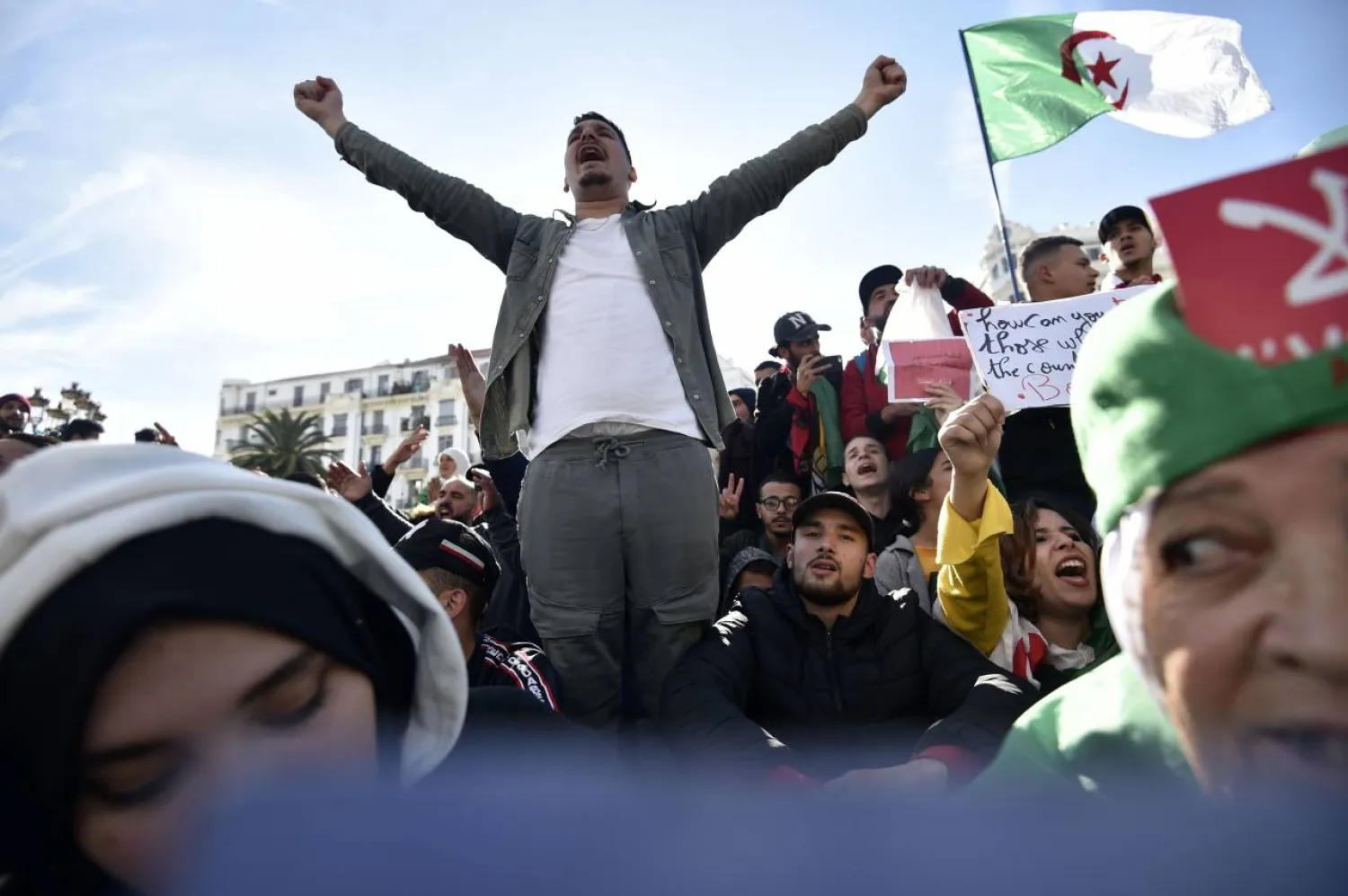
Tens of thousands rallied in central Algiers, defying a heavy police presence backed by water cannon and helicopters, and despite the arrests of at least 10 activists meant to prevent a repeat of the previous day's anti-election rallies.

All five candidates, including two former prime ministers, were linked to the Bouteflika regime, and protesters fear the elections will perpetuate a corruption-ridden system with military oversight that they are trying to bring to an end. Powerful army chief Ahmed Gaid Salah - who orchestrated the elections and set the date - promises the elections will chart the course to a new era in the gas-rich North African nation, a strategic partner of the West in countering extremist violence.

Protesters took to the streets in scattered cities on the eve of the vote, and continued their action on Thursday, with thousands filling a main avenue in Algiers, the capital.

"No to elections of shame" and "generals in the garbage" were among the chants.

Unrest also erupted in the northern mountain region of Kabylie, home to much of the country's Berber minority, where groups "ransacked the ballot boxes and destroyed part of the electoral lists" in Bejaia, a resident said.

Video footage shared on social media, purportedly from a polling station there, showed dozens of people tossing ballot papers into the air and stamping on them, while clips from other cities showed large demonstrations.

Crowds also surrounded a government building in Tizi Ouzou, where security forces fired teargas to repel them, witnesses told AFP from the region with a long history of opposition to the central government.

The head of the newly created National Independent Electoral Authority, Mohamed Charfi, said the participation rate was at 7.9% three hours after polls opened at 8 a.m. The electoral authority put the voter turnout at less than 1% in the Berber region of Kabyle. Algiers was at under 4.8% before noon.

The disgraced and ailing Bouteflika, who held office for 20 years, cast a ballot via a brother, Nasser, who said that "he remains a citizen with all his rights."

The turnout rate should be a critical indication of whether the candidate elected has popular legitimacy. There was no firm indication which of the five had the upper hand ahead of the vote. Opinion polls for elections are not permitted.

The five candidates, including former prime ministers, Ali Benflis and Abdelmadjid Tebboune, endured insults and protests during the 22-day campaign.

"Today is not just the day of a presidential election, but a day for strengthening the pillars of the republic," said candidate Azzedine Mihoubi, 60, a writer, poet and former culture minister who has recently been touted by the Algerian media as a favorite. "This is a day of victory for Algeria," he told reporters.

Tebboune, 74, was until recently seen as the favorite due to his reportedly close ties to Gaid Salah. Mihoubi has deep ties to the fallen Bouteflika regime. He took over leadership of the National Democratic Rally party, which governed in alliance with the FLN, the sole party for nearly three decades, until 1989, and now is in tatters.

Benflis, 75, is making his third attempt at the presidency. A lawyer and former justice minister, he was Bouteflika's top aide before falling out when he ran against him in 2004. He started his own party.

The other candidates are Abdelaziz Belaid, 56, a former figure in the FLN who started his own party, and Abdelkader Bengrina, 57, a one-time tourism minister and former member of the moderate Islamist party, Movement for a Society of Peace (MSP). He then started his own Islamist party el Bina, which like the MSP, backed Bouteflika.

Gaid Salah, who has emerged as the authority figure in the political vacuum, has maintained that the voting is the shortest and surest way to raise Algeria out of its paralyzing political crisis and give birth to a new era. He was the force behind an anti-corruption campaign that has seen top figures jailed and convicted, including Said Bouteflika, the president's younger brother and chief counselor, sentenced to 15 years in prison in September for "plotting against the state."

Gaid Salah refers to Bouteflika's entourage as "the gang," as do pro-democracy protesters who include Gaid Salah among them.



Rescue Teams Search for Survivors in Building Collapse that Killed at Least 2 in Northern Lebanon

A Lebanese flag is pictured, in the aftermath of a massive explosion, in Beirut's damaged port area, Lebanon August 17, 2020. REUTERS/Hannah McKay
TT

Rescue Teams Search for Survivors in Building Collapse that Killed at Least 2 in Northern Lebanon

A Lebanese flag is pictured, in the aftermath of a massive explosion, in Beirut's damaged port area, Lebanon August 17, 2020. REUTERS/Hannah McKay

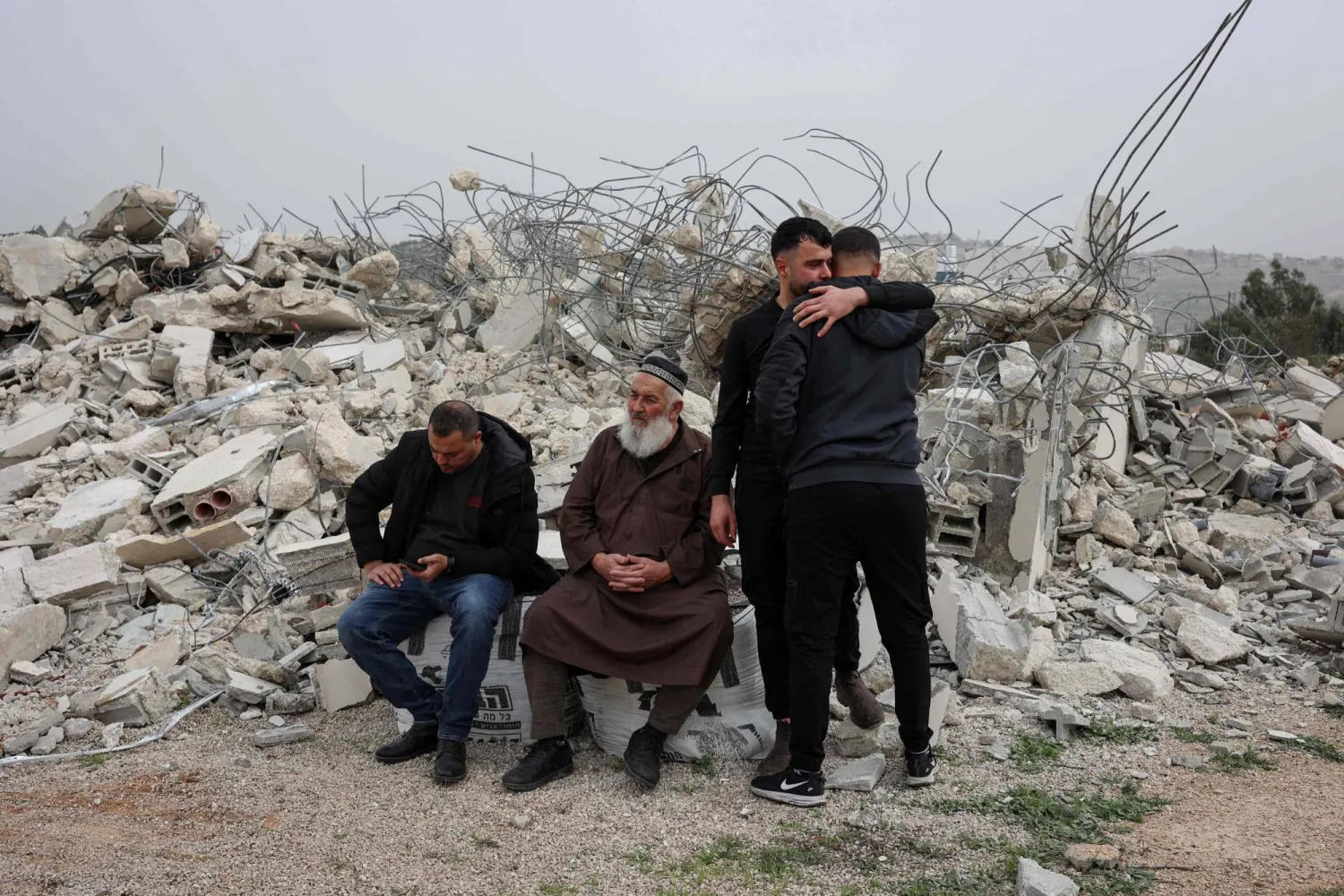
At least two people were killed and four rescued from the rubble of a multistory apartment building that collapsed Sunday in the city of Tripoli in northern Lebanon, state media reported.

Rescue teams were continuing to dig through the rubble. It was not immediately clear how many people were in the building when it fell.

The bodies pulled out were of a child and a woman, the state-run National News Agency reported.

Dozens of people crowded around the site of the crater left by the collapsed building, with some shooting in the air.

The building was in the neighborhood of Bab Tabbaneh, one of the poorest areas in Lebanon’s second largest city, where residents have long complained of government neglect and shoddy infrastructure. Building collapses are not uncommon in Tripoli due to poor building standards, according to The AP news.

Lebanon’s Health Ministry announced that those injured in the collapse would receive treatment at the state’s expense.

The national syndicate for property owners in a statement called the collapse the result of “blatant negligence and shortcomings of the Lebanese state toward the safety of citizens and their housing security,” and said it is “not an isolated incident.”

The syndicate called for the government to launch a comprehensive national survey of buildings at risk of collapse.


Israel to Take More West Bank Powers and Relax Settler Land Buys

A view of Israeli settlement of Maale Adumim, in the West Bank, Sunday, June 18, 2023. (AP)
TT

Israel to Take More West Bank Powers and Relax Settler Land Buys

A view of Israeli settlement of Maale Adumim, in the West Bank, Sunday, June 18, 2023. (AP)

Israel's security cabinet approved a series of steps on Sunday that would make it easier for settlers in the occupied West Bank to buy land while granting Israeli authorities more enforcement powers over Palestinians, Israeli media reported.

The West Bank is among the territories that the Palestinians seek for a future independent state. Much of it is under Israeli military control, with limited Palestinian self-rule in some areas run by the Western-backed Palestinian Authority (PA).

Citing statements by Finance Minister Bezalel Smotrich and Defense Minister Israel Katz, Israeli news sites Ynet and Haaretz said the measures included scrapping decades-old regulations that prevent Jewish private citizens buying land in the West Bank, The AP news reported.

They were also reported to include allowing Israeli authorities to administer some religious sites, and expand supervision and enforcement in areas under PA administration in matters of environmental hazards, water offences and damage to archaeological sites.

Palestinian President Mahmoud Abbas said the new measures were dangerous, illegal and tantamount to de-facto annexation.

The Israeli ministers did not immediately respond to requests for comment.

The new measures come three days before Prime Minister Benjamin Netanyahu is scheduled to meet in Washington with US President Donald Trump.

Trump has ruled out Israeli annexation of the West Bank but his administration has not sought to curb Israel's accelerated settlement building, which the Palestinians say denies them a potential state by eating away at its territory.

Netanyahu, who is facing an election later this year, deems the establishment of any Palestinian state a security threat.

His ruling coalition includes many pro-settler members who want Israel to annex the West Bank, land captured in the 1967 Middle East war to which Israel cites biblical and historical ties.

The United Nations' highest court said in a non-binding advisory opinion in 2024 that Israel's occupation of Palestinian territories and settlements there is illegal and should be ended as soon as possible. Israel disputes this view.


Arab League Condemns Attack on Aid Convoys in Sudan

A general view shows the opening session of the meeting of Arab foreign ministers at the Arab League Headquarters (Reuters)
TT

Arab League Condemns Attack on Aid Convoys in Sudan

A general view shows the opening session of the meeting of Arab foreign ministers at the Arab League Headquarters (Reuters)

Arab League Secretary-General Ahmed Aboul Gheit strongly condemned the attack by the Rapid Support Forces on humanitarian aid convoys and relief workers in North Kordofan State, Sudan.

In a statement reported by SPA, secretary-general's spokesperson Jamal Rushdi quoted Aboul Gheit as saying the attack constitutes a war crime under international humanitarian law, which prohibits the deliberate targeting of civilians and depriving them of their means of survival.

Aboul Gheit stressed the need to hold those responsible accountable, end impunity, and ensure the full protection of civilians, humanitarian workers, and relief facilities in Sudan.