

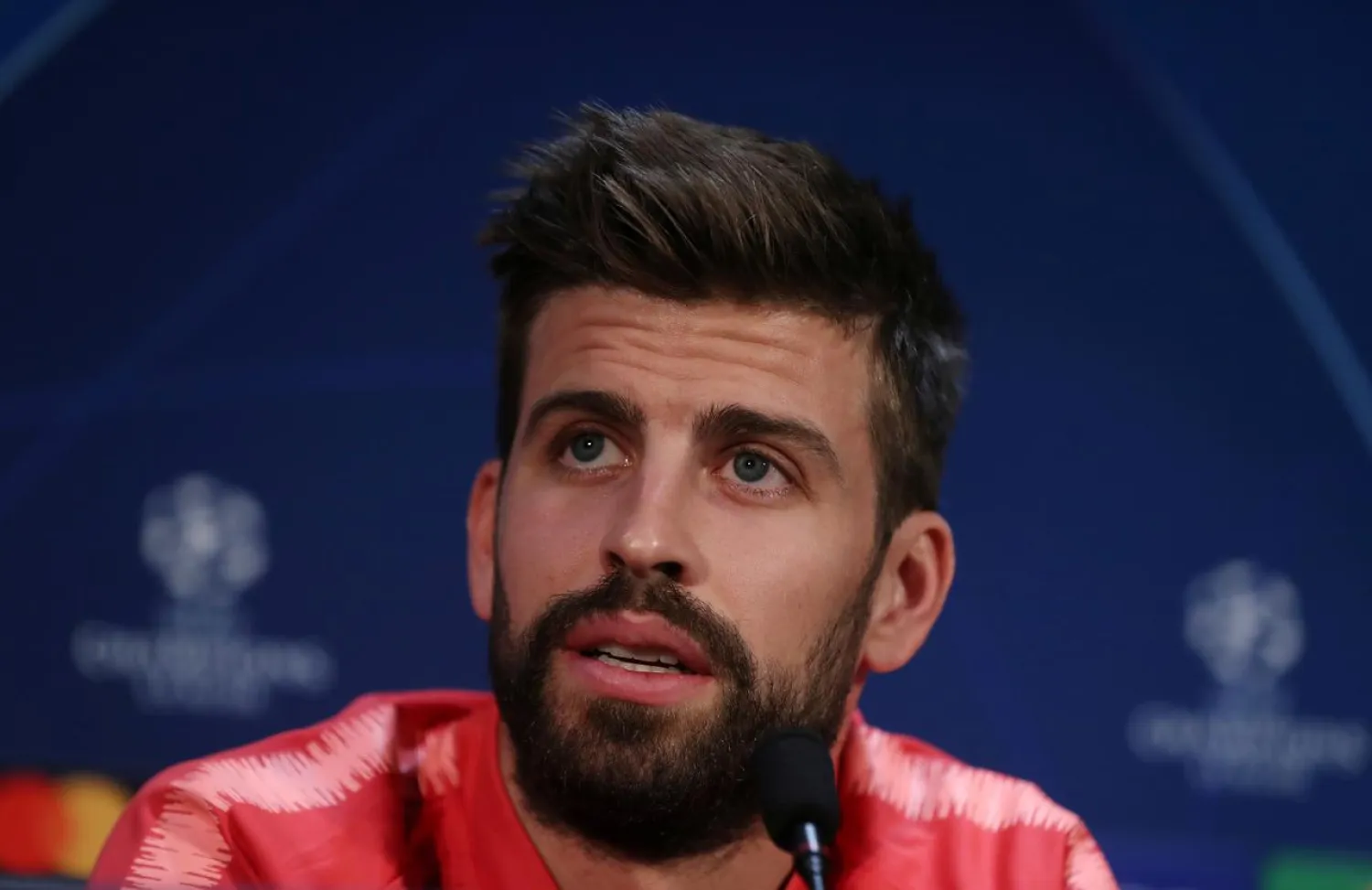

Meet the Harvard Professor who is Shaping the Destiny of Football Stars

Barcelona's Gerard Pique. (Reuters)
TT

Meet the Harvard Professor who is Shaping the Destiny of Football Stars

Barcelona's Gerard Pique. (Reuters)

Anita Elberse of Harvard Business School is discussing how it all started; how the world of football opened up to her teaching – which would see her become a mentor to some of the game’s A-list names, including Gerard Piqué, Kaká and Dani Alves.

Elberse, one of the youngest women to have been promoted to full professor with tenure in HBS’s history, had begun to cross over into sport from entertainment and media, making a case study for her students on the tennis player Maria Sharapova. This led to a research project into whether it paid to have an athlete endorsing a brand.

“There was a case on LeBron James and it started snowballing from there,” Elberse says, American accent obscuring her Dutch roots. “And then, all of a sudden, Alex Ferguson calls and, all of a sudden, I’m doing a project with him.”

It was the summer of 2012 and, according to Elberse, the then Manchester United manager and the people around him were “looking for what might be the next challenge for him after his active coaching career and maybe him talking about what he’s learned”. Elberse met Ferguson for breakfast in Boston. “I only realized later that it was a sort of audition,” she says. “He wanted to see if I could be the person to help him tell his story about the leadership that he’s brought to soccer.”

Ferguson would retire at the end of the 2012-13 season so Elberse might have been privy to a bombshell exclusive. “Looking back it was pretty naive not to have realized: ‘Oh, this might be his last year,’” she says, with a smile. “I didn’t know that was going to happen. I was able to follow him along for that last year. I visited the United training ground at Carrington, I went to his house and met his family, I saw him at the stadium. I even saw him in the famous room where he meets with the coach of the opposing team after matches.”

Elberse made a case study about Ferguson which asked what it took to run United, and they also wrote an article together for the Harvard Business Review, published in October 2013. It was entitled Ferguson’s Formula, and it distilled the eight leadership lessons that had formed the basis of his approach. Elberse commented at the time that “many of them can certainly be applied more broadly, to business and to life”.

By that time something else had changed in Elberse’s career. She had developed a course for HBS’s MBA students on entertainment, media and sport and, as the way she wrote and taught her case studies gathered repute, she was receiving more and more requests from people in various industries to sit in on her classes. She made a decision – to launch an executive education version of the course.

The first edition of the four-day Business of Entertainment, Media and Sport program took place in June 2013 and Ferguson was one of the guest speakers – “a very special moment,” she says. Ferguson has since been to Harvard several times to watch Elberse teach his case study and to answer questions from students.

In previous generations a retired footballer might open a pub or a sports retail store but, as Elberse says, it is rather different now. Top players can be brands in their own right and, in some instances, they have started to push high-end business ventures before they retire. Elberse’s executive course aims to highlight via open-ended case studies the patterns that exist in the worlds of film, television, music and sport; to show how to market and manage creative products and talent; and how to build businesses around content.

It runs every year for 80 people – each of whom pays $10,000 (£7,700) – with the admissions committee looking to offer a well-balanced room, containing athletes, actors, musicians, agents and senior executives. They live a student life on the Harvard campus, which is a great leveller, a facilitator of equality and what Elberse calls “one big community”. There is a cross-pollination of ideas in an environment that attendees have described as “inspiring”. It is a perfect space for networking.

Piqué was the first footballer to attend and he has been followed by Kaká, Alves, Mario Melchiot, Nuri Sahin, Edwin van der Sar, Tim Cahill and Oliver Kahn. There have been plenty of American sports stars, including Dwyane Wade, Chris Paul, Pau Gasol and Chris Bosh (all from the NBA), plus Michael Strahan and Brandon Marshall (from the NFL), while from the entertainment sector there has been the actor Channing Tatum, the rapper LL Cool J and the singer Ciara.

“If you look at Gerard Piqué – he is an active player at Barcelona but he has an investment company called Kosmos and he has already established a significant business,” Elberse says. “He’s had a stake in the Players’ Tribune from the get-go; he had a video game company as part of Kosmos and he has bought the Davis Cup in tennis for $3bn. It’s pretty simple what the footballers want from the course. They come to learn about the world of entertainment more generally, to discover patterns that are there in those industries that they can benefit from.

“I think the outside world looks at these people and says: ‘You are a footballer, this is what you do and that is probably all that you’ll do.’ Well, no. What I’ve learned is that they can do a lot more than what we’ve seen them do on the field. There are some lessons that are very transferable – performing under high-pressure situations, working as part of a team, which all businesses are. They have worked under great leaders and probably bad ones, too.

“One of the things we do, and it’s almost implicitly, is to show them that they actually know a lot more about business than they think they might. You might not know the jargon or the ins and outs of financial management or what it means to have the operations side of a business but there are a bunch of things that you do know and might be very good at.”

Kaká and Alves, former Brazil teammates, did the course together and Elberse remembers how the latter, now playing for São Paulo, turned up in full Harvard garb. “He had the Harvard tie, the Harvard cardigan, the Harvard pants – he was completely Harvard, which was very, very funny,” Elberse says. “He was by far the goofiest of the players that I’ve had in the program. He is completely crazy and he is proud of being as crazy as he is. But he was great to have for the group.

“He has an audience of millions through social media and he can do whatever he wants to do. The same goes for Kaká, who is a really smart business guy. I can imagine him being the president of a soccer club.”

Van der Sar was appointed the chief executive of Ajax in 2016, having hung up his footballing boots in 2011, which represented a relatively quick transition from player to businessman. “He was the Ajax CEO when he was in the class,” Elberse recalls. “It’s really interesting to hear what he’s learned from his playing career and how he’s trying to apply that now that he’s on the other side.”

Elberse’s case studies present a story and invite questions and discussion. “Dwayne ‘The Rock’ Johnson is a famous film star – why would he bother with a digital channel?” she says. “What is LeBron trying to build in Hollywood? What is Disney trying to do with the investments it is making in films?”

Elberse focuses the bulk of the course on her case studies but, on the final full day, a tradition has built whereby some of the more well-known members of the class sit on a panel and take questions. What has stood out is the searing honesty of the answers.

“Kaká talked about when he went from Milan to Real Madrid and felt like the biggest failure,” Elberse says. “He’d been the world player of the year, the fee had been a record and it didn’t work out – he talked about what that does to you as a person and how you recover. That was very powerful.

“Similarly, when Oliver Kahn was here, he talked about having won the Golden Ball and Golden Glove at the 2002 World Cup and then, for the 2006 World Cup, which was in Germany, his country, he was dropped. He talked about how he had to support Jens Lehmann, who became the No. 1 goalkeeper, what he had to tell himself.

“Everyone was choking up. I was supposed to lead this and I was choking up. Those are the moments that have stuck with me.”

The Guardian Sport


Real Madrid Beat Valencia to Stay on Barcelona’s Heels

Real Madrid's Kylian Mbappe, left, celebrates with Alvaro Carreras, right, and Brahim Diaz after scoring his side's second goal during the Spanish LaLiga match between Valencia and Real Madrid in Valencia, Spain, Sunday, Feb. 8, 2026. (AP)
TT

Real Madrid Beat Valencia to Stay on Barcelona’s Heels

Real Madrid's Kylian Mbappe, left, celebrates with Alvaro Carreras, right, and Brahim Diaz after scoring his side's second goal during the Spanish LaLiga match between Valencia and Real Madrid in Valencia, Spain, Sunday, Feb. 8, 2026. (AP)

Real Madrid stayed within one point of LaLiga leaders Barcelona with a 2-0 win at Valencia on Sunday as second-half goals by Alvaro Carreras and Kylian Mbappe settled a largely uneventful contest.

Real dominated possession but found chances hard to come by, with Valencia keeper Stole Dimitrievski rarely called into action as the visitors struggled to turn control into threat.

It took them until the 65th minute to break the deadlock through Carreras before Mbappe wrapped up the points in stoppage time.

Barcelona lead the table on 58 points, with Real second on 57. Valencia are 17th, a point above the relegation zone.

Mbappe offered the main outlet with sporadic ‌runs down the ‌left but clear openings were limited.

Real coach Alvaro ‌Arbeloa ⁠was forced ‌to improvise, missing suspended winger Vinicius Jr and injured trio Jude Bellingham, Rodrygo and Eder Militao.

The absences opened the door for academy players Raul Asensio, David Jimenez and Gonzalo Garcia to start, with Mbappe providing the lone spark for an uninspiring Real side.

The deadlock was broken through fullback Carreras in a fortunate turn of events.

Making an ambitious run into the box, Carreras was dispossessed by Valencia's defenders, but ⁠the attempted clearance ricocheted back off him and fortuitously fell at his feet.

The 22-year-old was quickest ‌to react, sweeping a low shot into the bottom-left ‍corner.

Valencia offered little in response and ‍Real sealed the points in added time. Substitute Brahim Diaz launched a ‍counter-attack down the left and slid a low cross into the area for Mbappe, who finished first time from close range.

It was the France forward's 23rd league goal, leaving him eight goals clear at the top of the scoring charts.

“Playing at Valencia is always like going to the dentist," Arbeloa told reporters.

"We knew how difficult the match would be, how demanding they would be. ⁠It was a very serious and committed match. I'm happy.

"We can certainly raise our game in terms of brilliance. We have a lot of room for improvement. But a team is built on solidity and commitment. (Thibaut) Courtois didn't make a single save today. Dedication, commitment, sacrifice. Madrid demonstrated those values once again today."

Elsewhere on Sunday, Atletico Madrid slipped further adrift in the title race after a 1-0 home loss to Real Betis.

Antony struck in the 28th minute with a fierce effort from the edge of the box, earning Manuel Pellegrini's side a valuable victory as they bolstered their push for European qualification.

Atletico are a distant third ‌in the table on 45 points, three points ahead of fourth-placed Villarreal, who have two games in hand. Betis sit fifth on 38 points.


Australia Humiliated by Ecuador in Davis Cup Qualifier

Tennis - Davis Cup - Qualifiers  - Ecuador v Australia - Quito Tenis y Golf Club, Quito, Ecuador - February 8, 2026 Team Ecuador celebrate winning the doubles match between Ecuador's Gonzalo Escobar and Diego Hidalgo, and  Australia's Rinky Hijikata and Jordan Thompson REUTERS/Cristina Vega
Tennis - Davis Cup - Qualifiers - Ecuador v Australia - Quito Tenis y Golf Club, Quito, Ecuador - February 8, 2026 Team Ecuador celebrate winning the doubles match between Ecuador's Gonzalo Escobar and Diego Hidalgo, and Australia's Rinky Hijikata and Jordan Thompson REUTERS/Cristina Vega
TT

Australia Humiliated by Ecuador in Davis Cup Qualifier

Tennis - Davis Cup - Qualifiers  - Ecuador v Australia - Quito Tenis y Golf Club, Quito, Ecuador - February 8, 2026 Team Ecuador celebrate winning the doubles match between Ecuador's Gonzalo Escobar and Diego Hidalgo, and  Australia's Rinky Hijikata and Jordan Thompson REUTERS/Cristina Vega
Tennis - Davis Cup - Qualifiers - Ecuador v Australia - Quito Tenis y Golf Club, Quito, Ecuador - February 8, 2026 Team Ecuador celebrate winning the doubles match between Ecuador's Gonzalo Escobar and Diego Hidalgo, and Australia's Rinky Hijikata and Jordan Thompson REUTERS/Cristina Vega

Australia slumped to their worst Davis Cup result under long-serving captain Lleyton Hewitt, suffering a 3-1 humiliation away to lowly Ecuador in the first round of qualifiers on Sunday.

With Australia's number one Alex De Minaur opting out of the tie in Quito, the 28-times champions crashed out when Rinky Hijikata and Jordan Thompson were beaten 7-6(5) 6-4 by Gonzalo Escobar and Diego Hidalgo in the decisive doubles rubber.

Lacking a player in the top 200, Ecuador set up their unlikely triumph on home clay by claiming ⁠both the opening singles rubbers on Saturday.

Alvaro Guillen Meza downed Hijikata in three sets before 257th-ranked Andres Andrade shocked world number 86 James Duckworth, also in three, Reuters reported.

Ecuador next face Britain in the second round of qualifiers in September.

With De Minaur leading the charge, Australia reached back-to-back finals in 2022-23 and ⁠the semi-finals in 2024.

However, the Ecuador shock continues the team's decline following their failure to reach the eight-nation Finals in 2025, Hewitt's 10th year in charge.

India's Dhakshineswar Suresh won both his singles matches and partnered Yuki Bhambri to victory in the doubles as India beat Netherlands 3-2 in Bengaluru.

The 25-year-old held his nerve under immense pressure in the final rubber against Guy de Ouden to win 6-4 7-6 (4) and guide India to the second round of qualifiers ⁠for the first time since the new Davis Cup format began in 2019.

“It’s just a different feeling when you’re playing for your country,” Suresh, who has a world ranking of 470, told the Davis Cup website after the win. “You are not playing for yourself, you’re playing for the whole nation."

India meet South Korea in the next round in September after the Koreans defeated Argentina 3-2. The United States beat Hungary 4-0 while Britain also secured a 4-0 win over Norway and Canada beat Brazil 3-2.


Saudi Arabia: RCU Partners with ASICS to Support Sports Development

The MoU was signed at the Cultural Oasis in AlUla. SPA
TT

Saudi Arabia: RCU Partners with ASICS to Support Sports Development

The MoU was signed at the Cultural Oasis in AlUla. SPA

Saudi Arabia’s Royal Commission for AlUla (RCU) has signed a Memorandum of Understanding (MoU) with ASICS, aimed at strengthening strategic cooperation to support the development of AlUla’s sports ecosystem and enhance talent pathways, in line with RCU’s long-term vision and future ambitions.

The MoU, signed at the Cultural Oasis in AlUla, establishes a framework for future collaboration through which RCU will explore opportunities to leverage ASICS’ technical, operational, and specialized advisory expertise across sports development and performance services, including assessment and analysis, to enhance the quality of sporting experiences in AlUla.

The cooperation includes joint efforts to support a more integrated sports ecosystem through initiatives that strengthen training environments, enhance athletic performance, and advance athlete development pathways and talent programs. RCU and ASICS will also explore opportunities to develop distinctive events and initiatives and attract regional and international competitions that contribute to AlUla’s growing profile on global sporting calendars.

The MoU further supports collaboration on community engagement through grassroots programs and social impact initiatives that encourage participation and wellbeing. It also enables exploration of digital enhancements that improve event delivery and participant engagement, including smarter registration, data management, and participant tracking for the AlUla Trail Race and other events across AlUla’s calendar.

This step is part of RCU’s ongoing efforts to develop the sports ecosystem in AlUla and increase community participation in sporting activities, in line with the objectives of Saudi Vision 2030 to advance the sports sector and enhance the quality of life.
