


Khalid bin Salman Distinguishes between Saudi Vision 2030, Iran’s ‘Vision 1979’

Saudi Deputy Defense Minister Prince Khalid bin Salman. (AFP)
TT

Khalid bin Salman Distinguishes between Saudi Vision 2030, Iran’s ‘Vision 1979’

Saudi Deputy Defense Minister Prince Khalid bin Salman. (AFP)

Saudi Deputy Defense Minister Prince Khalid bin Salman explained on Friday the difference between Saudi Arabia’s Vision 2030 and “vision 1979” that the Iranian regime has been working on for the past four decades.

Vision 2030 was launched in 2016 and is being spearheaded by Crown Prince Mohammed bin Salman, Deputy Prime Minister and Minister.

Speaking to Vice television, Prince Khalid stressed: “We have a forward-looking vision to improve our economy, to make our peoples’ lives better in the Kingdom, and to move our society forward. To be able to achieve that objective we want to have a stable, peaceful region around us, a prosperous region. We want to increase basically the economic cooperation.”

“Iran wants to do the opposite. Iran has expansionist policies. They want to basically take over countries in the region. They have these destructive activities in the region that is pulling the region backward, not forward. This is the cause of friction.”

“They want to export the revolution through any means possible, and that’s what they’ve been doing since 1979. The strategic goal never changed. Their tactics have changed throughout the 40 years that have passed. And that’s what they’ve been doing since 1979,” the date of the country’s revolution.

Prince Khalid added: “I believe the biggest threats to the region, and to international security, is basically Iran.”

“The Iranian regime and its proxies on one side, and ISIS, al-Qaeda and terrorist organizations on the other side. We believe that they’re both two sides of the same coin,” he remarked.

“They believe in the same concept, not necessarily exactly the same ideology, but they both do not believe in the sovereignty of nations, they both believe in a transnational ideological state, they both do not believe in international law, and sometimes they compete with each other, and they fight each other, but when it comes to us, we’re the common enemy, and they cooperate.”



UAE: Falling Debris Injures One after Attack Intercepted

FILE PHOTO: General view of the Abu Dhabi city is seen from observation deck of Emirates Towers in Abu Dhabi, United Arab Emirates, December 23, 2018. REUTERS/Hamad I Mohammed/File Photo
TT

UAE: Falling Debris Injures One after Attack Intercepted

FILE PHOTO: General view of the Abu Dhabi city is seen from observation deck of Emirates Towers in Abu Dhabi, United Arab Emirates, December 23, 2018. REUTERS/Hamad I Mohammed/File Photo

Falling debris from an intercepted attack injured one person in an industrial area of Abu Dhabi, authorities in the United Arab Emirates said Monday.

"Abu Dhabi authorities have responded to an incident of falling debris on the Raneen Systems company in ICAD (Industrial City of Abu Dhabi) in the Musaffah area, following a successful interception by air defense systems," the Abu Dhabi government's media office posted on X.

"The incident resulted in moderate injuries to a Ghanaian national."

The injury comes a day after authorities in the Emirati city of Sharjah said they were "dealing with an incident that targeted Khor Fakkan.”


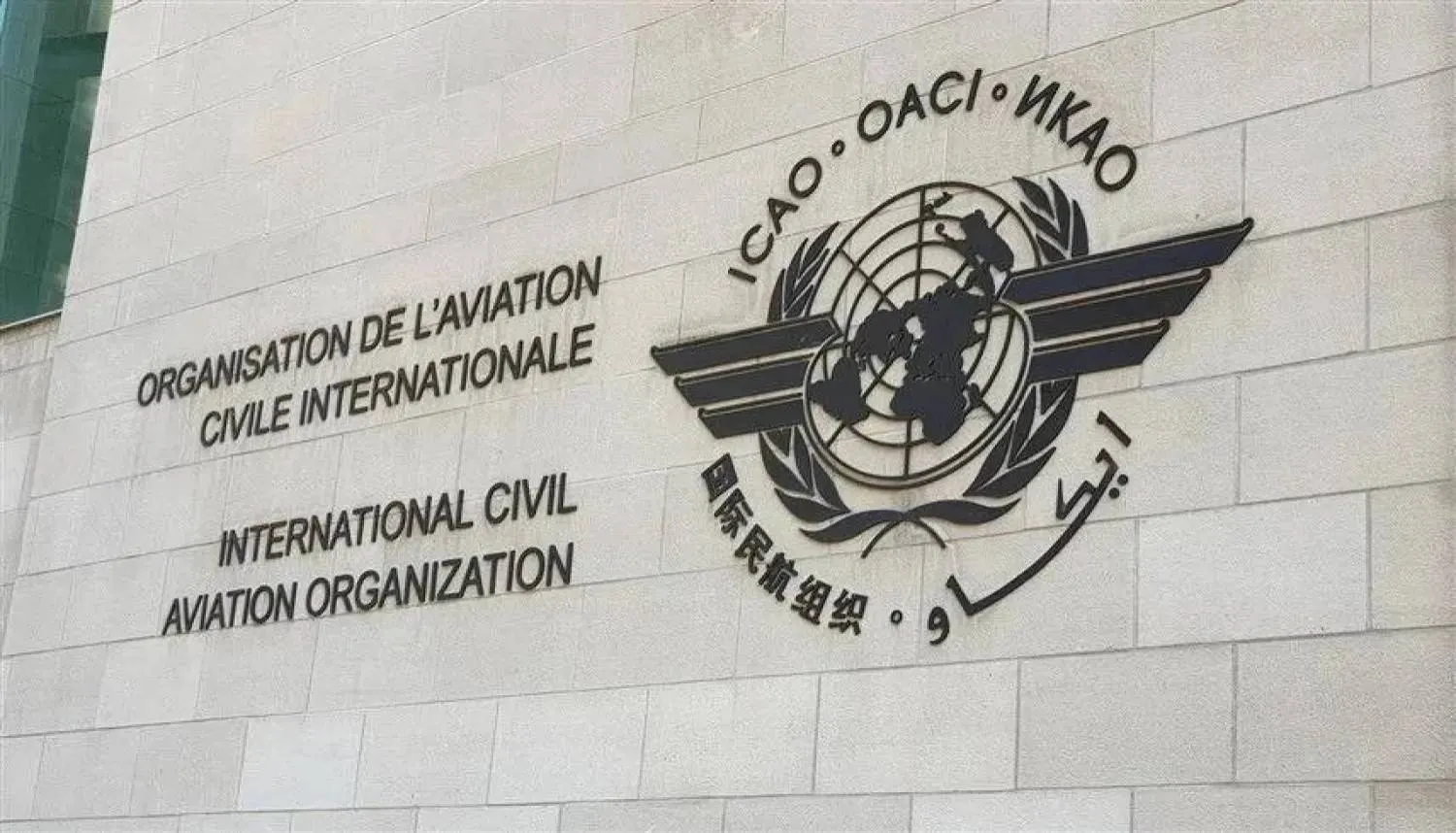
ICAO Condemns Iranian Attacks on Civil Aviation

The Council of the International Civil Aviation Organization (X) 
TT

ICAO Condemns Iranian Attacks on Civil Aviation

The Council of the International Civil Aviation Organization (X) 

The Council of the International Civil Aviation Organization (ICAO) on Sunday adopted at its 237th session a resolution condemning Iranian attacks targeting several countries in the region.

The resolution backs a paper presented on March 19 by Saudi Arabia, the United Arab Emirates, Jordan, Bahrain, Kuwait, Qatar, Oman, Egypt, and Morocco.

The decision came as a step reflecting a firm international opposition to threats against the safety and security of civil aviation. It included a range of measures, most notably condemning the attacks, calling for their immediate cessation, referring the text of the resolution to the relevant UN bodies, notifying member states, and closely monitoring developments to ensure the continued safety of civil aviation.

During the meeting, Permanent Representative of Saudi Arabia to the ICAO Council Mohammed Sami Habib reaffirmed the Kingdom’s full commitment to the Chicago Convention and its continued support for the smooth operation of air traffic in coordination with brotherly states and ICAO.

Habib emphasized that Saudi airspace and airports remain fully prepared to assist commercial carriers and facilitate evacuation flights in accordance with the highest safety standards.

He underscored the importance of all states adhering to the provisions of the Chicago Convention and refraining from using civil aviation for purposes other than those for which it is intended.

The Permanent Representative then stressed that the Kingdom is not a party to the ongoing conflict and has, since its outset, called for deescalation, restraint, and the prioritization of diplomatic solutions.

He highlighted UN Security Council Resolution 2817, issued on March 11, which condemned Iranian attacks on Gulf Cooperation Council countries and Jordan, underscoring growing international recognition of the threats facing regional security and stability.

Habib reiterated the Kingdom’s strongest condemnation of attacks targeting airspace and civil aviation infrastructure.

He said such actions constitute a flagrant violation of the UN Charter and the Convention on International Civil Aviation (Chicago Convention, 1944) and pose a direct threat to air navigation safety.

He also called on Iran to immediately and unconditionally cease such actions.

The ICAO council’s resolution noted that Iranian attacks since February 28, using missiles and drones, constitute a clear violation of the Chicago Convention and the principle of full state sovereignty over national airspace. It also referenced UN Security Council Resolution 2817.

The council’s resolution highlighted that these attacks have created serious risks for civil aviation, as projectile paths intersected flight corridors without the issuance of required navigational warnings.

This forced affected states to take precautionary measures, including closing parts of their airspace and rerouting flights, disrupting international air traffic operations.

The council also condemned attacks on civilian infrastructure and airports, emphasizing that such actions represent a breach of international law and a threat to international peace and security.


MWL Condemns Attacks on UAE Embassy in Damascus

The Muslim World League (MWL) logo
TT

MWL Condemns Attacks on UAE Embassy in Damascus

The Muslim World League (MWL) logo

The Muslim World League (MWL) strongly condemned the attacks targeting the UAE Embassy and the residence of its head of mission in the Syrian capital, Damascus, the Saudi Press Agency said on Sunday.

In a statement, the Muslim World League reiterated its firm rejection and condemnation of attacks and acts of sabotage against civilian and diplomatic facilities and their personnel, emphasizing that such acts constitute violations of international laws and agreements that guarantee their protection.