


The Goalkeepers’ Union: Why Do They Stick up for Each Other?

There are no union meetings, subs or walkouts, but goalies do share a sense of solidarity

James Shea
James Shea
TT

The Goalkeepers’ Union: Why Do They Stick up for Each Other?

James Shea
James Shea

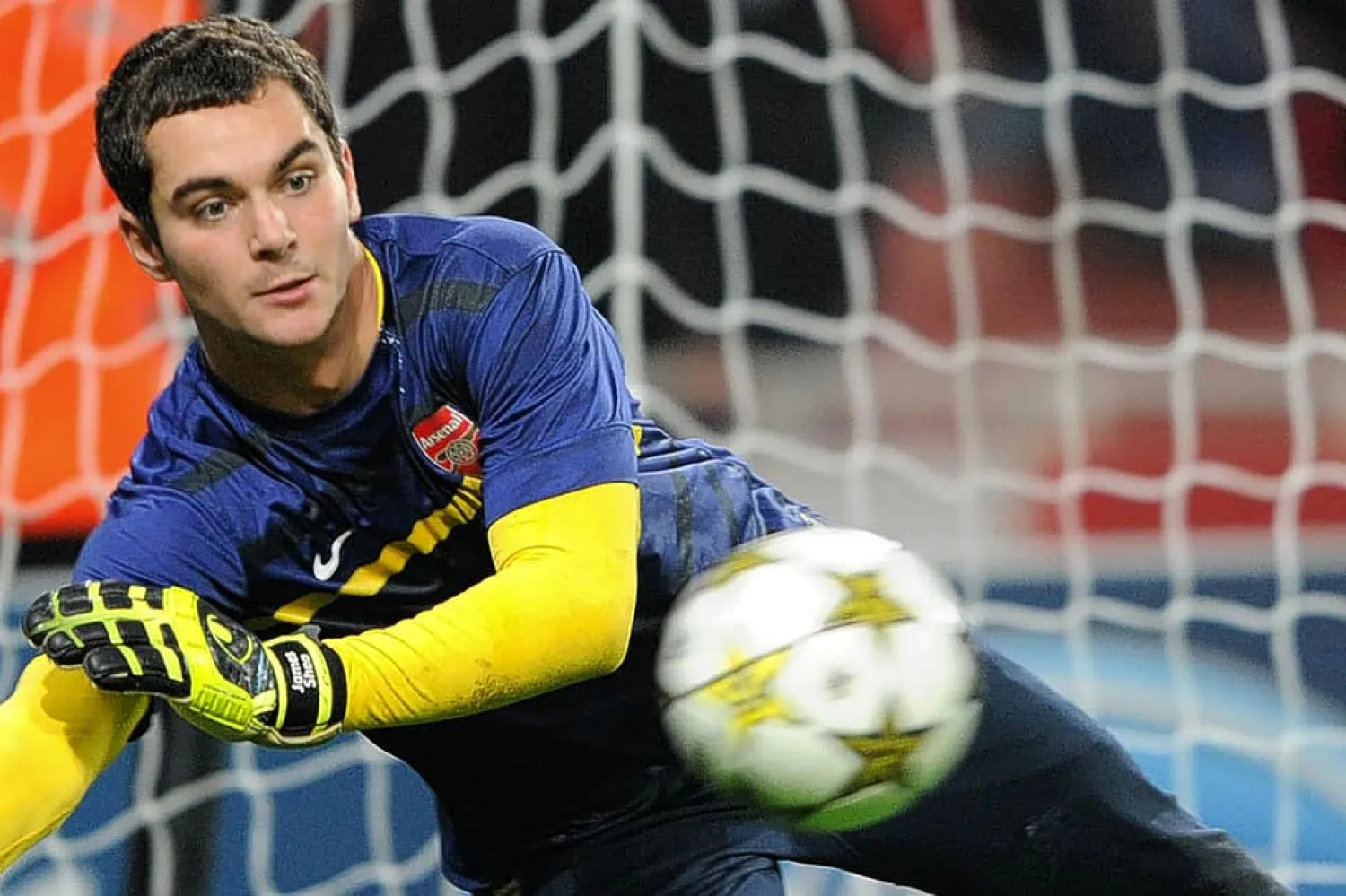
James Shea tells a story that captures the fraternal spirit among goalkeepers. Back when he was a novice at Arsenal – before his meandering path from the wilds of non-league took him to his current club, Luton Town – new gloves felt like a luxury and, on an academy keeper’s salary, were still a significant expense. Shea asked Lukasz Fabianski if he could borrow a pair for training. A few days later, Fabianski turned up with a big box full of gloves with Shea’s name emblazoned on them.

It was far from a one-off act of kindness. There are many goalkeepers with similar stories. Football is so often a dog-eat-dog environment but many keepers testify to a different moral code. There is even a term for this tendency towards mutual support: the goalkeepers’ union. There are no subs, no union meetings, and no walkouts, but many will bear witness to the sense of solidarity between the sticks.

“It’s a bit of a cliche, but goalkeepers are effectively playing a different sport,” says Richard Lee, a former Premier League goalkeeper with Watford and Blackburn Rovers. “Naturally, there’s that camaraderie between keepers. You support each other and you can empathize when other goalkeepers are going through a tough time.”

When it comes to criticism, many feel that only those within the goalkeepers’ union really get it. “The position of goalkeeper, even now, is quite misunderstood,” says Lee. “From a goalkeeper’s perspective, if you give an opinion, it is only ever going to be an amateur opinion if you haven’t played the position.”

That applies to punditry, commentary, and mainstream media analysis, which is why Lee started a keeper-oriented podcast called – surprise, surprise – The Goalkeepers’ Union. Co-creator Matthew Beadle, himself a willing goalie as a kid, voices his own frustrations about the way goalkeepers are under-represented on TV. “There’s now saturation analysis in football,” he says. “But there’s rarely ever a goalkeeper sitting on a panel that is able to say: ‘This is why this keeper has done that. Here’s why he may have made an error.’”

Without an expert in the room, former outfield players fall back on platitudes: “beaten at his near post”; “he’s flapped at that”; “a good height for a goalkeeper” and so on. Lee points out that, whereas Sky Sports have Ref Watch – a program in which a former referee will dissect the big decisions of the day – there is no equivalent for keepers. “Plus, now there are thousands of people on social media who see themselves as goalkeeping experts, telling you what you should have done. It’s tough so goalkeepers do tend to band together. It’s down to that appreciation of the position.”

The same misconceptions can also apply to teammates and even those in the dugout. James Shaw, who plays for Tooting & Mitcham United in the Isthmian League, agrees that goalkeeping is a misunderstood art. Asked about the goalkeepers’ union, he says: “It’s almost like Fight Club. You try to stick up for each other, because no matter what club it is, up and down the country, the goalkeeper is getting stick for something for no apparent reason. Every training session, every game, I get a right-winger or someone asking: ‘Why didn’t you do this? Why didn’t you come out for that?’ It’s like: ‘If I actually took you through the five decisions I had to make in that half a second, even then you probably wouldn’t understand.’”

Even though the demands of the position are changing – even at non-league level, keepers increasingly need to be comfortable in possession and able to play with their feet – keepers get minimal recognition. “Goalkeepers often don’t even get credit for being footballers,” says Shaw. “People treat you as if you’re just the idiot who stands in goal.” Then there is the brutal nature of their mistakes, with managers breathing fire on keepers who let in a goal after saving five or six.

Goalkeeping is a solitary art, which brings its own unique psychological challenges. The Russian author Vladimir Nabokov idealized the goalkeeper as “the lone eagle”, which goes some way to explaining why keepers feel a distant kinship.

“At times it’s like you’re friends, even though you don’t know the opposition keeper at all,” says Shaw. “It’s like meeting a long-lost brother. You know them, you know they’re related to you somehow and you don’t really know anything about them, but you can appreciate that you’re probably dealing with the same sort of things.”

In the Premier League that can mean standing alone in front of a sheer wall of noise. In non-league it can mean facing down intensely personal abuse from a handful of fans. And for every goalkeeper it means long spells waiting in the wind, rain, sleet, and snow, punctured by sudden rushes of desperate adrenaline.

Goalkeepers also train in tight-knit units, often sharing a small pool of coaches who, as ex-keepers themselves, serve as the invisible glue that holds the union together. While that contributes to their closeness, it also breeds a fierce competitiveness, and rival keepers cannot be entirely selfless. “If a mistake happens and your team concedes, you obviously feel sorry for them but you’re also like: ‘I could be back in next week,’” says Shaw. “That’s a cynical way of looking at it, but sometimes you need to look after No 1.”

If that is a tension within the goalkeepers’ union, most manage to keep it under wraps. “It’s just the reality, there’s only one position on the field,” says Lee. “I was with Brad Friedel at Blackburn and the guy just never gets injured. Peter Enckelman was there with him for four years and barely played a game of football.”

If anything, the possibility of spending weeks and months on the sidelines, waiting, is just another shared psychological challenge that brings keepers together. Even when pitted against each other, then, the spirit of the goalkeepers’ union remains and is symbolized, after training or the final whistle, by the clasping of gloved fists.

(The Guardian)


Hospital: Vonn Had Surgery on Broken Leg from Olympics Crash

This handout video grab from IOC/OBS shows US Lindsey Vonn crashing during the women's downhill event at the Milano Cortina 2026 Winter Olympic Games on February 8, 2026. (Photo by Handout / various sources / AFP)
TT

Hospital: Vonn Had Surgery on Broken Leg from Olympics Crash

This handout video grab from IOC/OBS shows US Lindsey Vonn crashing during the women's downhill event at the Milano Cortina 2026 Winter Olympic Games on February 8, 2026. (Photo by Handout / various sources / AFP)

Lindsey Vonn had surgery on a fracture of her left leg following the American's heavy fall in the Winter Olympics downhill, the hospital said in a statement given to Italian media on Sunday.

"In the afternoon, (Vonn) underwent orthopedic surgery to stabilize a fracture of the left leg," the Ca' Foncello hospital in Treviso said.

Vonn, 41, was flown to Treviso after she was strapped into a medical stretcher and winched off the sunlit Olimpia delle Tofane piste in Cortina d'Ampezzo.

Vonn, whose battle to reach the start line despite the serious injury to her left knee dominated the opening days of the Milano Cortina Olympics, saw her unlikely quest halted in screaming agony on the snow.

Wearing bib number 13 and with a brace on the left knee she ⁠injured in a crash at Crans Montana on January 30, Vonn looked pumped up at the start gate.

She tapped her ski poles before setting off in typically aggressive fashion down one of her favorite pistes on a mountain that has rewarded her in the past.

The 2010 gold medalist, the second most successful female World Cup skier of all time with 84 wins, appeared to clip the fourth gate with her shoulder, losing control and being launched into the air.

She then barreled off the course at high speed before coming to rest in a crumpled heap.

Vonn could be heard screaming on television coverage as fans and teammates gasped in horror before a shocked hush fell on the packed finish area.

She was quickly surrounded by several medics and officials before a yellow Falco 2 ⁠Alpine rescue helicopter arrived and winched her away on an orange stretcher.


Meloni Condemns 'Enemies of Italy' after Clashes in Olympics Host City Milan

Demonstrators hold smoke flares during a protest against the environmental, economic and social impact of the Milano-Cortina 2026 Winter Olympics in Milan, Italy, February 7, 2026. REUTERS/Kevin Coombs
TT

Meloni Condemns 'Enemies of Italy' after Clashes in Olympics Host City Milan

Demonstrators hold smoke flares during a protest against the environmental, economic and social impact of the Milano-Cortina 2026 Winter Olympics in Milan, Italy, February 7, 2026. REUTERS/Kevin Coombs

Italian Prime Minister Giorgia Meloni has condemned anti-Olympics protesters as "enemies of Italy" after violence on the fringes of a demonstration in Milan on Saturday night and sabotage attacks on the national rail network.

The incidents happened on the first full day of competition in the Winter Games that Milan, Italy's financial capital, is hosting with the Alpine town of Cortina d'Ampezzo.

Meloni praised the thousands of Italians who she said were working to make the Games run smoothly and present a positive face of Italy.

"Then ⁠there are those who are enemies of Italy and Italians, demonstrating 'against the Olympics' and ensuring that these images are broadcast on television screens around the world. After others cut the railway cables to prevent trains from departing," she wrote on Instagram on Sunday.

A group of around 100 protesters ⁠threw firecrackers, smoke bombs and bottles at police after breaking away from the main body of a demonstration in Milan.

An estimated 10,000 people had taken to the city's streets in a protest over housing costs and environmental concerns linked to the Games.

Police used water cannon to restore order and detained six people.

Also on Saturday, authorities said saboteurs had damaged rail infrastructure near the northern Italian city of Bologna, disrupting train journeys.

Police reported three separate ⁠incidents at different locations, which caused delays of up to 2-1/2 hours for high-speed, Intercity and regional services.

No one has claimed responsibility for the damage.

"Once again, solidarity with the police, the city of Milan, and all those who will see their work undermined by these gangs of criminals," added Meloni, who heads a right-wing coalition.

The Italian police have been given new arrest powers after violence last weekend at a protest by the hard-left in the city of Turin, in which more than 100 police officers were injured.


Liverpool New Signing Jacquet Suffers 'Serious' Injury

Soccer Football - Ligue 1 - RC Lens v Stade Rennes - Stade Bollaert-Delelis, Lens, France - February 7, 2026  Stade Rennes' Jeremy Jacquet in action REUTERS/Benoit Tessier
Soccer Football - Ligue 1 - RC Lens v Stade Rennes - Stade Bollaert-Delelis, Lens, France - February 7, 2026 Stade Rennes' Jeremy Jacquet in action REUTERS/Benoit Tessier
TT

Liverpool New Signing Jacquet Suffers 'Serious' Injury

Soccer Football - Ligue 1 - RC Lens v Stade Rennes - Stade Bollaert-Delelis, Lens, France - February 7, 2026  Stade Rennes' Jeremy Jacquet in action REUTERS/Benoit Tessier
Soccer Football - Ligue 1 - RC Lens v Stade Rennes - Stade Bollaert-Delelis, Lens, France - February 7, 2026 Stade Rennes' Jeremy Jacquet in action REUTERS/Benoit Tessier

Liverpool's new signing Jeremy Jacquet suffered a "serious" shoulder injury while playing for Rennes in their 3-1 Ligue 1 defeat at RC Lens on Saturday, casting doubt over the defender’s availability ahead of his summer move to Anfield.

Jacquet fell awkwardly in the second half of the ⁠French league match and appeared in agony as he left the pitch.

"For Jeremy, it's his shoulder, and for Abdelhamid (Ait Boudlal, another Rennes player injured in the ⁠same match) it's muscular," Rennes head coach Habib Beye told reporters after the match.

"We'll have time to see, but it's definitely quite serious for both of them."
Liverpool agreed a 60-million-pound ($80-million) deal for Jacquet on Monday, but the 20-year-old defender will stay with ⁠the French club until the end of the season.

Liverpool, provisionally sixth in the Premier League table, will face Manchester City on Sunday with four defenders - Giovanni Leoni, Joe Gomez, Jeremie Frimpong and Conor Bradley - sidelined due to injuries.
