

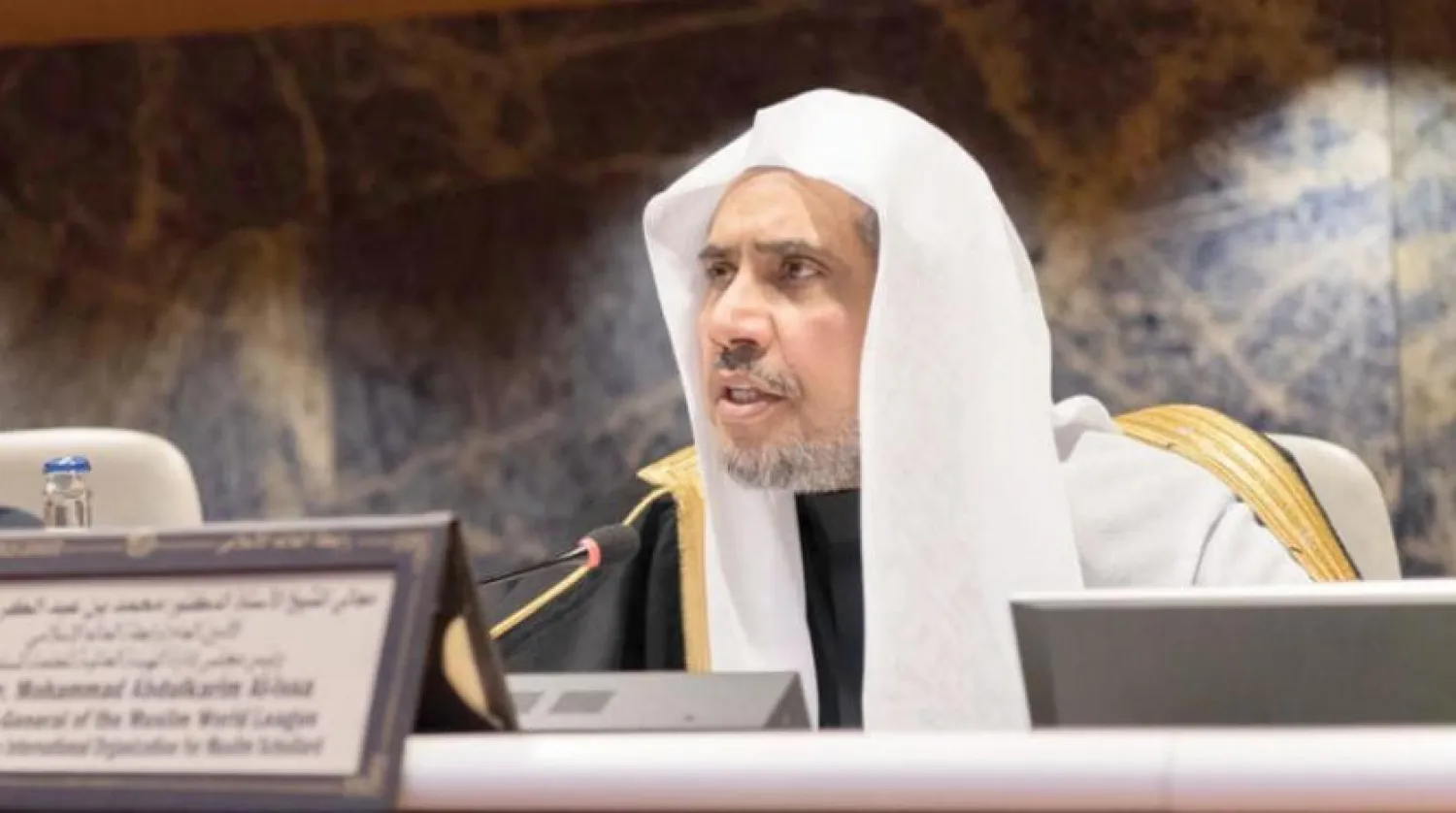

Al-Issa Launches Initiative to Protect Youth From Extremism, Spread Tolerance

 Al-Issa at the international conference for youth protection (Asharq Al-Awsat)
Al-Issa at the international conference for youth protection (Asharq Al-Awsat)
TT

Al-Issa Launches Initiative to Protect Youth From Extremism, Spread Tolerance

 Al-Issa at the international conference for youth protection (Asharq Al-Awsat)
Al-Issa at the international conference for youth protection (Asharq Al-Awsat)

The Muslim World League (MWL) announced an initiative for “protecting youths from extreme and violent ideas and its mechanisms of implementation” which was launched by Secretary-General Sheikh Dr. Mohammed al-Issa. This came at the UN headquarters in Geneva during an international conference that was attended by prime ministers, parliament speakers, UN ambassadors, and prominent religious and intellectual figures and academics.

Al- Issa said the initiative aims to protect youths from ideas of violent extremism and those that incite them to commit acts of violence. He stressed that educational institutions all over the world have the responsibility to protect youths from extremist ideologies in all of their forms by incorporating into their curriculums “interactive activities” that show how disagreement, diversity, and pluralism are inevitable, and that, if put in a positive framework, they can enrich humanity and unity.

He also said it was important to reflect how religious, ethnic and ideological conflicts danger social harmony and world peace.

Al-Issa stressed the importance of filtering the rhetoric directed at young people, making sure they are not exposed to a language which fuels conflict and hatred and stirs hostility and racism. Instead, the principle of equality should spread, emphasizing the importance of tolerance and forgiveness and rejecting hatred, racism, and marginalization.

He called on the authorities in each country to establish programs that strengthen the role played by families in cultivating sound mentalities in children and youths and to establish a plethora of initiatives in which various institutions corporate to support religious, cultural and ethnic harmony in diverse countries.

Al-Issa also stressed that religious and intellectual institutions should feel a sense of responsibility with regard to countering extremism, terrorism, and violence. This should be done by delving into the details of the ideology and unpacking it clearly and deeply. He also emphasized that “it is vital that we prevent the exportation or importation of fatwas and religious ideas out of their context, stressing that extremism is to be condemned in all cases. 

For his part, the Grand Mufti of Sheikh Dr. Shawki Allam confirmed that terrorists’ ambitions went as far as establishing armies and taking over modern technological tools.

Meanwhile, the president of the Supreme Islamic Council of Algeria Bouabdallah Mohamed Gholam Allah thanked the MWL, which plays an important role in spreading real Islamic values.

 Monsignor Khaled Okasha, a member of the Pontifical Council for Interreligious Dialogue in the Vatican State, said the Makkah Document will be a beacon of hope for the promotion of peace and harmony around the world and the confrontation of extremist and hateful rhetoric.



Somaliland Denies It Will Host Palestinians, Israeli Base

This picture taken on November 7, 2024 shows a general view of the city of Hargeisa, capital and largest city of the self-proclaimed Republic of Somaliland. (AFP)
TT

Somaliland Denies It Will Host Palestinians, Israeli Base

This picture taken on November 7, 2024 shows a general view of the city of Hargeisa, capital and largest city of the self-proclaimed Republic of Somaliland. (AFP)

The breakaway region of Somaliland on Thursday denied allegations by the Somali president that it would take resettled Palestinians or host an Israeli military base in exchange for Israel recognizing its independence.

Israel last week became the first country to recognize Somaliland as an "independent and sovereign state", triggering protests across Somalia.

On Wednesday, Somali President Hassan Sheikh Mohamud, citing intelligence reports, told Al Jazeera that Somaliland had accepted three conditions from Israel: the resettlement of Palestinians, the establishment of a military base on the Gulf of Aden, and joining the Abraham Accords to normalize ties with Israel.

Somaliland's foreign ministry denied the first two conditions.

"The Government of the Republic of Somaliland firmly rejects false claims made by the President of Somalia alleging the resettlement of Palestinians or the establishment of military bases in Somaliland," it said in a statement on X.

It said the deal was "purely diplomatic".

"These baseless allegations are intended to mislead the international community and undermine Somaliland's diplomatic progress," it added.

But analysts say an alliance with Somaliland is especially useful to Israel for its strategic position on the Bab el-Mandeb Strait, close to the Iran-backed Houthi in Yemen, who have struck Israel repeatedly since the start of the Gaza war.

Somaliland unilaterally declared independence in 1991 and has enjoyed far more peace than the rest of conflict-hit Somalia, establishing its own elections, currency and army.

Its location alongside one of the world's busiest shipping lanes has made it a key partner for foreign countries.


STC Says Handing over Positions to National Shield Forces in Yemen's Hadhramaut, Mahra

National Shield forces in Hadhramaut. (National Shield forces)
TT

STC Says Handing over Positions to National Shield Forces in Yemen's Hadhramaut, Mahra

National Shield forces in Hadhramaut. (National Shield forces)

Southern Transitional Council (STC) forces in Yemen began on Thursday handing over military positions to the government’s National Shield forces in the Hadhramaut and al-Mahra provinces in eastern Yemen.

Local sources in Hadhramaut confirmed to Asharq Al-Awsat that the handover kicked off after meetings were held between the two sides.

Speaking on condition of anonymity, the sources said the National Shield commanders met with STC leaderships to discuss future arrangements. The sourced did not elaborate, but they confirmed that Emirati armored vehicles, which had entered Balhaf port in Shabwah were seen departing on a UAE vessel, in line with a Yemeni government request.

The National Shield is overseen by Presidential Leadership Council (PLC) Chairman Dr. Rashad al-Alimi.

A Yemeni official described Thursday’s developments as “positive” step towards uniting ranks and legitimacy against a common enemy – the Houthi groups.

The official, also speaking on condition of anonymity, underscored to Asharq Al-Awsat the importance of “partnership between components of the legitimacy and of dialogue to resolve any future differences.”

Meanwhile, on the ground, Yemeni military sources revealed that some STC forces had refused to quit their positions, prompting the forces to dispatch an official to Hadhramaut’s Seiyun city to negotiate the situation.


Flash Floods Triggered by Heavy Rains in Afghanistan Kill at Least 17 People

Smog is seen over Kabul, Afghanistan, 31 December 2025. (EPA)
TT

Flash Floods Triggered by Heavy Rains in Afghanistan Kill at Least 17 People

Smog is seen over Kabul, Afghanistan, 31 December 2025. (EPA)

The season’s first heavy rains and snowfall ended a prolonged dry spell but triggered flash floods in several areas of Afghanistan, killing at least 17 people and injuring 11 others, a spokesman for Afghanistan’s national disaster management authority said Thursday.

The dead included five members of a family in a property where the roof collapsed on Thursday in Kabkan, a district in the Herat province, according to Mohammad Yousaf Saeedi, spokesman for the Herat governor. Two of the victims were children.

Most of the casualties have occurred since Monday in districts hit by flooding, and the severe weather also disrupted daily life across central, northern, southern, and western regions, according to Mohammad Yousaf Hammad, a spokesman for Afghanistan's National Disaster Management Authority.

Hammad said the floods also damaged infrastructure in the affected districts, killed livestock, and affected 1,800 families, worsening conditions in already vulnerable urban and rural communities.

Hammad said the agency has sent assessment teams to the worst-affected areas, with surveys ongoing to determine further needs.

Afghanistan, like neighboring Pakistan and India, is highly vulnerable to extreme weather events, particularly flash floods following seasonal rains.

Decades of conflict, poor infrastructure, deforestation, and the intensifying effects of climate change have amplified the impact of such disasters, especially in remote areas where many homes are made of mud and offer limited protection against sudden deluges.

The United Nations and other aid agencies this week warned that Afghanistan is expected to remain one of the world’s largest humanitarian crises in 2026. The UN and its humanitarian partners launched a $1.7 billion appeal on Tuesday to assist nearly 18 million people in urgent need in the country.