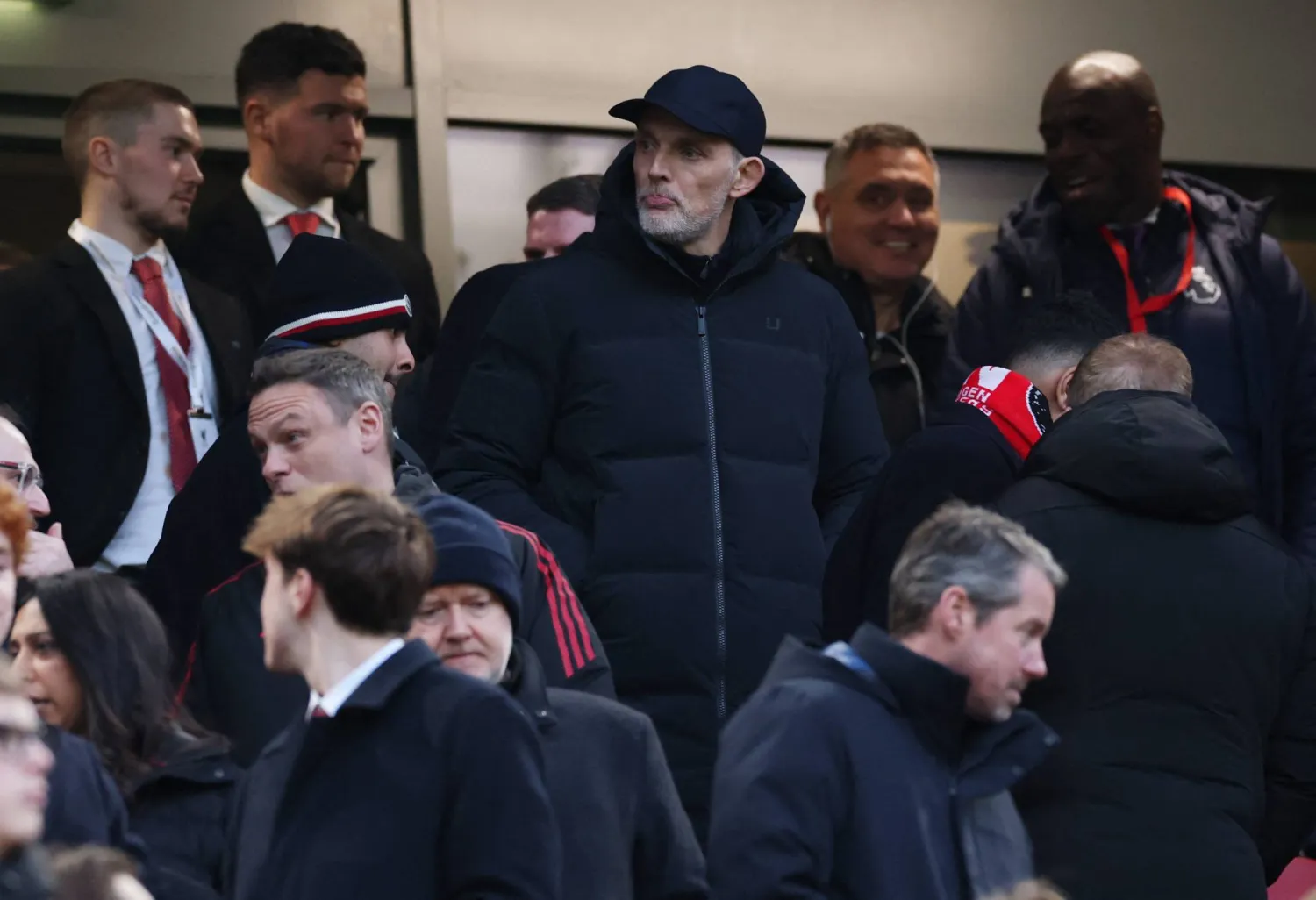
The Watford manager, who recently lost his mother, says protecting people’s health during the coronavirus crisis is more important than his side’s relegation fight
“Sometimes I just need solitude, which is really rather nice,” Nigel Pearson says in a deserted lounge at Vicarage Road on a quiet Tuesday afternoon. The coronavirus pandemic surrounds us but Pearson has spent an hour discussing a dizzying range of subjects, including his mental health during a relegation dogfight as well as the remarkable turnaround he has engineered since taking over as Watford’s manager in early December. Watford, having snapped Liverpool’s long unbeaten record with a 3-0 thrashing two weeks ago, are just above the relegation zone. Pearson knows their position remains precarious but he underlines far more serious concerns about coronavirus.
Pearson is also dealing with the rawest stages of grief, having lost his mother in January, but he is engaging company whether talking about emotional intelligence, attacking football or his Spotify playlists. Amid some diverse choices, Pearson also listens to classical music. He is interested in Shostakovich and his liking for solitude rises up again as he says of the Russian composer: “I wouldn’t listen to Shostakovich with other people.”
Pearson is a very good manager. He has a gift for simplifying the game and inspiring his team with a blend that he says is both brutal and attuned to his players’ shifting emotions. But he is perhaps more complex than any other manager in English football. There is deep introspection at the heart of the 56-year-old – and even Pearson seems amused by his need for some seclusion from the Premier League rollercoaster.
We have to keep this in perspective, but for Liverpool it would be such a tragedy not to conclude the season
“Sometimes I just need to be out in nature,” he continues. “It’s amazing how much I need time on my own. We’ve got a place in Devon and I joined the golf club there. It’s very friendly and, as a new member, you get people saying: ‘Come have a round with us.’ I think: ‘No, actually, I just wanna hit some balls on my own.’ It makes me sound a right miserable sod. But it’s just me finding some quiet time.”
Three days later, on Friday morning, we talk again. The Premier League has just announced a suspension of all matches until 4 April. Our earlier conversation about seclusion seems ironic now Pearson faces the stark possibility one of his players has the virus and that he and many others at the club could be facing a period of self-isolation. “Yeah, but it’s nicer to choose when and where you are isolated.” Pearson says wryly. “But for now it’s the right decision and it’s relatively proactive – even if it was made under duress.”
Pearson is still mulling over his disappointment after watching Boris Johnson shuffling around the issue and avoiding any decision in regard to cancelling sporting events. “I was totally underwhelmed by him last night,” Pearson says of the prime minister, “and by the lack of leadership and any clear messages. At times like this we need strong leadership and it’s important people have as much information as possible and that any decisions are made for their well-being. They need to be made for humanitarian rather than financial reasons. Of course, the economy is going to be hit but that can’t be the main priority.”
I ask Pearson what he and his players will do this weekend now Saturday’s game against Leicester City, his former club, has been suspended. “We’re waiting for the report on one player who is being tested for the virus. The players are not expected to report for training until next Thursday at the earliest. But we might have to reassess that. For now we just want them to look after themselves and their families at home – and also to make sure that if they feel ill they report it straight away. We’ve just got to be vigilant and minimise the risk for everyone.”
Pearson had told me earlier in the week that the idea of playing games behind closed doors was “an absolute nonsense” and that it also put players, coaches and officials at unnecessary risk. In the likely event the pandemic will have escalated by 4 April, should the season be abandoned? “Well, the longer it goes on the more difficult it will be to conclude the season. We have to keep this in perspective, of course, but for Liverpool it would be such a tragedy not to conclude the season. But let’s not get ahead of ourselves. It could be that when we get to April we may be able to resume and go into the summer months. How it looks for football pales – not into insignificance – but we need perspective on real-life issues. But, yes, purely on a football basis it’s going to throw up problems we’ve not experienced in this country before.”
The result of the test on the Watford player suspected of having the virus will be known by Saturday at the latest, so is Pearson steeling himself for self-isolation? “I would follow the recommendations like everyone else. It depends on the outcome of the test and that will have a knock-on effect on how I behave. We’re just sitting tight at the moment.”
Stepping away from coronavirus, Pearson reflects on the hidden impact of management on his mental health. “It can be quite damaging. I know I’m good at this job but certain aspects aren’t very good for me. It can be absolutely draining emotionally and mentally. You then can neglect yourself. Those are the dangerous times.”
How does Pearson replenish himself when there is always some Premier League drama to face? “I have things I enjoy doing on my own. I’ve also got better in talking to friends. One of my strengths is dealing with people but I like to be alone as well. I’ve noticed being back in football that, after some anonymity, people recognise you again. It’s a pain in the neck. My wife said to me yesterday, on a walk: ‘When you wore glasses that used to be quite a good disguise. But now people recognise you straight away.’ I’m going to have to wear a false beard and moustache.”
During his last stint at Leicester, when he saved them from relegation the season before they shocked everyone and won the Premier League in 2016, Pearson could be prickly. But losing his job in June 2015 broadened his vision. He discovered hiking and painting. He read and worked on his history degree. After a year away Pearson went back into football and soon fell out with Mel Morris, the chairman of Derby County, in October 2017. For the next 11 months he drew breath away from the game before accepting an offer to manage OH Leuven in the Belgian second division. Pearson “loved” his time in Belgium, where he helped design the kit and managed a team in front of average crowds of 4,500 for 17 months.
His latest break lasted 10 months and three days before, on 6 December 2019, with Watford bottom of the table and having already fired two managers this season, Pearson accepted an unexpected invitation from Vicarage Road. “I was curious and thought: ‘Let’s give it a real crack.’ People said: ‘It’s a bit of a risk.’ But where’s the risk? A club that’s got eight points and might score a goal every 400 minutes? You risk a relegation on your CV. The real risk is you regret not having a go.”
In his first game in charge, away to Liverpool, Watford played well, despite losing 2-0. They then won four and drew one of the next five games, beating Manchester United and Wolves while looking a different team. Before his arrival they had won one league game out of 13 and their goal difference was -18. How did he rejuvenate a moribund team?
“Being positive. Giving direction. Simplifying. Encouraging people to look at what’s possible. I get worn down by people telling you what you can’t do or what the problems are. Go on, give us a solution then. As I say to the players: ‘I pick you for what you can do, not what you can’t do.’ I make people feel part of a journey to which they can contribute.”
Pearson was once depicted as a ranting old-school manager – an English gaffer that gets called “a proper football man” – but the reality is different. He is a smart tactician who also stresses the importance of emotional intelligence. “It’s fundamental to our success because footballers are people first and foremost. It’s important that you’ve got different types of people and it’s my job to bring the best out of them. But I don’t want to sound as if it’s all touchy-feely stuff. Sometimes it can be blunt and brutal.”
Yet Pearson brings a light touch to his work. Before they outran, outworked and simply outplayed Liverpool, Pearson eased off in training that week. Watford did understated sessions, including a day of yoga and swimming. “It was spontaneous. As we went through the week we thought: ‘Let’s do something different.’ But it’s got to have authenticity.”
Pearson gave Watford more solidity when he arrived by changing to 4-2-1-3 – with the idea that a more structured defence would unleash the team’s attacking potential. Watford are fourth from bottom and, should this campaign recommence, Pearson insists they will keep attacking. This means he often replaces a defensive midfielder with a forward, even if Watford are leading. There have been 3-0 wins over Aston Villa, even after going down to 10 men, and Liverpool but they conceded last-minute winners at Villa Park and at home to Everton.
“We need to win games,” Pearson says. “That’s not to say we go gung-ho and take away the importance of solidity. But the way in which you play is dictated by what you have available and the situation you’re in. We have pace and good attacking players but we can’t be negligent. Sometimes we have to recognise that a point is great. But to give belief and hope we have to be positive and aggressive.
“We’re in a relegation dogfight and we’ve worked exceptionally hard to get back in contact with teams. Now we’ve done that, results like last weekend’s loss against Palace can feel a missed opportunity. But we can’t dwell on disappointments. We didn’t take our chances against Palace but we played OK. I have to detach myself from this emotional rollercoaster that everyone else is on.”
The more human backdrop is shaped by the fact Pearson lost his mum unexpectedly 10 weeks ago. He highlights the support of his wife, Nicky, and their adult son and daughter, James and Hannah, but he admits: “I don’t know whether I’ve found the right way of grieving yet. We’re making sure we all rally around my dad. They were together 64 years. A long, long time. Mum was such an energetic, dynamic 84-year-old. She was the dominant figure in the family and so it’s been difficult. It would’ve been her 85th birthday next Wednesday. That’s when we plan to scatter her ashes. So it’s still very, very raw.
“It happened on 28 December, the day of the Villa game, and straight after James said: ‘We need to get ready quickly.’ My mum had had a fall. The next few days were just backwards and forwards on the motorway. She died just a few days later, on the third. It was a huge shock. So now the focal point is my dad. I’ve just lost my mum and I certainly don’t want to lose my dad to [coronavirus]. It’s going to be a further worry because the elderly are more at risk.”
Pearson visited his father on Monday evening, before the threat that the virus had reached the Watford camp had emerged. Now he knows that a fellow manager, Arsenal’s Mikel Arteta, has coronavirus, is Pearson concerned he may also be affected and have passed it on to his 86-year-old dad? “It’s reasonable to presume that we may all have come into contact with someone who has got it. But it’s very difficult to quantify how many have been exposed to it. That’s not scaremongering. It’s just how it is.”
Is Pearson finding a balance between looking after others both inside and outside the club while taking care of himself? “I hope so. But the reality of it is, like a lot of people, I’m good at giving advice, but not so much when taking it. I’m trying to enjoy the job a bit more. But that’s never easy because I have a love-hate relationship with it.”
Beyond the travails of a pandemic virus and a relegation battle, Pearson relaxes and shares a couple of his many pleasurable diversions. “I’ve been enjoying doing the Guardian crossword since I joined Leicester first time around [in 2008]. I try to do the quick ones under 10 minutes. Today’s I did in nine minutes.” Flicking through his Spotify playlist he reads out an eclectic mix stretching from Miles Davis to The Cure, Nick Drake to Chick Corea, Van Morrison to XTC, The Shins to a selection of Icelandic groups, his enjoyment is obvious.
We drift back to football. If the season does resume will Watford survive the drop and can he possibly enjoy the challenge? “Yeah, I believe we will stay up. As for enjoying it I’ve always been a bit of a masochist. I presume you need to be in this job. But I think the pain of it is also a stimulus. I’d rather be bored sometimes – but then there would be other things to worry about. I just know we’re in this situation and I’m going to give everything to get us out of it – so we have to be ready to engage with it again when the opportunity comes along. But, for now, we’ll put relegation worries to one side. The health of all of us is the priority.”
The Guardian Sport