


Lebanon: Bread Crisis Lurks as Bakeries Threaten to Stop Distribution

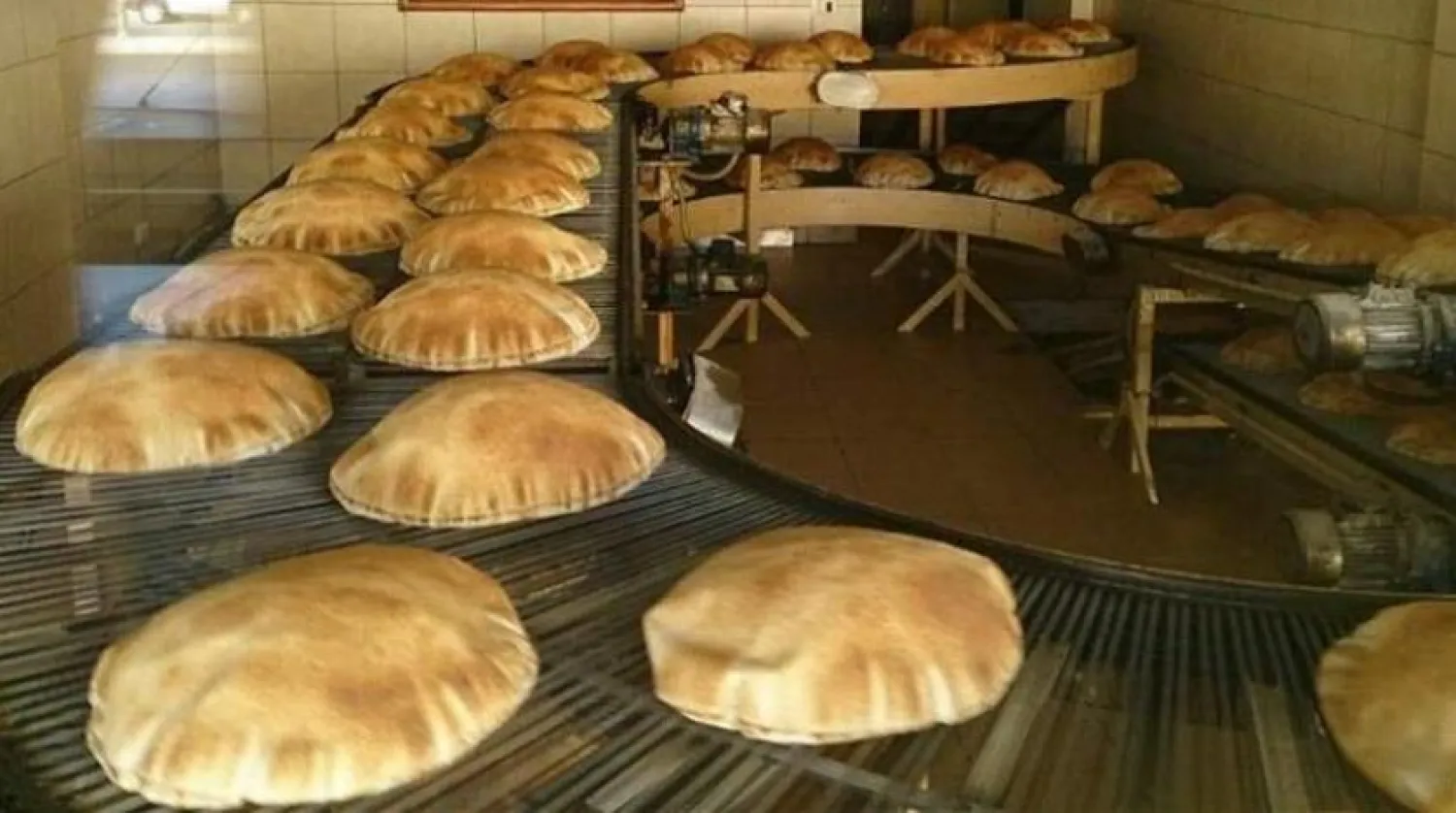
Lebanon’s Union of Bakeries Syndicates announced a decision to sell bread exclusively from bakeries (Photo: NNA)
TT

Lebanon: Bread Crisis Lurks as Bakeries Threaten to Stop Distribution

Lebanon’s Union of Bakeries Syndicates announced a decision to sell bread exclusively from bakeries (Photo: NNA)

Lebanon’s Union of Bakeries Syndicate announced a decision to sell bread exclusively from bakeries, halting the distribution across the country as of Monday.

The decision came in response to Economy Minister Raoul Nehme, who refused calls to raise the price of the bread packs sold in shops in the wake of the sharp fall of the local currency against the US dollar.

While the Union attributed its decision to the rising dollar exchange rate and the scarcity of liquidity in the market, which incurs high production costs, its new decision will lead to the suspension of bread delivery to villages, rural and remote areas and those who do not have vehicles or other means of transport.

Moreover, this escalation came at a time when the government is taking measures to confront the coronavirus epidemic, including restricting the circulation of cars on specific days according to their plate numbers, which also hinders the possibility of daily movement.

The Union also announced that it was “not responsible for the overcrowding in front of bakeries” and the threat of infections this would entail.

In comments to Asharq Al-Awsat, Ali Ibrahim, the head of the Union of Bakeries Syndicates, said the decision came due to the “deteriorating situation and as the (exchange rate of the) dollar is getting out of hand.”

“There is no law that forces us to distribute bread,’’ Ibrahim said, adding that distribution represented 90 percent of their sales, explaining that they sell the pack for LBP 1,100, while people pay LBP 1,500 at the shop.

“We resort to selling straight from bakeries at the official price, with the economy minister refusing to put two prices, between bakeries and shops,” he said.

Former Economy Minister Raed Khoury, who worked on this issue during his tenure, confirmed that with the rise of the dollar exchange rate, profits of bakeries might have declined, but they certainly did not deteriorate to an extent of causing losses to their owners.

“We had started to work on a study on the cost of a loaf of bread, and it certainly needs some amendment today with the exchange rate of the dollar… But some points must be taken into account, including the decline in oil prices and the fact that the value of the salaries of employees decreased with the rise of the dollar,” he explained.

Khoury noted that bakeries, which used to make good profits, now must accept lower revenues to overcome this stage until the prices are corrected based on the results of the studies.


Rescue Teams Search for Survivors in Building Collapse that Killed at Least 2 in Northern Lebanon

A Lebanese flag is pictured, in the aftermath of a massive explosion, in Beirut's damaged port area, Lebanon August 17, 2020. REUTERS/Hannah McKay
TT

Rescue Teams Search for Survivors in Building Collapse that Killed at Least 2 in Northern Lebanon

A Lebanese flag is pictured, in the aftermath of a massive explosion, in Beirut's damaged port area, Lebanon August 17, 2020. REUTERS/Hannah McKay

At least two people were killed and four rescued from the rubble of a multistory apartment building that collapsed Sunday in the city of Tripoli in northern Lebanon, state media reported.

Rescue teams were continuing to dig through the rubble. It was not immediately clear how many people were in the building when it fell.

The bodies pulled out were of a child and a woman, the state-run National News Agency reported.

Dozens of people crowded around the site of the crater left by the collapsed building, with some shooting in the air.

The building was in the neighborhood of Bab Tabbaneh, one of the poorest areas in Lebanon’s second largest city, where residents have long complained of government neglect and shoddy infrastructure. Building collapses are not uncommon in Tripoli due to poor building standards, according to The AP news.

Lebanon’s Health Ministry announced that those injured in the collapse would receive treatment at the state’s expense.

The national syndicate for property owners in a statement called the collapse the result of “blatant negligence and shortcomings of the Lebanese state toward the safety of citizens and their housing security,” and said it is “not an isolated incident.”

The syndicate called for the government to launch a comprehensive national survey of buildings at risk of collapse.


Israel to Take More West Bank Powers and Relax Settler Land Buys

A view of Israeli settlement of Maale Adumim, in the West Bank, Sunday, June 18, 2023. (AP)
TT

Israel to Take More West Bank Powers and Relax Settler Land Buys

A view of Israeli settlement of Maale Adumim, in the West Bank, Sunday, June 18, 2023. (AP)

Israel's security cabinet approved a series of steps on Sunday that would make it easier for settlers in the occupied West Bank to buy land while granting Israeli authorities more enforcement powers over Palestinians, Israeli media reported.

The West Bank is among the territories that the Palestinians seek for a future independent state. Much of it is under Israeli military control, with limited Palestinian self-rule in some areas run by the Western-backed Palestinian Authority (PA).

Citing statements by Finance Minister Bezalel Smotrich and Defense Minister Israel Katz, Israeli news sites Ynet and Haaretz said the measures included scrapping decades-old regulations that prevent Jewish private citizens buying land in the West Bank, The AP news reported.

They were also reported to include allowing Israeli authorities to administer some religious sites, and expand supervision and enforcement in areas under PA administration in matters of environmental hazards, water offences and damage to archaeological sites.

Palestinian President Mahmoud Abbas said the new measures were dangerous, illegal and tantamount to de-facto annexation.

The Israeli ministers did not immediately respond to requests for comment.

The new measures come three days before Prime Minister Benjamin Netanyahu is scheduled to meet in Washington with US President Donald Trump.

Trump has ruled out Israeli annexation of the West Bank but his administration has not sought to curb Israel's accelerated settlement building, which the Palestinians say denies them a potential state by eating away at its territory.

Netanyahu, who is facing an election later this year, deems the establishment of any Palestinian state a security threat.

His ruling coalition includes many pro-settler members who want Israel to annex the West Bank, land captured in the 1967 Middle East war to which Israel cites biblical and historical ties.

The United Nations' highest court said in a non-binding advisory opinion in 2024 that Israel's occupation of Palestinian territories and settlements there is illegal and should be ended as soon as possible. Israel disputes this view.


Arab League Condemns Attack on Aid Convoys in Sudan

A general view shows the opening session of the meeting of Arab foreign ministers at the Arab League Headquarters (Reuters)
TT

Arab League Condemns Attack on Aid Convoys in Sudan

A general view shows the opening session of the meeting of Arab foreign ministers at the Arab League Headquarters (Reuters)

Arab League Secretary-General Ahmed Aboul Gheit strongly condemned the attack by the Rapid Support Forces on humanitarian aid convoys and relief workers in North Kordofan State, Sudan.

In a statement reported by SPA, secretary-general's spokesperson Jamal Rushdi quoted Aboul Gheit as saying the attack constitutes a war crime under international humanitarian law, which prohibits the deliberate targeting of civilians and depriving them of their means of survival.

Aboul Gheit stressed the need to hold those responsible accountable, end impunity, and ensure the full protection of civilians, humanitarian workers, and relief facilities in Sudan.