


Iran’s Revolutionary Guards Threaten to Attack Nuclear Aircraft Carries

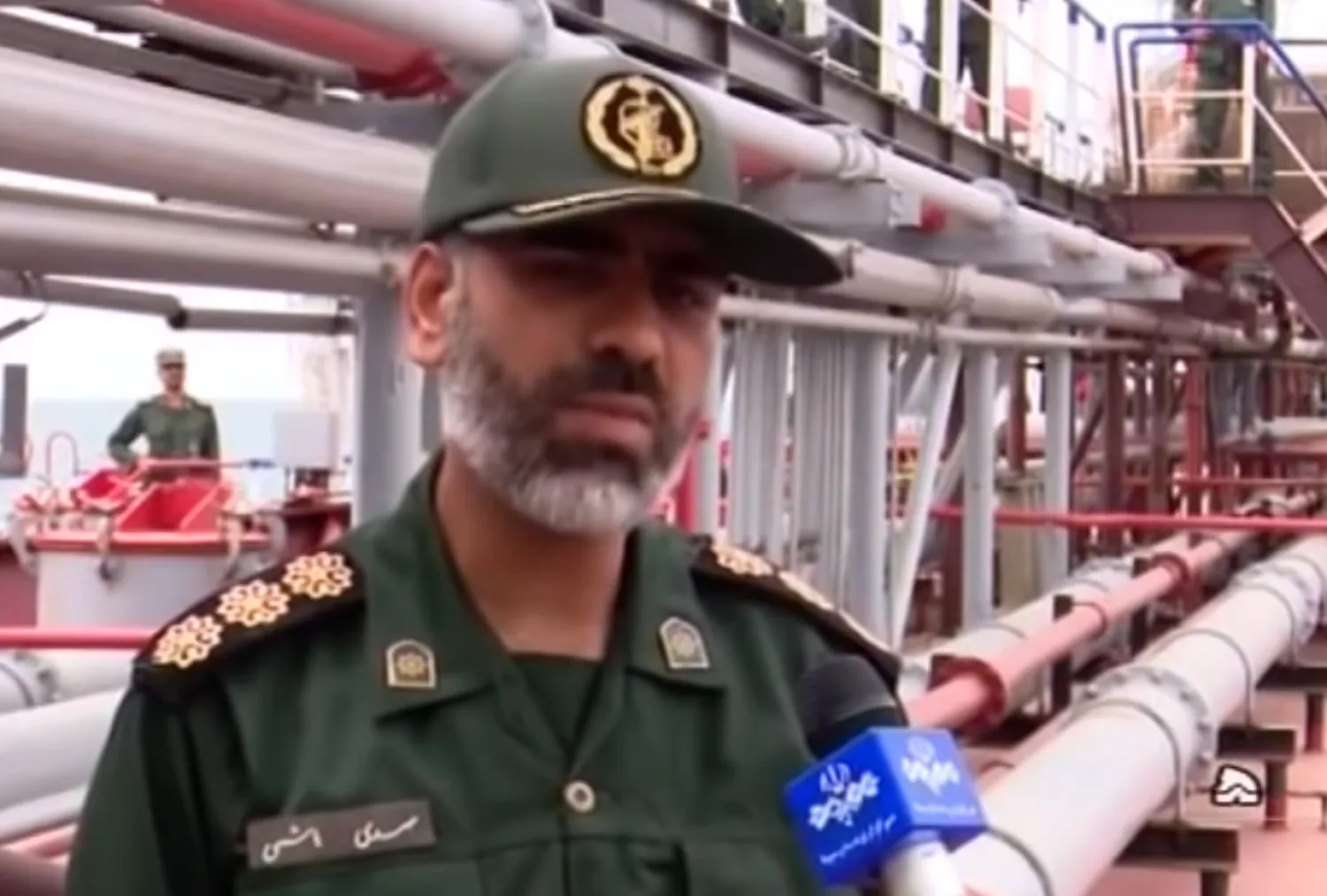
Islamic Revolution Guards Corps commander Alireza Tangsiri. (Screen capture/YouTube)
TT

Iran’s Revolutionary Guards Threaten to Attack Nuclear Aircraft Carries

Islamic Revolution Guards Corps commander Alireza Tangsiri. (Screen capture/YouTube)

The Islamic Revolution Guards Corps (IRGC) Navy Commander, Admiral Alireza Tangsiri, slammed on Monday the presence of US aircraft carriers and military ships in the Arabian Gulf, saying that his forces now possess surface-to-surface and subsurface anti-warship missiles with a range as high as 700 kilometers.

"Now we have a variety of surface and sub-surface missiles with a range of 700 kilometers which have been produced by domestic military experts,” the semi-official Tasnim news agency quoted the Iranian commander as saying.

Tangsiri’s statement came following the recent confrontation between IRGC and US forces in the Persian Gulf.

The US military said on Wednesday that 11 vessels from the IRGC navy had come dangerously close to US Navy and Coast Guard ships in the Gulf, calling the moves “dangerous and provocative.”

The IRGC Navy issued a statement on Sunday calling the US claims “fake” and likening them to some “Hollywood” scenarios.

"US forces violated international regulations and blocked the way of Iranian vessels but they were faced with our harsh response,” Tangsiri said, adding that no foreign vessel can trespass regional waters unless it is identified by the Iranian Army and IRGC forces.

“Our pride is that all of our military equipment is produced domestically, and we are not dependent on any other country,” he said.

The Commander said wherever the “Americans have been, there has been insecurity. We do not know of a place where American presence has brought security.”

Tangsiri warned that if anything is to happen to the nuclear warships in the Arabian Gulf, there will not be any living things or clean water in the region for at least 10 to 12 years.

Also on Monday, Iranian Foreign Ministry spokesman Abbas Mousavi said that foreign forces’ presence in the region is the source of insecurity, instability, and tension.

“We consider the presence of the foreign forces, especially forces of the United States, in the region a source of tension, instability, and insecurity. Their presence is illegal and illegitimate. This is our region and our armed forces must be able to patrol without hurdle,” Mousavi said in a press conference held through video conference.



Trump Says Won’t Unfreeze Iran Assets Before Deal

 A man walks past anti-US graffiti painted on the wall of the British Embassy in Tehran, Iran, Saturday, June 6, 2026. (AP)
A man walks past anti-US graffiti painted on the wall of the British Embassy in Tehran, Iran, Saturday, June 6, 2026. (AP)
TT

Trump Says Won’t Unfreeze Iran Assets Before Deal

 A man walks past anti-US graffiti painted on the wall of the British Embassy in Tehran, Iran, Saturday, June 6, 2026. (AP)
A man walks past anti-US graffiti painted on the wall of the British Embassy in Tehran, Iran, Saturday, June 6, 2026. (AP)

US President Donald Trump said in an interview broadcast Sunday that he will not unfreeze Iranian assets before reaching an agreement with Tehran.

Asked whether he would be willing, as part of a potential agreement, to unfreeze Iranian assets or lift certain sanctions against Iran, Trump replied: "No."

"(That) comes after. If they behave, if they do a good job, we start talking," he said in the interview with NBC, recorded Friday.

Iran has demanded that billions in frozen assets be unblocked.

Trump reiterated that he knows exactly where the enriched uranium is located in Iran and wants to recover it one way or another, while remaining vague about whether he would send in US troops to do so.

"If we make a deal, if we make a deal now we're friendly, we'll all go together" to recover this uranium, he said. "We'll take it out and destroy it."

The fate of the enriched uranium is one of the most difficult points in reaching an agreement to end the war waged by the United States and Israel against Iran.


US Draft Resolution at IAEA Demands Iran Open Up on Sites, Uranium Stocks

The IAEA logo is displayed in front of the agency’s headquarters in Vienna, Austria, June 5, 2026. (Reuters)
TT

US Draft Resolution at IAEA Demands Iran Open Up on Sites, Uranium Stocks

The IAEA logo is displayed in front of the agency’s headquarters in Vienna, Austria, June 5, 2026. (Reuters)

The US is lobbying other countries on the UN nuclear watchdog's Board of Governors to back a draft resolution demanding that Iran tell the agency what happened to its bombed nuclear sites and the enriched uranium stored there.

The US-drafted text, seen by Reuters on Sunday and circulated ahead of this week's quarterly meeting of the 35-nation board, risks complicating talks between Washington and Tehran.

Iran has typically retaliated against resolutions against it at the International Atomic Energy ‌Agency, escalating its nuclear ‌activities or scaling back cooperation.

Previous IAEA board resolutions on ‌Iran, ⁠submitted by the US, ⁠Britain, France and Germany, have passed by wide margins. One adopted in November demanded that Iran inform the agency "without delay" about the status of its enriched uranium stock and damaged sites - something that has yet to happen.

STATEMENT OF INTENT

The US draft says Iran must "provide the Agency with precise information on nuclear material accountancy and safeguarded nuclear facilities in Iran" and grant "all access it requires to verify this information." Both steps are described as "essential ⁠and urgent" and must be taken "without delay".

The text stops short ‌of referring Iran to the UN Security Council, ‌a move some diplomats had said was under consideration. That would have followed up on a ‌June 12, 2025 resolution declaring Iran in breach of its non-proliferation obligations.

Israel began ‌bombing Iran's nuclear sites a day later.

The US mission to the IAEA declined to comment.

While circulating a draft does not guarantee it will be formally submitted to the board, which would then vote on it, it signals an intention to do so.

Current US-Iran talks aim ‌to extend their ceasefire and pave the way for broader negotiations, including on Iran's nuclear program.

US President Donald Trump has ⁠said his goal is ⁠to ensure Iran cannot develop nuclear weapons, something Iran denies seeking.

RUSSIA ACCUSES US OF UNDERMINING COOPERATION

While June's strikes destroyed or badly damaged uranium-enrichment facilities, much of Iran's enriched uranium is believed to have survived.

Trump has said he wants Iran's highly enriched uranium removed, particularly what remains of the 440.9 kg (972 lbs) enriched to up to 60% purity - a short step from roughly 90% weapons grade - that the IAEA estimates Iran had when Israel first attacked. That amount would be enough, if further enriched, for 10 nuclear weapons, according to an IAEA yardstick.

Russia's ambassador to the IAEA told reporters on Friday a resolution would only antagonize Iran.

"It was exactly the United States who undermined this cooperation," he said, referring to the fact the IAEA had access to Iran's sites until the bombing started.

Russia and China have opposed all recent resolutions against Iran.


Russian Strikes Kill Five, Damage Nuclear Storage Facility

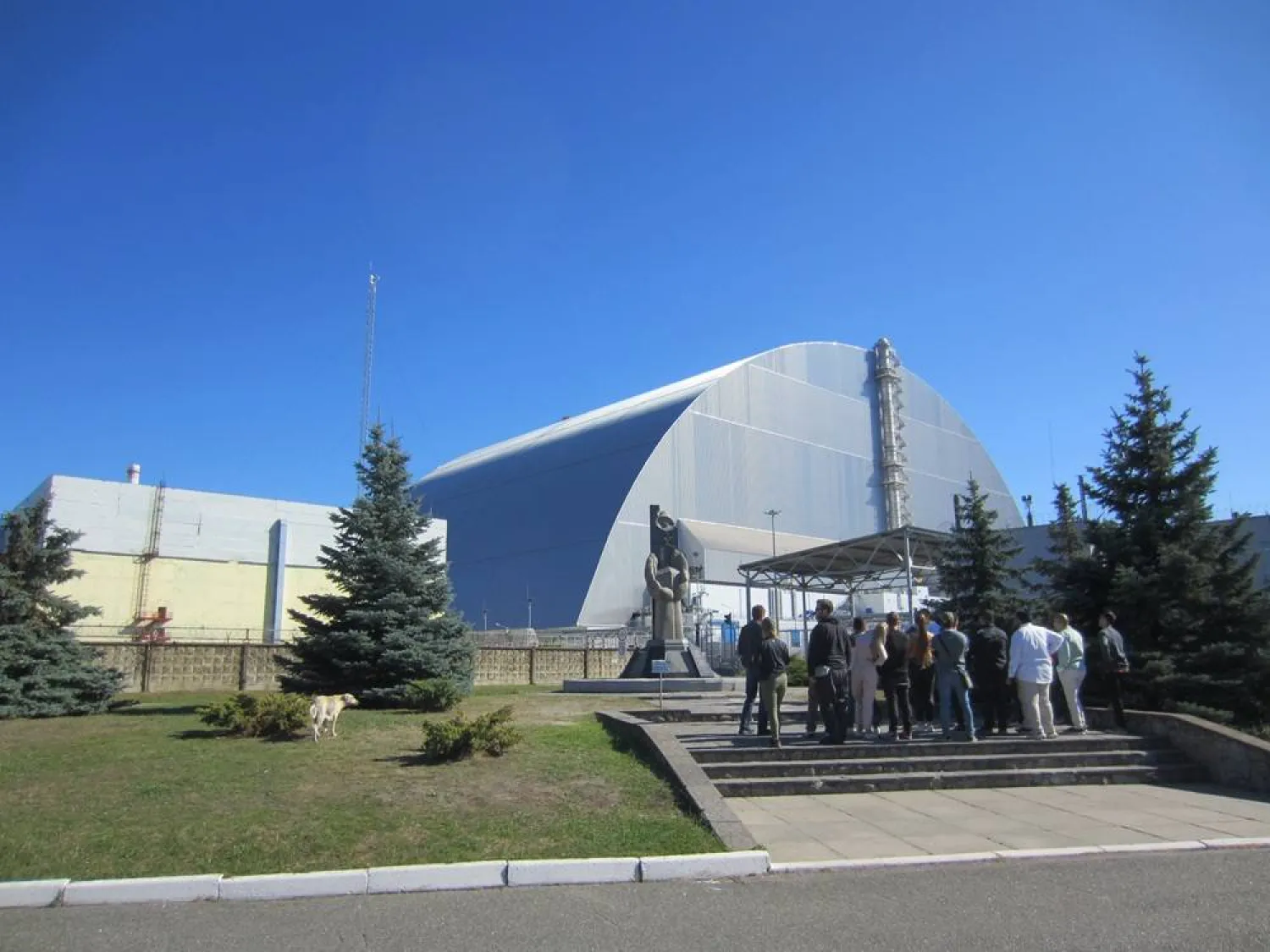
15 September 2021, Ukraine, Chornobyl: A group of tourists stand at the memorial in front of unit four of the Chornobyl nuclear power plant in Ukraine, which exploded in 1986. (dpa)
TT

Russian Strikes Kill Five, Damage Nuclear Storage Facility

15 September 2021, Ukraine, Chornobyl: A group of tourists stand at the memorial in front of unit four of the Chornobyl nuclear power plant in Ukraine, which exploded in 1986. (dpa)

Russia fired waves of drones and other munitions at Ukraine on Sunday, killing at least five people and damaging a nuclear storage facility in the Chornobyl exclusion zone, Ukrainian officials said. 

Radiation levels at the facility remained within normal limits following the attack, although the building's reception was "partially destroyed", according to Ukraine's Energoatom nuclear energy operator. 

Moscow and Kyiv have intensified drone strikes on each other in recent months as US-led diplomatic efforts to end the war, now in its fifth year, remain stalled and sidetracked by the conflict in the Middle East. 

Ukrainian President Volodymyr Zelensky is set to meet his allies in London later Sunday for talks on how to pressure Russia to end the fighting, after Russian President Vladimir Putin rejected direct peace talks with the Ukrainian leader. 

"A 'shahed' hit one of the buildings of the Centralized Spent Fuel Storage Facility," Zelensky said in a post on X, referring to the Iranian-designed "Shahed" drones that Russia fires at Ukraine on a nightly basis. 

"As of now, there are no readings exceeding normal background radiation levels. But there is certainly an increase in Russia's brazenness, which long ago went off the charts," he added. 

The International Atomic Energy Agency said it was dispatching a team to inspect the damage, calling the incident "deeply concerning". 

The facility is located in a remote area of forest around a dozen kilometers (seven miles) from the site of the 1986 Chornobyl disaster, and is designed to house spent nuclear fuel from Ukraine's three active nuclear plants. 

- Strikes on Ukraine - 

Russian strikes killed and wounded multiple civilians on Sunday, Ukrainian officials said. 

A Russian bombardment of a public transport stop in Ukraine's southern Zaporizhzhia region left at least two people dead, while a nearby drone strike killed a 56-year-old minibus driver, authorities said. 

A separate attack on the central Dnipropetrovsk region killed a 59-year-old man, governor Oleksandr Ganzha posted on Telegram. 

Hundreds of thousands have been killed and millions forced to flee their home since Russia launched its full-scale invasion of Ukraine in February 2022. 

Russia -- which denies targeting civilians -- now occupies around a fifth of its neighbor: the Crimean peninsula, which it annexed in 2014, most of the eastern regions of Donetsk and Lugansk -- collectively referred to as the Donbas -- and large parts of the southern Zaporizhzhia and Kherson regions.