Exclusive - New Secrets Revealed about Bin Laden’s Years in Sudan

Osama bin Laden is seen in a file photo taken in Afghanistan in 1998. (Reuters)
TT

Exclusive - New Secrets Revealed about Bin Laden’s Years in Sudan

Osama bin Laden is seen in a file photo taken in Afghanistan in 1998. (Reuters)

“I will leave, but you won’t solve your problems with the Americans.” These were the parting words of al-Qaeda leader, Osama bin Laden, as he boarded a military plane that flew him out of the Sudanese capital, Khartoum, to the mountains of Tora Bora in Afghanistan in 1996. Bin Laden, who was killed exactly nine years ago, never expected to be expelled by a fundamentalist regime that had adopted a hardline Islamic ideology opposed to the West and Americans. His prediction did come true, however. A year after he left Sudan, Washington imposed economic sanctions against the country.

Seven years before his expulsion, Sudan had fallen into the hands of the National Islamic Front, also known as the Muslim Brotherhood in the 1970s, after a military coup on June 30, 1989. The coup was plotted by the group’s leader, Hassan al-Turabi. Afterwards, Sudan was transformed into a safe haven for Islamic jihadist groups in other countries, especially Arab ones.

Failed assassination

The US listed Sudan as a state sponsor of terrorism in 1993 after accusing its government of harboring the al-Qaeda leader and opening its territories to extremist groups from throughout the world. Bin Laden arrived in Sudan in 1991 under the guise of a businessman and investor. He was close to the Islamic group that was ruling the country and that had adopted jihadist slogans against the West. Bin Laden consequently held several open and secret meetings with the leaders of the Islamic Front, such as Omar al-Bashir and Turabi.

Sources close to the decision-making powers at the Front at the time, said Bashir, the now-ousted president, and his deputy, Ali Osman Taha, had visited Bin Laden at his house in the Riyadh neighborhood in Khartoum to inform him about plans to deport him to Afghanistan.

The same sources said Bin Laden had asked about the fate of his assets and properties in Sudan. He was informed that they will be liquidated and that his rights will be preserved. In fact, this never happened, revealed circles close to those in power. As Bin Laden was flown out of Khartoum, Bashir and his deputy, headed to Turabi’s home to inform him that the al-Qaeda leader had left the country at his own volition after acknowledging the difficult situation it was going through. This was the official version of events.

The sources, however, stated that Taha had first proposed his expulsion after the failed attempt to assassinate Egyptian President Hosni Mubarak in the Ethiopian capital, Addis Ababa, in 1995. Taha was rumored to have been involved in the plot. Bashir was convinced that he must go. Taha wanted to “get rid of” Bin Laden immediately after it soon started to emerge that he and his regime may have been in on the assassination attempt by providing the conspirators with logistic help.

Former security and intelligence chief Qutbi al-Mahdi told Asharq Al-Awsat that Taha’s role in the plot was limited to logistic support and financing the Egyptian Islamic Jihad and Jamaa al-Islamiyya groups that carried out the attack. Turabi had directly accused Taha and his deputy of being involved in the plot. He revealed that Taha had personally detailed to him the incident, asking him to eliminate two Islamists who were involved. They had just recently returned to Khartoum and were later expelled to Afghanistan.

Taha’s actions demonstrate that he was “always prepared to do anything to keep his position in power, even sacrificing his fellow members in his organization,” the sources said. This statement was confirmed by conspirators who had later plotted to remove Turabi from power. They succeeded in 1999 and the Islamist Front split between Bashir, who remained president, and Turabi, who became part of the opposition.

Necessary sacrifice

The sources dismissed the official story about Bin Laden’s “voluntary” departure from Sudan, instead saying the Sudan Brotherhood members had “sacrificed” him because they feared the consequences of the failed attempt on Mubarak’s life. The failed attack led to the ouster of then intelligence chief Nafeh Ali Nafeh and several Islamist members of his agency. The sources said Turabi had asked Bashir to keep Nafeh in his position because his dismissal would implicate Sudan. Bashir did not heed the warning and acted on his own.

Other reports suggest that Bashir had repeatedly sought to get rid of Bin Laden after his regime grew tired of al-Qaeda. His attempts all failed. He even tried to hand him over to the United States, which responded that it did not have enough evidence to put him on trial and secure a conviction. At the time, Vanity Fair magazine released a statement from the intelligence chief, Qutbi, that Sudan was ready to turn over Bin Laden, who was not yet wanted by the CIA. Washington was not interested at the time.

When Bin Laden received word that the regime was seeking to hand him over to foreign forces, he requested to leave. Sources close to the decision-making powers at the time told Asharq Al-Awsat that the expulsion was decided by the Sudanese regime, specifically Bashir and Taha.

Prior to his expulsion, the intelligence agency had detained all foreign Islamists in Sudan. They turned over the Libyans to then ruler Moammar al-Gaddafi, the Eritreans to Eritrea and the Tunisians to Tunisia. Bin Laden was about to be handed over to the US.

Beginnings

In the mid-1990s, German authorities at Frankfurt airport arrested a Syrian called Imad and known as Abou Hajar, a member of al-Qaeda. He was handed over to US intelligence. He was given save haven by the Islamist regime in Sudan and was resident in Khartoum for years. He led prayers at a mosque in the Riyadh neighborhood, the same neighborhood where Bin Laden lived and the same mosque where the al-Qaeda leader prayed.

A resident of the neighborhood told Asharq Al-Awsat that Abou Hajar had given religious lessons at the mosque, which was frequented by different foreign residents of the upscale neighborhood. Many were close to Bin Laden. Bin Laden himself said little and kept to himself except when greeting others in a low barely audible tone. His house was guarded by members of the security and intelligence services.

His rented home belonged to a Sudanese man, who was rumored to be the head of the al-Shifa pharmaceutical factory that was struck by the US with a Cruse missile in 1995 for its alleged ties with al-Qaeda and for manufacturing chemical weapons. The attack was in response to the bombing of the US embassies in Dar Es Salaam and Nairobi. Washington also carried out air raids against “mujahideen” training camps in Afghanistan. One such attack sought to kill Bin Laden.

Sources said that when Bin Laden first requested to reside in Sudan, he was welcomed by Turabi, who dreamed of having his country become a safe haven for Islamist businessmen from across the Muslim world. He allowed them to enter without visas and granted the Sudanese citizenship to whoever requested it.

Soon after his arrival, Bin Laden began investing millions of dollars in several different projects. He set up various companies, implemented road projects and bought a farm belonging to Khartoum University. He used the farm to set up a training camp for the various multinational members of al-Qaeda. The harboring of these fighters, who had already received high levels of training even before arriving in Sudan, would later drag the country into terrorism.

US relations

Turabi even had relations with the “Afghan Jihad” group. The sources told Asharq Al-Awsat that these ties probably date back to 1979 after the Soviets occupied Afghanistan when Turbai served as justice minister in Prime Minister Jaafar Nimeiry’s government. Turabi had even convinced the premier to open the first office for the Afghan Jihad in the Arab world in Khartoum. The office was secretly opened in 1980.

Bin Laden played a central role in the Afghan Jihad due to his wealth and ties with Abdullah Azzam, the Brotherhood member, whom sources say had the idea to form al-Qaeda.

Relations between the Islamic movement in Sudan with the US date back to the Cold War and the Afghanistan War when Soviet intelligence accused the Muslim Brotherhood of operating under Washington’s influence. It is often said in Sudan that generations of Islamic movement members earned their university and higher education degrees in the US. They include Ahmed Osman Makki, Amin Hassan Omar, Sayyed al-Khatib and dozens of others.

Turabi and Bin Laden first met at the former’s house in Khartoum in 1988 in wake of floods that had ravaged Sudan. Bin Laden had landed in the country as part of a relief team that included his younger brother. Sources close to Turabi told Asharq Al-Awsat that he did not hold many meetings with Bin Laden and they were often held in secret. Turabi often spoke to Bin Laden of shifting the Islamic movement towards openness, while the al-Qaeda leader stuck to his extremist views. They also discussed investment in roads, agriculture and airports.

The sources confirmed that Bashir enjoyed good relations with Bin Laden. He used to visit him at his home and they were seen together at the inauguration of several projects in Sudan. World leaders avoid discussing any ties they may have had with Bin Laden while he was living Sudan, which raises questions by over his activity, which was not limited to investment and that the Sudanese government was aware of his actions.

Mahdi told Asharq Al-Awsat that Turabi and Bashir had both agreed on the need for Bin Laden to leave Sudan as soon as possible after coming pressure from regional countries and possibly even Taha.

After the Soviet Union quit Afghanistan in the early 1990s and after fierce fighting between the Arab Afghan Mujahideen with American support, they feared that the US would turn them over to their countries, he continued. Many consequently sought refuge in Sudan, which welcomed them with open arms. Some worked in investment with Bin Laden.

9/11 Avoided

Mahdi said that the Sudanese government offered to hand over Bin Laden to the Americans, who responded that they had no charges against him. Khartoum, therefore, had no choice but to deport him to fend off any terrorism accusations against it. Mahdi stressed: “America is responsible for forming terrorism because it supported the terrorists while they were fighting the Russians. After the end of the Cold War, it exerted pressure on Sudan to expel Afghan Jihad members from the country. We had no choice but to force them to return to their countries. The security and intelligence agencies were not involved in handing them over to US intelligence.”

Mahdi denied that the Brotherhood, which is accused of plotting to assassinate Mubarak, had any relations with Bin Laden and his companion, Ayman al-Zawahiri. He said members of the Egyptian Jihad and Jamaa al-Islamiyya were attempting to implicate al-Qaeda, but they failed.

Taha, he revealed, played a role in the failed attempt on Mubarak’s life. His role was limited to providing logistic and financial support. Taha believed that Mubarak was the greatest obstacle in the development of Sudanese-Egyptian relations and relations with the Gulf and several other countries.

The sources said the idea of the assassination was first proposed by the Egyptian Jihad and they approached Taha for support. Contact between the two sides took place through Sudanese intelligence.

The plot ultimately failed. Three people were killed at the scene and Ethiopian security arrested three suspects, while three others fled to Sudan. They were reportedly killed to eliminate any traces back to their leaders.

“Bin Laden and his all jihadist groups had their own unit in the Sudanese intelligence and security agency,” a security source told Asharq Al-Awsat on condition of anonymity. “When counter-terrorism cooperation began, then agency chief Salah Abdallah Gosh handed American intelligence 300 valuable intelligence files on Bin Laden.”

The move was a stab in the back by Sudan against the Islamists, he said.

American intelligence would later say that the failure of Bill Clinton’s administration to cooperate with Sudan was a direct factor that led to the September 11, 2001 attacks. Had the administration been aware of the important information Sudanese intelligence had handed over to the US, New York would have avoided the attack that changed the world. Afghanistan ultimately became Bin Laden’s final safe haven. Its Taliban rulers refused to turn him over to Washington.
Is Iran Pushing Houthis Toward Military Action Against Washington?

Houthis continue mobilization, fundraising, and declare combat readiness (AP) 
TT

Is Iran Pushing Houthis Toward Military Action Against Washington?

Houthis continue mobilization, fundraising, and declare combat readiness (AP) 

As US military movements intensify in the Middle East and the possibility of strikes on Iran looms, Yemen’s Houthi group has continued military preparations, mobilizing fighters and establishing new weapons sites.

The Houthi mobilization comes at a time when the group is widely viewed as one of Iran’s most important regional arms for retaliation.

Although the Iran-backed group has not issued any official statement declaring its position on a potential US attack on Iran, its leaders have warned Washington against any military action and against bearing full responsibility for any escalation and its consequences.

They have hinted that any response would be handled in accordance with the group’s senior leadership's assessment, after evaluating developments and potential repercussions.

Despite these signals, some interpret the Houthis’ stance as an attempt to avoid drawing the attention of the current US administration, led by President Donald Trump, to the need for preemptive action in anticipation of a potential Houthi response.

The Trump administration previously launched a military campaign against the group in the spring of last year, inflicting heavy losses.

Islam al-Mansi, an Egyptian researcher specializing in Iranian affairs, said Iran may avoid burning all its cards unless absolutely necessary, particularly given US threats to raise the level of escalation should any Iranian military proxies intervene or take part in a confrontation.

Iran did not resort to using its military proxies during its confrontation with Israel or during a limited US strike last summer because it did not perceive an existential threat, al-Mansi said.

That calculation could change in the anticipated confrontation, potentially prompting Houthi intervention, including targeting US allies, interests, and military forces, he told Asharq Al-Awsat.

Al-Mansi added that although Iran previously offered, within a negotiating framework, to abandon its regional proxies, including the Houthis, this makes it more likely that Tehran would use them in retaliation, noting that Iran created these groups to defend its territory from afar.

Many intelligence reports suggest that Iran’s Revolutionary Guard has discussed with the Houthis the activation of alternative support arenas in a potential US-Iran confrontation, including the use of cells and weapons not previously deployed.

Visible readiness

In recent days, Chinese media outlets cited an unnamed Houthi military commander as saying the group had raised its alert level and carried out inspections of missile launch platforms in several areas across Yemen, including the strategically important Red Sea region.

In this context, Yemeni political researcher Salah Ali Salah said the Houthis would participate in defending Iran against any US attacks, citing the group’s media rhetoric accompanying mass rallies, which openly supports Iran’s right to defend itself.

While this rhetoric maintains some ambiguity regarding Iran, it repeatedly invokes the war in Gaza and renews Houthi pledges to resume military escalation in defense of the besieged enclave’s population, Salah told Asharq Al-Awsat.

He noted that Iran would not have shared advanced and sophisticated military technologies with the Houthis without a high degree of trust in their ability to use them in Iran’s interest.

In recent months, following Israeli strikes on the unrecognized Houthi government and several of its leaders, hardline Houthi figures demonstrating strong loyalty to Iran have become more prominent.

On the ground, the group has established new military sites and moved equipment and weapons to new locations along and near the coast, alongside the potential use of security cells beyond Yemen’s borders.

Salah said that if the threat of a military strike on Iran escalates, the Iranian response could take a more advanced form, potentially including efforts to close strategic waterways, placing the Bab al-Mandab Strait within the Houthis’ target range.

Many observers have expressed concern that the Houthis may have transferred fighters and intelligence cells outside Yemen over recent years to target US and Western interests in the region.

Open options

After a ceasefire was declared in Gaza, the Houthis lost one of their key justifications for mobilizing fighters and collecting funds. The group has since faced growing public anger over its practices and worsening humanitarian conditions, responding with media messaging aimed at convincing audiences that the battle is not over and that further rounds lie ahead.

Alongside weekly rallies in areas under their control in support of Gaza, the Houthis have carried out attacks on front lines with Yemen’s internationally recognized government, particularly in Taiz province.

Some military experts describe these incidents as probing attacks, while others see them as attempts to divert attention from other activities.

In this context, Walid al-Abara, head of the Yemen and Gulf Studies Center, said the Houthis entered a critical phase after the Gaza war ended, having lost one of the main justifications for their attacks on Red Sea shipping.

As a result, they may seek to manufacture new pretexts, including claims of sanctions imposed against them, to maintain media momentum and their regional role.

Al-Abara told Asharq Al-Awsat that the group has two other options. The first is redirecting its activity inward to strengthen its military and economic leverage, either to impose its conditions in any future settlement or to consolidate power.

The second is yielding to international and regional pressure and entering a negotiation track, particularly if sanctions intensify or its economic and military capacity declines.

According to an assessment by the Yemen and Gulf Studies Center, widespread protests in Iran are increasingly pressuring the regime’s ability to manage its regional influence at the same pace as before, without dismantling its network of proxies.

This reality is pushing Tehran toward a more cautious approach, governed by domestic priorities and cost-benefit calculations, while maintaining a minimum level of external influence without broad escalation.

Within this framework, al-Abara said Iran is likely to maintain a controlled continuity in its relationship with the Houthis through selective support that ensures the group remains effective.

However, an expansion of protests or a direct military strike on Iran could open the door to a deeper Houthi repositioning, including broader political and security concessions in exchange for regional guarantees.


The Gaza Ceasefire Began Months Ago. Here’s Why the Fighting Persists

Israeli soldiers and tanks stand in Gaza, as seen from the Israeli side of the Israel-Gaza border, in Israel, February 4, 2026. REUTERS/Amir Cohen
TT

The Gaza Ceasefire Began Months Ago. Here’s Why the Fighting Persists

Israeli soldiers and tanks stand in Gaza, as seen from the Israeli side of the Israel-Gaza border, in Israel, February 4, 2026. REUTERS/Amir Cohen

As the bodies of two dozen Palestinians killed in Israeli strikes arrived at hospitals in Gaza on Wednesday, the director of one asked a question that has echoed across the war-ravaged territory for months.

“Where is the ceasefire? Where are the mediators?” Shifa Hospital's Mohamed Abu Selmiya wrote on Facebook.

At least 556 Palestinians have been killed in Israeli strikes since a US-brokered truce came into effect in October, including 24 on Wednesday and 30 on Saturday, according to Gaza's Health Ministry. Four Israeli soldiers have been killed in Gaza in the same period, with more injured, including a soldier whom the military said was severely wounded when militants opened fire near the ceasefire line in northern Gaza overnight.

Other aspects of the agreement have stalled, including the deployment of an international security force, Hamas' disarmament and the start of Gaza's reconstruction. The opening of the Rafah border crossing between Gaza and Egypt raised hope of further progress, but fewer than 50 people were allowed to cross on Monday, The Associated Press said.

Hostages freed as other issues languish In October, after months of stalled negotiations, Israel and Hamas accepted a 20-point plan proposed by US President Donald Trump aimed at ending the war unleashed by Hamas' Oct. 7, 2023, attack into Israel.

At the time, Trump said it would lead to a “Strong, Durable, and Everlasting Peace."

Hamas freed all the living hostages it still held at the outset of the deal in exchange for thousands of Palestinian prisoners held by Israel and the remains of others.

But the larger issues the agreement sought to address, including the future governance of the strip, were met with reservations, and the US offered no firm timeline.

The return of the remains of hostages meanwhile stretched far beyond the 72-hour timeline outlined in the agreement. Israel recovered the body of the last hostage only last week, after accusing Hamas and other militant groups of violating the ceasefire by failing to return all of the bodies. The militants said they were unable to immediately locate all the remains because of the massive destruction caused by the war — a claim Israel rejected.

The ceasefire also called for an immediate influx of humanitarian aid, including equipment to clear rubble and rehabilitate infrastructure. The United Nations and humanitarian groups say aid deliveries to Gaza's 2 million Palestinians have fallen short due to customs clearance problems and other delays. COGAT, the Israeli military body overseeing aid to Gaza, has called the UN's claims “simply a lie.”

Ceasefire holds despite accusations

Violence has sharply declined since the ceasefire paused a war in which more than 71,800 Palestinians have been killed, according to the Gaza Health Ministry. The ministry is part of the Hamas-led government and maintains detailed records seen as generally reliable by UN agencies and independent experts.

Hamas-led militants killed some 1,200 people in the initial October 2023 attack and took around 250 hostage.

Both sides say the agreement is still in effect and use the word “ceasefire” in their communications. But Israel accuses Hamas fighters of operating beyond the truce line splitting Gaza in half, threatening its troops and occasionally opening fire, while Hamas accuses Israeli forces of gunfire and strikes on residential areas far from the line.

Palestinians have called on US and Arab mediators to get Israel to stop carrying out deadly strikes, which often kill civilians. Among those killed on Wednesday were five children, including two babies. Hamas, which accuses Israel of hundreds of violations, called it a “grave circumvention of the ceasefire agreement.”

In a joint statement on Sunday, eight Arab and Muslim countries condemned Israel’s actions since the agreement took effect and urged restraint from all sides “to preserve and sustain the ceasefire.”

Israel says it is responding to daily violations committed by Hamas and acting to protect its troops. “While Hamas’ actions undermine the ceasefire, Israel remains fully committed to upholding it,” the military said in a statement on Wednesday.

“One of the scenarios the (military) has to be ready for is Hamas is using a deception tactic like they did before October 7 and rearming and preparing for an attack when it’s comfortable for them,” said Lt. Col. Nadav Shoshani, a military spokesperson.

Some signs of progress

The return of the remains of the last hostage, the limited opening of the Rafah crossing, and the naming of a Palestinian committee to govern Gaza and oversee its reconstruction showed a willingness to advance the agreement despite the violence.

Last month, US envoy Steve Witkoff, who played a key role in brokering the truce, said it was time for “transitioning from ceasefire to demilitarization, technocratic governance, and reconstruction.”

That will require Israel and Hamas to grapple with major issues on which they have been sharply divided, including whether Israel will fully withdraw from Gaza and Hamas will lay down its arms.

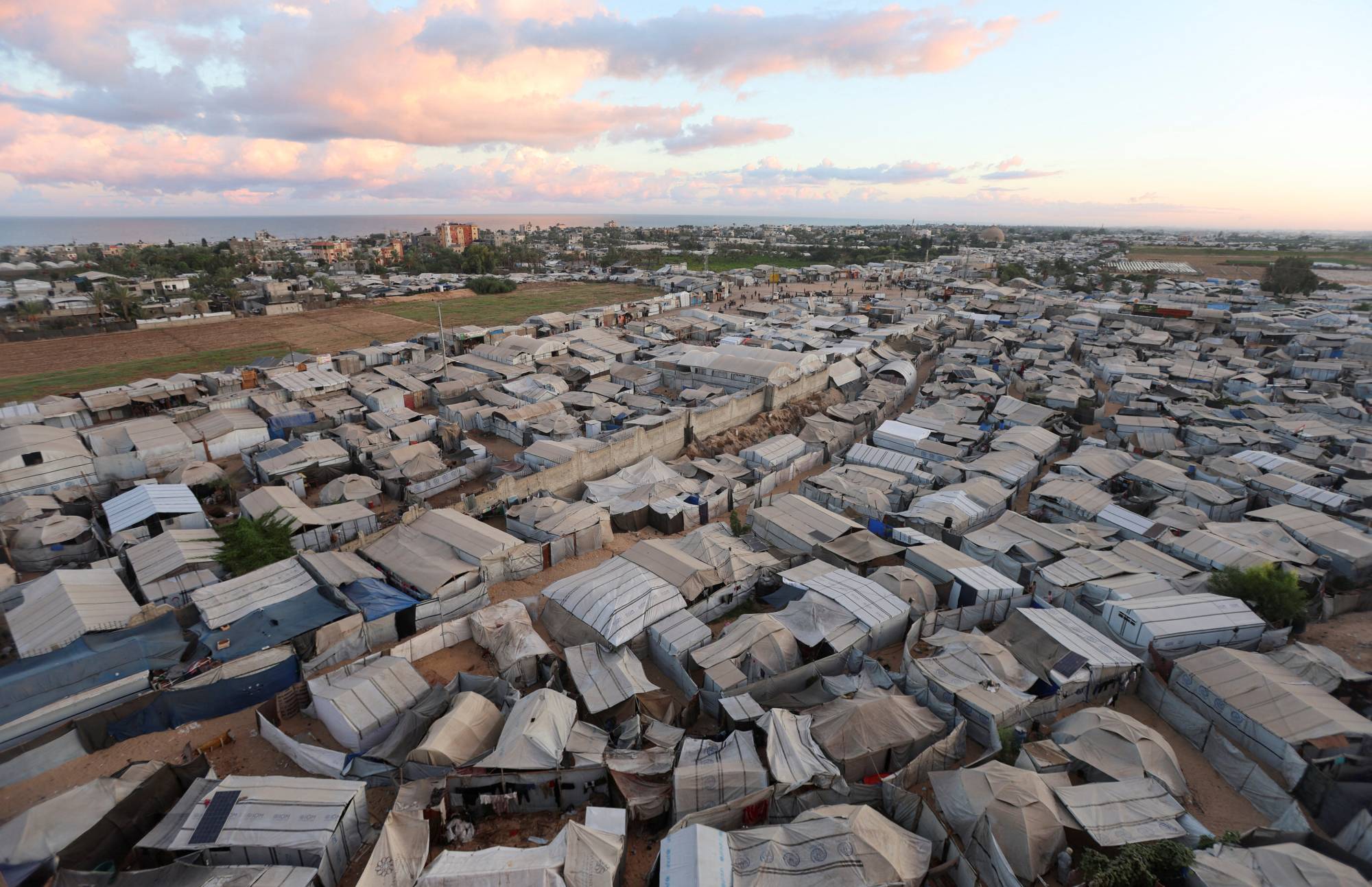
Though political leaders are holding onto the term “ceasefire” and have yet to withdraw from the process, there is growing despair in Gaza.

On Saturday, Atallah Abu Hadaiyed heard explosions in Gaza City during his morning prayers and ran outside to find his cousins lying on the ground as flames curled around them.

“We don’t know if we’re at war or at peace,” he said from a displacement camp, as tarpaulin strips blew off the tent behind him.


What to Know as Iran and US Set for Nuclear Talks in Oman

The flags of USA and Iran are displayed in Muscat, Oman, 25 April 2025. EPA/ALI HAIDER
TT

What to Know as Iran and US Set for Nuclear Talks in Oman

The flags of USA and Iran are displayed in Muscat, Oman, 25 April 2025. EPA/ALI HAIDER

Iran and the United States will hold talks Friday in Oman, their latest over Tehran's nuclear program after Israel launched a 12-day war on the country in June and Iran launched a bloody crackdown on nationwide protests.

US President Donald Trump has kept up pressure on Iran, suggesting America could attack Iran over the killing of peaceful demonstrators or if Tehran launches mass executions over the protests. Meanwhile, Trump has pushed Iran's nuclear program back into the frame as well after the June war disrupted five rounds of talks held in Rome and Muscat, Oman, last year.

Trump began the diplomacy initially by writing a letter last year to Iran’s 86-year-old Supreme Leader Ali Khamenei to jump start these talks. Khamenei has warned Iran would respond to any attack with an attack of its own, particularly as the theocracy he commands reels following the protests.

Here’s what to know about Iran’s nuclear program and the tensions that have stalked relations between Tehran and Washington since the 1979 Iranian Revolution.

Trump writes letter to Khamenei Trump dispatched the letter to Khamenei on March 5, 2025, then gave a television interview the next day in which he acknowledged sending it. He said: “I’ve written them a letter saying, ‘I hope you’re going to negotiate because if we have to go in militarily, it’s going to be a terrible thing.’”

Since returning to the White House, the president has been pushing for talks while ratcheting up sanctions and suggesting a military strike by Israel or the US could target Iranian nuclear sites.

A previous letter from Trump during his first term drew an angry retort from the supreme leader.

But Trump’s letters to North Korean leader Kim Jong Un in his first term led to face-to-face meetings, though no deals to limit Pyongyang’s atomic bombs and a missile program capable of reaching the continental US.

Oman mediated previous talks

Oman, a sultanate on the eastern edge of the Arabian Peninsula, has mediated talks between Iranian Foreign Minister Abbas Araghchi and US Mideast envoy Steve Witkoff. The two men have met face to face after indirect talks, a rare occurrence due to the decades of tensions between the countries.

It hasn't been all smooth, however. Witkoff at one point made a television appearance in which he suggested 3.67% enrichment for Iran could be something the countries could agree on. But that’s exactly the terms set by the 2015 nuclear deal struck under former President Barack Obama, from which Trump unilaterally withdrew America. Witkoff, Trump and other American officials in the time since have maintained Iran can have no enrichment under any deal, something to which Tehran insists it won't agree.

Those negotiations ended, however, with Israel launching the war in June on Iran.

The 12-day war and nationwide protests Israel launched what became a 12-day war on Iran in June that included the US bombing Iranian nuclear sites. Iran later acknowledged in November that the attacks saw it halt all uranium enrichment in the country, though inspectors from the International Atomic Energy Agency have been unable to visit the bombed sites.

Iran soon experienced protests that began in late December over the collapse of the country's rial currency. Those demonstrations soon became nationwide, sparking Tehran to launch a bloody crackdown that killed thousands and saw tens of thousands detained by authorities.

Iran’s nuclear program worries the West Iran has insisted for decades that its nuclear program is peaceful. However, its officials increasingly threaten to pursue a nuclear weapon. Iran now enriches uranium to near weapons-grade levels of 60%, the only country in the world without a nuclear weapons program to do so.

Under the original 2015 nuclear deal, Iran was allowed to enrich uranium up to 3.67% purity and to maintain a uranium stockpile of 300 kilograms (661 pounds). The last report by the International Atomic Energy Agency on Iran’s program put its stockpile at some 9,870 kilograms (21,760 pounds), with a fraction of it enriched to 60%.

US intelligence agencies assess that Iran has yet to begin a weapons program, but has “undertaken activities that better position it to produce a nuclear device, if it chooses to do so.” Iranian officials have threatened to pursue the bomb.

Decades of tense relations between Iran and the US Iran was once one of the US’s top allies in the Mideast under Shah Mohammad Reza Pahlavi, who purchased American military weapons and allowed CIA technicians to run secret listening posts monitoring the neighboring Soviet Union. The CIA had fomented a 1953 coup that cemented the shah’s rule.

But in January 1979, the shah, fatally ill with cancer, fled Iran as mass demonstrations swelled against his rule. The Iranian Revolution followed, led by Grand Khomeini, and created Iran’s theocratic government.

Later that year, university students overran the US Embassy in Tehran, seeking the shah’s extradition and sparking the 444-day hostage crisis that saw diplomatic relations between Iran and the US severed.

The Iran-Iraq war of the 1980s saw the US back Saddam Hussein. The “Tanker War” during that conflict saw the US launch a one-day assault that crippled Iran at sea, while the US later shot down an Iranian commercial airliner that the US military said it mistook for a warplane.

Iran and the US have seesawed between enmity and grudging diplomacy in the years since, with relations peaking when Tehran made the 2015 nuclear deal with world powers. But Trump unilaterally withdrew America from the accord in 2018, sparking tensions in the Mideast that persist today.