

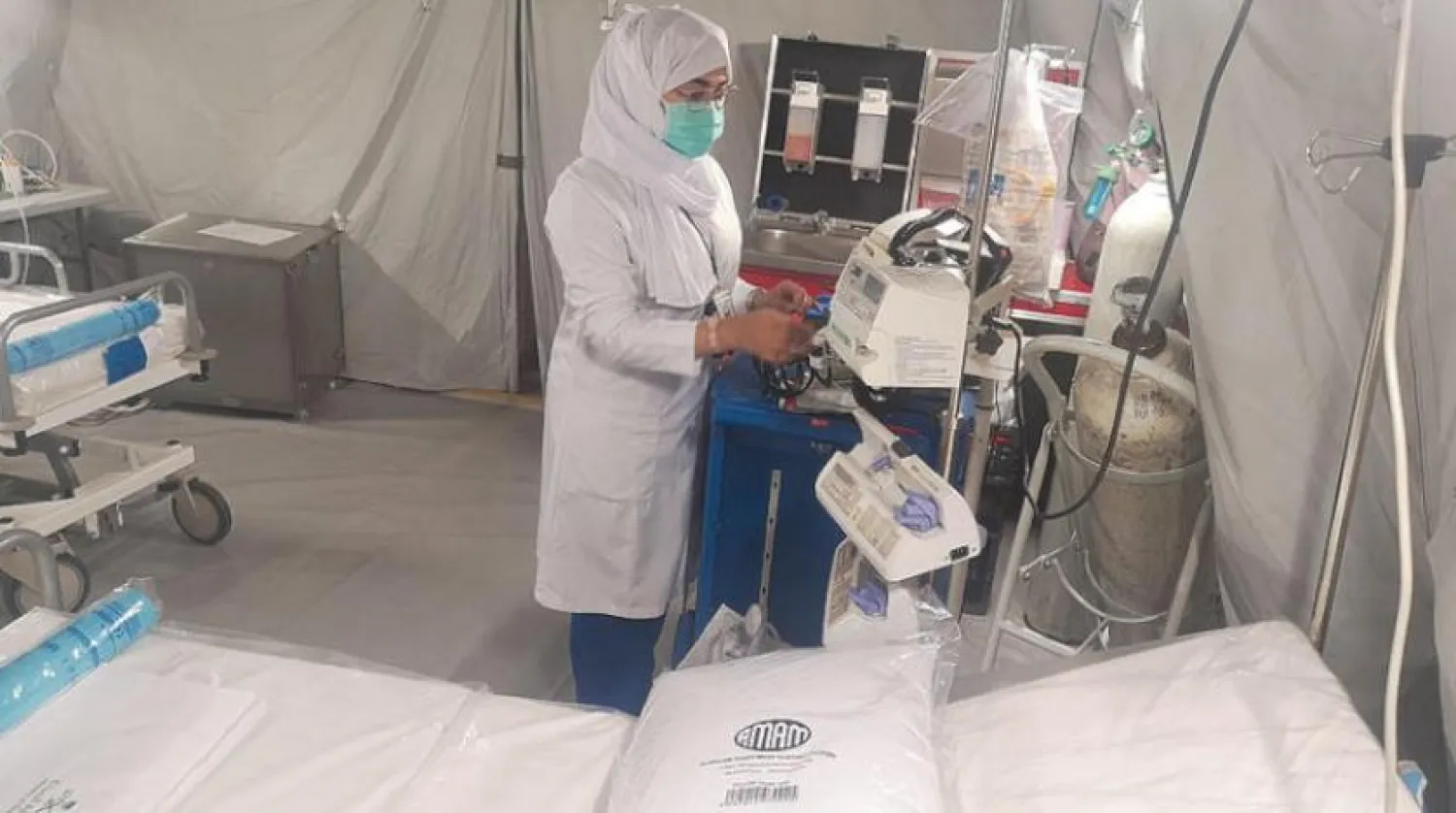

Asharq Al-Awsat Tours Makkah Field Hospital

The hospital is close to active examination sites. Asharq Al-Awsat
TT

Asharq Al-Awsat Tours Makkah Field Hospital

The hospital is close to active examination sites. Asharq Al-Awsat

Active testing has been one of the most important steps that the Saudi authorities have taken to limit the spread of the coronavirus, especially in crowded urban areas.

Different sectors are coordinating efforts to provide healthcare and protective services, including establishing a field hospital.

The Saudi Ministry of Defense established the first field hospital as part of a wider effort to provide services. The relevant bodies in Makkah completed the mobile field hospital that was prepared to treat and isolate cases.

The hospital aims to receive confirmed and suspected cases, as well as critical cases, especially from the isolated neighborhoods near the hospital.

Officials told Asharq Al-Awsat during its visit to the facility spanning more than 2,000 square meters, that the hospital consists of eight wings and 100 beds, including four ICU beds.

Dr. Al-Baraaa Kadhem, director of the mobile hospital, tells Asharq Al-Awsat that the hospital consists of six units, two wards each, and a division for digital imaging that is connected to all hospitals in order to rapidly interpret test results for those suspected to have the virus as well as those confirmed to have it.

According to the director, the hospital has a lab and pharmacy, in addition to a division that is heavily equipped to carry out surgeries.

The director of the wards in the mobile hospital, Dr. Ibrahim Jawahirji, tells Asharq Al-Awsat that their work in the hospital starts whenever a suspected case is confirmed to be positive through triage and clinical examination.

The wings are then prepared to receive the patient in compliance with the highest standards. Dr. Jawahirji adds, “despite being a field hospital, it operates within the standards that ensure patient safety, to an extent that it is indistinguishable from traditional hospitals”.

The critical care unit is of utmost readiness in case of any deterioration in the health condition of a patient, according to Dr. Abrar Mohammad, director of the nursing services in the hospital. Dr. Mohammad adds, “The cardiopulmonary resuscitation room is equipped to receive the most severe cases”.

According to Engineer Khaled al-Harthi, the field hospital was designed in compliance with the highest medical standards by the Saudi Armed Forces. Al-Harthi explained that the hospital was very meticulously prepared by the Armed Forces, in terms of equipment, medical supplies and ventilation.

It took around 60 hours to set up the hospital, weather-proof it and install a ventilation system.
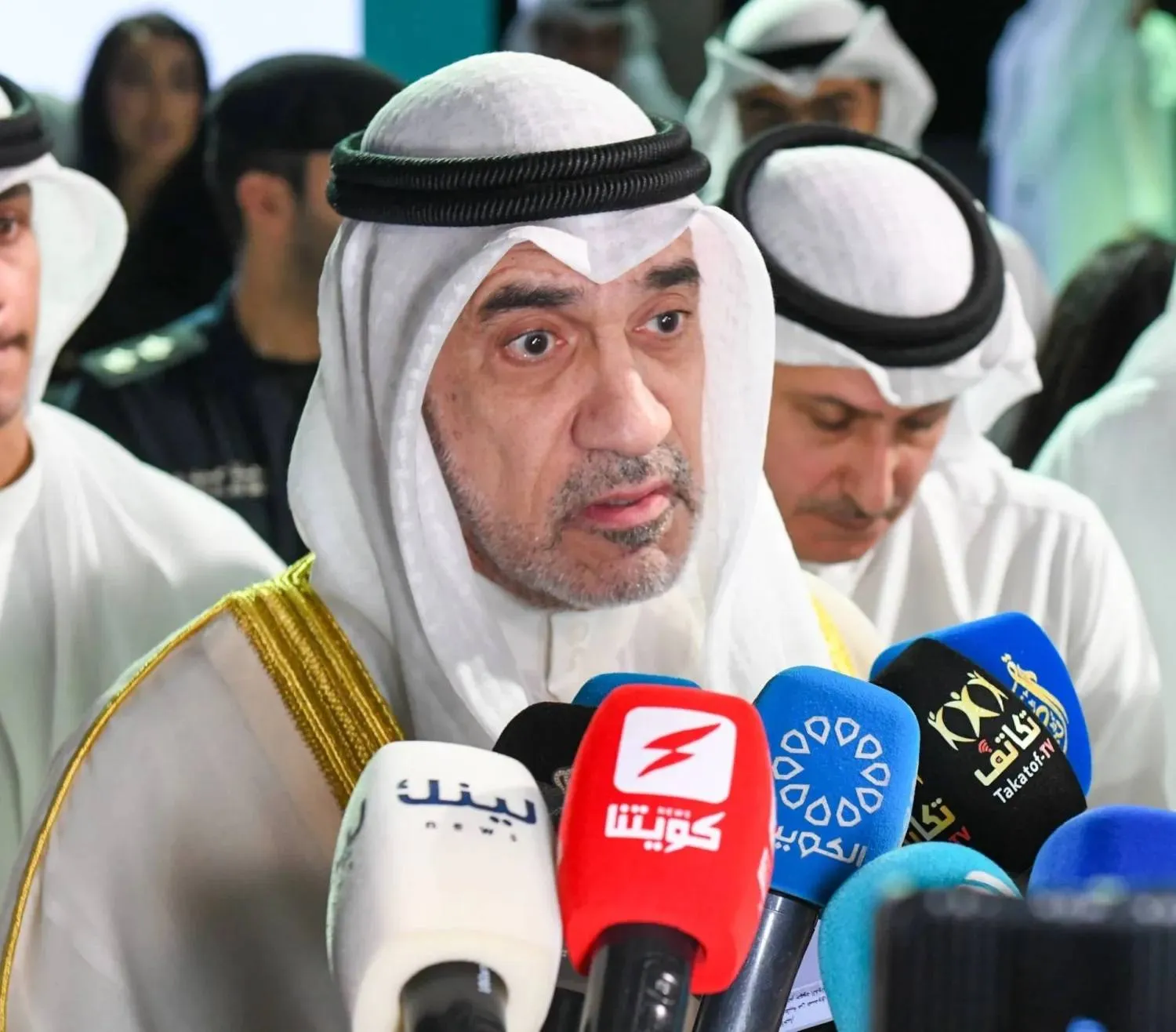



Saudi Interior Minister, Singapore's Coordinating Minister for National Security Discuss Regional Security Development

The Saudi flag. Asharq Al-Awsat
TT

Saudi Interior Minister, Singapore's Coordinating Minister for National Security Discuss Regional Security Development

The Saudi flag. Asharq Al-Awsat

Saudi Minister of Interior Prince Abdulaziz bin Saud bin Naif bin Abdulaziz received a phone call on Sunday from Coordinating Minister for National Security and Minister for Home Affairs of the Republic of Singapore K Shanmugam.

During the call, the two officials discussed the latest developments in the Middle East and current security developments amid the Iranian attacks targeting regional security and stability, SPA reported.

They also affirmed the importance of enhancing bilateral cooperation and coordination in support of regional security and stability, in addition to discussing a number of topics of mutual interest.

Shanmugam expressed his country's condemnation of the Iranian attacks targeting the Kingdom and the Gulf Cooperation Council (GCC) states, affirming Singapore's solidarity with the Kingdom and the GCC states in all measures aimed at enhancing security and stability.


Saudi Arabia Condemns Riots Targeting UAE Embassy in Damascus

Saudi Arabia called for the protection of diplomatic missions. (Asharq Al-Awsat)
TT

Saudi Arabia Condemns Riots Targeting UAE Embassy in Damascus

Saudi Arabia called for the protection of diplomatic missions. (Asharq Al-Awsat)

Saudi Arabia condemned on Sunday the riots, assaults, and attempted vandalism that targeted the Embassy of the United Arab Emirates and the residence of its head of mission in Damascus.

A Foreign Ministry statement said the Kingdom also slammed the “unacceptable offenses directed at the national symbols of the brotherly UAE.”

The ministry stressed the Kingdom’s “rejection of these attacks and all forms of violence against diplomats, stressing the need to ensure the protection of diplomats and diplomatic missions in line with relevant international laws and conventions.”

Secretary-General of the Gulf Cooperation Council (GCC) Jasem Albudaiwi also slammed the attack against the UAE embassy in Damascus, urging Syrian authorities to hold those responsible to account.


Oman, Iran Hold Talks on Strait of Hormuz

Traffic passing a huge political billboard reading in Persian "The Strait of Hormuz will remain closed", in Enghelb square in Tehran, Iran, 05 April 2026. (EPA)
TT

Oman, Iran Hold Talks on Strait of Hormuz

Traffic passing a huge political billboard reading in Persian "The Strait of Hormuz will remain closed", in Enghelb square in Tehran, Iran, 05 April 2026. (EPA)

Oman and Iran held talks on easing passage through the Strait of Hormuz, the Omani state news agency reported Sunday, with the key shipping chokepoint effectively closed due to war in the Middle East.

"Oman and Iran held a meeting at the deputy ministers level in the foreign ministries of the two countries, with the attendance of specialists from both sides, during which the possible options were discussed regarding ensuring the smooth passage through the Strait of Hormuz," the news agency posted on X.

"The experts from both sides put forward a number of visions and proposals regarding it," it added.