


UN Reiterates Support for Riyadh Agreement on Yemen

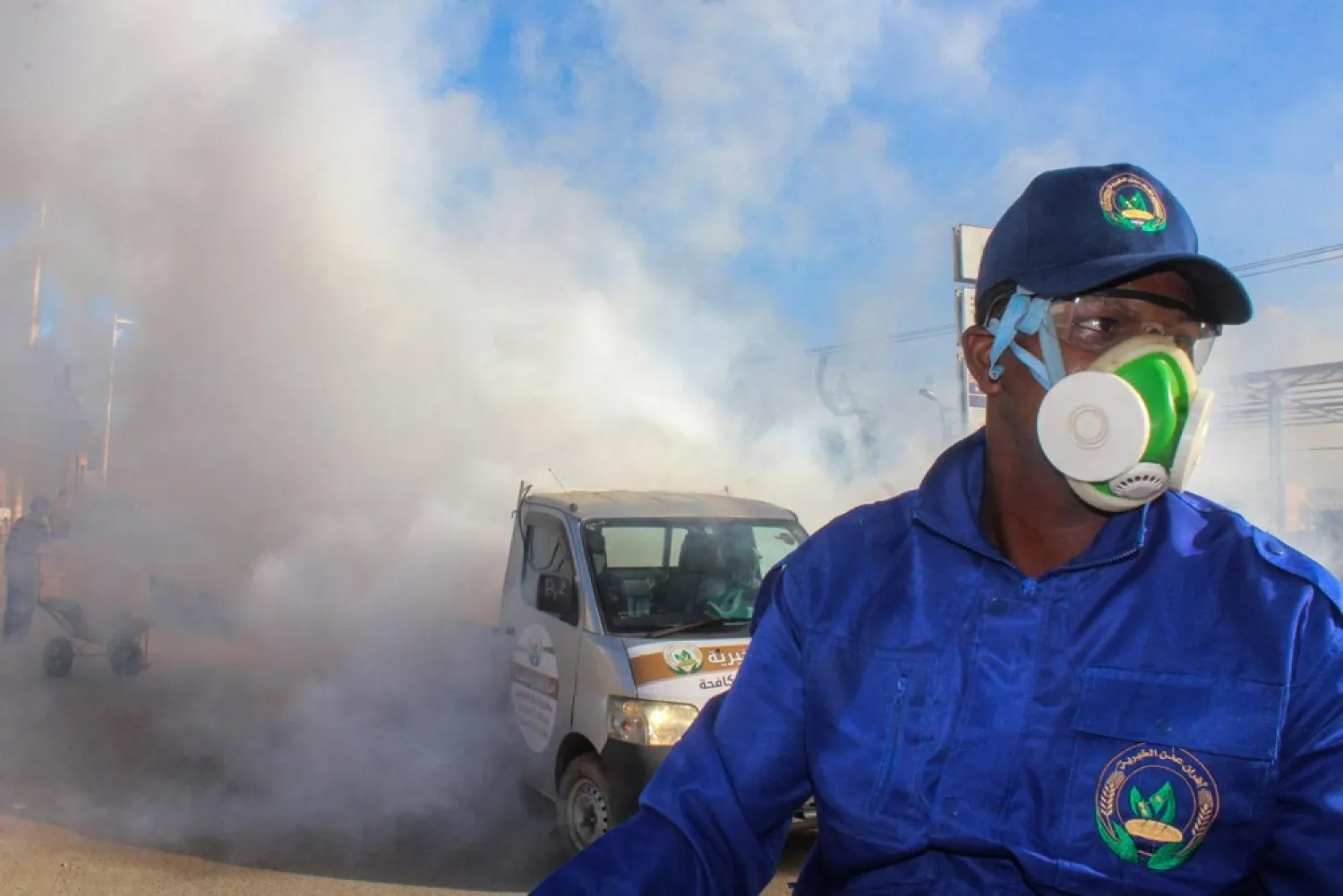
A sanitary worker performs a fumigation in Aden, Yemen to prevent insect-borne diseases amid the coronavirus pandemic. (AFP)
TT

UN Reiterates Support for Riyadh Agreement on Yemen

A sanitary worker performs a fumigation in Aden, Yemen to prevent insect-borne diseases amid the coronavirus pandemic. (AFP)

The United Nations Security Council agreed to support special envoy Martin Griffiths in his mission to achieve peace between the legitimate government and Iran-backed Houthi militias. Meeting on Thursday, it also underscored the need for the Southern Transitional Council to return to the Riyadh Agreement.

The council described the humanitarian situation in Yemen as terrible due to the spread of the novel coronavirus, saying it support Griffiths' efforts to revive the negotiations between the government and Houthis.

It reiterated support for Secretary-General Antonio Guterres’ call for a ceasefire in the country and expressed concern at fighting between the government and the Houthis and the slow pace of negotiations toward a ceasefire.

Members also called on the government and STC separatists “to deescalate military tensions” and engage in the Riyadh Agreement. They also called on the separatists “to reverse any actions challenging the legitimacy, sovereignty, unity or territorial integrity of Yemen.”

Griffiths urged Yemen’s warring sides to quickly resolve their differences over humanitarian and economic measures needed to move peace efforts forward and help the country counter the virus.

Yemen has so far reported 106 cases of the virus, including 15 deaths. The government and WHO have criticized the Houthis for their lack of transparency, as just two cases, including one death, have been recorded in territory under their control.

US Ambassador to the UN, Kelly Craft, said that Washington "stands with the Yemeni people, who have suffered every imaginable hardship, and who are simply trying to survive in the midst of conflict, food insecurity, devastating floods, and now the spread of COVID-19."

"In light of these hardships, we welcome the Saudi-led Arab coalition’s extension of its unilateral ceasefire in support of the UN peace process and efforts to fight COVID-19," she added.

"The US strongly urges the Houthis to join the Government of Yemen in halting offensive operations in support of this ceasefire. This is so that all parties may focus their efforts on countering COVID-19 and working towards a lasting political resolution of the conflict," she continued.

"The Houthis must re-commit to de-escalation followed by resumption of talks directed toward a political solution. We urge the parties to the conflict to continue to review and provide meaningful feedback on the Special Envoy’s draft proposals, which represent the spirit of consensus required to move toward a lasting political settlement," Craft stated.

On the developments in southern Yemen, she expressed her concern over the STC's announcement of its so-called "self-administration." " Such actions from the STC will only distract from UN-led efforts to secure a nation-wide ceasefire and a political solution," she remarked.

"We are also concerned by reports of increasing STC interference in Central Bank of Yemen operations. All parties must continue to respect the government institutions underpinning Yemen’s political and economic stability. We call on the STC and the Republic of Yemen Government to re-engage in the political process provided under the Riyadh Agreement," she demanded.

Moreover, she expressed concern about the "limitations on humanitarian access in Houthi controlled areas. The Houthis’ deliberate interference with assistance operations – interference that is in flagrant defiance of humanitarian principles – continues to limit the ability of the UN and other humanitarian organizations to provide for the needs of the most vulnerable Yemenis."

"We acknowledge some steps taken by the Houthis in certain areas. These include the decision to lift the two percent levy on aid projects, sign NGO agreements, and approve key independent needs assessments. But further progress is critical, especially on biometric registration and ensuring humanitarian staff can implement and monitor their programs," Craft said.

"As we have said on previous occasions, the US again calls on the Houthis to allow UN inspection and maintenance of the Safer oil tanker. UN officials must have immediate access to the Safer in order to prevent an environmental catastrophe, which would have far-reaching effects in Yemen and around the Red Sea," she continued.

"We are grateful to Martin Griffiths for continuing to raise this issue in Sanaa. The Houthis must stop blocking a solution to this problem, and permit required assessments and repairs," she remarked.



US Increases its Pressure on Iran in Iraq

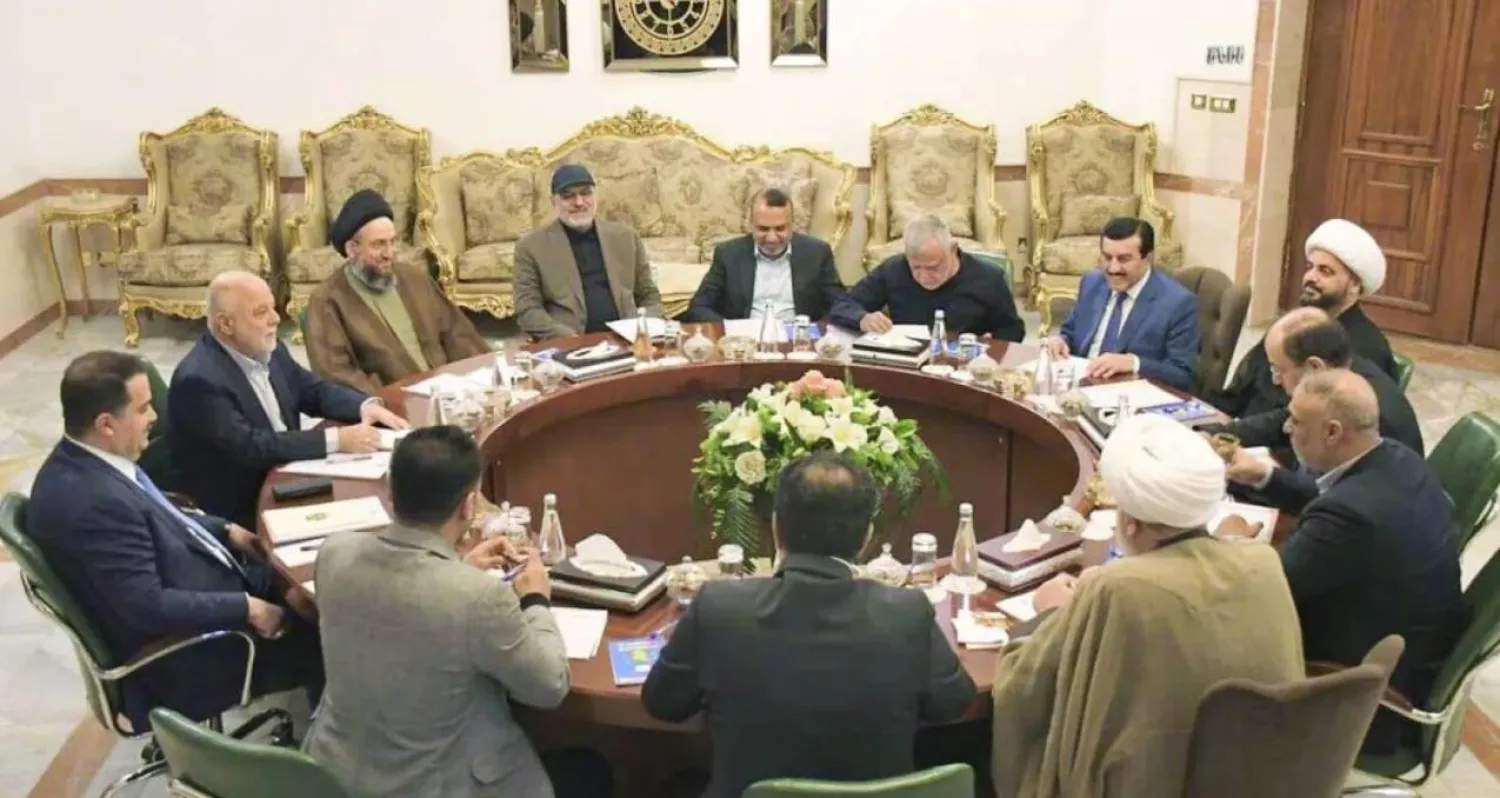
Coordination Framework leaders during a meeting in Baghdad. Iraqi News Agency
TT

US Increases its Pressure on Iran in Iraq

Coordination Framework leaders during a meeting in Baghdad. Iraqi News Agency

US pressure over Iranian influence in Iraq is increasing amid consultations to form a new government and messages from Washington affirming its willingness to use “the full range of tools” to counter what it describes as “Iran’s destabilizing activities.”

US Chargé d’Affaires Joshua Harris confirmed during a meeting on Thursday with Abdul Hussein Al-Mousawi, head of the National Approach Alliance, that any Iraqi government “should remain fully independent and focused on advancing the national interests of all Iraqis.”

A US embassy statement said the meeting addressed the importance of a strong partnership between the United States and Iraq that delivers “tangible benefits” for both sides within the framework of safeguarding Iraqi sovereignty, bolstering regional stability, and strengthening economic ties.

Harris stressed his country’s readiness “to use the full range of tools to counter Iran’s destabilizing activities in Iraq,” a statement seen as a dual message directed at forces linked to Tehran and at blocs engaged in government formation negotiations.

The media office of the National Approach Alliance, which is part of the Coordination Framework, stated that the meeting discussed the latest developments in Iraq and the region, and ways to strengthen bilateral relations “in line with the principle of mutual sovereign respect and shared interests.”

It also addressed consultations among political parties to abide by constitutional mechanisms and the results of elections.

Both sides stressed the importance of ensuring the success of negotiations between the US and Iran in a way that contributes to de-escalation and the adoption of dialogue.

Last month, US President Donald Trump warned Iraq over a reinstatement of Nouri al-Maliki as prime minister, saying that the country “descended into poverty and total chaos” under his previous leadership.

“That should not be allowed to happen again” Trump wrote on social media.

Al-Maliki, who has long-standing ties to Iran, dismissed Trump’s threat as “blatant American interference in Iraq’s internal affairs,” and vowed to “continue to work until we reach the end.”

The Coordination Framework, which holds a parliamentary majority, has named al-Maliki to serve again as Iraq’s prime minister, citing his “political and administrative experience and role in managing the state.”


German Parliament Speaker Visits Gaza

Displaced Palestinians fleeing Israeli military operations in Beit Lahia in the northern Gaza strip walk along the Salah al-Din main road in eastern Gaza City making their way to the city center, on October 22, 2024, amid the ongoing war in the Palestinian territory between Israel and Hamas. (AFP)
TT

German Parliament Speaker Visits Gaza

Displaced Palestinians fleeing Israeli military operations in Beit Lahia in the northern Gaza strip walk along the Salah al-Din main road in eastern Gaza City making their way to the city center, on October 22, 2024, amid the ongoing war in the Palestinian territory between Israel and Hamas. (AFP)

The speaker of Germany's lower house of parliament briefly visited the Israeli-controlled part of the Gaza Strip on Thursday, the body told AFP.

Julia Kloeckner spent "about an hour in the part of Gaza controlled by Israeli army forces", parliament said, becoming the first German official to visit the territory since Hamas's attack on Israel in October 2023 that sparked the devastating war.

Since the start of the conflict, Israel has drastically restricted access to the densely populated coastal strip.

In a statement shared by her office, Kloeckner said it was essential for politicians to have access to "reliable assessments of the situation" in Gaza.

"I expressly welcome the fact that Israel has now, for the first time, granted me, a parliamentary observer, access to the Gaza Strip," she said.

However, she was only able to gain a "limited insight" into the situation on the ground during her trip, she said.

Kloeckner appealed to Israel to "continue on this path of openness" and emphasised that the so-called yellow line, which designates Israeli military zones inside the Gaza Strip, must "not become a permanent barrier".

Contacted by AFP, the German foreign ministry said it would "not comment on travel plans or trips by other constitutional bodies that wish to assess the situation on the ground".

Germany has been one of Israel's staunchest supporters as the European power seeks to atone for the legacy of the Holocaust.

But in recent months, Chancellor Friedrich Merz has occasionally delivered sharp critiques of Israeli policy as German public opinion turns against Israel's actions in Gaza.

In August, Germany imposed a partial arms embargo on Israel, which was lifted in November after the announcement of what has proved to be a fragile ceasefire for Gaza.

Merz visited Israel in December and reaffirmed Germany's support.

But in a sign of lingering tension, Germany's foreign ministry on Wednesday criticized Israeli plans to tighten control over the occupied West Bank as a step toward "de facto annexation".


Syria Says its Forces Have Taken over al-Tanf Base after a Handover from the US

FILE: Members of the Maghawir al-Thawra Syrian opposition group receive firearms training from US Army Special Forces soldiers at the al-Tanf military outpost in southern Syria in 2018. (AP/Lolita Baldor)
TT

Syria Says its Forces Have Taken over al-Tanf Base after a Handover from the US

FILE: Members of the Maghawir al-Thawra Syrian opposition group receive firearms training from US Army Special Forces soldiers at the al-Tanf military outpost in southern Syria in 2018. (AP/Lolita Baldor)

Syrian government forces have taken control of a base in the east of the country that was run for years by US troops as part of the war against the ISIS group, the Defense Ministry said in a statement Thursday.

The al-Tanf base sits on a strategic location, close to the borders with Jordan and Iraq. In a terse statement, the Syrian Defense Ministry said the handover of the base took place in coordination with the US military and Syrian forces are now “securing the base and its perimeters.”

The US military did not immediately respond to an email from The Associated Press regarding the Syrian statement.

The Syrian Defense Ministry also said that Syrian troops are now in place in the desert area around the al-Tanf garrison, with border guards to deploy in the coming days.

The deployment of Syrian troops at al-Tanf and in the surrounding areas comes after last month’s deal between the government and the US-backed and Kurdish-led Syrian Democratic Forces, or SDF, to merge into the military.

Al-Tanf garrison was repeatedly attacked over the past years with drones by Iran-backed groups but such attacks have dropped sharply following the fall of Bashar Assad’s government in Syria in December 2024.

Syria’s interim President Ahmad al-Sharaa has been expanding his control of the country, and last month government forces captured wide parts of northeast Syria after deadly clashes with the SDF. A ceasefire was later reached between the two sides.

Al-Tanf base played a major role in the fight against the ISIS group that declared a caliphate in large parts of Syria and Iraq in 2014. ISIS was defeated in Iraq in 2017 and in Syria two years later.

Over the past weeks, the US military began transferring thousands of ISIS prisoners from prisons run by the SDF in northeastern Syria to Iraq, where they will be prosecuted.

The number of US troops posted in Syria has changed over the years.

The number of US troops increased to more than 2,000 after the Oct. 7, 2023, attack by Hamas in Israel, as Iranian-backed militants targeted American troops and interests in the region in response to Israel’s bombardment of Gaza.

The force has since been drawn back down to around 900.