


Huawei to Build $1.2 bln UK Research Center

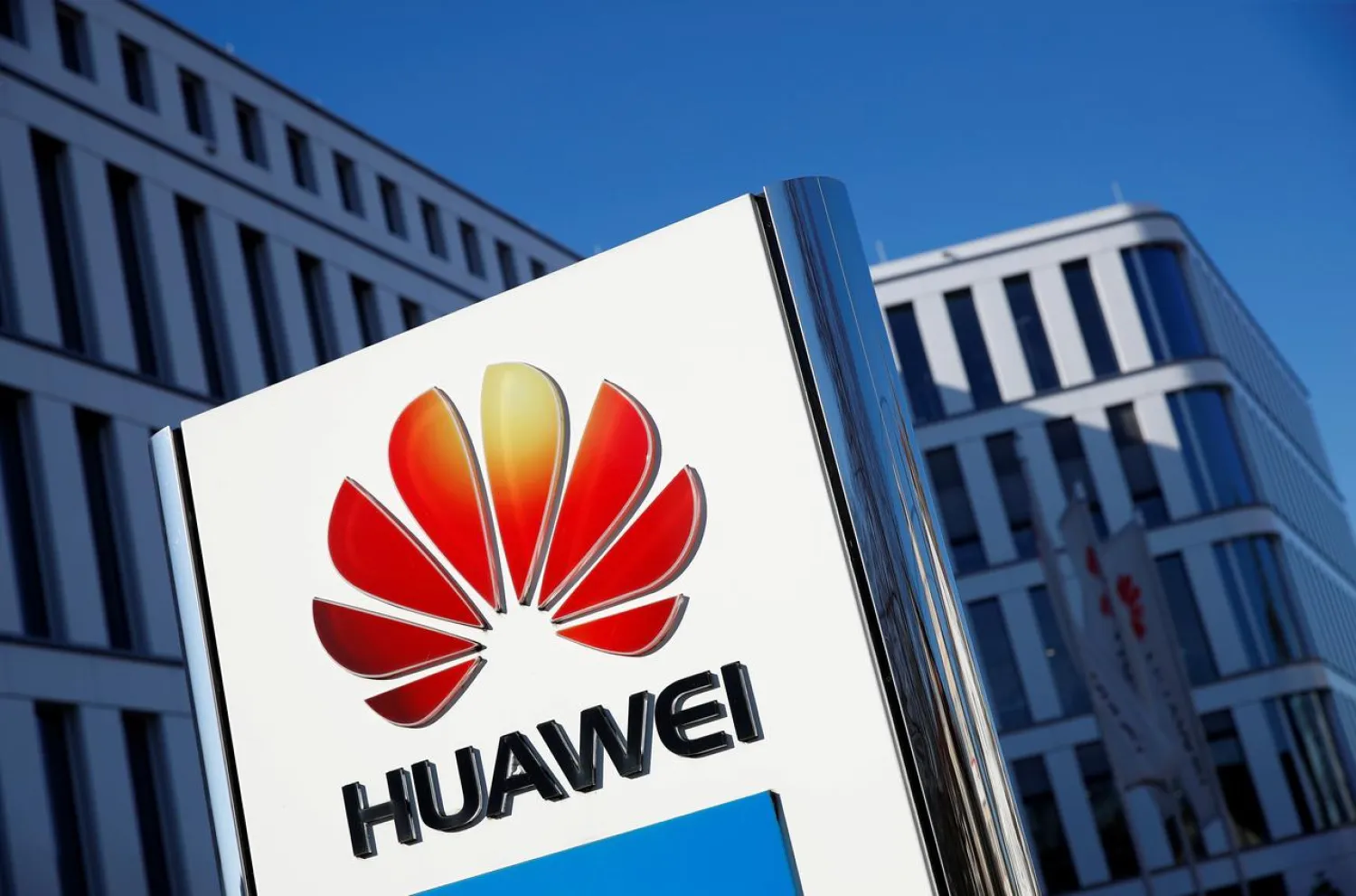
FILE PHOTO: The logo of Huawei Technologies is pictured in front of the German headquarters of the Chinese telecommunications giant in Duesseldorf, Germany, February 18, 2019. REUTERS/Wolfgang Rattay/File Photo
TT

Huawei to Build $1.2 bln UK Research Center

FILE PHOTO: The logo of Huawei Technologies is pictured in front of the German headquarters of the Chinese telecommunications giant in Duesseldorf, Germany, February 18, 2019. REUTERS/Wolfgang Rattay/File Photo

China's Huawei Technologies said on Thursday it had received planning permission for a 1 billion pound ($1.2 billion) research and development facility in England.

The new center will hire around 400 people and focus on producing optical equipment used in fiber-optic communication systems, Huawei said in a statement.

The development is likely to anger officials in the United States and some British lawmakers who say Huawei's equipment can be used by Beijing for spying and that Britain should reconsider a January decision to allow it a limited role in its 5G networks. The company denies the charges.

British officials are in the process of reviewing how to best mitigate any security risks posed by Huawei in light of new US sanctions announced in May, which aim to cut off the firm's supply of the advanced microchips needed to make its equipment.

A decision is expected in the coming weeks, Reuters reported.

Huawei Vice President Victor Zhang said the technology developed at the new center was separate from that targeted by the US restrictions, and it was "simply wrong" to suggest its announcement was timed to influence Britain's decision.

Huawei began working on the project in 2017, he said, and acquired the 500-acre development site near Cambridge, around 70km north of London, in 2018.

US officials have said the development project is part of an effort by China to expand its influence in the West.

"They donate money, hire grads, and burnish their PR credentials. Then comes bullying, coercion, and expansion of the surveillance state," US Under Secretary of State Keith Krach said in a tweet on Tuesday.

On Thursday, he said the US is willing to help other countries finance purchases of next-generation telecom technology from Western providers so they can avoid Huawei.

Giving Huawei even a small 5G role would allow Beijing to expand its “surveillance state” by eavesdropping on phone and other network-based systems, said Krach.


Apple Sues OpenAI for Stealing Trade Secrets

 11 July 2026, Taiwan, Taichung: Apple and OpenAI logos displayed on smartphone. (dpa)
11 July 2026, Taiwan, Taichung: Apple and OpenAI logos displayed on smartphone. (dpa)
TT

Apple Sues OpenAI for Stealing Trade Secrets

 11 July 2026, Taiwan, Taichung: Apple and OpenAI logos displayed on smartphone. (dpa)
11 July 2026, Taiwan, Taichung: Apple and OpenAI logos displayed on smartphone. (dpa)

Apple on Friday sued OpenAI, accusing the artificial intelligence company of orchestrating a campaign to steal the iPhone maker's trade secrets as it tries to develop its own consumer hardware device.

The lawsuit -- filed in a federal court in San Jose, California -- paints a picture of an aggressive effort by OpenAI to poach Apple employees and extract confidential information to build its own device.

The lawsuit marks a dramatic escalation in tensions between two companies that partnered in 2024 to integrate ChatGPT into Apple's products.

That relationship has since deteriorated. Bloomberg reported in May that OpenAI was itself considering legal action against Apple, alleging the tech giant had failed to adequately promote the ChatGPT integration.

"At every level, from members of its Technical Staff to its Chief Hardware Officer, and in coordination with business partners, OpenAI has been stealing Apple's trade secrets and confidential information," Apple said in the 41-page complaint.

The suit will significantly complicate OpenAI's plans for a hotly anticipated initial public offering.

The company, valued at roughly $852 billion, has raised more than $180 billion from investors, and expanding into consumer hardware was seen as a major opportunity for growth.

"Significant evidence has emerged suggesting individuals employed by OpenAI wrongfully took Apple's secret and confidential information regarding our unreleased technologies, processes and products," the company said in a statement to AFP.

"We will always defend our teams' hard work and innovations, and we are taking all appropriate steps to do so."

OpenAI responded to AFP's request for comment with an emailed statement Friday.

"We have no interest in other companies' trade secrets. We remain focused on building innovative technology that empowers people everywhere," an OpenAI spokesperson said.

The suit names OpenAI, its hardware subsidiary io Products -- the company co-founded by former Apple design chief Jony Ive -- and two former Apple employees: Tang Yew Tan, now OpenAI's chief hardware officer, and engineer Chang Liu.

Apple said it was seeking damages and an injunction barring OpenAI from using its confidential information, calling the lawsuit necessary after OpenAI failed to respond to concerns the company raised in February.

- 'Show and tell' -

Tan spent 24 years at Apple, most recently as vice president of product design for the iPhone and Apple Watch, before co-founding io Products, which OpenAI acquired for roughly $6.5 billion in 2025.

Apple alleged that Tan used confidential project code names during OpenAI job interviews to probe candidates about unreleased Apple products. According to the complaint, about 400 employees at OpenAI are former Apple staffers.

Tan also allegedly told Apple employees to bring physical components, such as batteries, circuit boards, and other parts, to interviews for "show and tell" sessions.

Apple described its findings as "the tip of the iceberg," saying it had limited visibility into what was happening behind OpenAI's closed doors.

"OpenAI's nascent hardware business now rests on the shakiest of foundations, rotten to its core by its illegal reliance on misappropriated trade secrets," the complaint said.


EU Tells Instagram, Facebook to Change Addictive Features or Risk Fines

FILE PHOTO: A blue verification badge and the logos of Facebook and Instagram are seen in this picture illustration taken January 19, 2023. REUTERS/Dado Ruvic/Illustration/File Photo
TT

EU Tells Instagram, Facebook to Change Addictive Features or Risk Fines

FILE PHOTO: A blue verification badge and the logos of Facebook and Instagram are seen in this picture illustration taken January 19, 2023. REUTERS/Dado Ruvic/Illustration/File Photo

The EU charged Meta Platforms' Instagram and Facebook on Friday with breaching its tech rules, with regulators targeting features they say are designed to keep users hooked and demanding changes to autoplay and infinite scroll or risk fines.

The European Commission's preliminary findings follow a two-year investigation under the European Union's landmark Digital Services Act, which requires large online platforms to do more to tackle illegal and harmful content.

Social media companies face growing scrutiny around the world over concerns that their platforms are contributing to a mental health crisis among children, prompting some governments to impose or consider bans for underage users.

The Commission, the EU's tech regulator, said Meta had failed to adequately assess the addictive risks posed by highly personalized recommendations, autoplay and infinite ⁠scroll, which continuously feed ⁠users new content and encourage prolonged engagement.

It said reels and stories on Facebook and Instagram could contribute to excessive or compulsive use.

The regulator criticized Meta's measures to mitigate these risks, saying time management tools can be easily dismissed, while parental controls require significant time, effort and technical knowledge to use effectively.

Meta should disable features such as autoplay and infinite scroll by default, introduce effective screen-time breaks and make its recommendation system less focused on driving engagement, Reuters quoted the Commission as saying.

"We disagree with these preliminary findings, which don't accurately take into account the significant steps we've taken to protect teens," Meta spokesperson Ben Walters said.

"Since this investigation began, we rolled out Teen Accounts that automatically protect teens and put parents in control - allowing them to block access to Instagram at night and cap daily screen time at just 15 minutes."

Meta added it would continue to engage constructively with EU regulators.

"Our starting point is that, based on our findings, this design is too addictive and changes need to be made," EU tech chief Henna Virkkunen told Reuters.

"The next step is either that Meta changes its design or a non-compliance decision will follow."

Meta, which risks a fine of up to 6% of its global annual turnover, can ⁠respond to the ⁠charges before the Commission issues a final decision in the coming months.

The company last month failed in its bid to dismiss claims by 29 US state attorneys general's that Facebook and Instagram are addictive to children.

The EU charges against Meta mirror those brought against TikTok in February, when regulators demanded similar changes to its app.

The Commission is separately investigating so-called rabbit hole effects caused by Facebook and Instagram recommendation systems, where users can be drawn into prolonged viewing by algorithmic recommendations that push them towards similar content. In another case announced in April, it told Meta to do more to prevent children under 13 from accessing its social networks or risk fines.

The Commission is due to receive findings from experts on Monday that could help pave the way for a Europe-wide social media ban for teenagers that Commission President Ursula von der Leyen is expected to announce in her September state of the union address.


Global AI Industry Falls Short on Safety, Think Tank Warns

Mistral ranked last in a survey on the management of risks associated with artificial intelligence. Lionel BONAVENTURE / AFP/File
TT

Global AI Industry Falls Short on Safety, Think Tank Warns

Mistral ranked last in a survey on the management of risks associated with artificial intelligence. Lionel BONAVENTURE / AFP/File

US artificial intelligence lab Anthropic scored the highest in a semiannual safety ranking, but globally the industry fails to combat "existential" threats, according to a report released on Tuesday.

Meta moved up two spots to fourth place, while xAI dropped three spots to seventh place, just ahead of China's DeepSeek and France's Mistral, which placed last, according to US-based AI safety think tank Future of Life Institute, which ranked nine of the world's leading AI companies.

Seven researchers and governance experts determined the rankings based on public data and information provided by the companies.

They evaluated efforts across six distinct categories: risk assessment, current harms, safety frameworks, existential safety, governance and accountability, and information sharing.

No company received an "A" in any single category, while Anthropic got the best overall score of "C+."

Mistral was included on the list for the first time, though when asked by AFP to comment on its last place, the company said the report's framework isn't suited for its approach to developing AI models.

The French company develops so-called open models, which allow users to download and modify them. Many of its competitors develop closed AI models -- including Anthropic, OpenAI and Google DeepMind, which are also included in the report.

"I was very disappointed to find that they came last, especially since Europe has really...been a leader in AI safety," Max Tegmark, an MIT professor and Future of Life president, told AFP.

"We reached out many, many times" but Mistral did not respond to the organization's survey, Tegmark continued.

Alibaba, xAI and DeepSeek did not respond to its survey either, the organization said.

Three Chinese developers included in the report also produce open models and landed in the bottom half of the ranking: DeepSeek (fifth), Alibaba Cloud (sixth) and Z.ai (eighth).

- 'Questionable' practices -

The report noted that several companies that previously banned their technology from military uses have "gradually reversed course," including Anthropic, which the report criticized for having "questionable military engagements."

The US government used Anthropic's technology in military operations in Venezuela and Iran over the past year, according to various media reports -- though the company was subject to a recent ban by the Pentagon over disagreements on AI safety.

All nine companies are failing when it comes to combating "existential" threats such as pursuing models that reach human-level intelligence, known as "artificial general intelligence" or AGI, the report said.

Although "constructive attempts exist," efforts across the board are "entirely inadequate."

Other risks include the possible misuse of a model to carry out a cyberattack or perform tasks potentially harmful to humans.

Anthropic was thrust into the spotlight recently after it released its most powerful model yet, called Mythos.

In early April, the San Francisco-based company released Mythos only to a handful of trusted organizations due to its abilities to expose cyber safety vulnerabilities to bad actors.

However, by June 12 the US government blocked Anthropic from releasing Mythos to foreigners on national security grounds.

The Trump administration eventually lifted the ban a couple of weeks later on June 30.