

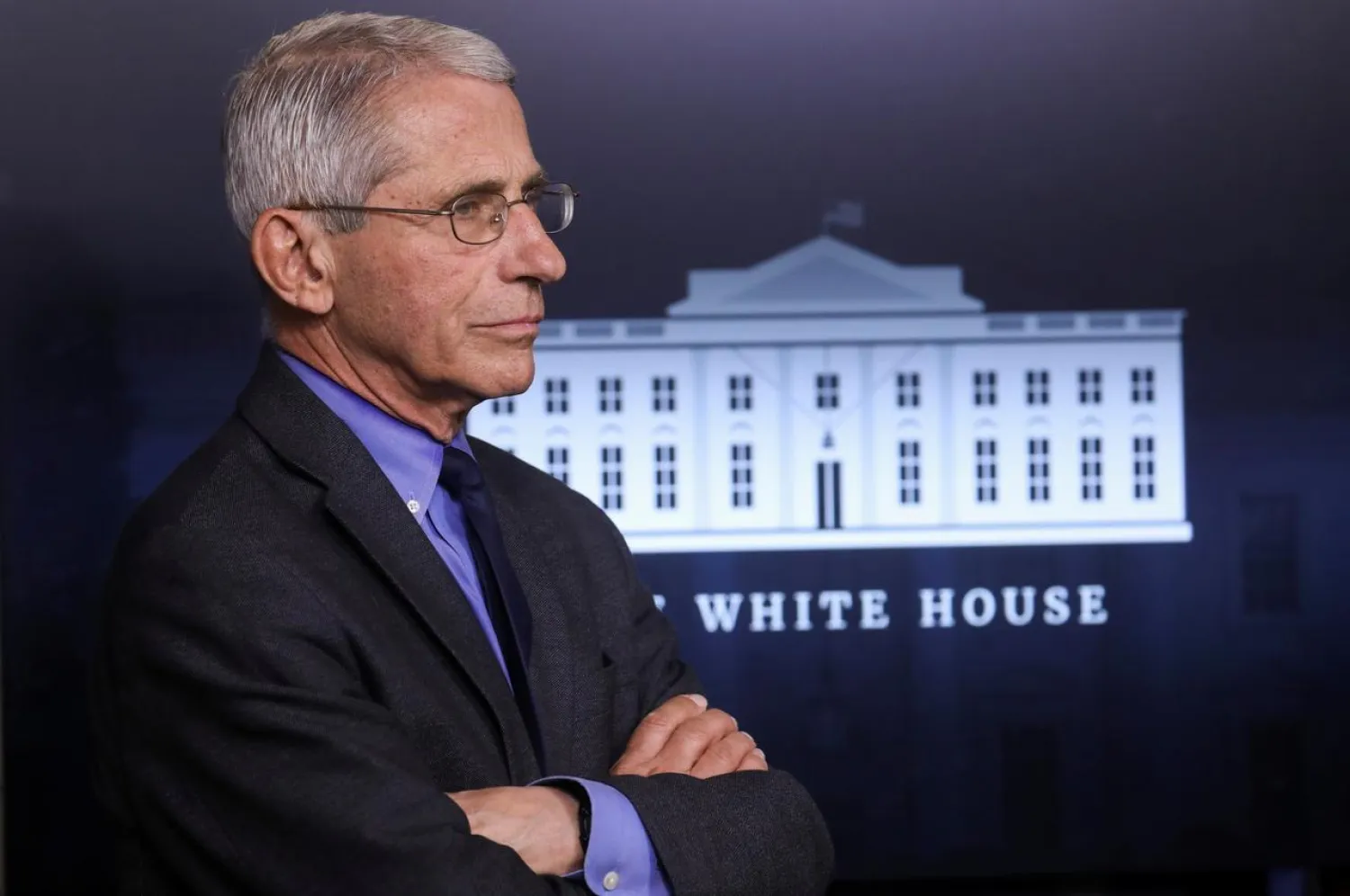

'A Recipe for Disaster': Top US Disease Official Warns Americans on Ignoring Coronavirus Advice

Anthony Fauci, director of the National Institute of Allergy and Infectious Diseases. (Reuters)
TT

'A Recipe for Disaster': Top US Disease Official Warns Americans on Ignoring Coronavirus Advice

Anthony Fauci, director of the National Institute of Allergy and Infectious Diseases. (Reuters)

The recent spike in US coronavirus infections has been fueled in large part by Americans ignoring public health guidelines to keep their distance and wear masks, the government’s top infectious disease official said.

A daily surge in confirmed cases and hospitalizations has been most pronounced in Florida, Texas and other southern and western states that disregarded benchmark guidelines from health officials to wait for a steady, two-week decline in infections before reopening their economies.

“That’s a recipe for disaster,” Anthony Fauci, who directs the National Institute of Allergy and Infectious Diseases, told CNN in an interview broadcast on Monday.

“Now we’re seeing the consequences of community spread, which is even more difficult to contain than spread in a well-known physical location like a prison or nursing home or meatpacking place,” Fauci said in the interview, which was recorded on Friday.

New York Governor Andrew Cuomo, who has become one of the nation’s leading voices during the pandemic, said on Monday that President Donald Trump’s focus on reopening the economy was misguided and that it had backfired. Trump should issue an executive order mandating that people wear masks in public, and he should “lead by example” by wearing one himself.

Face covering to help stop the virus’ spread has become as much a political as a public health issue, with many Trump supporters saying such mandates infringe on their personal freedom.

US Vice President Mike Pence on Sunday pressed Americans to adopt face masks during a trip to Texas and wore one himself, a sharp turnaround for the administration. Other Republican politicians in hard hit states also are now calling for public facing covering.

The city of Jacksonville, Florida, venue for the Republican National Convention in August ahead of the Nov. 3 presidential election, said on its official Twitter account that it will be adopting a mandatory mask requirement for public and indoor locations starting later on Monday.

Arizona and Georgia were among the states reporting record new cases this week. Last week, a total of 15 US states reported records, according to a Reuters tally.

In June, 22 US states reported record increases in new cases, often multiple times, including Alaska, Arkansas, Montana, New Mexico, North Carolina, Oregon and Utah.

The United States accounts for about a quarter of all reported global coronavirus cases and related deaths, which surpassed 10 million and 500,000, respectively, over the weekend.

The pandemic "is not even close to being over," World Health Organization chief Tedros Adhanom Ghebreyesus told a briefing on Monday.

In places where the number of cases are soaring, US health officials are also considering “completely blanketing these communities with tests,” Fauci said, to try to get a better sense of an outbreak.

They would either test groups, or “pools,” of people or have community groups do contact tracing in person rather than by phone. Contact tracing involves identifying anyone exposed to an infected person asking them to voluntarily go into quarantine.

Fauci said he was optimistic that a vaccine could be available by year’s end, but that it was unclear how effective it would prove to be.

No vaccine would be 100 percent effective, he said, adding that it was difficult to achieve so-called herd immunity, in which most of population would be safe because a very large percentage has received a vaccine or gained immunity through prior infections.



Netanyahu Skeptical of an Iran Breakthrough

Israel's Prime Minister Benjamin Netanyahu leaves after a meeting with US President Donald Trump at the White House February 11, 2026, in Washington, DC. (Photo by Brendan Smialowski / AFP)
TT

Netanyahu Skeptical of an Iran Breakthrough

Israel's Prime Minister Benjamin Netanyahu leaves after a meeting with US President Donald Trump at the White House February 11, 2026, in Washington, DC. (Photo by Brendan Smialowski / AFP)

Israeli Prime Minister Benjamin Netanyahu said he was skeptical that US nuclear talks with Iran will lead to a breakthrough but described his meeting with US President Donald Trump at the White House as “excellent.”

Speaking to reporters Thursday in Washington before boarding a plane to return to Israel, Netanyahu said Trump’s terms and Iran’s “understanding that they made a mistake the last time when they did not reach an agreement, may lead them to agree to conditions that will enable a good agreement to be reached.”

While he said he did “not hide my general skepticism” about any deal, he stressed that any agreement must include concessions about Iran’s ballistic missiles program and support for militant proxies.

He added that the conversation Wednesday with Trump, which lasted more than two hours, included a number of other subjects, including Gaza and regional developments but focused on the negotiations with Iran.


German Court Rejects Palestinian's Claim over Weapons Exports

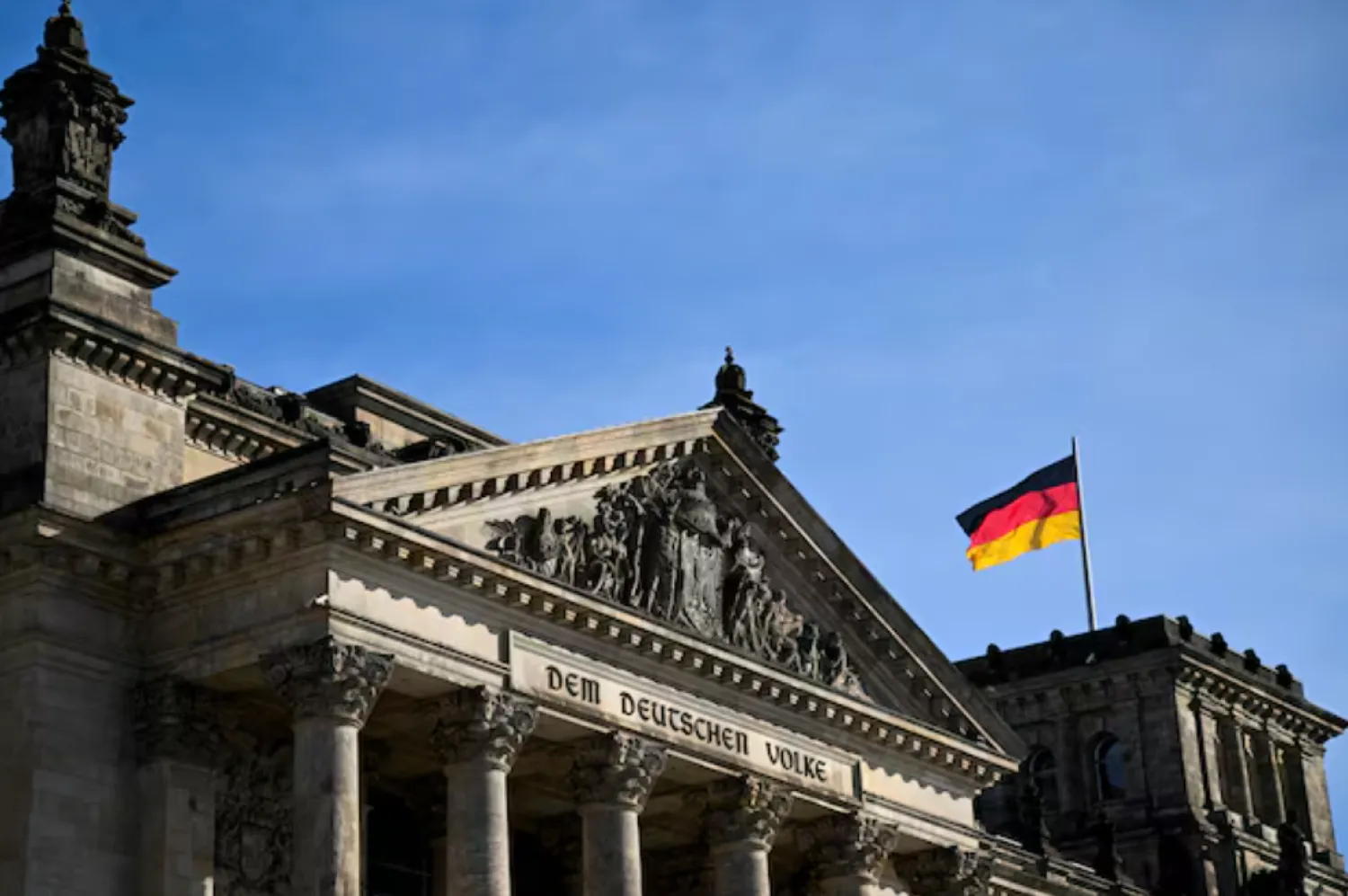
A view shows the front of the Reichstag building, the seat of the German parliament, the Bundestag, in Berlin, Germany March 5, 2025. REUTERS/Annegret Hilse/File Photo
TT

German Court Rejects Palestinian's Claim over Weapons Exports

A view shows the front of the Reichstag building, the seat of the German parliament, the Bundestag, in Berlin, Germany March 5, 2025. REUTERS/Annegret Hilse/File Photo

Germany's highest court on Thursday threw out a case brought by a Palestinian civilian from Gaza seeking to sue the German government over its weapons exports to Israel.

The complainant, supported by the European Center for Constitutional and Human Rights (ECCHR), had been seeking to challenge export licences for German parts used in Israeli tanks deployed in Gaza.

After his case was rejected by lower courts in 2024 and 2025, he had appealed to the Federal Constitutional Court.

But the court in Karlsruhe dismissed the case, stating that "the complainant has not sufficiently substantiated that the specialized courts misjudged or arbitrarily denied a possible duty to protect him", AFP reported.

While Germany is obliged to protect human rights and respect international humanitarian law, this does not mean the state is necessarily obliged to take specific action on behalf of individuals, the court said.

"It is fundamentally the responsibility of the state authorities themselves to decide how they fulfil their general duty of protection," it added.

The ECCHR called the decision "a setback for civilian access to justice".

"The court acknowledges the duty to protect but only in the abstract and refuses to ensure its practical enforcement," said Alexander Schwarz, co-director of the NGO's International Crimes and Legal Accountability program.

"For people whose lives are endangered by the consequences of German arms exports, access to justice remains effectively closed," he said.

The ECCHR had been hoping for a successful appeal after the Constitutional Court ruled last year that Germany had "a general duty to protect fundamental human rights and the core norms of international humanitarian law, even in cases involving foreign countries".

In that case, two Yemenis had been seeking to sue Berlin over the role of the US Ramstein airbase in a 2012 drone attack.

The complainant was one of five Palestinians who initially brought their case against the German government in 2024.


2 Israelis Charged with Using Classified Military Information to Place Bets

The Israeli Iron Dome air defense system intercepts missiles during an Iranian attack on Tel Aviv, Israel, June 18, 2025. (AP Photo/Leo Correa, File)
TT

2 Israelis Charged with Using Classified Military Information to Place Bets

The Israeli Iron Dome air defense system intercepts missiles during an Iranian attack on Tel Aviv, Israel, June 18, 2025. (AP Photo/Leo Correa, File)

Two Israelis have been charged with using classified military information to place bets on how future events will unfold, Israeli authorities said Thursday, accusing the individuals of “serious security offenses.”

A joint statement by the Israeli Ministry of Defense, domestic security service Shin Bet and police said that a civilian and a reservist are suspected of placing bets on the US-based prediction market Polymarket on future military operations based on information that the reservist had access to, The AP news reported.

Israel’s Attorney General’s Office decided to prosecute the two individuals following a joint investigation by police, military intelligence and other security agencies that resulted in several arrests. The two face charges including bribery and obstruction of justice.

Authorities offered no details on the identity of the two individuals or the reservist's rank or position in the Israeli military but warned that such actions posed a “real security risk” for the military and the Israeli state.

Israel’s public broadcaster Kan had reported earlier that the bets were placed in June ahead of Israel’s war with Iran and that the winnings were roughly $150,000.

Israel's military and security services “view the acts attributed to the defendants very seriously and will act resolutely to thwart and bring to justice any person involved in the activity of using classified information illegally,” the statement said.

The accused will remain in custody until the end of legal proceedings against them, the Prosecutor's Office said.

Prediction markets are comprised of typically yes-or-no questions called event contracts, with the prices connected to what traders are willing to pay, which theoretically indicates the perceived probability of an event occurring.

Their use has skyrocketed in recent years, but despite some eye-catching windfalls, traders still lose money everyday. In the US, the trades are categorized differently than traditional forms of gambling, raising questions about transparency and risk.