


Technology Infuses Ancient Hajj Rites Tailored for Pandemic

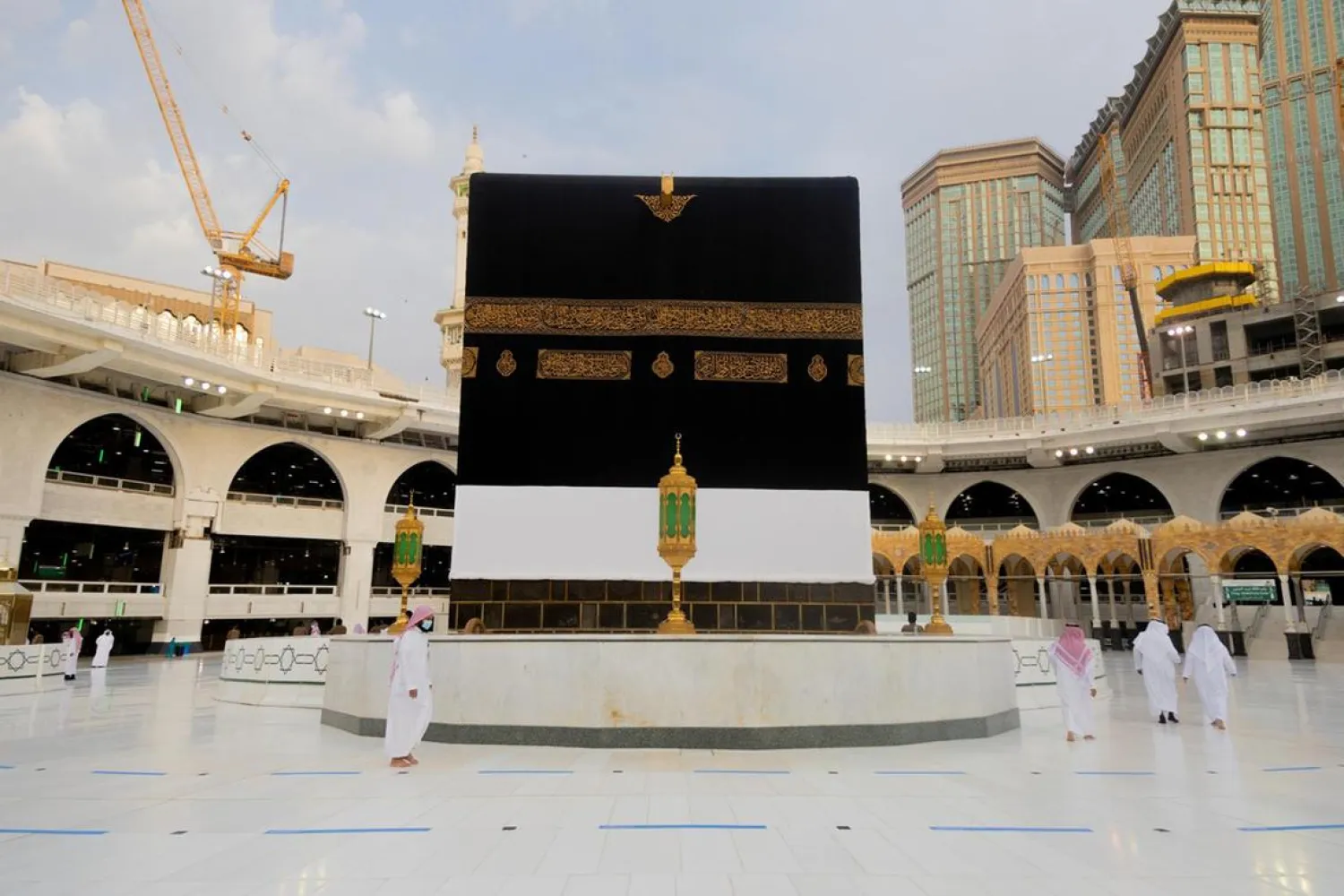
The Kaaba at the Grand Mosque in Mahhak, Saudi Arabia. (Reuters)
TT

Technology Infuses Ancient Hajj Rites Tailored for Pandemic

The Kaaba at the Grand Mosque in Mahhak, Saudi Arabia. (Reuters)

The vast, white-marble floors surrounding Islam’s holiest site, the Kaaba in Makkah, would normally be packed with hundreds of thousands of pilgrims from around the world the day before the Hajj.

On Tuesday, however, only a few officials and workers putting last-minute preparations in place were seen at the Grand Mosque housing the Kaaba.

In place of the 2.5 million pilgrims who performed the Hajj last year, only a very limited number of faithful – around 1,000 - are being allowed to take part in this year’s pilgrimage due to the ongoing coronavirus pandemic.

The select few approved for this year's Hajj have been tested for the virus and are self-isolating in hotel rooms in Makkah before embarking on their holy journey.

Amr Al-Maddah, the chief planning officer at the Ministry of Hajj and Umrah, is helping incorporate the latest technology into the pilgrimage such as thermal scanners and electronic ID cards.

"Right now, technology is our black horse to developing the whole Hajj journey," said al-Maddah, an electronics engineer with a Ph.D. in robotics and artificial intelligence.

"We are taking every step possible to make sure that this Hajj will end with zero cases of COVID-19 and also with zero deaths in our total Hajj numbers," he told The Associated Press.

Before pilgrims could even enter Makkah, they were given wristbands by the Saudi Health Ministry to monitor their movements and ensure the mandatory quarantine was observed. Thermal scanners are being used across the holy sites to monitor people's temperatures.

Each pilgrim is assigned to a group of around 20 others. A group leader will guide them throughout the Hajj to each destination at a specified time, to avoid crowding in places like the Grand Mosque, where Muslims circle the Kaaba and follow a path traveled by the Prophet Ibrahim's wife, Hagar, who ran between two hills searching for water for her dying son.

While on Mount Arafat, where the Prophet Mohammad delivered his final sermon nearly 1,400 years ago and where pilgrims will spend Thursday in deep prayer and repentance, the pilgrims will be wearing high-tech ID cards that connect to an application on their phones.

The card and app allow the government to easily monitor the pilgrims, and gives them a way to reach out to their group leader and make special meal requests.

The card stores the pilgrims’ personal information, health status, residence and other Hajj-related details. In the future, al-Maddah said the cards will be fitted with a location tracker to follow individual pilgrims’ movements. The tracker will be managed by a control room, and can be used as a pay card in place of cash.

Pilgrims have also been given special attire to wear during the Hajj laced with silver nano technology that helps kill bacteria and makes clothes water resistant. Al-Maddah said the measure is a precaution, "even if it can affect almost nothing" or has a minimal chance of "improving health conditions."

It's all part of the special treatment pilgrims are receiving this year. Other perks - all meals, hotel accommodation, transportation and health care is paid for by the Saudi government. Typically, the Hajj can cost thousands of dollars for pilgrims who save for a lifetime for the journey.

This year marks the first time in nearly a century of Saudi rule over Makkah that people from outside the Kingdom will not take part in the five-day Hajj, which is a once in a lifetime requirement of Muslims.

Al-Maddah, who sits on the Hajj planning committee, said allowing people to enter Saudi Arabia from abroad would have posed a global health risk.

Two-thirds of pilgrims this year are foreigners already residing in Saudi Arabia from among the 160 different nationalities that would have normally been represented at the Hajj. The other one-third are Saudi security personnel and medical staff who have recovered from the coronavirus.

All pilgrims had to be between the ages of 20 and 50 with no terminal illnesses and showing no symptoms of the coronavirus.

"For us, safety comes first," al-Maddah said. "We are employing technology to make sure that these services and these precautions are met and delivered in the highest standard."



Ericsson Lags Profit Expectations as AI Demand Drives Up Chip Costs

FILE PHOTO: A woman walks across the logo of Ericsson at the ongoing India Mobile Congress 2025 at Yashobhoomi, a convention and expo center in New Delhi, India, October 8, 2025. REUTERS/Anushree Fadnavis/File Photo
TT

Ericsson Lags Profit Expectations as AI Demand Drives Up Chip Costs

FILE PHOTO: A woman walks across the logo of Ericsson at the ongoing India Mobile Congress 2025 at Yashobhoomi, a convention and expo center in New Delhi, India, October 8, 2025. REUTERS/Anushree Fadnavis/File Photo

Sweden's Ericsson reported a first-quarter core profit that slightly missed market expectations on Friday, citing increasing chip costs caused by artificial intelligence demand and a sales slowdown in North America.

The network equipment maker is facing rising input costs partially due to high demand for AI technology that is driving up prices of semiconductors, CEO Börje Ekholm said in a statement.

"We are working ⁠together with our ⁠suppliers to mitigate this. But also, we will need to work with our customers to share the burden on this," finance chief Lars Sandström added in an interview with Reuters.

The company reported an adjusted operating profit of 5.2 billion Swedish ⁠crowns ($566 million), excluding restructuring charges, for the first quarter of 2026. Analysts polled by Infront were expecting 5.4 billion crowns on average.

Ericsson, one of the main Western suppliers of network equipment alongside Finland's Nokia, is betting heavily on the US market even as transatlantic ties have become strained under President Donald Trump's rule.

The Swedish group has significant exposure to the United States, especially after winning a $14 ⁠billion ⁠deal with operator AT&T in 2023, which could help outweigh slower telecoms investments in other markets.

Sandström said sales in North America fell by a mid-single-digit percentage in the quarter, compared to a strong year-ago period that was boosted by tariff-related demand. Underlying market conditions in the region remain solid, he added.

The group reported quarterly net sales of 49.3 billion crowns, compared with an Infront poll estimate of 50.7 billion crowns.


EU: Google Should Allow Third-party Search Engines Access to Data

FILE PHOTO: Google's logo during the CERAWeek energy conference 2026 in Houston, Texas, US, March 24, 2026. REUTERS/Danielle Villasana/File Photo
TT

EU: Google Should Allow Third-party Search Engines Access to Data

FILE PHOTO: Google's logo during the CERAWeek energy conference 2026 in Houston, Texas, US, March 24, 2026. REUTERS/Danielle Villasana/File Photo

The European Commission has sent preliminary findings to Google on proposed measures to comply with the EU's Digital Markets Act, which would allow third-party search engines to access Google search data, including ⁠that of artificial ⁠intelligence chatbots with search functionalities, the commission said on Thursday.

Interested parties have until May ⁠1 to submit their views on the proposed measures, with a final decision to be made in July.

Google, the world's most popular search engine, was charged in March 2025 with ⁠breaching ⁠the Digital Markets Act. It has made its own proposals to mollify rivals and EU regulators, but rivals have complained the measures were insufficient.


Samsung Asks Court to Block Illegal Strike Activities by Unions

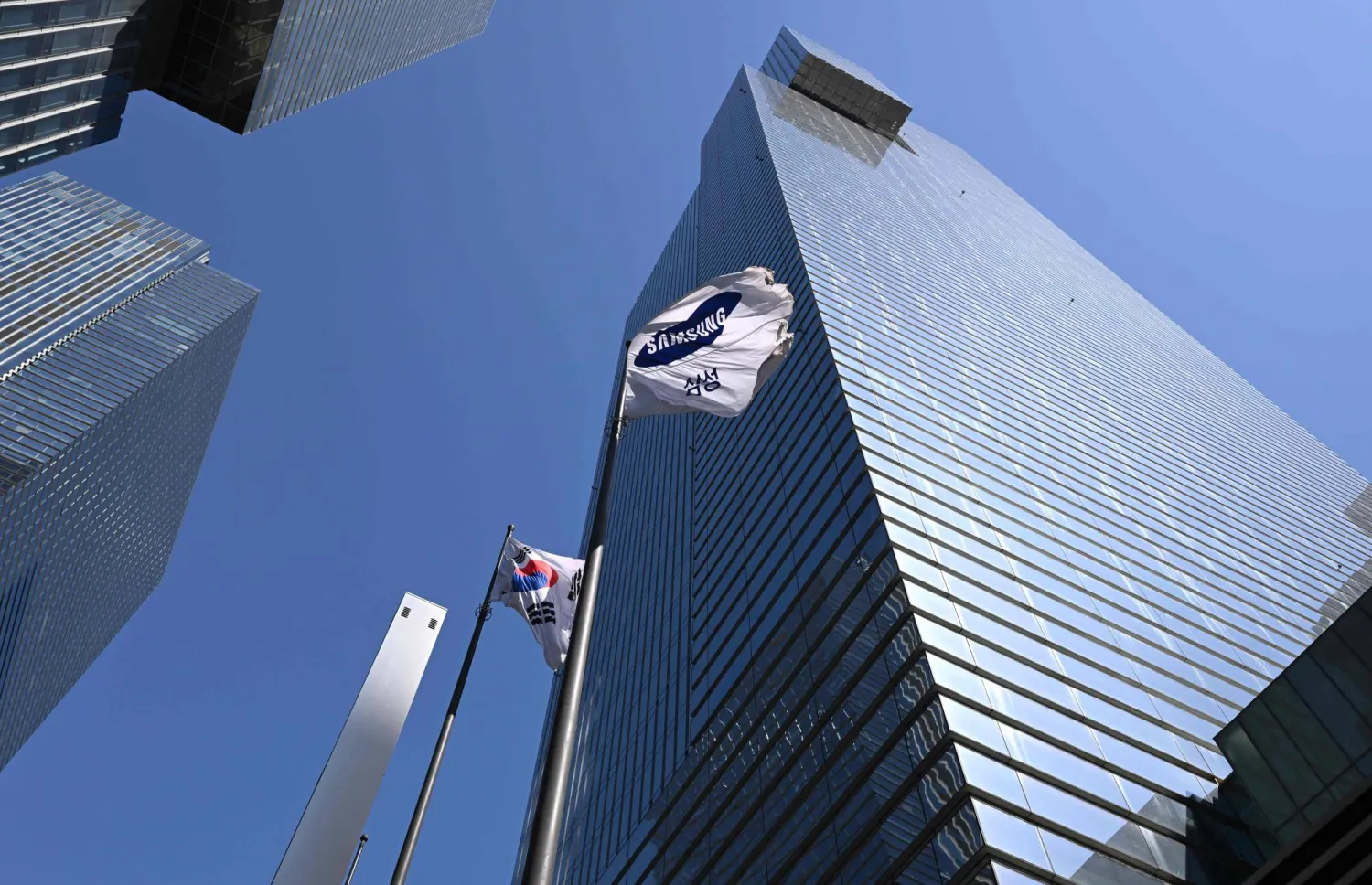
A South Korean national flag (L) and a Samsung flag (R) flutter outside the company's Seocho building in Seoul on April 7, 2026. (Photo by Jung Yeon-je / AFP)
TT

Samsung Asks Court to Block Illegal Strike Activities by Unions

A South Korean national flag (L) and a Samsung flag (R) flutter outside the company's Seocho building in Seoul on April 7, 2026. (Photo by Jung Yeon-je / AFP)

Samsung Electronics asked a court on Thursday to block its South Korean labour unions engaging in illegal activities during a planned strike, a spokesperson said, as a wage dispute threatens to disrupt operations at the world's top memory chipmaker.

Samsung did not elaborate on details of its legal action. Unions labelled it a "declaration of war," accusing the company of infringing on its right to strike, which ⁠is protected under the ⁠law.

Unionized workers at Samsung last month voted to authorize strike plans and threatened to walk out for 18 days from May 21, should they fail to agree on a wage deal with management.

The unions also plan to ⁠hold a major rally on April 23, ramping up pressure on Samsung during wage negotiations.

Samsung workers, frustrated by a pay gap with crosstown rival SK Hynix, are calling on Samsung to remove its performance pay cap and link bonuses to operating profit.

The company estimated it made an operating profit of 57.2 trillion won ($38.85 billion) for the January to March period, more than an eightfold ⁠jump ⁠from 6.69 trillion won a year earlier.

Samsung's union leader told Reuters that a potential strike could affect about half the output at Samsung's giant semiconductor complex in Pyeongtaek, south of Seoul, the capital.

A strike at the world's largest manufacturer of memory chips could worsen bottlenecks in global supply of semiconductors, stemming from robust demand for artificial intelligence data center operations that has curbed supply to industries from cars and computers to smartphones.