Israel, UAE Deal Follows Years of Failed Peace Initiatives

US President Donald Trump announces that Israel and the United Arab Emirates have reached a peace deal that will lead to the full normalization of diplomatic relations between the two Middle Eastern nations in an agreement that Trump helped broker, at White House in Washington, US, August 13, 2020. REUTERS/Kevin Lamarque
TT

Israel, UAE Deal Follows Years of Failed Peace Initiatives

US President Donald Trump announces that Israel and the United Arab Emirates have reached a peace deal that will lead to the full normalization of diplomatic relations between the two Middle Eastern nations in an agreement that Trump helped broker, at White House in Washington, US, August 13, 2020. REUTERS/Kevin Lamarque

A deal between Israel and the United Arab Emirates intended to fully normalize relations follows a history of peace efforts between Israel and the Palestinians and their Arab allies that have failed to overcome decades of distrust and violence.

Most Arab nations, including the UAE, have not recognized Israel or had formal diplomatic or economic relations with it because of what they regard as Israel’s thwarting of Palestinians’ aspirations for a state of their own.

Reuters listed the main initiatives undertaken by the parties themselves and international mediators since the 1967 Middle East War, when Israel captured the West Bank and East Jerusalem, the Sinai peninsula and the Gaza Strip and the Golan Heights:

1967 - UN Security Council Resolution 242

After the Six-Day War, UN Security Council Resolution 242 calls for the “withdrawal of Israeli armed forces from territories occupied in the recent conflict” in return for all states in the area to respect each other’s sovereignty, territorial integrity, and independence.

The resolution is the foundation for many peace initiatives but its imprecise phrasing - is the reference to all territories or just some? - has complicated efforts for decades.

1978 - Camp David agreement

Israel’s Menachem Begin and Egypt’s Anwar Sadat agree on a framework for regional peace that calls for an Israeli withdrawal in stages from Egypt’s Sinai and a transitional Palestinian government in the West Bank and Gaza.

1979 - Israeli-Egyptian peace treaty

The first peace treaty between Israel and an Arab country sets out plans for a complete Israeli withdrawal from Sinai within three years. in 1981, Sadat was assassinated by extremist Islamist revolutionaries at a military parade in Cairo.

1991 - Madrid summit

Representatives of Israel and the Palestine Liberation Organization (PLO) attend a peace conference. No agreements are reached but the scene is set for direct contacts.

1994 - Israel-Jordan agreement

Jordan becomes the second Arab country to sign a peace treaty with Israel. But the treaty is unpopular and pro-Palestinian sentiment is widespread in Jordan.

1993-1995 - Declaration of Principles/Oslo Accords

Israel and the PLO hold secret talks in Norway that result in interim peace accords calling for the establishment of Palestinian interim self-government and an elected council in the West Bank and Gaza for a five-year transitional period, Israeli troop withdrawals and negotiations on a permanent settlement.

2000 - Camp David summit

US President Bill Clinton convenes Palestinian leader Yasser Arafat and Israeli Prime Minister Ehud Barak at Camp David. They fail to agree. Another Palestinian uprising ensues.

2002-2003 - Bush Declaration/Arab peace initiative/Road Map

George W. Bush becomes the first US president to call for the creation of a Palestinian state, living side-by-side with Israel “in peace and security”.

2002 - Saudi Arabia presents Arab League-endorsed peace plan for full Israeli withdrawal from occupied territory and Israel’s acceptance of a Palestinian state in return for normal relations with Arab countries. The United States, the European Union, the United Nations, and Russia present their own roadmap to a permanent two-state solution to the conflict.

2007 - Annapolis summit

Palestinian President Mahmoud Abbas and Israeli Prime Minister Ehud Olmert fail to reach a deal at a US-hosted summit. Olmert later says they were close to a deal but a graft investigation against him and a Gaza war in 2008 scupper any agreement.

2009 - Netanyahu’s Bar-Ilan address

Prime Minister Benjamin Netanyahu says he would be prepared for a peace deal that includes the establishment of a demilitarized Palestinian state. He also sets another condition: Palestinian recognition of Israel as the “state of the Jewish people”.

2013 - 2014 - Washington peace talks/negotiations collapse

US Secretary of State John Kerry coaxes Israelis and Palestinians to resume talks. They fail and are suspended in April 2014.

June 2019 - Trump economic plan announced

Jared Kushner, Trump’s son-in-law, launches its preliminary stage in Bahrain. He takes an “economy first” approach, calling for a $50 billion investment fund to boost the Palestinian and neighboring Arab economies. Palestinian leaders dismiss it.

2019
Netanyahu says he intends to annex West Bank settlements, and much of the Jordan Valley if elected. Later, US Secretary of State Mike Pompeo effectively backs Israel’s claimed right to build Jewish settlements in the occupied West Bank by abandoning a four-decade-old US position that they were inconsistent with international law.

Arab League head Ahmed Aboul Gheit says in June 2019 the only acceptable resolution for Arab states is Israel’s acceptance of the initiative drawn up by Saudi Arabia in 2002.

Sudanese Patients with Chronic Diseases Struggle with Medicine Shortages, Soaring Prices

Packages of approved diabetes and blood pressure medications at a pharmacy in Omdurman, Sudan (Asharq Al-Awsat)
TT

Sudanese Patients with Chronic Diseases Struggle with Medicine Shortages, Soaring Prices

Packages of approved diabetes and blood pressure medications at a pharmacy in Omdurman, Sudan (Asharq Al-Awsat)

When the power goes out at his home, as it frequently does, Al-Hadi Osman is forced to place the insulin he struggled to find and afford in a container filled with water, hoping to prevent it from spoiling.

"Insulin disappears from pharmacies for long periods, and sometimes I have to turn to donors when I can't afford to buy it," he told Asharq Al-Awsat.

Kamal Idris faces a similar struggle. He says he sometimes spends more than two months searching for medication to treat high blood pressure without finding it.

His financial circumstances make obtaining medicine even more difficult. Most of the time, he buys tablets by the strip rather than purchasing an entire package. Occasionally, he relies on medicines sent by relatives or friends living in Arab countries.

Idris told Asharq Al-Awsat that he also takes Glucophage to treat diabetes and vitamin B12 supplements.

The experiences of Osman and Idris illustrate the difficulties patients in Khartoum face in maintaining regular treatment. However, pharmacists interviewed by Asharq Al-Awsat said medicine availability has generally improved, although some medications remain scarce and prices are often beyond patients' means.

Sudan's pharmaceutical supply network was disrupted by the war that began in April 2023, cutting off distribution routes that had previously carried medicines from the capital to other states.

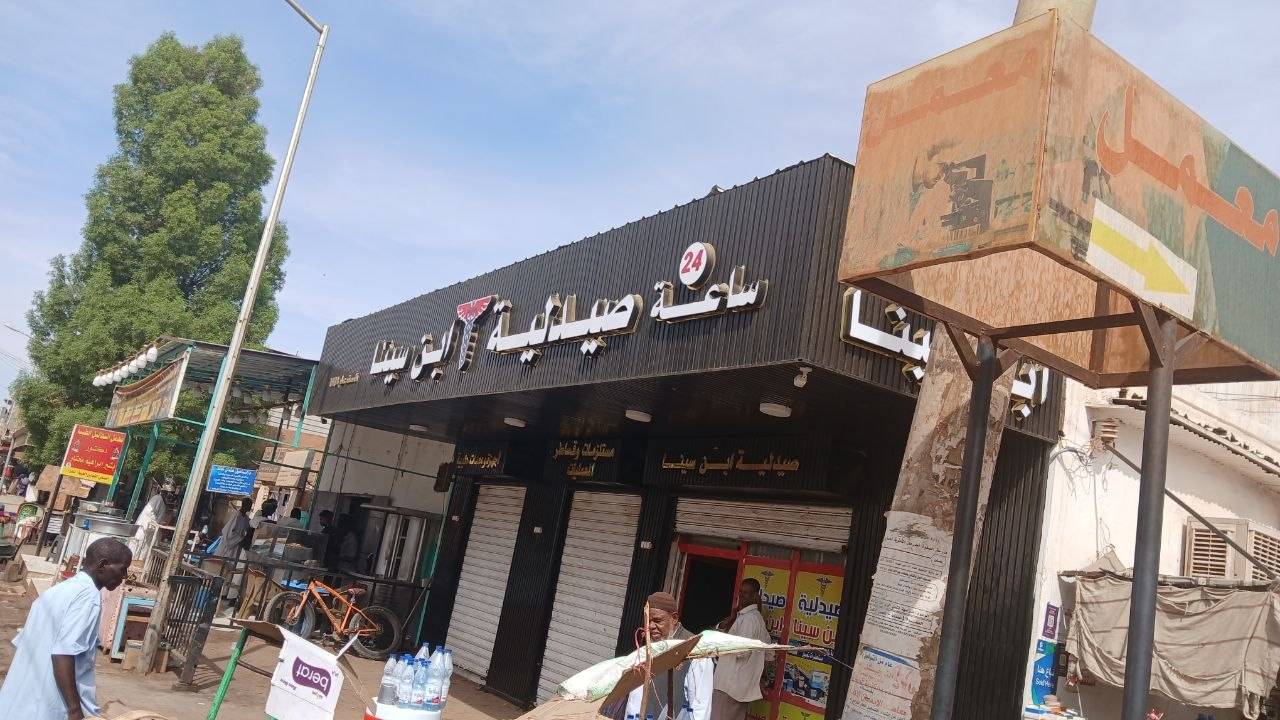
The exterior of a pharmacy operating in Omdurman (Asharq Al-Awsat)

However, the National Medical Supplies Fund (NMSF), the government agency responsible for medical supplies, has gradually resumed operations following its return to Khartoum.

Pharmacist Walid Farid told Asharq Al-Awsat that Amilo, a blood pressure medication, costs approximately 6,000 Sudanese pounds, while Amilosan and Candestan each cost around 15,000 pounds.

Among diabetes medications, Amaryl costs between 30,000 and 45,000 pounds, depending on the formulation and manufacturer, while Metformin costs approximately 54,000 Sudanese pounds.

Farid said a package of insulin costs 30,000 pounds when available.

However, another pharmacist who works for the NMSF told Asharq Al-Awsat that insulin is generally unavailable in pharmacies, with the exception of premixed insulin, which he said is available through the fund at prices ranging from 26,000 to 30,000 pounds.

Pharmacist Nafisa Abdelrahman offered a somewhat different assessment, saying most medications for chronic diseases are available on the market, although shortages persist in certain types of premixed and long-acting insulin, including Lantus and insulin pens.

"Difficulties obtaining some of these types existed even before the war," she said.

Premixed insulin combines two types of insulin with different onset times and durations of action in fixed proportions, typically 30% short-acting insulin and 70% intermediate-acting insulin.

Switching between insulin formulations requires medical supervision, making access to the specific type prescribed to a patient essential, even when other formulations are available.

Monthly treatment costs vary according to individual needs.

Farid explained that some patients require 20 to 30 units of insulin per dose, while others need higher doses. The number of packages required depends on the patient's total daily dosage, as well as the size and concentration of each package.

Abdelrahman said rising prices have placed a burden on both patients and pharmacists.

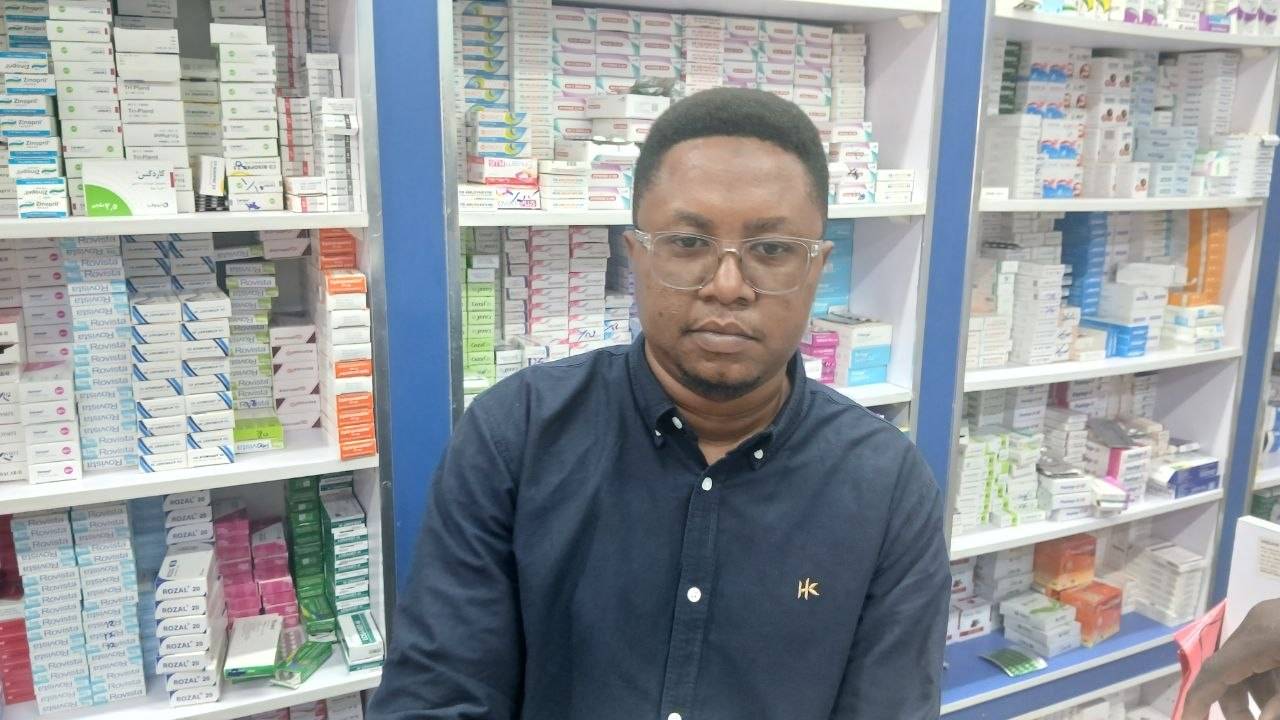
Pharmacist Mohammed Omar speaks to Asharq Al-Awsat about medications for chronic diseases (Asharq Al-Awsat)

She attributed the increases to multiple exchange rates and the emergence of parallel import channels, with some traders pricing medicines according to their import costs.

"Prices sometimes change almost daily, while patients' urgent need for treatment drives some to buy their medicines regardless of how expensive they become," she said.

Farid also attributed fluctuations in medicine prices to the Sudanese pound's volatility against the US dollar, which has made pricing unstable.

He recalled once advising a pharmacy owner to temporarily suspend sales until economic conditions stabilized.

According to pharmacist Omar, manufacturers or entities financing imports determine the initial price of medicines, after which an additional 20% is applied under what he described as the new pricing system.

He estimated that the cost of a package of medicine has doubled since the beginning of the year, attributing the increase to the depreciation of the Sudanese pound.

"High prices sometimes slow sales, leaving certain medicines sitting on pharmacy shelves because patients cannot afford them," he said.

Abdelrahman explained that some pharmacies allow customers to purchase blood pressure medication by the strip when a package contains several strips.

However, opening insulin packages and selling individual doses is not common practice in retail pharmacies because of storage and safety requirements.

Omar said patients requiring urgent doses receive treatment in hospital emergency departments according to their medical condition.

Disruptions to pharmaceutical distribution date back to the early months of the war.

In June 2023, the World Health Organization (WHO) reported that military forces had reportedly taken control of the NMSF's central warehouses in Khartoum.

The facilities stored medicines intended for distribution across Sudan and housed the National Pharmacy for Chronic Diseases.

The NMSF accused the Rapid Support Forces (RSF) of preventing access to its warehouses and said refrigerated vehicles used to transport medicines had been looted.

The agency was subsequently forced to organize distribution operations from Port Sudan, while continuing to face difficulties delivering shipments to Khartoum and other areas.

Sudan's National Investigation Committee estimated the fund's war-related losses at more than $500 million, including life-saving medicines, medical solutions and equipment.

In August 2026, the NMSF announced the reopening of 10 warehouses at its Khartoum headquarters and the restoration of its electronic supply management system.

In October, it announced the reopening of the Martyr Ahmed Hassan Pharmacy, a central pharmacy in the capital.

Omar estimated that medicine availability through the NMSF had reached 68% this year, with the agency aiming to increase that figure to 85% by 2027 to meet the needs of Sudan's states.

He identified two continuing obstacles to increasing supplies: the high cost of foreign currency and disruptions to maritime transport.

He said shipping disruptions, including those affecting traffic through the Strait of Hormuz, had interfered with deliveries of insulin and blood pressure medications to Khartoum state over the past six months.

According to Abdelrahman, some domestic pharmaceutical factories have resumed operations but continue to face multiple fees and levies, along with rising costs for imported raw materials.

She warned that additional medications could become unavailable if the Sudanese pound continues to depreciate.

Omar said Sudan currently imports insulin, although a proposal exists to manufacture it domestically. Implementing such a project, however, would require time, stability and adequate resources.

In November, the WHO called for urgent, sustained funding to protect and expand essential health services in Sudan.

The organization said 21 million people across the country require health assistance and that 37% of healthcare facilities are out of service.

The appeal followed a WHO delegation's visit to Kosti in White Nile state and El Obeid in North Kordofan between November 7 and 12.

The delegation documented medicine shortages and difficulties accessing healthcare, reporting that power outages were disrupting services including surgery, intensive care and kidney dialysis.

Back in Khartoum, Kamal Idris continues to rely on whatever medicine he can afford, sometimes purchasing just one strip of tablets or using supplies sent by relatives and friends in Saudi Arabia.

Meanwhile, Al-Hadi Osman continues searching for someone who can help him pay for insulin. Even when he manages to obtain it and bring it home, frequent power outages remain another obstacle in his struggle to maintain treatment.


What’s Next After Climate Talks Fail?

COP31 President and Türkiye’s Minister of Environment, Urbanization and Climate Change Murat Kurum (C) attends a plenary session of the United Nations Climate Change Conference (COP31) in Antalya on November 22, 2026. (AFP)
TT

What’s Next After Climate Talks Fail?

COP31 President and Türkiye’s Minister of Environment, Urbanization and Climate Change Murat Kurum (C) attends a plenary session of the United Nations Climate Change Conference (COP31) in Antalya on November 22, 2026. (AFP)

The collapse of marathon climate talks in Türkiye has renewed questions about reform of their consensus requirement, and galvanized calls for legal action and ambitious side agreements between like-minded countries.

The "conference of the parties" talks, better known as COP31, ended without agreement and two days over schedule on Sunday, as countries deadlocked on fossil fuels, finance, science and carbon-removing technologies.

It was an ignominious end for an unusual dual-presidency shared by Australia and Türkiye, and negotiations chair Chris Bowen, who is Australia's climate minister, said it was "very disappointing".

For many observers, the outcome was the inevitable result of a process that has regularly been hamstrung by its insistence on consensus.

"Decision-making that requires every country to agree on every comma is not fit for a climate emergency," said Nikki Reisch, director of the Center of International Environmental Law's climate and energy program.

Bowen identified the same issue.

"The fundamental root of the problem is that when COP was created, for reasons I understand, it was made consensus only," he said. "That's a very tough ask."

- 'Significant reform' -

Sunday's collapse has renewed calls for a reform to that consensus-based process, in which any one country, or a small minority, can nix progress.

"It has been clear for years that the COP process is in need of significant reform," wrote former US vice president Al Gore on X.

He urged a "reinvigorated multilateral process that reflects the latest science and represents the will of the majority of the world."

But as Bowen noted, "you also need consensus to change consensus" -- in other words, all countries would have to agree those reforms.

He described that as a "particular challenge," although others might characterize it as simply impossible.

The COP31 talks deadlocked over multiple issues, notably whether the so-called cover decision would mention phasing out planet-warming fossil fuels.

Several countries refused a deal without that mention, while others were vehemently opposed to its inclusion.

There were other serious faultlines, including the timing of scientific work from the Intergovernmental Panel on Climate Change, and language on carbon capture, a technology championed by the fossil fuel industry but criticized by some as costly and ineffective.

Crucially for developing countries, there was also no progress on finance -- the money badly needed to help countries transition energy systems and adapt to the natural disasters climate change is already worsening.

"The fundamental problem for globally agreed climate policy is more starkly obvious than ever: fossil fuel powers will not agree to have their resource wealth devalued, and rich countries won't provide enough climate finance to the developing world," said Frank Jotzo, professor of environmental and climate change economics at the Australian National University.

- 'Doesn't replace COP' -

Other COPs have ended in failure before, including most recently in 2009.

But for all the forum's failings, most agree that the COP process remains important for its unique format, bringing together virtually every country in the world and offering equal billing to all.

As a result, few suggest the process should be abandoned, but there are growing calls for alternatives to advance climate change action, including legal suits.

That route is already being pursued, most notably with an International Court of Justice advisory opinion that confirmed states have a binding legal obligation to combat climate change.

"If the negotiations are not delivering what individual states need, then they'll certainly consider turning to the ICJ and other international courts," said Harj Narulla, an international lawyer who advised the Solomon Islands at COP31.

Others expect growing interest in agreements made outside the COP process, like the Santa Marta initiative, bringing together countries committed to phasing out fossil fuels.

The process grew out of the COP30 meeting in Brazil, where interested nations sought to bypass a lack of consensus on the issue.

Members held talks earlier this year, and agreed some first steps, including an expert scientific panel to advise on pathways.

These "plurilateral processes are growing," said Jotzo, and more are needed, including on carbon removal technologies and finance for adaptation.

Bowen too said he sees the Santa Marta process becoming "increasingly important."

"Doesn't replace COP. It's just another way of doing it," he added.


The Secret Courage of Australia’s Bondi Shooting Hero, One Year On

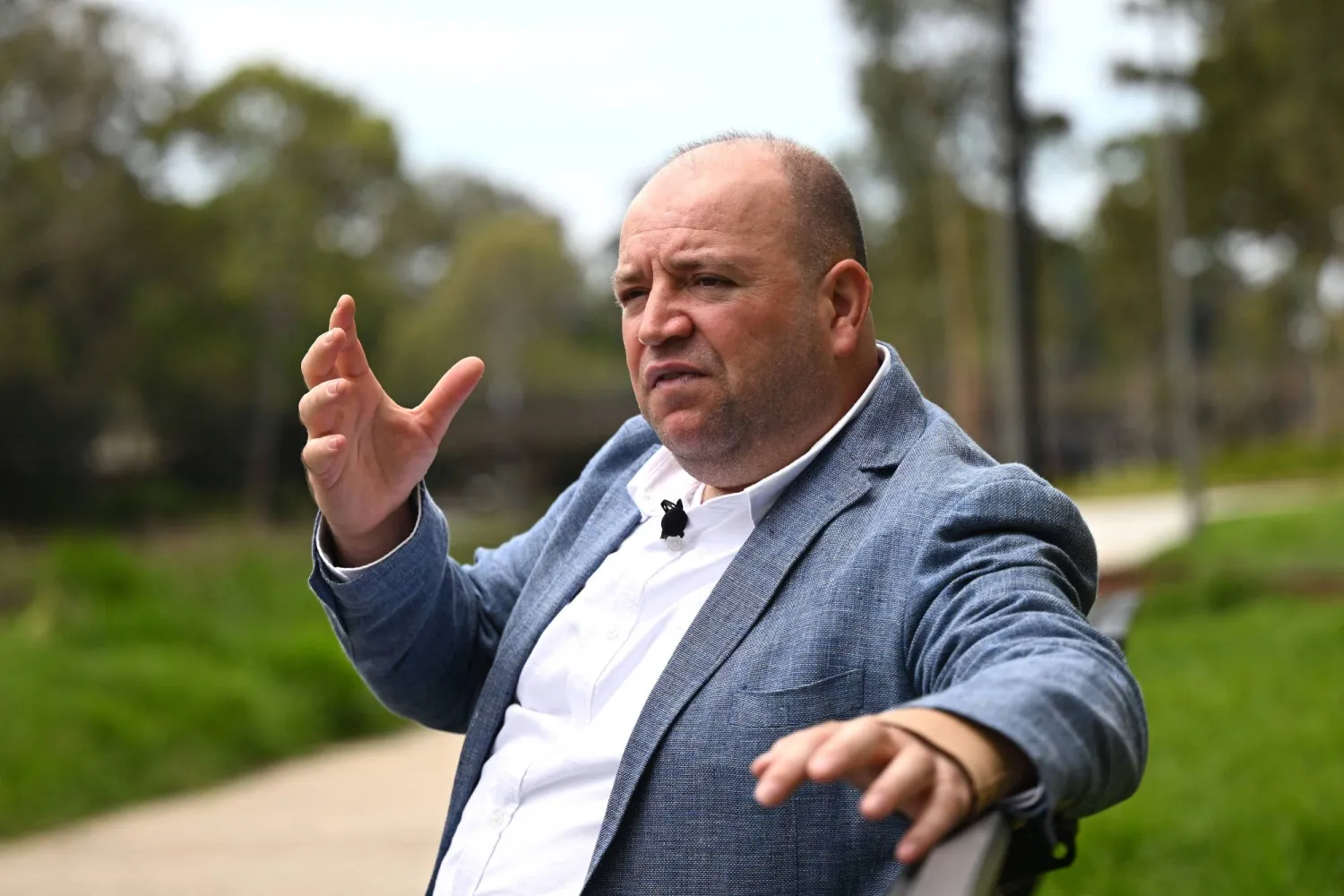
Ahmed al-Ahmed, who helped tackle and disarm one of the attacker during the Bondi terror attack, recalls the events of the day during an interview with AFP in Sydney on November 20, 2026, ahead of the first anniversary of the attack. (AFP)
TT

The Secret Courage of Australia’s Bondi Shooting Hero, One Year On

Ahmed al-Ahmed, who helped tackle and disarm one of the attacker during the Bondi terror attack, recalls the events of the day during an interview with AFP in Sydney on November 20, 2026, ahead of the first anniversary of the attack. (AFP)

A man who heroically tackled a gunman at a Jewish festival on Bondi Beach said his wounds still ache as he issued a plea for unity almost a year after Australia's worst mass shooting in decades.

Fruit seller Ahmed al-Ahmed, who was born in Syria and moved to Australia in 2006, was visiting the Sydney beach with his cousin on a Sunday afternoon last December when he heard shots ring out.

He rushed to tackle one of the gunmen as they fired round after round into a crowd of men, women and children.

"I didn't think about it," he told AFP.

"Because to save people's lives, there's no need to think, when you hear the kids and the women and old people and men and everyone asking for help."

"Every human has a secret courage in his heart. It comes in the time when needed, when it's asked.

"I heard people asking, and I did it."

Fifteen people were killed and dozens were wounded on December 14, 2025, as crowds gathered at the world-famous beach to celebrate Hanukkah.

An elderly woman also died this month from complications linked to her wounds.

Ahmed's actions have been credited with stopping many more from dying after video of his act of bravery taken by a bystander went viral.

The father of two was lauded as a "true Australian hero" by Prime Minister Anthony Albanese, and a fundraising campaign raised millions of dollars.

But Ahmed said much of the initial fame passed him by -- he was too focused on recovering from the devastating wounds he suffered.

- Face to face with a killer -

Tackling the gunman and wrestling the rifle from his hands, Ahmed said he found himself face to face with the killer -- a memory that still haunts him "day by day, night by night".

"He was thinking he's a god, and no one can touch him," he said.

In that moment Ahmed was aiming the gun at the shooter.

"I asked him: 'leave, leave'," he said.

"I don't wanna shoot."

The shooter retreated, leaving Ahmed to take cover behind a tree, where he came under fire.

"I start feeling my whole clothes get wet, you know, similar like someone taking a bucket of blood and threw it on you," he said.

"And then I start feeling: 'Oh, I'm gonna die. Oh my God, my kids, my family, my wife. What's happened?'"

The man he tackled, Sajid Akram, was killed by police at the scene.

His son, Naveed, remains in custody facing a total of 78 charges, including terrorism and murder. He has yet to enter a plea.

Two of the five bullets that struck Ahmed that day are still inside him.

He is on medication for nerve pain and to help him sleep, with the mobility of his left hand still limited.

"I'm still suffering," said Ahmed, who focused his energies on writing a book -- "Light Will Win" -- that was released this month.

He is also setting up a foundation to help women and children trapped in violence, inspired by his own difficult upbringing as the son of a police officer in Syria.

He told AFP he wouldn't do it any differently if he relived that fateful day, despite his wounds.

"I've been chosen. God chose me for that and to lead our community not to be divided," Ahmed said.

- 'We are human beings' -

The Bondi shooting -- one of the worst attacks on Jews worldwide since the October 7 killings by Hamas in Israel -- changed Australia forever.

The ruling Labor Party announced a crackdown on gun ownership and new laws allowing them to ban extremist political groups.

However, Australia has also since seen a surge in support for Pauline Hanson's far-right One Nation party, which has vowed sweeping cuts to immigration, especially from "radical Islamic countries".

For Ahmed -- a Muslim and an immigrant -- such politics have no place in the country he calls home.

"I'm a proud Aussie," he said.

"One Nation -- it's wrong, wrong, wrong, wrong."

"We have to respect each other. We have to care about each other."

"You know, we are human beings. No matter where you come from, no matter what your color, what you are, what's your religion, we have to treat each other with respect, and don't judge and blame others."

"Australia is multicultural."

Equating the actions of the two shooters at Bondi with his religion -- as many have -- is unthinkable for Ahmed.

"This is not a Muslim," he said. "I'm a Muslim, and I put my life in danger."

"I never heard my religion say to kill innocent people. That's not right."

"We are human beings. This is me, Ahmed al-Ahmed."