


US Faces Back-To-School Laptop Shortage

Jason Rand cuts open the shrink wrap around a pallet of Lenovo Chromebook laptops as they sit in a Denver Public Schools warehouse after arriving Friday, Aug. 21, 2020, in Denver. Schools across the United States are facing shortages and long delays in getting this year's most crucial back-to-school accessories: the laptops and other equipment needed for online learning. (AP Photo/David Zalubowski)
TT

US Faces Back-To-School Laptop Shortage

Jason Rand cuts open the shrink wrap around a pallet of Lenovo Chromebook laptops as they sit in a Denver Public Schools warehouse after arriving Friday, Aug. 21, 2020, in Denver. Schools across the United States are facing shortages and long delays in getting this year's most crucial back-to-school accessories: the laptops and other equipment needed for online learning. (AP Photo/David Zalubowski)

Schools across the United States are facing shortages and long delays, of up to several months, in getting this year´s most crucial back-to-school supplies: the laptops and other equipment needed for online learning, an Associated Press investigation has found.

The world´s three biggest computer companies, Lenovo, HP, and Dell, have told school districts they have a shortage of nearly 5 million laptops, in some cases exacerbated by Trump administration sanctions on Chinese suppliers, according to interviews with over two dozen US schools, districts in 15 states, suppliers, computer companies and industry analysts.

As the school year begins virtually in many places because of the coronavirus, educators nationwide worry that computer shortfalls will compound the inequities - and the headaches for students, families, and teachers.

"This is going to be like asking an artist to paint a picture without paint. You can´t have a kid do distance learning without a computer," said Tom Baumgarten, superintendent of the Morongo Unified School District in California´s Mojave Desert, where all 8,000 students qualify for free lunch and most need computers for distance learning.

Baumgarten was set to order 5,000 Lenovo Chromebooks in July when his vendor called him off, saying Lenovos were getting "stopped by a government agency because of a component from China that´s not allowed here," he said. He switched to HPs and was told they would arrive in time for the first day of school Aug. 26. The delivery date then changed to September, then October. The district has about 4,000 old laptops that can serve roughly half of students, but what about the rest, Baumgarten asks rhetorically. "I´m very concerned that I´m not going to be able to get everyone a computer."

Chromebooks and other low-cost PCs are the computers of choice for most budget-strapped schools. The delays started in the spring and intensified because of high demand and disruptions of supply chains, the same reasons that toilet paper and other pandemic necessities flew off shelves a few months ago. Then came the Trump administration's July 20 announcement targeting Chinese companies it says were implicated in forced labor or other human rights abuses against a Muslim minority population, the Uighurs. The Commerce Department imposed sanctions on 11 Chinese companies, including the manufacturer of multiple models of Lenovo laptops, which the company says will add several weeks to existing delays, according to a letter Lenovo sent to customers.

School districts are pleading with the Trump administration to resolve the issue, saying that distance learning without laptops will amount to no learning for some of the country´s most vulnerable students.

"It's a tough one because I´m not condoning child slave labor for computers, but can we not hurt more children in the process?" said Matt Bartenhagen, IT director for Williston Public Schools in North Dakota, a district of 4,600 waiting on an order for 2,000 Lenovo Chromebooks. "They were supposed to be delivered in July. Then August. Then late August. The current shipping estimate is `hopefully" by the end of the year.

The Denver Public Schools district, the largest in Colorado, is waiting for 12,500 Lenovo Chromebooks ordered in April and May. The district has scrambled to find machines, settled for whatever is available and is handing out everything they get to students that need them. Still, when school starts Wednesday, they will be about 3,000 devices short, says Lara Hussain, an IT director for the district.

"We were promised devices. Our students need devices. And as a result of not receiving devices we will have students starting the school year unable to participate. It´s unconscionable," said Hussain.

Lenovo had informed Denver and other districts over the spring and summer of supply chain delays. In late July, Lenovo sent a letter to customers to say the "trade controls" announced by the Commerce Department would cause another slowdown of at least several weeks.

"This delay is a new development and is unrelated to supply constraints previously communicated," Matthew Zielinski, president of Lenovo North America said in the letter, which referred to the sanctions on a Chinese supplier, Hefei Bitland Information Technology Co. Ltd. The letter listed 23 Lenovo models for education and corporate customers made by Bitland.

"Effective immediately, we are no longer manufacturing these devices at Bitland," the letter said, adding that Lenovo is working on "a transition plan" to shift production to other sites.

A Lenovo official told California´s Department of Education the company has a backlog of more than 3 million Chromebooks, said Daniel Thigpen, the department´s spokesman.

Lenovo declined to respond to repeated questions from AP seeking confirmation of the backlog and details on the numbers of devices delayed, replying only to deny a question on whether computers were seized by US customs, as some schools were told by suppliers.

US government agencies said they have no knowledge of the computers' whereabouts and also deny any were seized.

"US Customs and Border Protection does not have any record of detained laptops matching this description," the agency said in a statement.

The Department of Commerce said it added Hefei Bitland to its so-called Entity List, which restricts the export and in-country transfer of items by sanctioned companies. "It does not apply to the importation of Chromebooks from China," the department said in a statement, adding, however, "we should all agree that American school children should not be using computers from China that were produced from forced labor."

There are no nationwide tallies on the numbers of laptops and other devices that schools are waiting for. The Associated Press found that some of America´s biggest school districts are among those with outstanding orders of Chromebooks, other laptops or hotspots for internet connections, including Los Angeles, Clark County, Nevada, Wake County, North Carolina, Houston, Palm Beach and Hawaii, the nation´s only statewide school district.

A recent poll of California's 1,100 districts showed schools across the state are waiting on at least 300,000 backordered computers, said Mary Nicely, a senior policy advisor to the state superintendent. A survey in Alabama found that about 20 schools were waiting on 33,000 computers, said Ryan Hollingsworth, director of the School Superintendents of Alabama.

Smaller districts in Montana, New York, Indiana, Maryland, Ohio, New Hampshire, and elsewhere are also waiting on laptop orders, with delivery dates that have become moving targets.

Some of the school districts, like Los Angeles, say the outstanding orders are for replacement devices and all students who need a computer will have one. Many districts are asking parents with the means to buy devices for their children but realize that's not an option for many families.

It's also not an easy task with supplies at commercial stores running out. Best Buy's website shows 36 models of new and used Chromebooks priced under $500, the low-cost models that are popular for students. As of this week, 33 of those models were sold out.

The backlog and delays have become so widespread that some students will be forced to start the semester without an essential piece of technology for remote learning, said Michael Flood, senior vice president of Kajeet, which works with more than 2,000 school districts in the US and Canada.

Some school administrators told Flood their laptop and Chromebook suppliers hope deliveries will only be delayed by a month or so. But others are being told their machines may not be available until early 2021.

The shortage stems from exceptionally high demand at a time when the personal computer industry is still recovering from pandemic-driven precautions that shut down the factories of major PC suppliers in China during February and March. Just as the supply chain started ramping back up, new orders poured in from huge companies and government agencies with large numbers of employees working from home - in addition to school districts scrambling to secure machines, said Mikako Kitagawa, research director at Gartner Inc., which closely follows the PC industry.

"The bottom line is everyone seems to want a laptop or Chromebook right now and there just isn´t enough supply of it," Kitagawa said. "It´s a case of very bad timing."

To make matters worse, many school districts underestimated their needs during spring ordering, assuming that traditional in-person classes would resume in the fall.

In California, most schools were planning for some form of in-person classes in the fall but only learned in July that wouldn´t be possible, when Gov. Gavin Newsom effectively ordered the majority of schools to start with remote learning. It created a mad dash for computers.

Tom Quiambao, director of technology for the Tracy Unified School District in Northern California, said he and his vendor contacted HP directly to ask why his July order for 10,000 HP laptops would take three months to be delivered. He was told, "HP is short 1.7 million units of laptops" because of production shortages in a variety of components made in China, including processors, touchscreens, motherboards, and others, Quiambao said.

An HP spokeswoman declined to confirm or deny that number, saying only "we are continuing to leverage our global supply chain to meet the changing needs of our customer."

Dell offered a similarly brief response to detailed questions about a backlog.

"We can´t comment on demand and supply specifically," Dell said in an emailed statement, adding the company was seeing increased orders due to virtual learning and trying "to fulfill orders as efficiently as possible."

With so many customers ordering laptops at the same time, PC manufacturers may be put in the uncomfortable position of deciding who gets them first, said Linn Huang, an analyst for the research firm International Data Corp. Those kind of pecking orders threaten to push small school districts to the back of the laptop line.

That´s part of the problem for the central Texas district of Abilene, where they are waiting for 6,000 Dell Chromebooks, ordered in May and June but not expected until November.

"In Texas, there are over 1,200 school districts and they´re all ordering," said district spokesman Lance Fleming. Schools are trying to get disinfecting supplies, too. "Who would have ever thought that computers and Clorox Wipes would be on the same level of need in our country."


AI to Track Icebergs Adrift at Sea in Boon for Science

© Jonathan NACKSTRAND / AFP
TT

AI to Track Icebergs Adrift at Sea in Boon for Science

© Jonathan NACKSTRAND / AFP

British scientists said Thursday that a world-first AI tool to catalogue and track icebergs as they break apart into smaller chunks could fill a "major blind spot" in predicting climate change.

Icebergs release enormous volumes of freshwater when they melt on the open water, affecting global climate patterns and altering ocean currents and ecosystems, reported AFP.

But scientists have long struggled to keep track of these floating behemoths once they break into thousands of smaller chunks, their fate and impact on the climate largely lost to the seas.

To fill in the gap, the British Antarctic Survey has developed an AI system that automatically identifies and names individual icebergs at birth and tracks their sometimes decades-long journey to a watery grave.

Using satellite images, the tool captures the distinct shape of icebergs as they break off -- or calve -- from glaciers and ice sheets on land.

As they disintegrate over time, the machine performs a giant puzzle problem, linking the smaller "child" fragments back to the "parent" and creating detailed family trees never before possible at this scale.

It represents a huge improvement on existing methods, where scientists pore over satellite images to visually identify and track only the largest icebergs one by one.

The AI system, which was tested using satellite observations over Greenland, provides "vital new information" for scientists and improves predictions about the future climate, said the British Antarctic Survey.

Knowing where these giant slabs of freshwater were melting into the ocean was especially crucial with ice loss expected to increase in a warming world, it added.

"What's exciting is that this finally gives us the observations we've been missing," Ben Evans, a machine learning expert at the British Antarctic Survey, said in a statement.

"We've gone from tracking a few famous icebergs to building full family trees. For the first time, we can see where each fragment came from, where it goes and why that matters for the climate."

This use of AI could also be adapted to aid safe passage for navigators through treacherous polar regions littered by icebergs.

Iceberg calving is a natural process. But scientists say the rate at which they were being lost from Antarctica is increasing, probably because of human-induced climate change.


AMD Predicts Weaker First-Quarter Sales, Shares Plunge on Nvidia Comparisons

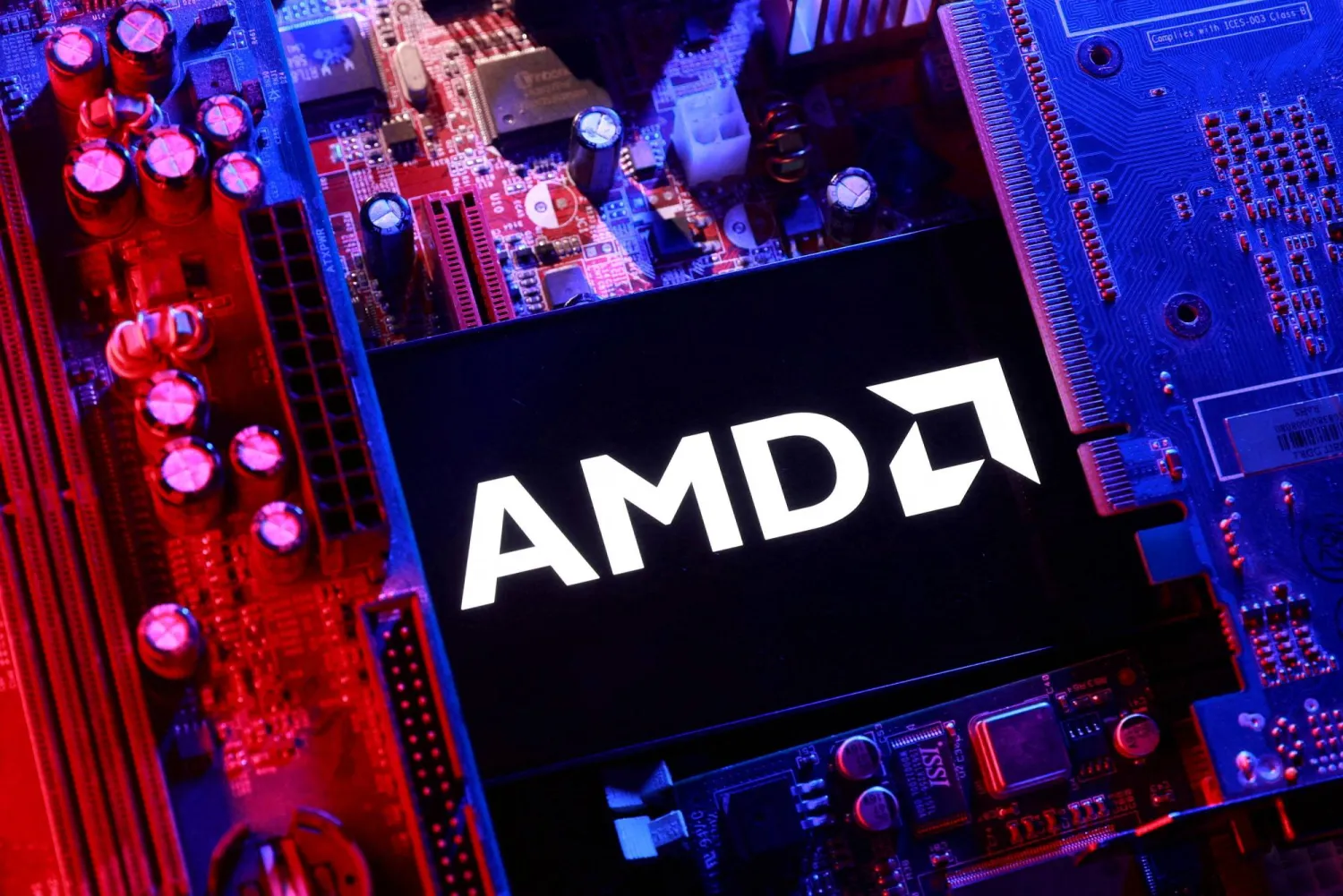
An AMD logo and a computer motherboard appear in this illustration created on August 25, 2025. (Reuters)
TT

AMD Predicts Weaker First-Quarter Sales, Shares Plunge on Nvidia Comparisons

An AMD logo and a computer motherboard appear in this illustration created on August 25, 2025. (Reuters)

Advanced Micro Devices on Tuesday forecast a slight decline in quarterly revenue, raising concerns about whether it ​can effectively challenge Nvidia in the booming AI market and sending its shares tumbling 8% in after-hours trade.

The lackluster prediction comes despite an unexpected boost from sales of certain artificial intelligence chips to China, which began in the last quarter after the Trump administration approved a license for orders that AMD received in early 2025.

And without those sales to China which generated $390 million, AMD's data-center segment would have missed estimates for the fourth quarter.

AMD said it expects revenue of about $9.8 billion this quarter, plus or minus $300 million. That's down from $10.27 billion in the fourth-quarter which was up 34% year-on-year and ahead of LSEG ‌estimates for $9.67 billion.

PALES ‌NEXT TO NVIDIA

Though AMD is seen as one of the ‌few ⁠contenders ​that can seriously ‌challenge Nvidia, investors noted the stark contrast between the two companies' performances. AMD expects an adjusted gross margin of 55% this quarter. Nvidia has said it expects adjusted gross margin in the mid-70% range during its fiscal 2027.

"The expectations for large blowout quarters for AI-related hardware companies have skewed what the market is looking for," said Bob O'Donnell, president of TECHnalysis Research.

The forecast for the current first quarter includes $100 million from sales to China, where the situation remains "dynamic," AMD CEO Lisa Su said on a conference call with investors.

The US government ⁠has placed restrictions on the exports of advanced chips to China, but AMD received licenses to sell modified versions of its MI300 series ‌of AI chips there. Its MI308 chip competes with Nvidia's H20 ‍chip in China.

OPENAI SALES

AMD has accelerated its ‍product launches and is moving into selling full AI systems to better compete against Nvidia, which now ‍provides "rack-scale" systems that combine GPUs, CPUs and networking gear.

Last year, it entered into a multi-year deal to supply AI chips to ChatGPT-owner OpenAI, which would bring in tens of billions of dollars in annual revenue and give the startup the option to buy up to roughly 10% of the chipmaker.

Su reiterated on Tuesday that the company ​expects sales of a new flagship AI server to OpenAI and others to rise rapidly in the second half of this year, saying a global memory-chip crunch will not ⁠slow its plans.

"I do not believe that we will be supply-limited in terms of the ramp that we put in place," Su said.

BEYOND OPENAI

As Big Tech and governments across the globe double down on investing in AI hardware, shares in Santa Clara, California-based AMD have doubled since the start of 2025, outperforming a 60% bump in the broader chip index.

But analysts remain concerned that AMD's success remains tied to a handful of customers that rivals such as Nvidia could try to poach. Reuters reported this week that Nvidia made a $20 billion move to hire most of chip startup Groq's founders after OpenAI held chip supply discussions with the startup.

"Growth appears concentrated in large deployments and specific regions, and China shipments are significant enough to influence a quarter," said eMarketer analyst Gadjo Sevilla.

Revenue in AMD's key data-center segment grew 39% to $5.38 billion in the ‌fourth quarter. But excluding sales of the MI308, which is a data-center chip, that revenue would have been $4.99 billion, below estimates of $5.07 billion.


Switch 2 Sales Boost Nintendo Results but Chip Shortage Looms

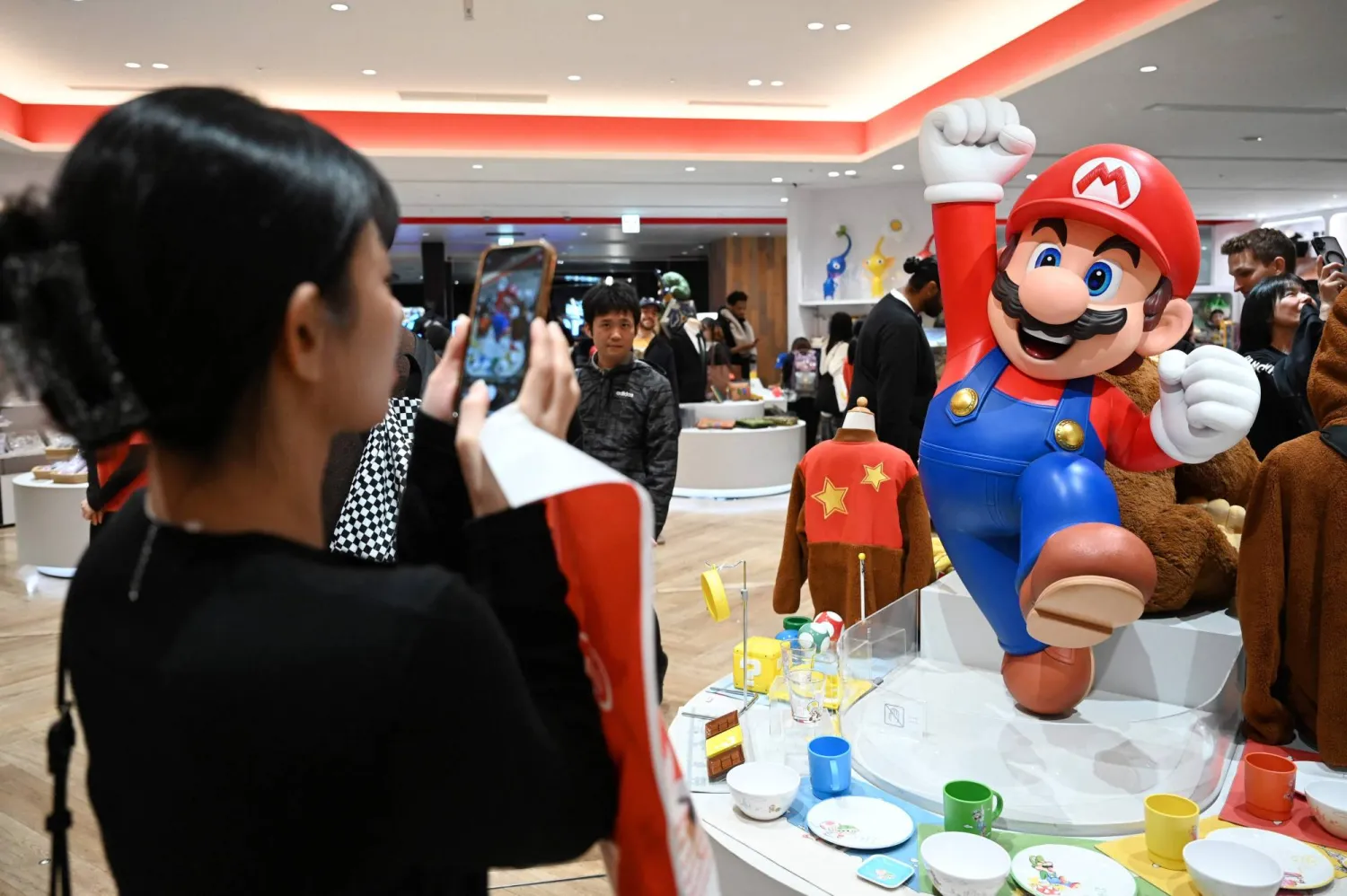
This photo taken on November 4, 2025 shows a woman taking photos of a Super Mario figure at the Nintendo Tokyo store in Tokyo. (AFP)
TT

Switch 2 Sales Boost Nintendo Results but Chip Shortage Looms

This photo taken on November 4, 2025 shows a woman taking photos of a Super Mario figure at the Nintendo Tokyo store in Tokyo. (AFP)

The runaway success of the Switch 2 console drove up Nintendo's net profit by more than 50 percent in the nine months to December, the Japanese video game giant said Tuesday.

But a global memory chip shortage, created by frenzied demand for artificial intelligence hardware, could push up manufacturing costs.

The Switch 2 became the world's fastest-selling games console after launching to a fan frenzy last summer.

It is the successor to the original Switch, which soared in popularity during the pandemic when games such as "Animal Crossing" struck a chord during long lockdowns.

Both are hybrid devices that can be connected to a TV or used on-the-go.

In April-December, net profit jumped 51.3 percent year-on-year to 358.9 billion yen ($2.3 billion), and revenue nearly doubled on-year to 1.9 trillion yen, Nintendo said.

But the firm kept its annual unit sales target for the Switch 2 steady at 19 million, and also held its full-year net profit forecast of 350 billion yen.

"Nintendo Switch 2 got off to a good start following its launch on June 5 and unit sales continued to grow through the holiday season," the company said.

Nearly 17.4 million Switch 2 devices were sold in the nine-month period, it added.

"Maintaining momentum is certainly a big focus for Nintendo," Krysta Yang of the Nintendo-focused Kit and Krysta Podcast told AFP.

A lack of heavy-hitting first-party new games for the Switch 2 in coming months risks hindering growth, although third-party titles such as "Resident Evil Requiem" should help fill the gap, she said.

Nintendo said Tuesday it planned to release "Mario Tennis Fever" this month and "Pokemon Pokopia" in March.

While the firm is diversifying into hit movies and theme parks, consoles remain the core of its business.

The Switch 1 has now sold 155.37 million units -- overtaking the Nintendo DS console to be its best-selling hardware of all time.

But soaring prices for memory chips, used in gaming consoles as well as phones, laptops and other electronics, will likely be a headwind for the company.

Their prices have been pushed up as chipmakers focus on producing the advanced memory chips in huge demand to power AI data centers.

"Nintendo and other console manufacturers are publicly keeping quiet about the impact of the shortage," gaming industry consultant Serkan Toto told AFP.

But "users can forget the past when consoles always became cheaper in tandem with component costs falling over time", with price hikes potentially on the way in 2026, he said.

Yang said she thought a price increase for the Switch 2 "is not out of the question" but added that Nintendo "would likely exhaust all other options" before doing so.