


Former Turkish PM Slams Govt Handling of East Med Tensions

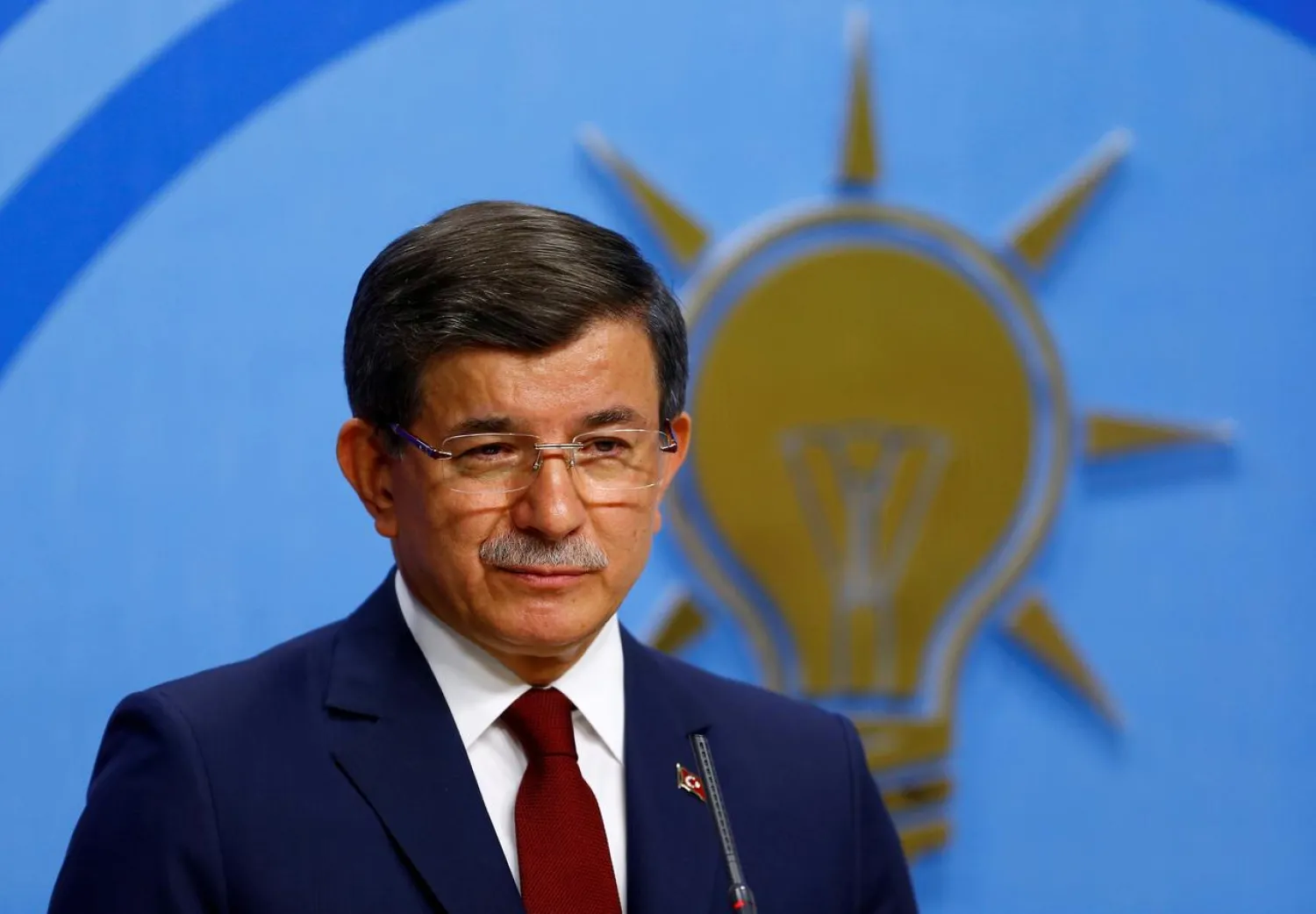
FILE PHOTO: Turkish Prime Minister Ahmet Davutoglu speaks during a news conference at his ruling AK Party headquarters in Ankara, Turkey May 5, 2016. REUTERS/Umit Bektas/File Photo
TT

Former Turkish PM Slams Govt Handling of East Med Tensions

FILE PHOTO: Turkish Prime Minister Ahmet Davutoglu speaks during a news conference at his ruling AK Party headquarters in Ankara, Turkey May 5, 2016. REUTERS/Umit Bektas/File Photo

Turkey risks military confrontation in the eastern Mediterranean because it prizes power over diplomacy, a former prime minister who championed a less confrontational policy in the first decade of President Tayyip Erdogan's rule told Reuters.

Ahmet Davutoglu, whose "zero problems with neighbors" mantra was a hallmark of Erdogan's early dealings with Europe and the Middle East, broke with the president's ruling AK Party last year to set up the rival Gelecek (Future) Party, Reuters reported.

He criticized what he described as a lurch towards authoritarianism under Turkey's new executive presidency, and accused the government of mishandling a series of challenges including the economy, the coronavirus outbreak and the growing tensions in the eastern Mediterranean.

Last month Turkey sent a survey vessel, escorted by frigates, to explore for oil and gas in waters claimed by Greece, a move Athens said was illegal. The two NATO allies are locked in a dispute over the extent of their continental shelves and maritime economic zones.

The European Union, backing EU members Greece and Cyprus, has imposed minor sanctions against Turkey, and a collision between Greek and Turkish warships shadowing the survey vessel last month highlighted the potential for military escalation.

Davutoglu said Ankara had genuine grievances over Greek claims to tens of thousands of square kilometres of sea extending up to Turkey's Mediterranean coast, but added that Erdogan's approach carried high risks.

"Unfortunately our government is not doing a proper diplomatic performance," he said in an interview, warning that if both Greece and Turkey prefer "power projections" over diplomacy, "at any time any crisis may erupt and escalate".

Turkey should say clearly to the European Union: "'Let's come around the table and share all views'," Davutoglu said. It should also sit down with Greece to "discuss all matters (and) de-escalate the tension".

Erdogan's government said it was on the verge of announcing a resumption of talks with Greece last month when Athens signed a deal setting out its maritime border with Egypt - an agreement which cut across waters claimed by Turkey.

Ankara cut off the process in protest, and a visit to Greece and Turkey by Germany's foreign minister last week appeared to make no headway. EU leaders will discuss the standoff later this month and could take further action against Turkey.

According to Reuters, Davutoglu, who served as Erdogan's foreign minister from 2009 to 2014 and then as prime minister for two subsequent years, worked to strengthen Turkish ties and influence in the Mediterranean and Middle East.

But years of talks with Greece were suspended in 2016, and Davutoglu's Middle East strategy was derailed in the turmoil of the Arab uprisings, when relations with Syria and Egypt collapsed over Ankara's support for Muslim Brotherhood groups.

Davutoglu's Future Party is one of two which has broken away from Erdogan's AKP. Neither has registered above low single figures in recent polls, but by eroding the AKP's support they have made Erdogan's quest for a majority in elections due by 2023 more challenging.



US Authorizes Iranian Oil Sales Amid Talks on Final Peace Deal

US Treasury Secretary Scott Bessent attends a bilateral meeting during the G7 Summit in Evian-les-Bains, France, June 17, 2026. (Reuters)
TT

US Authorizes Iranian Oil Sales Amid Talks on Final Peace Deal

US Treasury Secretary Scott Bessent attends a bilateral meeting during the G7 Summit in Evian-les-Bains, France, June 17, 2026. (Reuters)

The United States authorized Iranian oil sales on Monday, easing decades-old sanctions as it pushes toward a final peace deal with Tehran in return for commitments on nuclear inspections and free transit through the Strait of Hormuz.

The general license, announced by the Treasury Department, allows the sale of crude oil and petrochemical and petroleum products of Iranian origin through August 21.

The license says Iranian oil can be imported into the US when necessary to complete ‌its sale, delivery ‌or offloading. The US has not meaningfully imported Iranian ‌oil ⁠since Washington imposed measures ⁠after the 1979 revolution.

"In line with the ongoing productive talks in Switzerland, Iran has committed to free and open transit in the Strait of Hormuz and to permit International Atomic Energy Agency (IAEA) inspectors into their country," Treasury Secretary Scott Bessent wrote on X.

"As part of the framework, Treasury has issued a temporary 60-day general license authorizing the production, delivery and sale of Iranian oil."

Under a memorandum of ⁠understanding signed last week between Washington and Tehran, the US ‌agreed to issue waivers for the export ‌of Iranian crude oil, petroleum products and derivatives, and all associated services, including banking transactions, insurances ‌and transportation.

Payment of funds to Iran may be made in US dollar-denominated ‌funds, according to the license.

Cuba, North Korea and Crimea are among those excluded from the license.

Washington first sanctioned Iran in 1979 when revolutionary students seized the US embassy in Tehran, holding diplomats hostage. Numerous additional sanctions have been imposed since then over the ‌nuclear program and Iran's support for groups the US deems terrorist organizations.

Independent Chinese refiners have been the main buyers ⁠of sanctioned Iranian ⁠oil, taking advantage of deep discounts as others avoided such purchases. India, South Korea, Japan, Italy, Greece, Taiwan and Türkiye were also major buyers of Iranian crude before US sanctions were reimposed in 2018.

Mediators said on Monday that Washington and Tehran made "encouraging progress" at the first round of talks aimed at reaching a final peace deal. The talks began under the terms of the memorandum of understanding reached last week to extend a tenuous ceasefire from April for at least another 60 days.

Oil prices had risen sharply when Tehran started blockading the Strait of Hormuz, prompting a US blockade of Iranian ports, but after the interim deal, fell to their lowest since before the war began on February 28 with US-Israeli attacks on Iran.


Taiwan Begins 5-Day Military Drill with Tanks Patrolling Streets

This picture taken and released by Taiwan's Central News Agency (CNA) on June 22, 2026 shows a row of armored military vehicles driving along the highway in Taoyuan, Taiwan. (AFP photo / CNA Photo)
TT

Taiwan Begins 5-Day Military Drill with Tanks Patrolling Streets

This picture taken and released by Taiwan's Central News Agency (CNA) on June 22, 2026 shows a row of armored military vehicles driving along the highway in Taoyuan, Taiwan. (AFP photo / CNA Photo)

Taiwan kicked off a five-day set of military drills on Monday aimed at boosting the island's combat readiness in case of a Chinese military attack.

In the city of Taoyuan, home to the island's largest international airport, tanks drove down city streets and highways, videos and photos of the exercise showed, as armored vehicles from the Army’s 269th Infantry Brigade conducted combat readiness patrols morning.

The Immediate Combat Readiness Exercises are meant to test how rapidly military units can deploy, especially in the face of a possible sudden escalation of Chinese grey-zone warfare. Grey-zone tactics refer to a range of aggressive tactics that vary from navy ship patrols to drone flights, but fall short of direct combat.

The exercises, announced Sunday afternoon, are meant to be realistic, the Ministry of Defense said in a statement, with an emphasis on “real-time, live-fire and on-site."

These exercises are designed to simulate what would happen before enemy forces launched their ships, according to Taiwan's semi-official Central News Agency. The series of exercises could also include impromptu ones in the future, including real-time responses to Chinese military drills.

China's People's Liberation Army sent 23 aircraft towards Taiwan from Sunday into Monday morning, according to Taiwan's defense ministry. That was accompanied by seven navy ships and five other Chinese government ships. China sends war planes, drones and navy ships towards the island on a daily basis.

Taiwan regularly conducts combat readiness drills as it seeks to bolster its defense capabilities amid ongoing military pressure from China, which claims the self-governed island as its own territory and has not ruled out the use of force to bring it under its control. Earlier in June, Taiwan fired rockets in China's direction for the first time as part of a military exercise.


EU Chief Hails 'Statesman' Starmer after Resignation

European Commission President Ursula von der Leyen gives a press statement on sanctions against Russia at the EU headquarters in Brussels on June 9, 2026. (Photo by Nicolas TUCAT / AFP)
TT

EU Chief Hails 'Statesman' Starmer after Resignation

European Commission President Ursula von der Leyen gives a press statement on sanctions against Russia at the EU headquarters in Brussels on June 9, 2026. (Photo by Nicolas TUCAT / AFP)

EU chief Ursula von der Leyen on Monday praised British Prime Minister Keir Starmer for bolstering "European" security after he announced his resignation.

"It can take many leaders years to grow into the statesman you became in just two years. European and Ukrainian security is stronger because of you. Thank you, dear Keir," the European Commission president posted online.