


Paris Hilton Says she 'Feels Free' after YouTube Documentary

Paris Hilton. (AP)
Paris Hilton. (AP)
TT

Paris Hilton Says she 'Feels Free' after YouTube Documentary

Paris Hilton. (AP)
Paris Hilton. (AP)

There's a scene in a new documentary about Paris Hilton, where the so-called socialite is speaking with former classmates from a Utah boarding school. They joke about how on her reality series “The Simple Life,” Hilton pretended to be clueless over many things— including how to perform any sort of manual labor.

One bluntly described it as “some straight-up (expletive)," as they all laughed.

“I don't think you had like a high-pitch voice back then,” was another observation.

None of this is a surprise to Hilton. What's revealed in “This is Paris,” which debuted for free Monday on Hilton's YouTube channel, is that the ultra-glam, baby-talking young woman whose standard line was “that's hot,” was a manufactured caricature not just for fame but self-protection, too.

Hilton says as a teen she got into the nightlife scene and would sneak out and go to clubs while her family lived at the Waldorf Astoria hotel in New York. Her exasperated parents sent her away to various programs to straighten out. There was an outdoor wilderness camp where Hilton and another girl tried to escape. Hilton claims they were caught and beaten in front of others as punishment.

When she was 17, Hilton was finally sent to what she describes as “the worst of the worst": Provo Canyon School in Utah.

“This is the only place where it’s impossible to run away. So it’s basically like that one place that they all talk about at the other places saying, ‘If you run away or you’re bad, you’re going to be sent to Provo,’” said Hilton.

She stayed at Provo for 11 months and says while there, she was abused mentally and physically, claiming staff would beat her, force her to take unknown pills, watch her shower and send her to solitary confinement without clothes as punishment.

The 39-year-old says the treatment was so “traumatizing” that she suffered nightmares and insomnia for years.

“We are aware of a new documentary referencing Provo Canyon School (PCS). Please note that PCS was sold by its previous ownership in August 2000. We therefore cannot comment on the operations or patient experience prior to that time," the school said in a statement on its website.

Attempts to find the previous owners for comment were unsuccessful.

Hilton says when she agreed to be the subject of “This is Paris," it was never her intention to speak about past abuses, but she opened up as she became more comfortable with director Alexandra Dean.

Hilton said while she was at Provo, she decided she wanted complete control in her life and image. That meant she would never tell anyone about what happened to her there. She also wanted to be very, very wealthy.

“I saw success as freedom and I just imagined this glamorous life… I made all these plans of what I wanted to be. And all I cared about was being successful and independent.”

For someone who has been criticized for being famous for no reason, Hilton has built a multi-billion-dollar company around her image. She has branded stores in the Middle East and Asia, is a successful DJ, and has released 27 fragrances, among other products.

“It turns out that whole machine, all that attention she got, the paparazzi, the insta-fame, it was all a creation of this traumatized girl trying to figure out how to climb her way out of this hole she was in," said Dean. "She attracted it all. In some ways she created it all. What I want people to know is that they should give her credit for being immensely innovative, but they should also understand that what they watched was not the person, but the shield that she constructed to protect herself.”

Hilton says since speaking out about what happened at Provo, she feels free. She's now sleeping through the night and no longer has nightmares. She also says she's happy and in a healthy relationship with businessman Carter Reum.

Her life has slowed down in the past six months due to the pandemic, and she's no longer traveling for work. Hilton says she likes it this way and plans to continue to be more choosy about leaving home. “I'm moving on to the next phase of my life,” she said.

She's also hopeful that speaking out against programs like Provo will deter parents from sending their kids to similar situations.

“I would never recommend that to any family ever, because I think it just causes more drama and more issues than anyone would ever have." She's now a part of the Breaking Code Silence movement, a network dedicated to raising awareness about the “troubled teen industry."

“The parents are manipulated and lied to and told a completely different story," she said. "I think it’s important to do your research.”

‘Family Under Pressure’ at Berlin Film Festival

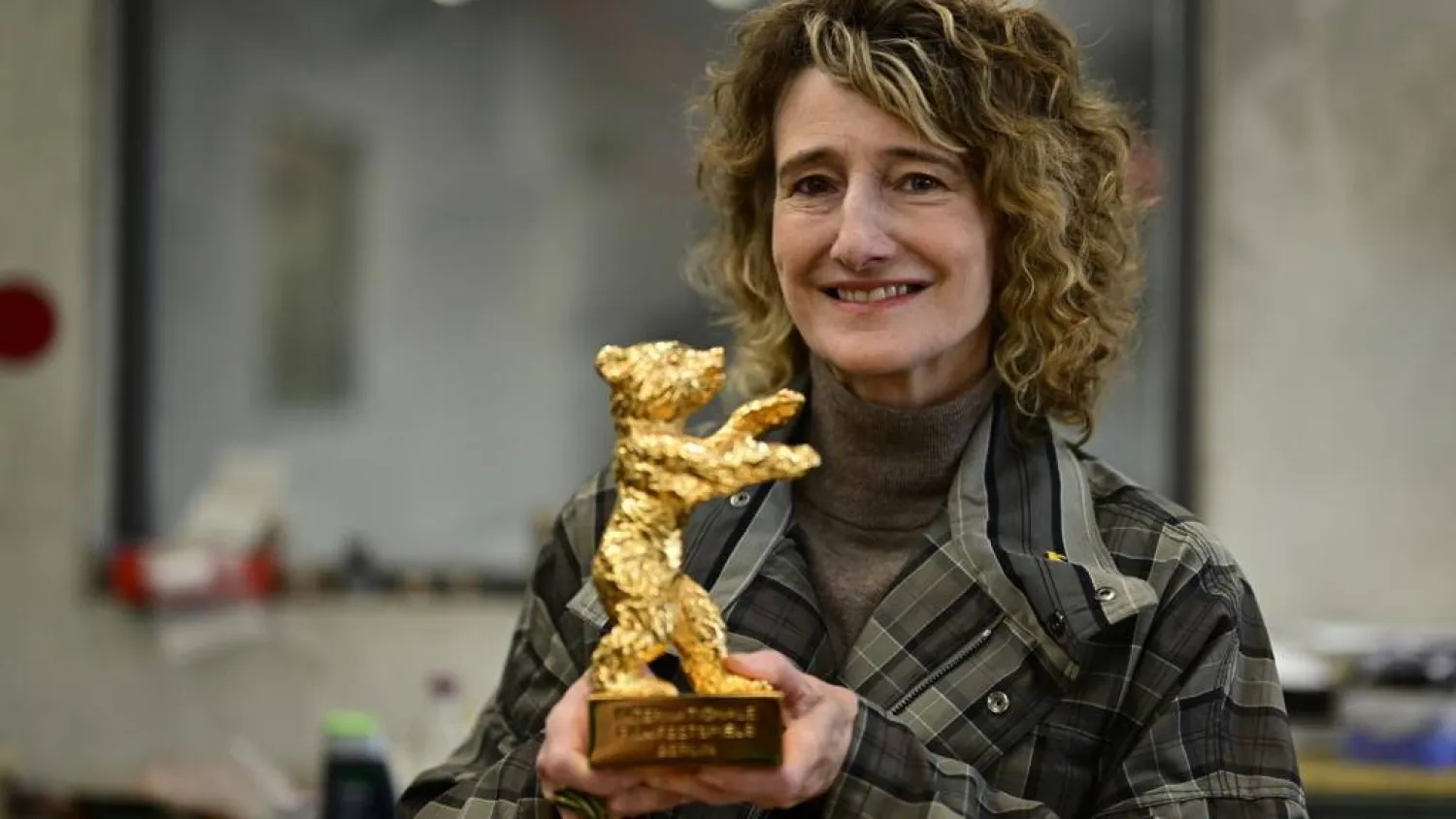
Of more than 200 films shown during the Berlin Film Festival, 22 will compete for the coveted Golden Bear. (AFP)
TT

‘Family Under Pressure’ at Berlin Film Festival

Of more than 200 films shown during the Berlin Film Festival, 22 will compete for the coveted Golden Bear. (AFP)

The 76th edition of the Berlin Film Festival opens on Thursday, featuring productions from over 80 countries and with German film legend Wim Wenders presiding over this year's jury.

AFP sat down with festival director Tricia Tuttle, who is in her second year at the helm, for a look-ahead at Europe's first big cinema festival of the year.

Here are five things to expect from this year's festival, which runs until February 22.

- 'Reflecting international cinema' -

Of more than 200 films shown during the10-day festival, 22 will compete for the coveted Golden Bear, which was won last year by the drama "Dreams" from Norwegian director Dag Johan Haugerud.

In assembling this year's diverse program, Tuttle said that "the guiding principle was to reflect where international cinema is right now".

She said that she had noticed "family and intimacy under pressure, questions of care, power, belonging, and the experience of living between worlds" as themes running through this year's selection.

"Many of the films look at how private lives are shaped by larger political and social forces."

The festival will also honor Malaysian actor Michelle Yeoh -- who won the best actress Oscar in 2023 for "Everything Everywhere All at Once" -- with a lifetime achievement award.

- Spotlight on women directors -

As in 2025, women directed most of the films being screened at the festival.

Among those in the official competition, nine out of 22 were directed by women, a higher proportion than at the Cannes or Venice festivals.

"One thing that is encouraging for me is the number of second and third time female film-makers who have made strong work," Tuttle said.

The opening film, "No Good Men", is itself the third feature-length film from Afghan director Shahrbanoo Sadat.

"It's about Afghan women's experience, which you wouldn't see if it wasn't for Shahrbanoo's work," Tuttle said.

Sadat fled her home country following the Taliban takeover in 2021 and now lives in Hamburg.

- American films remain elusive -

In contrast to Cannes or Venice, which regularly attract Oscar contenders, Berlin does not feature as many large-scale US productions and the sprinkle of stardust that often accompanies them.

"Some of the biggest authored films of the year, those sort of commercial-arthouse crossover films, haven't launched out of festivals this year," Tuttle noted, perhaps in a nod to titles such as "One Battle After Another", "Sinners" and "Marty Supreme".

For such films, which can easily cost more than $100 million to make, producers and distributors are increasingly keen on controlling all aspects of a film's release.

"Festivals can be busy, noisy places where you might not get the cut-through that you want," according to Tuttle -- not to mention running the risk of negative reviews from critics.

- The era of co-productions -

This year's festival will notably feature European co-productions with financing from several countries.

According to Tuttle, "there's an opportunity right now for Europe, for European producers to work together" as the industry more broadly continues to fracture.

She cites the example of Joachim Trier's "Sentimental Value", nominated for nine Oscars, which is a co-production between Norway, Denmark, France and Germany.

"Sentimental Value is a film that is made by many countries in terms of investment, but it's very much the work of an author and a really important filmmaker," said Tuttle.

- Streaming platforms almost absent -

Unlike in Venice, where three Netflix-produced films entered the official competition, the giants of the streaming world are relatively marginal in Berlin.

"There's real value to be had in theatrical exhibition, not just because there's money to be made there ... but also, for us as movie fans, it's the best way to see a film," said Tuttle.

The only Netflix film at this year's Berlinale will feature in the "Special Presentation" section -- outside of the official competition.

"Un hijo proprio" ("A Child of My Own") is a documentary-length feature telling the story of a Mexican woman who invents a pregnancy in an attempt to escape pressure from her family to have a child.


Movie Review: Stephen Curry's Animated Basketball Movie 'GOAT' Is a Disappointing Air Ball

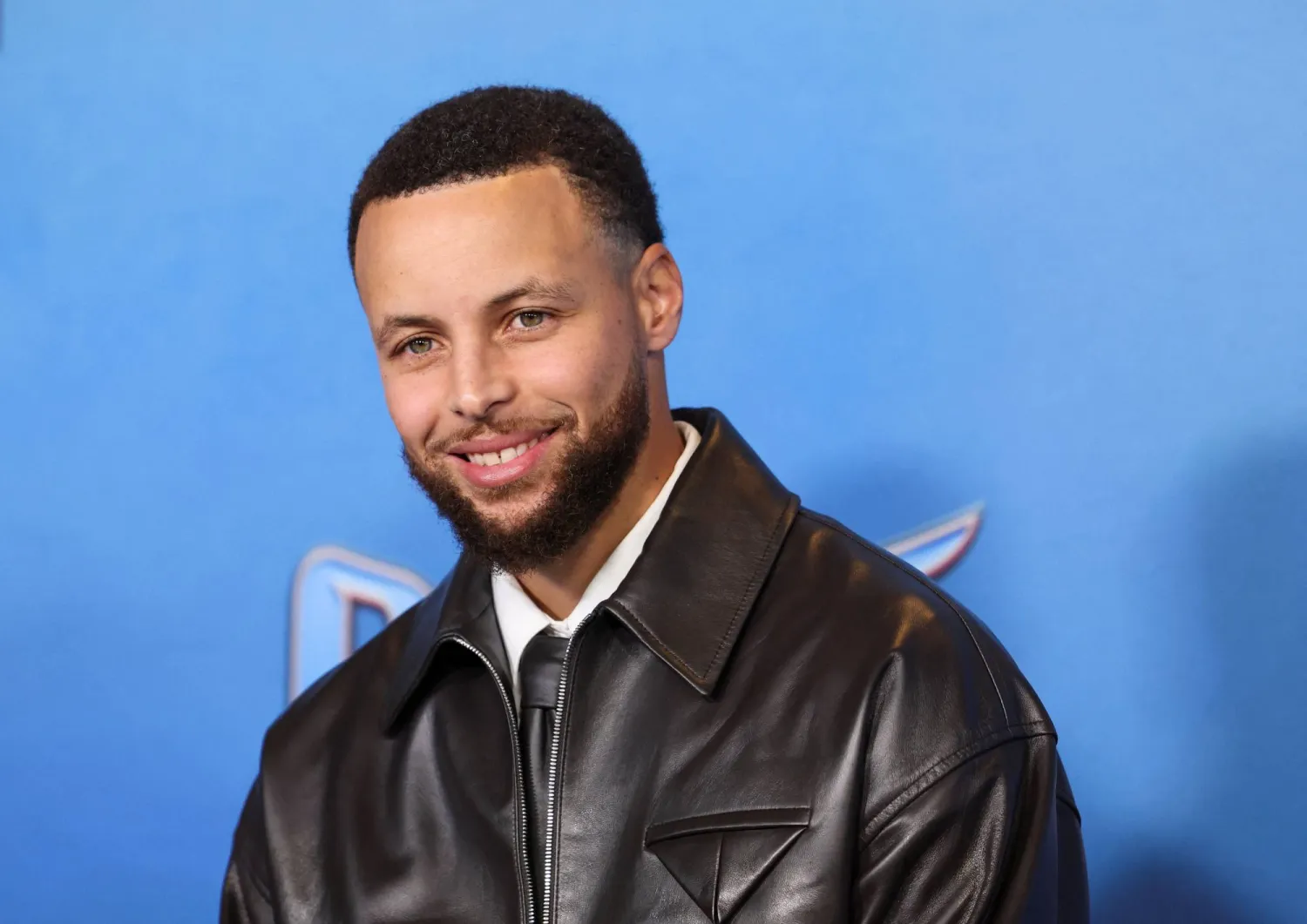
 Stephen Curry attends a premiere for the film "GOAT", in Los Angeles, California, US, February 6, 2026. (Reuters)
Stephen Curry attends a premiere for the film "GOAT", in Los Angeles, California, US, February 6, 2026. (Reuters)
TT

Movie Review: Stephen Curry's Animated Basketball Movie 'GOAT' Is a Disappointing Air Ball

 Stephen Curry attends a premiere for the film "GOAT", in Los Angeles, California, US, February 6, 2026. (Reuters)
Stephen Curry attends a premiere for the film "GOAT", in Los Angeles, California, US, February 6, 2026. (Reuters)

You'd expect an animated basketball movie with four-time NBA champion Stephen Curry in the producer's chair to be an easy lay-up. So why is “GOAT” such a brick?

Despite a wondrously textured, kinetic world and some interesting oddball characters, the movie is undone by a predictable, saccharine script. It’s as easy to see the steps coming as a Curry three-pointer arching into the net.

The movie has the kind of lazy, thin writing that feels like it all could have derived from a Hollywood happy hour gettogether: “Bro, bro. Wait. What if the GOAT was an actual goat?”

It centers on Will Harris, a goat with dreams of becoming a great baller, voiced by “Stranger Things” star Caleb McLaughlin. Undersized and an orphan — again with the orphans, guys? — Will is a delivery driver for a diner and late on his rent. He's a great outside shooter but a liability in the paint, unless he learns, that is.

He lives in Vineland — a hectic urban landscape with graffiti and living vines that choke the playgrounds — and is a rabid supporter of the local franchise, the Thorns. His idol is veteran Jett Fillmore, a leopard who's the league's all-time leading scorer, nicely voiced by Gabrielle Union. The Thorns are a bit of a mess, despite Jett's brilliance.

The game here is called roarball, a high-intensity, co-ed, multi-animal, full-contact sport derived from basketball with a hollow ball that has small holes. It's a “Mad Max” sport — ultraviolent, unofficiated and the dangers lurk not just from the beefy opponents but from the arena itself. The championship award is called the Claw.

The best part of the movie may be the environments for the other arenas — lava in one, a swamp with stalagmites and stalactites in another, plus an ice-bound one and another with desert sandstorms and rocks. Homefield advantage is a big thing in this league.

There seem to be only two kinds of points scored here — blazing windmills, cutting tomahawks and spectacular alley-oop dunks or slow-mo threes from so far downtown they might as well be in a different zip code. No mid-range jumpers, bro.

This universe is divided into “bigs” and “smalls” — rhinos, bears and giraffes on one side, gerbils and capybara on the other — and Will is deemed a small. “Smalls can’t ball,” he is told, condescendingly.

But Will — thanks to a viral video — improbably gets signed to the Thorns by the team's owner (a cynical warthog voiced wonderfully by Jenifer Lewis). It's seen as a shameless publicity stunt that no one wants, especially Jett, who needs a winning season after being taunted by “All stats, no Claw.”

Now, predictably, in Aaron Buchsbaum and Teddy Riley script, comes the bulk of the movie, giving a steady “The Karate Kid” or “Air Bud” vibe as it charts Will's steady rise to honored teammate and franchise future, despite Jett insisting she's not ready to go: “I’m the GOAT. I’m not passing the torch.”

The lessons are good — the importance of teamwork and believing in yourself — but the testosterone-fueled violence on the courts is WWE extreme. There are unnecessary plugs for Mercedes and Under Armor, and hollow slogans like “Dream big” and “Roots run deep.”

Some of the most interesting characters end up on the Thorns, a fragile, somewhat broken team that includes a rhino (voiced by David Harbour), a delicate ostrich (Nicola Coughlan), a gonzo Komodo dragon (Nick Kroll) and a desultory giraffe (Curry).

The Komodo dragon, named Modo, is the best of the bunch, an insane, unpredictable creature full of electricity. “If Modo was any more of a snack, he’d eat himself,” he declares. Could he get his own movie?

Directed by “Bob’s Burgers” veteran Tyree Dillihay and Adam Rosette, “GOAT” is targeted to Gen Alpha, leveraging cellphone screens and online likes, virality and diss tracks. It's not as funny as it thinks it is and tiresome in its overly familiar redemption arc.

Another potential basketball GOAT — Michael Jordan — gave us a clunker of a live-action- animated basketball movie in “Space Jam” exactly 30 years ago and “GOAT,” while not as bad as that mess, is an air ball none the same.


Music World Mourns Ghana's Ebo Taylor, Founding Father of Highlife

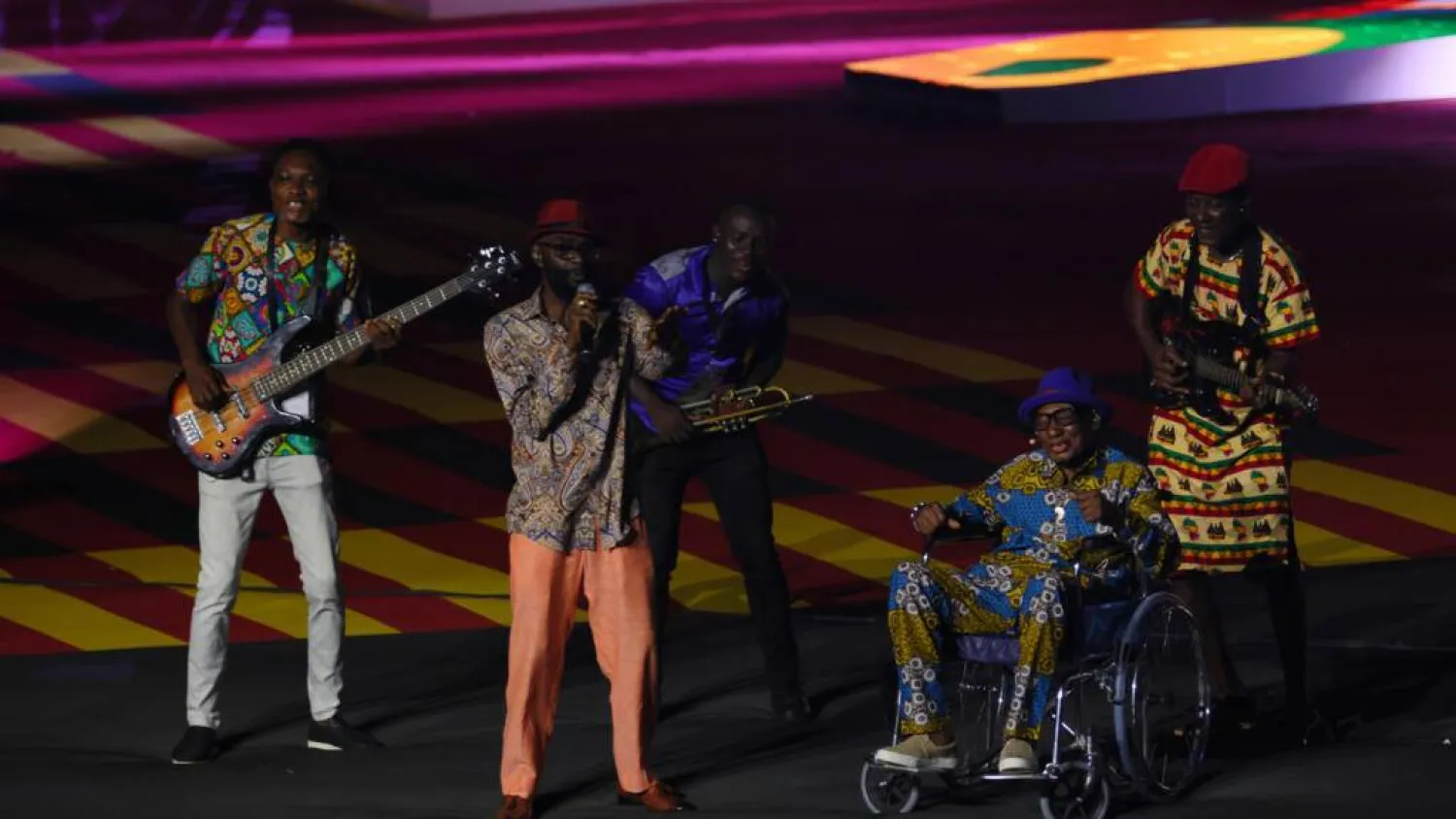
Ebo Taylor, who kept performing into his 80s, was instrumental in introducing Ghanaian highlife to international listeners. Nipah Dennis / AFP
TT

Music World Mourns Ghana's Ebo Taylor, Founding Father of Highlife

Ebo Taylor, who kept performing into his 80s, was instrumental in introducing Ghanaian highlife to international listeners. Nipah Dennis / AFP

Tributes have been pouring in from across Ghana and the world since the death of Ghanaian highlife legend Ebo Taylor.

A guitarist, composer and bandleader who died on Saturday, Taylor's six-decade career played a key role in shaping modern popular music in West Africa, said AFP.

Often described as one of the founding fathers of contemporary highlife, Taylor died a day after the launch of a music festival bearing his name in the capital, Accra, and just a month after celebrating his 90th birthday.

Highlife, a genre blending traditional African rhythms with jazz and Caribbean influences, was recently added to UNESCO's Intangible Cultural Heritage list.

"The world has lost a giant. A colossus of African music," a statement shared on his official page said. "Your light will never fade."

The Los Angeles-based collective Jazz Is Dead called him a pioneer of highlife and Afrobeat, while Ghanaian dancehall star Stonebwoy and American producer Adrian Younge, who his worked with Jay Z and Kendrick Lamar, also paid tribute to his legacy.

Nigerian writer and poet Dami Ajayi described him as a "highlife maestro" and a "fantastic guitarist".

- 'Uncle Ebo' -

Taylor's influence extended far beyond Ghana, with elements of his music appearing in the soul, jazz, hip-hop and Afrobeat genres that dominate the African and global charts today.

Born Deroy Taylor in Cape Coast in 1936, he began performing in the 1950s, as highlife was establishing itself as the dominant sound in Ghana in the years following independence.

Known for intricate guitar lines and rich horn arrangements, he played with leading bands including the Stargazers and the Broadway Dance Band.

In the early 1960s, he travelled to London to study music, where he worked alongside other African musicians, including Nigerian Afrobeat pioneer Fela Kuti.

The exchange of ideas between the two would later be seen as formative to the development of Afrobeat, a political cocktail blending highlife with funk, jazz and soul.

Back in Ghana, Taylor became one of the country's most sought-after arrangers and producers, working with stars such as Pat Thomas and CK Mann while leading his own bands.

His compositions -- including "Love & Death", "Heaven", "Odofo Nyi Akyiri Biara" and "Appia Kwa Bridge" -- gained renewed international attention decades later as DJs, collectors and record labels reissued his music. His grooves were sampled by hip-hop and R&B artists and helped introduce new global audiences to Ghanaian highlife.

Taylor continued touring into his 70s and 80s, performing across Europe and the United States as part of a late-career renaissance that cemented his status as a cult figure among younger musicians.

Many fans affectionately referred to him as "Uncle Ebo", reflecting both his longevity and mentorship of younger artists.

For many, he remained a symbol of highlife's golden era and of a generation that carried Ghanaian music onto the world stage.