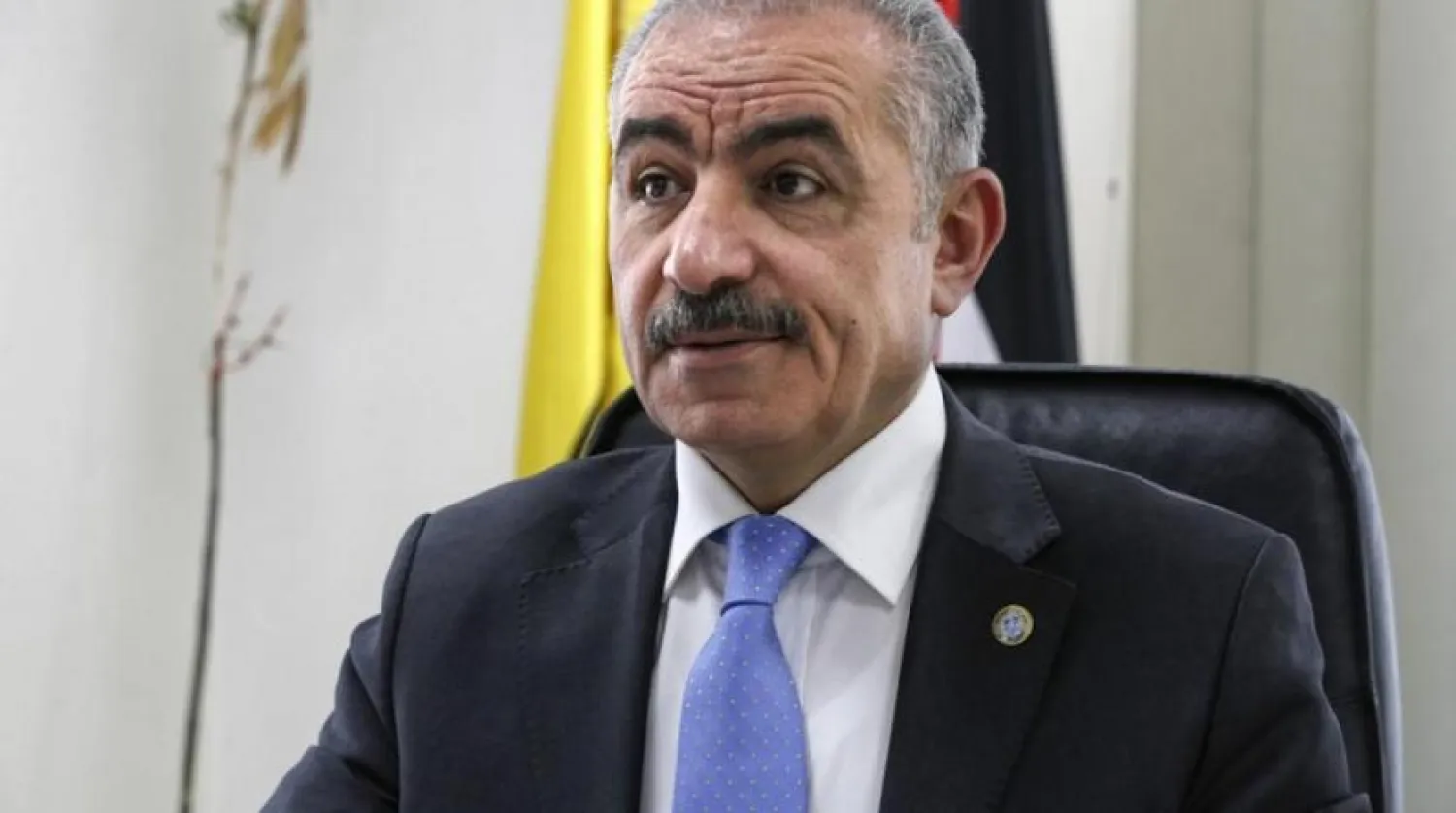
Palestinian Prime Minister Mohammad Shtayyeh. (AFP)
Palestinian Prime Minister Mohammad Shtayyeh launched an unprecedented attack against the Arab League on Monday, describing the organization as a symbol of Arab ineptitude.
“The cabinet was considering recommending that President Mahmoud Abbas revise Palestine’s relations with the Arab League, which remains tight-lipped on the blatant violation of its own resolutions, none of which has anyway been implemented,” the PM said during the cabinet weekly session in Ramallah.
He urged the Arab countries to boycott the signing ceremony of the UAE-Israeli and Bahraini-Israeli normalization agreements, scheduled to take place in Washington on Tuesday.
“We consider the signing ceremony as a black day in the history of the Arab nation and as a defeat to the Arab League, which has become an institution of division, driving a wedge in Arab solidarity,” Shtayyeh said, adding that this day will be added to the Palestinian calendar of pain and Arab calendar of defeats, as it deals the death blow to the Arab Peace Initiative and Arab solidarity.
The PM urged Arabs to stand united in the face of the agreements.
“Would it make sense that Arabs accept being allowed by Israel to pray at Al-Aqsa Mosque compound, which remains under occupation, on conditions?”
Meanwhile, Shtayyeh emphasized that the cabinet was sparing no effort to end the intra-Palestinian division and bring about comprehensive national reconciliation through several steps, first and foremost, through holding elections.
The PM stressed the importance of the implementation of the outcomes of the recent meeting of the heads of Palestinian factions, held under Abbas’ chairmanship.
Last week, Bahrain followed the UAE in moving forward to establish diplomatic relations with Israel, which it announced last month.
On Sept. the UAE will officially normalize ties with Israel. Bahrain and Israel will sign a declaration the same day.
04 June 2026, Palestinian Territories, Gaza: Palestinians inspect a damaged house following an Israeli airstrike that targeted an apartment belonging to the Labad family in Gaza City. Photo: Hadi Daoud/APA Images via ZUMA Press Wire/dpa
04 June 2026, Palestinian Territories, Gaza: Palestinians inspect a damaged house following an Israeli airstrike that targeted an apartment belonging to the Labad family in Gaza City. Photo: Hadi Daoud/APA Images via ZUMA Press Wire/dpa
The Gaza war was the spark that touched off years of Middle East conflict culminating in the US-Israeli war with Iran, but as Washington and Tehran wrangle over terms for peace, the devastated territory's fate seems largely out of mind.
"Ever since the United States went to war with Iran, the whole world has forgotten Gaza and its tragedy. We no longer have anyone standing by us," Palestinian Ahmed Jamali, 53, told AFP from the displacement camp in Gaza where he lives.
"We are weak and oppressed, and Israel is doing whatever it wants: killing, destroying and occupying Gaza, while no one in the world lifts a finger."
The apparent inattention paid to the Palestinian territory is all the more striking because it sits at the heart of the chain of events that plunged the region into its most dangerous confrontation in decades.
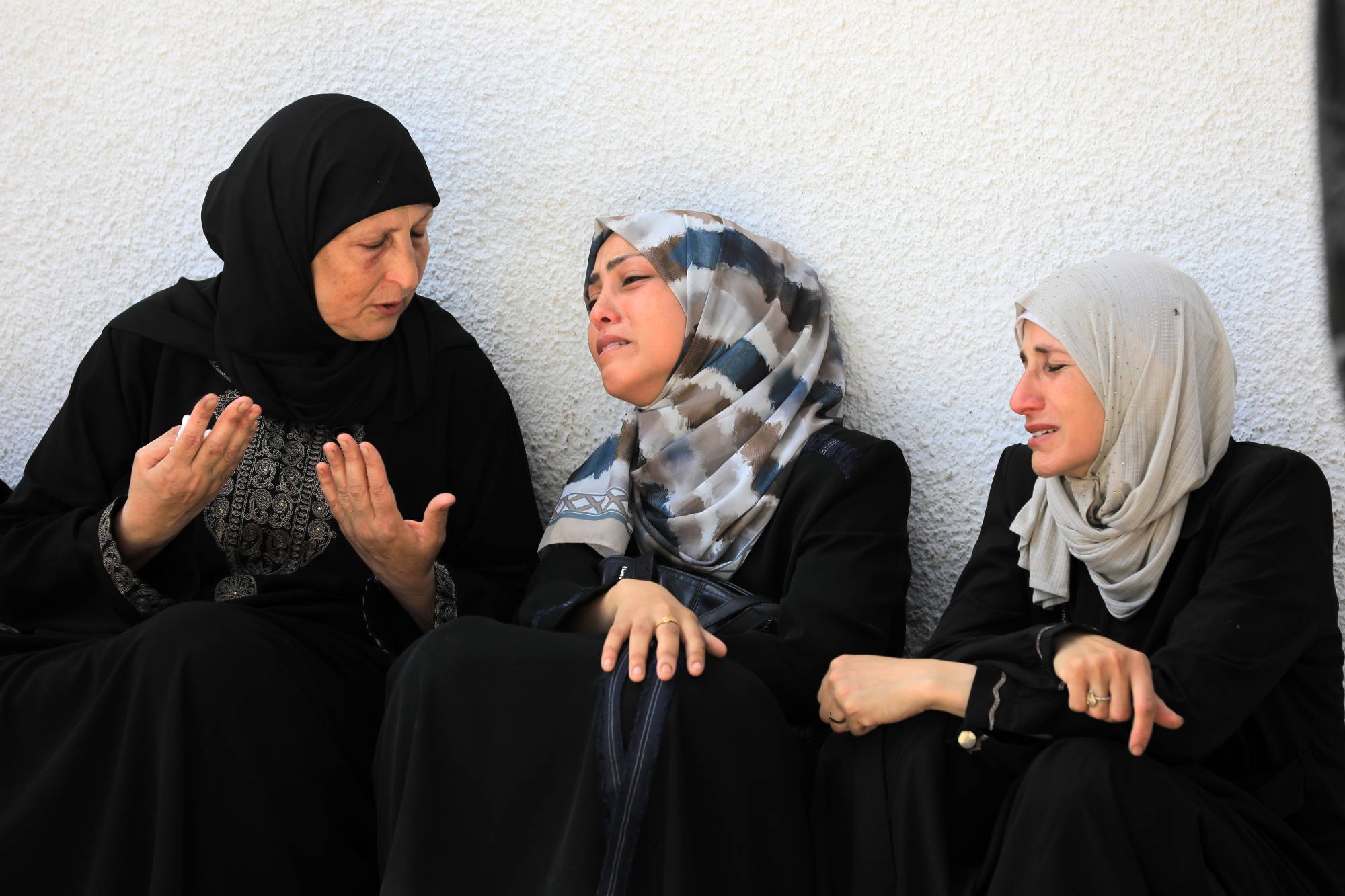
07 June 2026, Palestinian Territories, Gaza: Mourners gather to bid farewell to several Palestinians, including a child and his father, at al-Shifa Hospital in Gaza City. Photo: Bilal Osama/APA Images via ZUMA Press Wire/dpa
Hamas's unprecedented October 7, 2023 attack on Israel triggered a devastating military response in Gaza, drawing in Tehran-backed allies like Hezbollah in Lebanon and Yemen's Houthis -- and eventually Iran itself.
What began as a local war between Israel and Hamas evolved into a regional conflict and, in turn, a direct confrontation between arch-foes Tehran and Washington.
More than two-and-a-half years later, Gaza remains mired in a severe humanitarian crisis, and despite a fragile ceasefire reached between Israel and Hamas in October 2025, efforts to bring the war to a definitive end have stalled for months.
Although Iranian officials initially spoke of an agreement to end the Middle East war that would encompass the entire region, the preliminary text endorsed by Tehran and Washington last month contains no mention of Gaza.
For analysts, that shows a shift in regional priorities.
"It reflects Hamas's declining strategic value in Iran's eyes," Hugh Lovatt of the European Council on Foreign Relations, told AFP.
Iran has long armed and financed Hamas as part of its "axis of resistance" -- an array of regional forces opposed to Israel and the US -- but the October 2023 attack appears to have fundamentally altered that relationship.
"Iranians do not really care about Gaza. Hamas was an ally, not an Iranian tool," said Israeli military expert Eado Hecht.
"It betrayed them. They did not want war in autumn 2023, it was too early for them."
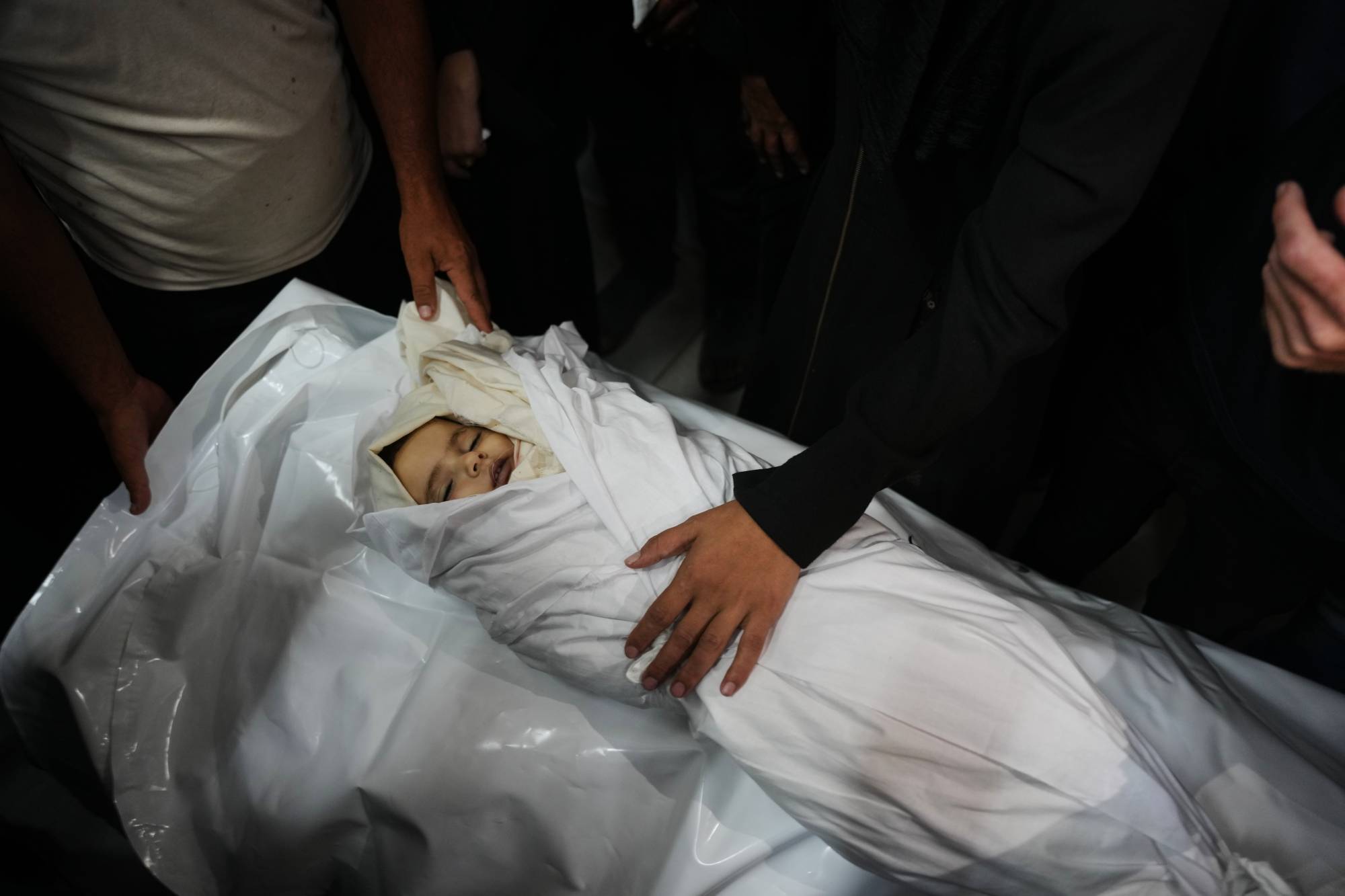
Palestinians mourn the bodies of Diana Abu Daraz, and her infant daughter, Sewar, who were killed in an Israeli airstrike that struck a tent camp for displaced Palestinians in Khan Younis, Gaza Strip, Tuesday, June 30, 2026. (AP Photo/Abdel Kareem Hana)
Michael Milshtein, another Israeli military analyst, argued that Tehran's calculations have shifted elsewhere.
"It places greater value on preserving Hezbollah as a pillar of the regional balance," he said.
The diplomatic focus has also shifted, with a growing sense of international fatigue over Gaza.
"Gaza is gradually fading from international attention," said Lovatt.
One diplomat involved in negotiations described a widespread belief among governments that "most actors see the issue as insoluble in the short to medium term".
Another veteran diplomat based in Jerusalem told AFP that Gaza's absence from the discussions reflected political paralysis rather than progress.
"Gaza is absent from the agreement not because the war is over, but because no credible political framework exists for the day after," he said.
Israel insists that Hamas must fully disarm before any political transition can begin, while Hamas refuses to surrender its weapons without guarantees that an alternative Palestinian governing authority will replace it.
Neither an international stabilization force nor a credible transitional mechanism has emerged in the months since the ceasefire took effect, both of which were called for in the US-brokered framework that halted the fighting.
Behind the scenes, negotiations over Gaza's future continue in Cairo.
The talks bring together Palestinian factions, including Hamas, alongside the Board of Peace set up by US President Donald Trump and regional players including Qatar and Türkiye.
"Trump may want to give this process a chance," said a source close to the negotiations.
"Whether it succeeds remains to be seen."
Although few details have emerged publicly, diplomatic and security sources told AFP that negotiators are working on a roadmap combining the gradual disarmament of Hamas with the creation of transitional governing authorities for Gaza.
Israeli media has reported that the government would reject such a framework.
"For now, this diplomatic process exists only around the negotiating table," Lovatt said.
"There has been progress, but reconstruction remains a distant prospect, and nothing is changing for the people on the ground."
With diplomacy stalled, concerns are mounting that the fighting could yet resume.
Israeli media have reported military preparations for a possible summer 2026 offensive against Hamas should political negotiations fail.
But military expert Hecht cautioned against assuming that contingency planning meant another war was inevitable.
"Having the military opportunities is not the same as having the political opportunity," he said.
"Preparations are not the same as implementation."
Analyst Milshtein argued that Israel had little leverage left.
In his view, Washington could ultimately pressure Israel to accept a phased disarmament of Hamas alongside a transitional political framework -- or even to withdraw from Gaza.
"Alternatively, Israel could embark on another military adventure. Given this government's record... (it) cannot be ruled out," Milshtein said, adding that Israeli leaders still lacked a coherent long-term strategy.
Gaza War Reaches 1,000 Days: A Tragedy in Numbershttps://english.aawsat.com/arab-world/5291948-gaza-war-reaches-1000-days-tragedy-numbers
A child amid the rubble of a building destroyed by Israel in Al-Shati camp, west of Gaza City, last Wednesday. (AFP)
A thousand days have passed since the Oct. 7, 2023, attack carried out by Hamas against Israeli military sites and settlements along the Gaza border, and since the start of a bloody war that lasted two years in the enclave.
A ceasefire agreement was reached on Oct. 10, 2025, but it remained fragile amid daily Israeli violations.
Asharq Al-Awsat reviews the most prominent figures published by government bodies and international organizations active in Gaza on the war.
According to the latest cumulative toll, 73,078 people were killed and more than 173,541 wounded, including 1,063 killed after the ceasefire and 3,438 wounded.
The dead included more than 21,500 children, among them 1,022 under the age of one. They included 520 infants who were born during the war and killed in it. The toll also included 12,470 women, more than 9,000 mothers and 22,000 fathers. Some 2,700 families were wiped entirely from the civil registry after attacks hit their homes and killed them all.
About 9,500 Palestinians remain missing under the rubble of destroyed homes. Others are believed to be held in secret Israeli prisons, with no information disclosed about their fate.
Israel bombed 38 hospitals during the war, while 96 medical clinics were forced out of service, despite the start of partial rehabilitation work at some facilities under harsh conditions. Some 1,700 medical personnel were killed, including doctors, nurses, administrators, paramedics and others. Israel also destroyed 16 civil defense centers and 84 vehicles.
Some 22,000 patients and wounded people urgently need treatment abroad as Gaza’s health crisis deepens.
More than 1.9 million cases of infectious disease were recorded, ranging from mild to moderate, with most patients recovering. More than 2 million displaced people remain inside the enclave, living in harsh conditions in more than 132,000 displacement tents, most of them worn out and unfit for living.
During the war, Israel closed the crossings for more than 670 days, blocking the entry of aid trucks and endangering the lives of more than 2 million Palestinians. They included 650,000 children who suffered from malnutrition and hunger.
Some 58,000 children were orphaned after losing one or both parents. Some 460 people died from famine, including 164 children, while 28 displaced people died from the cold, among them 25 children.
Israel continued to target schools, fully or partially, causing extensive material damage. More than 620,000 students were denied their right to education. More than 20,051 students were killed, along with 830 teachers and 194 academics.
Israel completely destroyed 410,000 buildings and housing units, blew up more than 5,080 kilometers of electricity networks, destroyed 1,047 mosques in full, dug up a large number of cemeteries, and destroyed and bulldozed 87% of agricultural land. It also destroyed hundreds of factories and companies. Initial losses from the war exceeded $80 billion.
Egypt Calls for Urgent Humanitarian Truce in Sudanhttps://english.aawsat.com/arab-world/5291932-egypt-calls-urgent-humanitarian-truce-sudan
FILE PHOTO: Displaced women from South Kordofan sit on the ground in El Obeid, North Kordofan State, Sudan, January 15, 2026. REUTERS/El Tayeb Siddig/File Photo
Egypt Calls for Urgent Humanitarian Truce in Sudan
FILE PHOTO: Displaced women from South Kordofan sit on the ground in El Obeid, North Kordofan State, Sudan, January 15, 2026. REUTERS/El Tayeb Siddig/File Photo
Egypt renewed its call for “an urgent and immediate humanitarian truce in Sudan” and stressed the need for “a comprehensive and complete ceasefire across all Sudanese territory.”
Egypt’s permanent representative to the UN Human Rights Council in Geneva, Ambassador Amr Ramadan, said on Friday that the situation in Sudan requires a responsible position that supports mechanisms trusted by the Sudanese people.
He also called for “strengthening national institutions as an essential and indispensable pillar for achieving justice and protecting human rights.”
The appeals come as fighting escalates in Sudan, particularly in El Obeid, the capital of North Kordofan state, where drones have been used by the Sudanese army and the Rapid Support Forces (RSF).
The scene recalls El Fasher, the capital of North Darfur state, which fell to the RSF last year after months of siege and the deaths of hundreds of people.
At the UN Human Rights Council meeting, Ramadan said: “The highest and most urgent priority today is to reach a real humanitarian truce that would pave the way for a comprehensive halt to military operations.”
He renewed Egypt’s call for “a comprehensive and complete ceasefire across all Sudanese territory” and urged “the launch of a purely Sudanese political process, without any external dictates or interference.”
UN High Commissioner for Human Rights Volker Türk also called on Friday for greater light to be shed on how resources such as gold are being exploited to fuel the conflict.
Ambassador Salah Halima, a member of the Egyptian Council for Foreign Affairs, said: “There is difficulty in advancing solutions to the Sudanese crisis.”
“We are still going in circles, between tracks calling for a humanitarian truce, a ceasefire, and the launch of political dialogue, without any of them being implemented,” he said.
Halima said the crisis requires understandings that the international quartet could adopt, describing it as the most capable and influential mechanism for reaching a settlement to the humanitarian crisis.
The quartet mechanism, which includes Saudi Arabia, Egypt, the United Arab Emirates and the United States, is working to secure a ceasefire in Sudan.
It held a ministerial-level meeting in Washington last September and announced: “a roadmap that includes a timeline to end the crisis in Sudan, beginning with the implementation of a humanitarian truce as soon as possible.”
Halima said the tracks for resolving the Sudanese crisis “must be implemented in parallel,” covering the security, military, humanitarian and political dimensions, as well as reconstruction.
He told Asharq Al-Awsat that “the start could be the launch of a political dialogue among Sudanese parties, which would issue a decision on a ceasefire,” saying this “could create pressure on the parties to the war.”
Makki al-Maghribi, director of the International Relations Unit at the Sudanese Center for Thought and Strategic Studies, said: “A humanitarian truce in Sudan remains difficult.”
He said any “real cessation of hostilities requires a commitment from the Rapid Support Forces militia in the areas it controls, which has not happened since the start of the war.”
Maghribi told Asharq Al-Awsat that “there is a new formulation of international mediation on Sudan ... through a quartet meeting held in Cairo that included Saudi Arabia, Egypt, Türkiye and the United States.”
“The position of most countries in the new mediation is always read in the context of preserving Sudan’s unity,” he said.
لم تشترك بعد
انشئ حساباً خاصاً بك لتحصل على أخبار مخصصة لك ولتتمتع بخاصية حفظ المقالات وتتلقى نشراتنا البريدية المتنوعة