


Lebanon: Popular Anger Over Hezbollah Obstructing Govt Formation

Cars drive near a poster depicting Hezbollah leader Sayyed Hassan Nasrallah at the entrance of the village of Ain Qana, Lebanon September 22, 2020. REUTERS/Aziz Taher
TT

Lebanon: Popular Anger Over Hezbollah Obstructing Govt Formation

Cars drive near a poster depicting Hezbollah leader Sayyed Hassan Nasrallah at the entrance of the village of Ain Qana, Lebanon September 22, 2020. REUTERS/Aziz Taher

Hezbollah is no longer able to absorb the repercussions of the US sanctions, which have recently affected its allies.

It is true the party has adapted to the financial blockade by resorting to a parallel system that does not depend on Lebanon’s banking sector. But many believe that it won't be unable to absorb the increasing popular resentment against it, especially with French President Emmanuel Macron directly accusing it of obstructing the formation of the new government.

Anger was recently echoed by Hezbollah’s close allies, namely the Free Patriotic Movement (FPM). Leaders in the movement are now talking about the party’s compliance with Tehran’s unwillingness to make any concessions in favor of Washington ahead of the US presidential elections. This was reflected in the failure of Prime Minister-designate Mustafa Adib to form a new government, amid the insistence of the Shiite duo (Hezbollah and Amal) to obtain the Finance ministry.

Professor of politics and planning at the American University of Beirut, Dr. Nasser Yassin, said that pressure on Hezbollah would increase and more sanctions would be imposed against the party and its allies.

The explosion that rocked the town of Ain Qana in southern Lebanon last week raised questions as to whether the pressure on Hezbollah had developed into targeting its weapons depots.

Although no official statement was issued by Hezbollah in this regard, sources close to the party said that the explosion occurred in a house that contained old mines and shells left over from past Israeli aggression.

Reuters, however, quoted security sources as saying that an arms depot of Hezbollah exploded due to a “technical error”.

The head of the Institute for Near East and Gulf Military Analysis (INEGMA), Riad Kahwaji, said that Hezbollah was facing “big internal pressure at the current stage, which will probably increase” following the recent remarks by Macron.

“Usually, when Hezbollah is besieged, it attacks. Therefore, if the party sees that its allies are turning against it, which will tighten the siege on it, we may witness an unexpected reaction,” he added.



EU Condemns Israel's West Bank Control Measures

The Israeli settlement of Har Homa, seen from the West Bank city of Bethlehem, Tuesday, Dec. 17, 2024. (AP)
TT

EU Condemns Israel's West Bank Control Measures

The Israeli settlement of Har Homa, seen from the West Bank city of Bethlehem, Tuesday, Dec. 17, 2024. (AP)

The European Union on Monday condemned new Israeli measures to tighten control of the West Bank and pave the way for more settlements in the occupied Palestinian territory, AFP reported.

"The European Union condemns recent decisions by Israel's security cabinet to expand Israeli control in the West Bank. This move is another step in the wrong direction," EU spokesman Anouar El Anouni told journalists.


Atrocities in Sudan's El-Fasher Were 'Preventable Human Rights Catastrophe'

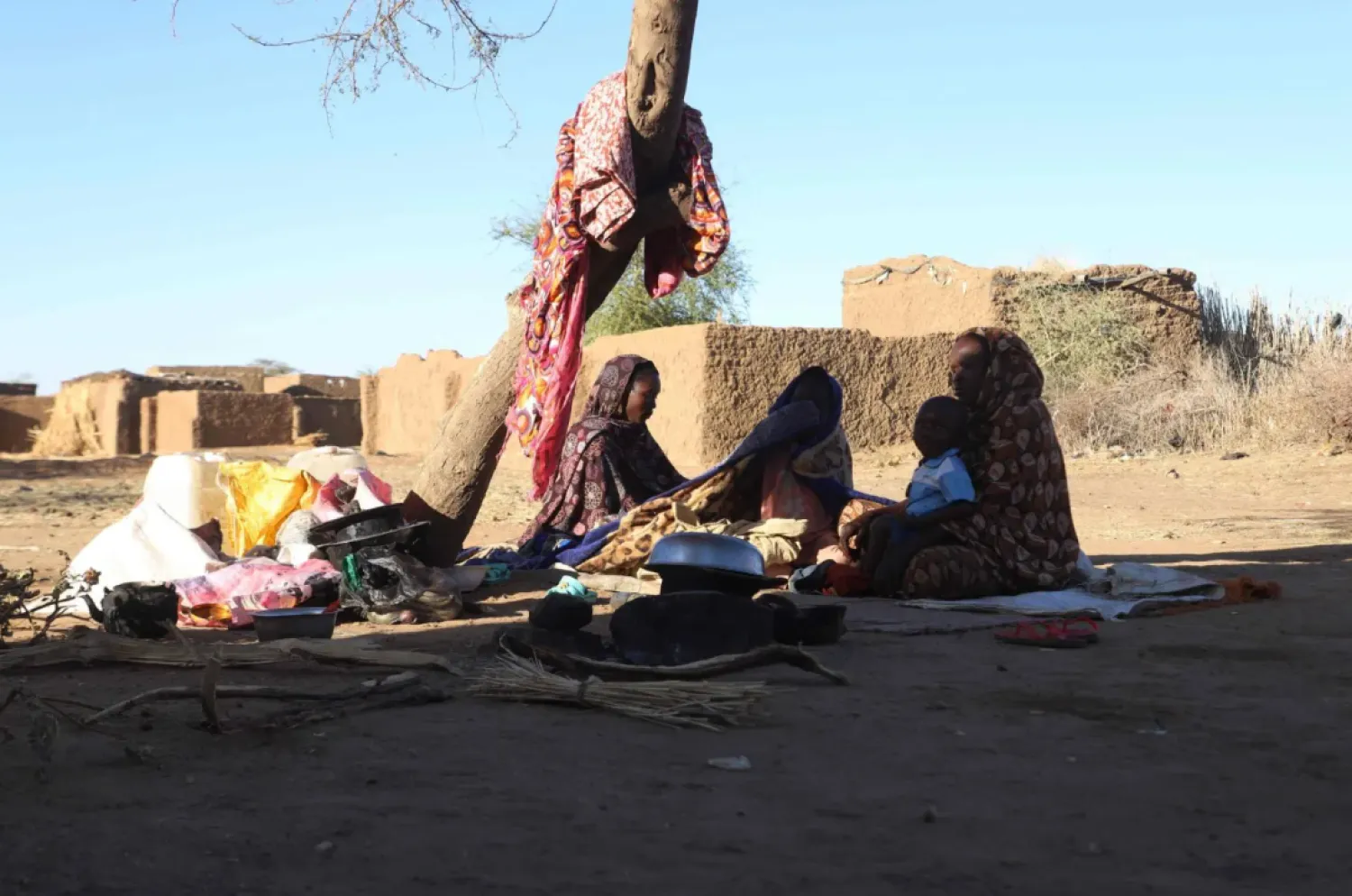
Sudanese displaced people who left El Fasher after its fall, sit in the shade in Tawila at the Rwanda camp reception point on December 17, 2025. (Photo by AFP)
TT

Atrocities in Sudan's El-Fasher Were 'Preventable Human Rights Catastrophe'

Sudanese displaced people who left El Fasher after its fall, sit in the shade in Tawila at the Rwanda camp reception point on December 17, 2025. (Photo by AFP)

The atrocities unleashed on El-Fasher in Sudan's Darfur region last October were a "preventable human rights catastrophe", the United Nations said Monday, warning they now risked being repeated in the neighbouring Kordofan region.


"My office sounded the alarm about the risk of mass atrocities in the besieged city of El-Fasher for more than a year ... but our warnings were ignored," UN rights chief Volker Turk told the Human Rights Council in Geneva.


He added that he was now "extremely concerned that these violations and abuses may be repeated in the Kordofan region".


Arab League Condemns Israel's Decisions to Alter Legal, Administrative Status of West Bank

A general view shows the opening session of the meeting of Arab foreign ministers at the Arab League Headquarters (Reuters)
TT

Arab League Condemns Israel's Decisions to Alter Legal, Administrative Status of West Bank

A general view shows the opening session of the meeting of Arab foreign ministers at the Arab League Headquarters (Reuters)

The General Secretariat of the Arab League strongly condemned decisions by Israeli occupation authorities to impose fundamental changes on the legal and administrative status of the occupied Palestinian territories, particularly in the West Bank, describing them as a dangerous escalation and a flagrant violation of international law, international legitimacy resolutions, and signed agreements, SPA reported.

In a statement, the Arab League said the measures include facilitating the confiscation of private Palestinian property and transferring planning and licensing authorities in the city of Hebron and the area surrounding the Ibrahimi Mosque to occupation authorities.

It warned of the serious repercussions of these actions on the rights of the Palestinian people and on Islamic and Christian holy sites.

The statement reaffirmed the Arab League’s firm support for the legitimate rights of the Palestinian people, foremost among them the establishment of their independent state on the June 4, 1967 borders, with East Jerusalem as its capital.