FILE PHOTO: The logo of Royal Dutch Shell is seen at a petrol station in Sint-Pieters-Leeuw, Belgium January 30, 2019. REUTERS/Yves Herman/File Photo
Royal Dutch Shell will axe up to 9,000 jobs or more than 10 percent of its global workforce, the energy giant said Wednesday as the coronavirus pandemic slams oil demand and prices.
The Anglo-Dutch group will cut between 7,000 and 9,000 positions by the end of 2022, including 1,500 staff who have agreed to take voluntary redundancy this year, it said in a statement.
"This is an extremely tough process. It is very painful to know that you will end up saying goodbye to quite a few good people," AFP quoted Shell chief executive Ben van Beurden, who oversees 80,000 staff across more than 70 countries, as saying.
"But we are doing this because we have to, because it is the right thing to do for the future of the company.
"We have to be a simpler, more streamlined, more competitive organization that is more nimble and able to respond to customers," he added.
The virus has hit the entire energy sector, with Shell's fierce rival BP axing about 10,000 jobs or 15 percent of its staff.
Shell on Wednesday added that it aims to generate annual savings of between $2 billion and $2.5 billion (1.7-2.1 billion euros) by also cutting back on refining capacity.
It will help the company to achieve a $3-$4 billion efficiency drive announced in March and that runs to 2021.
Shell had in July flagged that job cuts were in the pipeline after posting a colossal $18.1-billion second-quarter net loss.
On Wednesday it warned that it would suffer more post-tax impairment charges of $1.0-$1.5 billion in full third quarter earnings due next month.
Van Beurden added that Shell was looking at a raft of other areas where it can cut costs, such as travel, its use of contractors and virtual working.
Von der Leyen: EU Must 'Tear Down Barriers' to Become 'Global Giant'https://english.aawsat.com/business/5239595-von-der-leyen-eu-must-tear-down-barriers-become-global-giant
Von der Leyen: EU Must 'Tear Down Barriers' to Become 'Global Giant'
(FILES) European Commission President Ursula von der Leyen delivers a speech in Brussels, on January 22, 2026. (Photo by NICOLAS TUCAT / AFP)
The EU must "tear down the barriers" that prevent it from becoming a truly global economic giant, European Commission chief Ursula von der Leyen said Wednesday, ahead of leaders' talks on making the 27-nation bloc more competitive.
"Our companies need capital right now. So let's get it done this year," the commission president told EU lawmakers as she outlined key steps to bridging the gap with China and the United States.
"We have to make progress one way or the other to tear down the barriers that prevent us from being a true global giant," she said, calling the current system "fragmentation on steroids."
Reviving the moribund EU economy has taken on greater urgency in the face of geopolitical shocks, from US President Donald Trump's threats and tariffs upending the global trading to his push to seize Greenland from Denmark.
AFP said that Von der Leyen delivered her message before heading with EU leaders including France's Emmanuel Macron and Germany's Friedrich Merz to a gathering of industry executives in Antwerp, held on the eve of a summit on bolstering the bloc's economy.
A key issue identified by the EU is the fact that European companies face difficulties accessing capital to scale up, unlike their American counterparts.
To tackle this, Plan A would be to advance together as 27 states, von der Leyen said, but if they cannot reach agreement, the EU should consider "enhanced cooperation" between those countries that want to.
Von der Leyen said Europe should ramp up its competitiveness by "stepping up production" on the continent and "by expanding our network of reliable partners", pointing to the importance of signing trade agreements.
After recent deals with South American bloc Mercosur and India, she said more were on their way -- with Australia, Thailand, the Philippines and the United Arab Emirates.
One of the biggest -- and most debated -- proposals for boosting the EU's economy is to favor European firms over foreign rivals in "strategic" fields, which von der Leyen supports.
"In strategic sectors, European preference is a necessary instrument... that will contribute to strengthen Europe's own production base," she said -- while cautioning against a "one-size-fits-all" approach.
France has been spearheading the push, but some EU nations like Sweden are wary of veering into protectionism and warn Brussels against going too far.
The EU executive will also next month propose the 28th regime, also known as "EU Inc", a voluntary set of rules for businesses that would apply across the European Union and would not be linked to any particular country.
Brussels argues this would make it easier for companies to work across the EU, since the fragmented market is often blamed for why the economy is not better.
The commission is also engaged in a massive effort to cut red tape for firms, which complain EU rules make it harder to do business -- drawing accusations from critics that Brussels is watering down key legislation on climate in particular.
Saco: Saudi Retail Market Remains Promising, Digital Transformation Key to Expanding Market Sharehttps://english.aawsat.com/business/5239588-saco-saudi-retail-market-remains-promising-digital-transformation-key-expanding
Saco: Saudi Retail Market Remains Promising, Digital Transformation Key to Expanding Market Share
A Saco branch in Riyadh. Asharq Al-Awsat
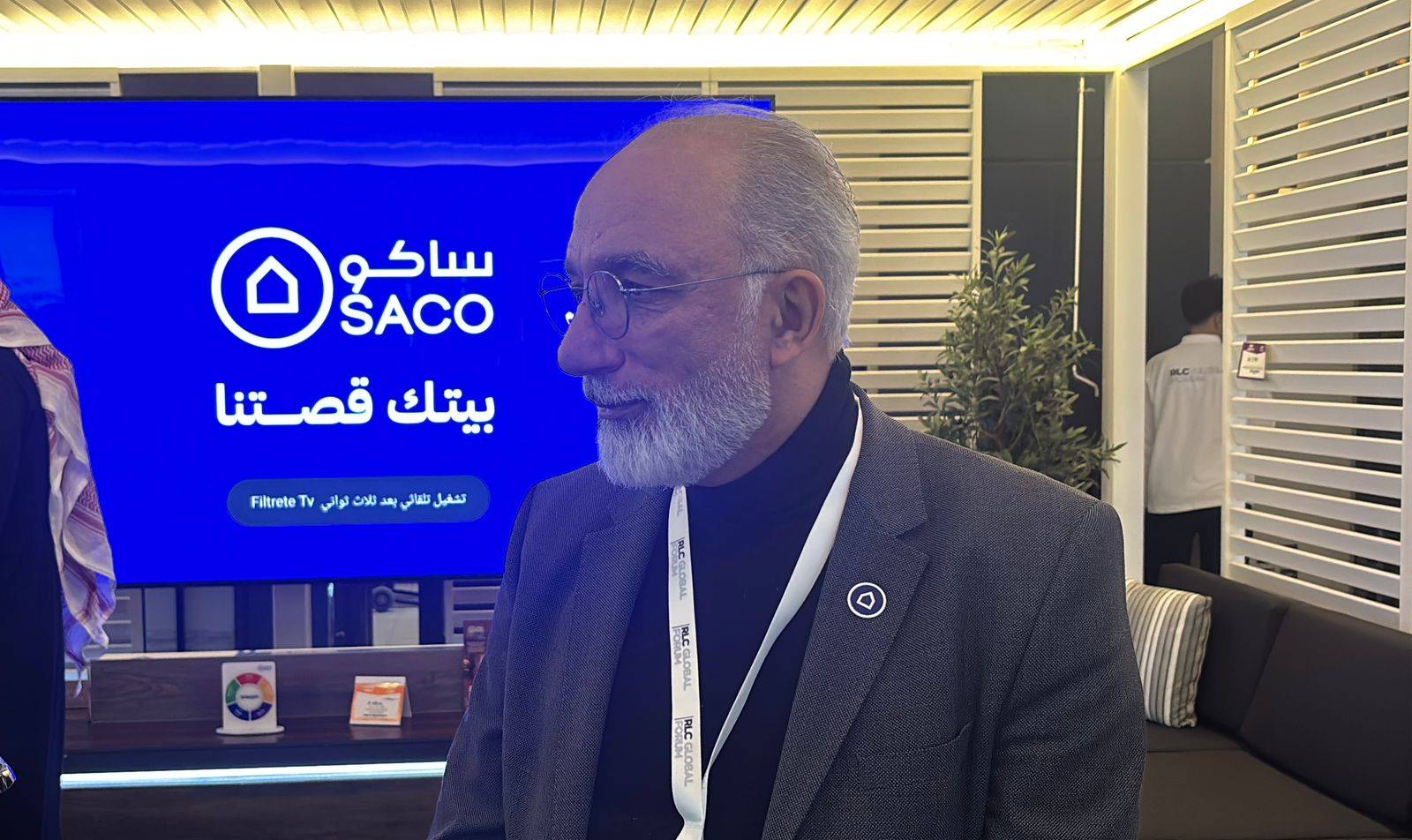
Saudi Arabia’s retail sector is undergoing deep structural changes driven by the rapid global expansion of e-commerce, prompting local companies to reassess their operational and financial strategies to remain competitive, according to Abdel-Salam Bdeir, chief executive of Saco.
Speaking to Asharq Al-Awsat on the sidelines of the RLC Global Forum 2026, Bdeir said the Saudi retail market reached an estimated SAR385 billion ($102.7 billion) in 2025. Of this total, SAR35 billion ($9.3 billion) came from domestic e-commerce, while traditional physical stores accounted for about SAR350 billion ($93.4 billion). By comparison, the market stood at roughly SAR400 billion ($106.7 billion) in 2018.
Bdeir said competition from global e-commerce platforms and intensifying price pressures are not challenges facing Saco alone, but rather the retail sector, wholesale trade, and the Saudi economy more broadly. He noted that international platforms have captured most of the sector’s growth in recent years, eroding local market share and affecting sales and employment.
Employment in the retail sector declined from more than 2 million jobs in 2016 to around 1.7 million in 2025, he stated. Purchases from global platforms exceeded SAR65 billion ($17.3 billion) in 2025, representing more than 16 percent of the Saudi retail market.
Bdeir added that the absence of customs duties on most such orders costs the state between SAR6 billion and SAR10 billion annually in lost customs revenues alone, in addition to the impact on zakat, employment, and broader economic returns.
Abdel-Salam Bdeir, chief executive of Saco (Asharq Al-Awsat)
New Strategy
In response to these challenges, Bdeir said Saco completed the repayment of all its loans in 2025, leaving the company debt-free and better positioned to manage interest-rate volatility.
He added that the company has secured financing of SAR150 million ($40 million) that has yet to be drawn, providing additional flexibility to support future investments.
Saco returned to profitability in the fourth quarter of 2024 with a margin of 16.8 percent and has remained profitable for five consecutive quarters. Bdeir attributed this performance to a successful operational restructuring that included closing underperforming branches.
Digital transformation has also gained momentum, with online sales rising from 4 percent of total revenue in 2023 to 10 percent in 2025. The Saco CEO said digital channels are recording annual growth rates exceeding 50 to 60 percent.
Cost Control and Compliance
Bdeir noted that higher logistics, diesel, and service costs have weighed on profit margins, prompting the company to renegotiate terms with delivery providers. He also stressed the importance of compliance with local quality and safety standards, noting that some global platforms do not adhere to these regulations, creating potential risks for consumers.
Founded in 1984, Saco is the Kingdom’s largest home improvement solutions provider, operating 35 stores across 19 cities, including five megastores, and offering more than 45,000 products. The company has been publicly listed since 2015 and has acquired a logistics services provider to enhance operational efficiency, while focusing on developing young Saudi talent in line with Vision 2030.
Saco’s shares were trading at around SAR 26.5 ($7.1) by the close of trading on Tuesday.
Global Forum
The RLC Global Forum serves as a key platform for senior executives and decision-makers to discuss major shifts in consumer behavior, digital innovation strategies, the future of smart retail, and pathways to sustainable growth.
The 2026 edition, held under the theme “Growth Crossroads,” took place over two days in Riyadh, reflecting Saudi Arabia’s growing role as a regional hub for retail and commercial investment.
TotalEnergies Posts 17% Drop in Net Profit to $13.1 Bnhttps://english.aawsat.com/business/5239575-totalenergies-posts-17-drop-net-profit-131-bn
FILE PHOTO: The logo of French oil and gas company TotalEnergies is seen on a building in Rueil-Malmaison, near Paris, France, April 14, 2025. REUTERS/Stephanie Lecocq/File Photo
TotalEnergies Posts 17% Drop in Net Profit to $13.1 Bn
FILE PHOTO: The logo of French oil and gas company TotalEnergies is seen on a building in Rueil-Malmaison, near Paris, France, April 14, 2025. REUTERS/Stephanie Lecocq/File Photo
French energy giant TotalEnergies said Wednesday that its net profit fell 17 percent last year, reflecting declines in oil prices even as it increased production.
Profit was down to $13.1 billion, but the company will raise its final 2025 dividend payout by 5.6 percent, to 3.40 euros per share.
"With cash flow stable at $7.2 billion, TotalEnergies once again demonstrates its ability to offset lower hydrocarbon prices thanks to accretive growth in its upstream production of 3.9 percent in 2025, exceeding the guidance of above 3 percent," chief executive Patrick Pouyanne said in a statement.
According to AFP, the company will also continue to buy back its own shares to support its stock price, spending $3 billion to $6 billion this year assuming oil prices stay in a range of $60 to $70 a barrel.
Like other oil majors, TotalEnergies is grappling with low oil and gas prices as a result of higher output by OPEC+ nations since last year.
They are looking to regain market share amid strong competition from producers outside the group, such as the United States, Canada and Guyana.
Pouyanne said TotalEnergies invested $17.1 billion last year, of which 37 percent went to new oil and gas projects.
He also said $3.5 billion was invested in "low-carbon energies", mainly electricity.
Last October, TotalEnergies was convicted by a French court of "misleading commercial practices" by overstating its climate pledges and ordered it to remove some claims.
Activists called it the first such ruling worldwide against a major oil company for climate misinformation.
لم تشترك بعد
انشئ حساباً خاصاً بك لتحصل على أخبار مخصصة لك ولتتمتع بخاصية حفظ المقالات وتتلقى نشراتنا البريدية المتنوعة