


Virus, What Virus? India Gets Back to Work

As India enters the October-November festival season, there are fears the number of coronavirus infections will spike | AFP
TT

Virus, What Virus? India Gets Back to Work

As India enters the October-November festival season, there are fears the number of coronavirus infections will spike | AFP

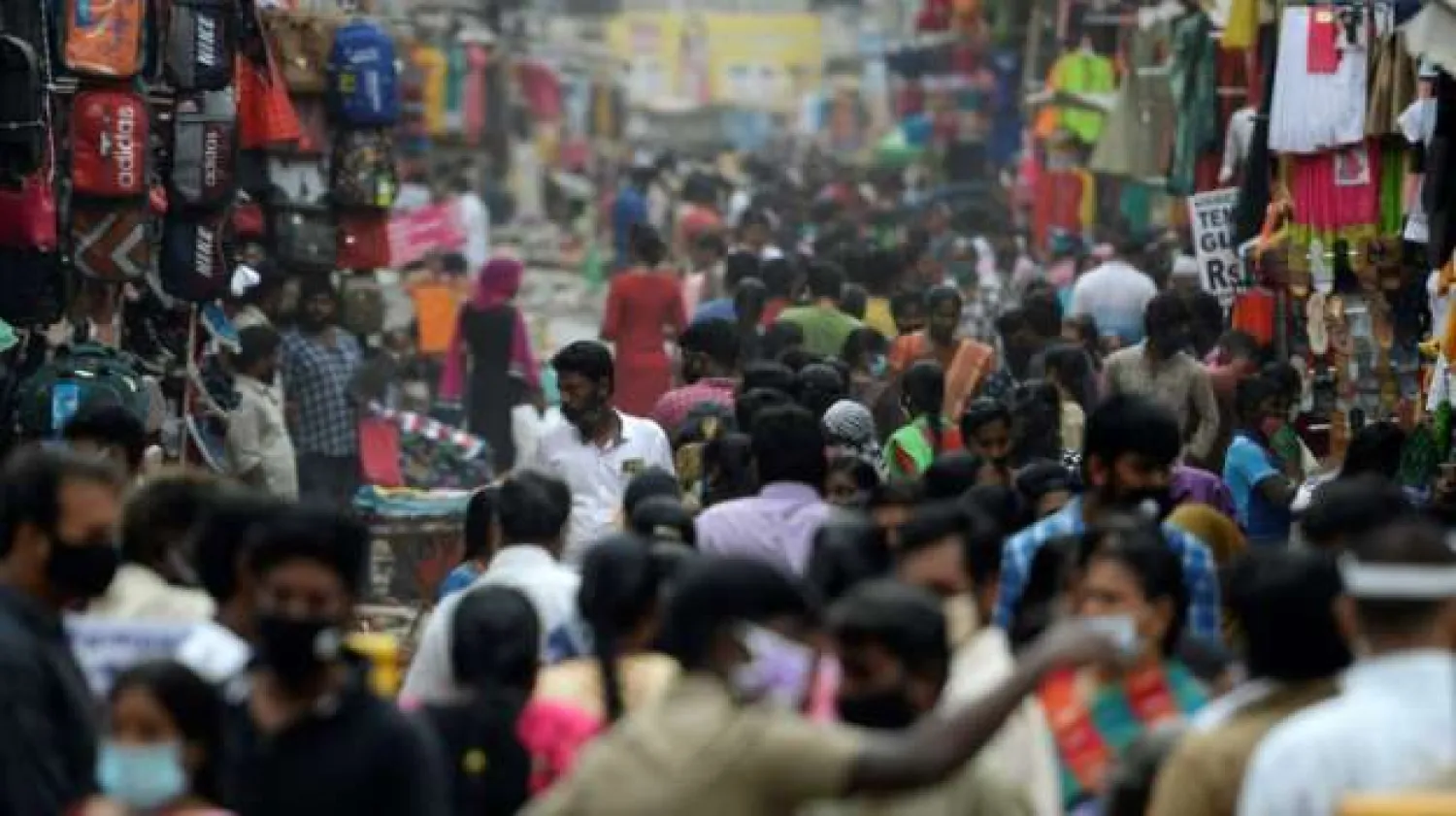
India is on course to top the world in coronavirus cases, but from Maharashtra's whirring factories to Kolkata's thronging markets, people are back at work -- and eager to forget the pandemic for festival season.

After a strict lockdown in March that left millions on the brink of starvation, the government and people of the world's second-most populous country decided life must go on.

Sonali Dange, for instance, has two young daughters and an elderly mother-in-law to look after. She was hospitalised this year in excruciating pain after catching the coronavirus.

But after the lockdown exhausted the family's savings, the 29-year-old had to return to work at a factory where she earns 25,000 rupees ($340) a month.

"Now that I have recovered, I am no longer so scared of the disease," she told AFP amid the din of machinery at the Nobel Hygiene plant east of Mumbai.

- Worst since 1947 -

The pandemic's confirmed fatality rate has been heaviest in richer nations with older populations -- the US death toll is double that of India despite having only a quarter of the population.

Poor countries have suffered far worse economic pain, with the World Bank predicting 150 million people could fall into extreme poverty worldwide.

Many children in the developing world are now working to help their parents make ends meet, activists say, while thousands of young girls have been forced into marriage.

In Varanasi in northern India, 12-year-old Sanchit no longer attends school and instead collects cloth discarded from bodies before cremation on the city's ghats.

"On a good day, I earn around 50 rupees (70 US cents)," the boy told AFP.

The IMF projects India's GDP will contract by 10.3 percent this year, the biggest slump of any major emerging nation and its worst since independence in 1947.

- Lockdown catastrophe -

When India went into lockdown, it was a human catastrophe, leaving millions in the informal economy jobless, penniless, and destitute almost overnight.

No one wants to go back to that, said Gargi Mukherjee, 42, as she shopped in the New Market area of Kolkata, thronging with festival-season customers, many without face masks.

"For survival, people have to come out and do their jobs. If you don't earn, you cannot feed your family," she told AFP.

Experts caution that the October-November season -- when Hindus celebrate major festivals such as Durga Puja, Dussehra and Diwali -- may trigger a sharp increase in infections, as consumers crowd markets to snap up big-ticket items on discount.

"Of course corona is to be feared. But what can I do? I can't miss the moments of Durga Puja," said housewife Tiyas Bhattacharya Das, 25.

"Durga Puja comes once in the year, so I cannot miss the enjoyment of the shopping."

- Hunger or virus -

Sunil Kumar Sinha, principal economist at the Mumbai-based India Ratings and Research agency, said Indians faced a stark choice.

"People have to choose whether to die of hunger or risk getting a virus that may or may not kill you," he told AFP.

Indeed India's relatively low mortality rate -- about 1.5 percent of its more than seven million cases -- has surprised many who warned coronavirus would lay waste to its crowded cities, beset by poor sanitation and crumbling public hospitals.

Even accounting for some likely undercounting, it is evident that the nightmare scenario of dead bodies piled in the streets as seen during the 1918 flu pandemic has mercifully not materialized.

- 'Foot off the brake' -

The unexpected reprieve has given Prime Minister Narendra Modi leeway to resist a fresh lockdown, with the human toll -- and political cost -- of another shutdown higher than seeing case numbers soar.

But Bhramar Mukherjee, an epidemiologist at the University of Michigan, warned the government should not simply let the virus run its course.

"In order to open up, you need to intensify public health measures... If you completely take your foot off the brakes, the virus will take off too," Mukherjee told AFP.

Last month, the Indian Medical Association slammed the Modi government for its "indifference" to the sacrifices of front-line staff in one of the world's worst-funded health care systems.

"It appears that they are dispensable," it said.

Back in Kolkata, bookseller Prem Prakash, 67, was philosophical.

"You have to leave some things to fate," he told AFP.

"Fearing death too much is not a solution. When that comes, you should accept it gracefully."


Road Accident in Nigeria Kills at Least 30 People

FILE PHOTO: A police vehicle of Operation Fushin Kada (Anger of Crocodile) is parked on Yakowa Road, as schools across northern Nigeria reopen nearly two months after closing due to security concerns, following the mass abductions of school children, in Kaduna, Nigeria, January 12, 2026. REUTERS/Nuhu Gwamna/File Photo
TT

Road Accident in Nigeria Kills at Least 30 People

FILE PHOTO: A police vehicle of Operation Fushin Kada (Anger of Crocodile) is parked on Yakowa Road, as schools across northern Nigeria reopen nearly two months after closing due to security concerns, following the mass abductions of school children, in Kaduna, Nigeria, January 12, 2026. REUTERS/Nuhu Gwamna/File Photo

At least 30 people have been killed and an unspecified number of people injured in a road accident in northwest Nigeria, authorities said.

The accident occurred Sunday in Kwanar Barde in the Gezawa area of Kano state and was caused by “reckless driving” by the driver of a truck-trailer, Gov. Abba Yusuf said in a statement. He did not specify what other vehicles were involved.

Yusuf described the accident as “heartbreaking and a great loss” to the affected families and the state. He did not provide more details of the accident, said The Associated Press.

Africa’s most populous country recorded 5,421 deaths in 9,570 road accidents in 2024, according to data by the country’s Federal Road Safety Corps.

Experts say a combination of factors including a network of bad roads, lax enforcement of traffic laws and indiscipline by some drivers produce the grim statistics.

In December, boxing heavyweight champion Anthony Joshua was in a deadly car crash that injured him and killed Sina Ghami and Latif “Latz” Ayodele, two of his friends, in southwest Nigeria.

Adeniyi Mobolaji Kayode, Joshua’s driver, was charged with dangerous and reckless driving and his trial is scheduled to begin later this month.


US Vice President Vance Heads to Armenia, Azerbaijan to Push Peace, Trade

US Vice President JD Vance speaks during the Critical Minerals Ministerial at the State Department in Washington, DC, US, February 4, 2026. (Reuters)
TT

US Vice President Vance Heads to Armenia, Azerbaijan to Push Peace, Trade

US Vice President JD Vance speaks during the Critical Minerals Ministerial at the State Department in Washington, DC, US, February 4, 2026. (Reuters)

US Vice President JD Vance will visit Armenia and Azerbaijan this week to push a Washington-brokered peace agreement that could transform energy and trade routes in the strategic South Caucasus region.

His two-day trip to Armenia, which begins later on Monday, comes just six months after the Armenian and Azerbaijani leaders signed an agreement at the White House seen as the first step towards peace after nearly 40 years of war.

Vance, the first US vice president to visit Armenia, is seeking to advance the Trump Route for International Peace and Prosperity (TRIPP), a proposed 43-kilometre (27-mile) corridor that would run across southern Armenia and give Azerbaijan a direct route to its exclave ‌of Nakhchivan ‌and in turn to Türkiye, Baku's close ally.

"Vance's visit should ‌serve ⁠to reaffirm the ‌US's commitment to seeing the Trump Route through," said Joshua Kucera, a senior South Caucasus analyst at Crisis Group.

"In a region like the Caucasus, even a small amount of attention from the US can make a significant impact."

The Armenian government said on Monday that Vance would hold talks with Prime Minister Nikol Pashinyan and that both men would then make statements, without elaborating.

Vance will then visit Azerbaijan on Wednesday and Thursday, the White House has said.

Under the agreement signed last year, ⁠a private US firm, the TRIPP Development Company, has been granted exclusive rights to develop the proposed corridor, with Yerevan ‌retaining full sovereignty over its borders, customs, taxation and security.

The ‍route would better connect Asia to Europe ‍while - crucially for Washington - bypassing Russia and Iran at a time when Western countries are ‍keen on diversifying energy and trade routes away from Russia due to its war in Ukraine.

Russia has traditionally viewed the South Caucasus as part of its sphere of influence but has seen its clout there diminish as it is distracted by the war in Ukraine.

Securing US access to supplies of critical minerals is also likely to be a key focus of Vance's visit.

TRIPP could prove a key transit corridor for the vast mineral wealth of ⁠Central Asia - including uranium, copper, gold and rare earths - to Western markets.

CLOSED BORDERS, BITTER RIVALS

In Soviet times the South Caucasus was criss-crossed by railways and oil pipelines until a series of wars beginning in the 1980s disrupted energy routes and shuttered the border between Armenia and Türkiye, Azerbaijan's key regional ally.

Armenia and Azerbaijan were locked in bitter conflict for nearly four decades, primarily over the mountainous region of Nagorno-Karabakh, an internationally recognized part of Azerbaijan that broke away from Baku's control as the Soviet Union fell apart in 1991.

Azerbaijan and Armenia fought two wars over Karabakh before Baku finally took it back in 2023. Karabakh's entire ethnic Armenian population of around 100,000 people fled to Armenia. The two neighbors have made progress in recent months on normalizing relations, including restarting ‌some energy shipments.

But major hurdles remain to full and lasting peace, including a demand by Azerbaijan that Armenia change its constitution to remove what Baku says contains implicit claims on Azerbaijani territory.


Adviser to Iran's Supreme Leader to Visit Oman on Tuesday

FILED - 06 February 2009, Bavaria, Munich: Ali Larijani, then chairman of the Iranian parliament, speaks at the 45th Munich Security Conference in Munich. Photo: Andreas Gebert/dpa
TT

Adviser to Iran's Supreme Leader to Visit Oman on Tuesday

FILED - 06 February 2009, Bavaria, Munich: Ali Larijani, then chairman of the Iranian parliament, speaks at the 45th Munich Security Conference in Munich. Photo: Andreas Gebert/dpa

Ali Larijani, an adviser to Iran's Supreme Leader Ali Khamenei, will visit Oman accompanied by a delegation on Tuesday, the ‌semi-official Tasnim news ‌agency reported ‌on ⁠Monday.

American and ‌Iranian diplomats held indirect talks in Oman last week, aimed at reviving diplomacy amid a US ⁠naval buildup near Iran and ‌Tehran's vows ‍of a ‍harsh response if ‍attacked.

"During this trip, (Larijani) will meet with high-ranking officials of the Sultanate of Oman and discuss the latest regional ⁠and international developments and bilateral cooperation at various levels," Tasnim said.

The date and venue of the next round of talks are yet to be announced.
