


Eco-Fashion Offers a Renaissance for New Tunisian Brands

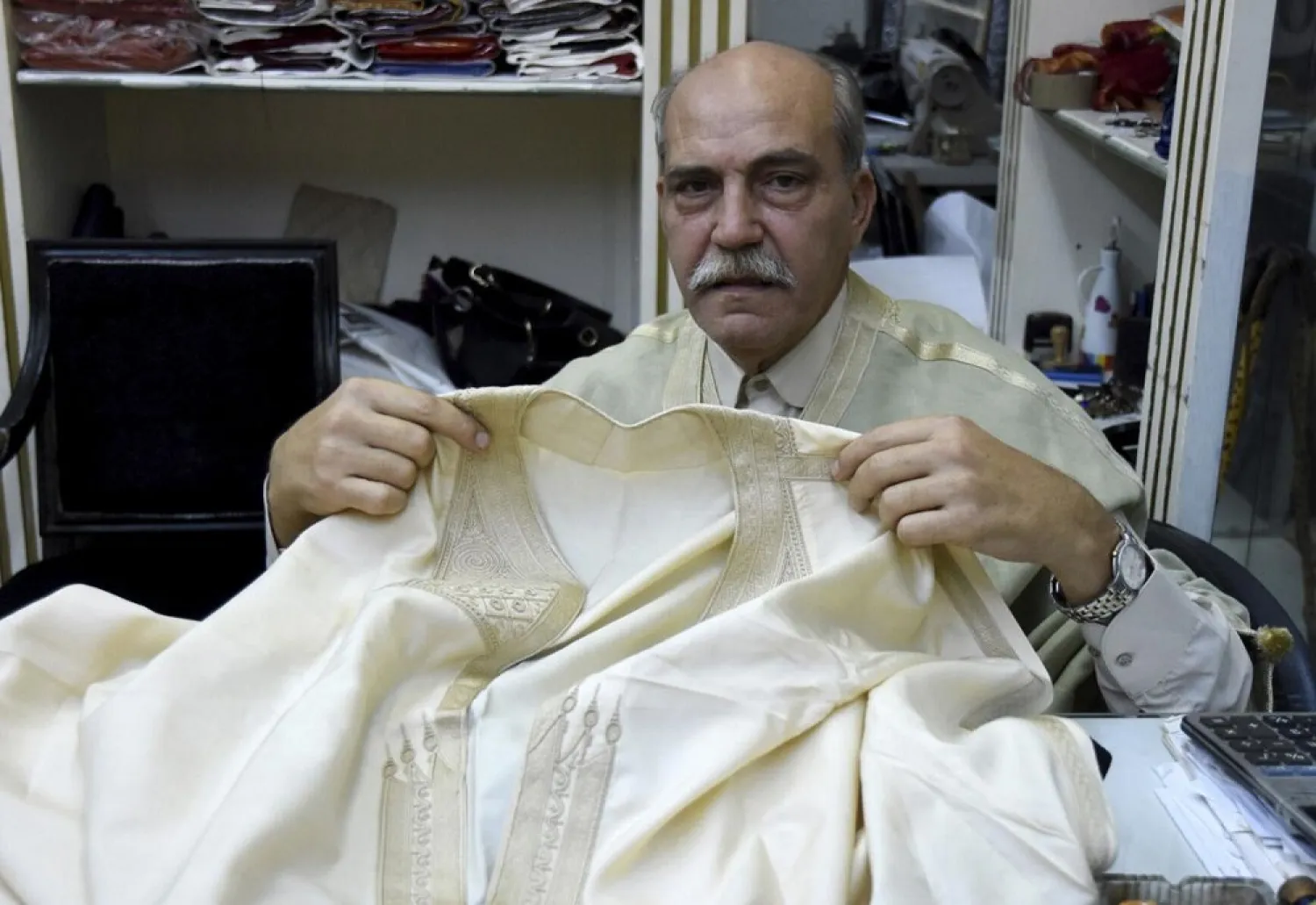
Lasaad El Beji Amine El Hrairia, a silk weaver In Tunis' Medina and that Hassan Ben Ayech, the designer for the Bardo Collection, holds a fabric in Tunis, Monday Oct.5, 2020. (AP)
TT

Eco-Fashion Offers a Renaissance for New Tunisian Brands

Lasaad El Beji Amine El Hrairia, a silk weaver In Tunis' Medina and that Hassan Ben Ayech, the designer for the Bardo Collection, holds a fabric in Tunis, Monday Oct.5, 2020. (AP)

The sun is setting by the time Tunisian fashion designer Chems Eddine Mechri reaches the breezy, seaside town of Mahdia. He has spent half the day driving in the scorching heat in pursuit of the precious, handmade fabrics he needs for his upcoming winter collection.

With a 200-kilometer (125-mile) road trip from Tunis coming to an end, the designer knows just the place: the basement of a blue-lit workshop, hidden away in the labyrinth of Mahdia’s old medina, where silk weaver Mohamed Ismail’s spinning wheel still is going at full speed.

In a globalized world dominated by fast fashion brands such as Zara, H&M and Topshop, Tunisian designers like Mechri are increasingly going back to their roots, embracing local artisans and environmentally conscious materials. Thanks to North African nation's age-old textile-making traditions, Tunisia is a good fit for the eco-fashion they want to champion.

Ismail has been spinning locally sourced wool and cotton, as well as silk thread imported from China, for the last 47 years. “This work is in our blood…it’s in our DNA,” Ismail says as he unwinds a crimson silk yarn in his workshop. “It’s intergenerational, and for my family, this work is very precious to us.”

Back in the capital of Tunis, Mechri and his dressmaker sew together a dress from scratch for his fashion brand Née. They combine a shimmering pink and gold traditional fabric used in Tunisian embroidery with a mesh material from the 1960s. Both were deemed unsellable by the merchant Mechri bought them from.

“They (didn’t) fit with the tastes of the day,” Mechri said. “And that’s why they (the fabric merchants) need us, the designers...to give a second life to these materials.”

The $2.6 billion textile industry is a pillar of the Tunisian economy, employing 160,000 people and producing roughly 25% of the country’s total exports, according to estimates by the Oxford Business Group. However, fashion is among the most polluting industries in the world, responsible for producing 10% of carbon dioxide globally, according to the World Bank, and tens of millions of tons of clothing is discarded every year.

Mechri and other designers have turned to the eco-friendly practice of “upcycling” — taking old or unwanted materials and turning them into something new and modern by incorporating high-quality fabrics. Mechri mixes old fabrics with the craftwork of artisans across Tunisia - from embroiderers in Tataouine, on the edge of the desert, to seamstresses in Bizerte in the country's north.

Fashion brands in the West are getting serious about upcycling, too, including American brand Bode and Hotel, a Danish-French brand founded by Alexandra Hartmann.

“People are starting to realize the negative impact of that desire to constantly consume all the time without taking a step back, taking a pause to reflect and ask questions about the environment and the future of humanity,” Mechri said in his Tunis boutique as clothing on the racks behind him shimmered and rustled at the touch. “Fashion is an intelligent way to pay homage to local materials.”

The desire to honor one’s ancestry was equally important to Hassen Ben Ayech, a 26-year-old former computer scientist. He founded the fledgling high-end brand Bardo with the express intent of reviving Tunisia’s heritage and traditional crafts in “an era of uncertainty and fear of environmental doom, coupled with the slow death of small pockets of culture in the face of globalization.”

The brand’s first collection evokes imagery from the famous Bardo palace in Tunis and the era of the beys, the rulers in the Tunisian monarchy that was abolished in 1957.

“We wanted to go back to a period that is often overlooked and avoid the clichés,” Ayech said. “We wanted to show that there is more to us than kaftans, (and to) dive deeper into our history and identity.”

In 2018, Riad Trabelsi relaunched his French-Tunisian brand BASSCOUTUR to prove to the industry that sustainable fashion is possible on a wider scale. The brand has a growing client base in Japan and South Korea and will soon launch in Italy.

“We’re seeing this concept become normative. If it’s not sustainable, it’s not cool,” Trabelsi said.

He feels his designs reflect the complexity of the modern Tunisian diaspora: “My identity is complex - I have a Tunisian father, an Algerian mother, meanwhile I was born in France. I draw all my DNA from this incredible mix… I am constantly evolving, reconditioning myself and my understanding of my Tunisian heritage each day.”

Sofia Guellaty, a Tunisian fashion journalist and the founder of MILLE World, an online platform spotlighting Arab youth culture, arts and fashion, said these brands “are using the storytelling of where they come from to make their garments stand out.”

“Tunisia is exactly on the mood board: the natural shapes, the beautiful, raw, organic materials. They are what the international and local markets want," she said.

Guellaty notes that most Tunisians, still excited by the novelty of fast fashion brands that only started becoming available locally over the last decade — are not so eco-conscious. Still, she has noticed more young Tunisians embracing their cultural identity and turning to local brands.

Ayech says Tunisia’s still-flourishing textile industry represents hope for those swept up in the country's ongoing economic crisis, which has been exacerbated by the coronavirus pandemic.

“The industry sustains a lot of families with a steady income even in remote areas and without access to higher education,” he said. Businesses that strike a balance between ethical industrial practices and community-driven craftmanship offer Tunisia “a hope of a better tomorrow.”



Shein to Buy Apparel Retailer Everlane

People walk past the Everlane Soho store on May 22, 2026 in New York City. (Getty Images/AFP)
TT

Shein to Buy Apparel Retailer Everlane

People walk past the Everlane Soho store on May 22, 2026 in New York City. (Getty Images/AFP)

US apparel brand ‌Everlane said on Friday it had reached an agreement to be acquired by online retailer Shein, giving the fast-fashion company ownership of a brand known for sustainability and supply-chain transparency.

Everlane will remain independent, its CEO Alfred Chang said in a statement, adding that the brand will hold its sustainability commitments while expanding to a global reach through ‌the deal.

Shein has ‌long admired Everlane and ‌plans ⁠to use the ⁠brand to enhance its own image of just affordable fast-fashion and drive cross-selling opportunities, a source familiar with the matter told Reuters, adding that there were multiple bidders for Everlane.

Puck News first reported the deal and ⁠said it values the brand at ‌about $100 million on ‌Sunday, adding that shareholders with common stock in Everlane ‌would not receive a payout.

L Catterton, ‌the majority owner of Everlane, and Shein have yet to respond to Reuters requests for comment.

Companies such as Shein and Temu have disrupted ‌retail markets through aggressive pricing, heavy marketing and tax loopholes that initially ⁠gave ⁠them an edge over local players.

Shein plans to invest in growing Everlane and is expected to keep its physical stores open for now, according to the source, even though brick-and-mortar retail is not central to its business model.

At the same time, the company's faster production cycles and ability to quickly bring new products to market could support Everlane's operations.


Deal That Could Have Put Clinique, Charlotte Tilbury and Jean Paul Gaultier Under One Roof Is Off

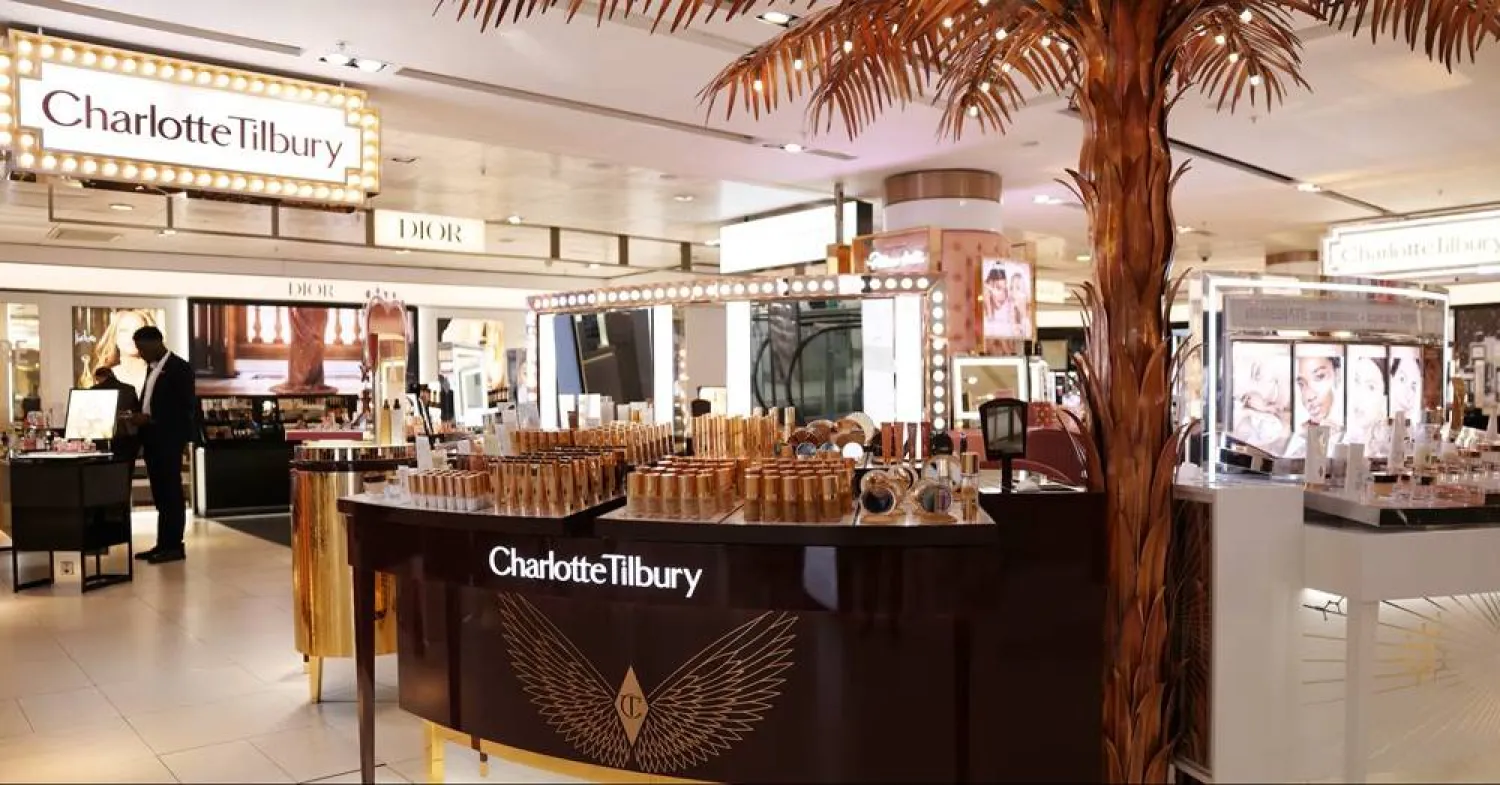
A Charlotte Tilbury beauty counter is seen at the John Lewis retail store on Oxford Street in London, Britain, October 24, 2024. (Reuters)
TT

Deal That Could Have Put Clinique, Charlotte Tilbury and Jean Paul Gaultier Under One Roof Is Off

A Charlotte Tilbury beauty counter is seen at the John Lewis retail store on Oxford Street in London, Britain, October 24, 2024. (Reuters)

Estee Lauder and perfume maker Puig have ended merger talks that would have potentially put brands like MAC, Clinique, Charlotte Tilbury and Jean Paul Gaultier under one roof.

Estee Lauder Cos. confirmed the discussions in March but said at the time that no agreement had been reached with the century-old Spanish company.

“We are grateful for the conversations we have had with Puig,” Estee Lauder CEO Stéphane de La Faverie said in a prepared statement late Thursday. “Today, we are reiterating our confidence in the power of our incredible brands, our talented teams, and our strength as a standalone company."

The New York-based company said in February 2025 that it could possibly cut as many as 7,000 jobs by fiscal 2026, more than 11% of its workforce. De La Faverie said at the time that Estee Lauder was transforming its operating model to be “leaner, faster, and more agile.”

Puig oversees makeup, skin care and fragrance brands like Nina Ricci, Jean Paul Gaultier and Dr. Barbara Sturm. The company went public on the Madrid Stock Exchange in early 2024.

Shares of Estee Lauder jumped more than 12% in early trading Friday.


Ruffles, Biker Leather and Celebs at Louis Vuitton's New York Show

Models present creations by designer Nicolas Ghesquiere during the Louis Vuitton Cruise 2027 collection show in New York City, US, May 20, 2026. REUTERS/Jeenah Moon
TT

Ruffles, Biker Leather and Celebs at Louis Vuitton's New York Show

Models present creations by designer Nicolas Ghesquiere during the Louis Vuitton Cruise 2027 collection show in New York City, US, May 20, 2026. REUTERS/Jeenah Moon

French fashion house Louis Vuitton combined ruffles, biker leather and the graphic art of Keith Haring for its celebrity-packed cruise 2027 show at a New York museum on Wednesday night.

Under the gaze of Zendaya, Anne Hathaway and Cate Blanchett, Louis Vuitton's artistic director for women's wear Nicolas Ghesquiere presented a collection built on contrasts and bright pops of color, said AFP.

Structured leather jackets were paired with fluffy Medici collars.

Ensembles were punctuated by the Pop Art movement's orange, pink and green, while also giving way to deep purple, dusty pink and teal.

Whether the models donned heels or sneakers, the shoes were metallic, and legs were on display with boxer shorts, biker shorts and tailored Bermuda suits.

Hats -- bucket or brimless -- topped models' heads when hair wasn't left loose and marked with the horizontal streaks popularized by figure skater Alysa Liu, the brand's new ambassador.

The show was held at The Frick Collection, marking the first time a fashion show has been hosted by the museum since its renovation last year.

Formerly the mansion of a steel magnate, the museum teems with an impressive collection of European paintings and art dating back to the Renaissance. Models stalked down the runway, passing under archways and past famed artworks.

"Within the timeless rooms of The Frick Collection, beauty and art transcend time in a quiet dialogue, while beyond its walls, New York City pulses with constant reinvention -- a convergence of contrasts," the fashion house posted on Instagram, with the brand and the museum announcing a three-year patronage partnership.

Notably, Louis Vuitton will fund three temporary major exhibitions and host free visitor after-hours evenings at the museum on the first Fridays of every month for a year.

Europe's major fashion houses have shown exceptional interest in the American market and culture recently.

Louis Vuitton's men's collection by hip hop star Pharrell Williams drew inspiration from the Big Apple, and Gucci and Dior have recently unveiled their cruise collections in New York and Los Angeles, respectively.

In December, Chanel held its show in the New York subway.