


Sudan Deploys Troops on Border with Ethiopia

FILE PHOTO: Ethiopia's Prime Minister Abiy Ahmed addresses the legislators on the current situation of the country inside the Parliament Buildings in Addis Ababa, Ethiopia February 3, 2020. REUTERS/Tiksa Negeri/File Photo
TT

Sudan Deploys Troops on Border with Ethiopia

FILE PHOTO: Ethiopia's Prime Minister Abiy Ahmed addresses the legislators on the current situation of the country inside the Parliament Buildings in Addis Ababa, Ethiopia February 3, 2020. REUTERS/Tiksa Negeri/File Photo

Sudan has deployed troops on the border with Ethiopia to stop the infiltration of armed elements to its territories.

Member of Sudan’s Sovereign Council Mohamed Alfaki Suleiman said on Tuesday that the government has taken all the necessary arrangements to deal with a flow of Ethiopian refugees.

He pointed out that the United Nations High Commissioner for Refugees has visited eastern Sudan, inspected the old refugee camps and prepared for opening new camps if necessary.

This comes in light of the armed conflict in Ethiopia between the Federal government and Tigray region’s forces that resulted in the escape of dozens of Ethiopians across the border to Sudan.

Gedu Andargachew, the Ethiopian National Security Affairs Advisor to the Prime Minister, arrived in Khartoum on Tuesday and met with President of Sudan’s Transitional Sovereign Council Abdel Fattah al-Burhan and Premier Abdalla Hamdok.

According to the Council’s statement, Burhan stressed the Sudanese government and people’s support for Ethiopia in facing the current crisis.

Hamdok referred to the ongoing contacts with Ethiopian PM Abiy Ahmed as part of Khartoum’s keenness on the neighboring country’s security and stability.

He received a letter from his Ethiopian counterpart on the latest developments in Tigray region and expressed confidence in Addis Ababa’s ability to overcome the crisis.

Andargachew briefed the Sudanese officials on the developments in Tigray, affirming the Ethiopian government’s ability to address the situation as soon as possible.

Eyewitnesses told Asharq Al-Awsat that hundreds of Ethiopians have fled Tigray to Sudan’s Kassalam and Gedaref bordering states.

Sudan’s Security and Defense Council discussed the developments in Ethiopia on Monday and called on all parties to seek a peaceful solution to the conflict.

Last weekend, the Ethiopian army announced an offensive on the northern region following an attack by Tigray People’s Liberation Front (TPLF) on a federal military base in the area.

Media Rights Group Urges Pressure on Israel over Deadly 2023 Strike

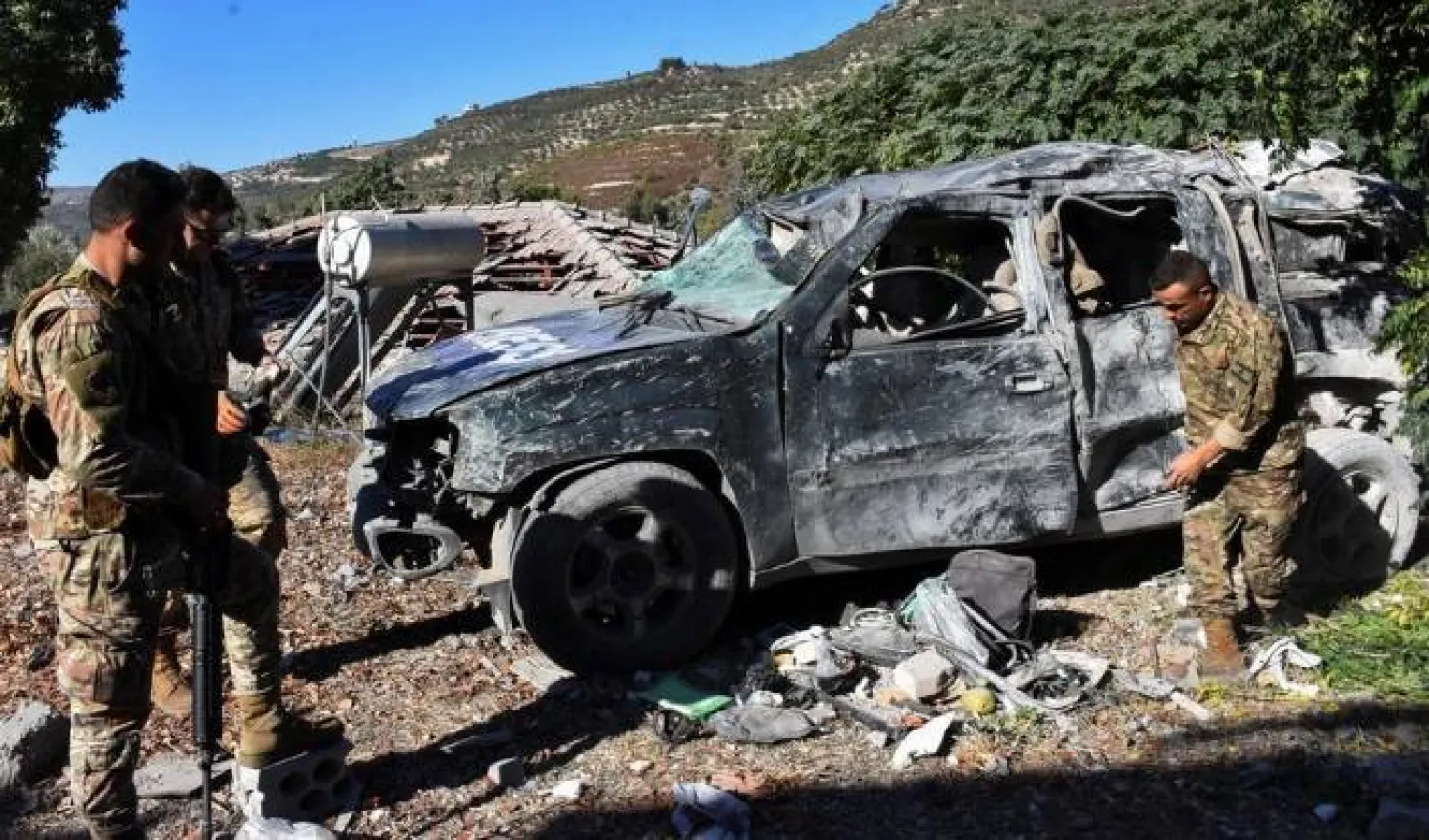
Lebanese army soldiers inspect a damaged vehicle marked with 'Press' at the site of an Israeli strike that killed a few journalists and wounded several others as they slept in guesthouses used by media, Lebanon's health ministry and local media reported, in Hasbaya in southern Lebanon, October 25, 2024. REUTERS/Stringer
TT

Media Rights Group Urges Pressure on Israel over Deadly 2023 Strike

Lebanese army soldiers inspect a damaged vehicle marked with 'Press' at the site of an Israeli strike that killed a few journalists and wounded several others as they slept in guesthouses used by media, Lebanon's health ministry and local media reported, in Hasbaya in southern Lebanon, October 25, 2024. REUTERS/Stringer

The Committee to Protect Journalists on Tuesday urged pressure on Israel including potential economic consequences if it does not hold responsible troops behind a deadly 2023 strike on reporters in Lebanon.

A Reuters journalist was killed and two AFP reporters were seriously wounded when they came under fire in southern Lebanon close to the border with Israel on October 13, 2023.

Investigations by both news agencies as well as several non-governmental groups concluded that Israel carried out the attack.

The Committee to Protect Journalists, a New York-based group advocating freedom of the press, said that the European Union should consider a suspension of its agreement allowing free trade with Israel unless Israel takes responsibility.

"With Israel's blatant failure to take accountability, we call on the international community to pressure Israeli officials to complete a probe naming the units and individuals responsible for the deliberate attacks against journalists," said Sara Qudah, Middle East regional director for the Committee to Protect Journalists.

"The failure to hold those responsible to account," she said, "puts other journalists at risk by allowing impunity to persist."

"The suspension of the EU-Israel Association Agreement is one of the few remaining avenues that could create a meaningful pressure to break this cycle of impunity," she said.

The Israeli military, asked by AFP for an update on the case, said the incident had been "referred to the General Staff Fact-Finding Assessment Mechanism for a comprehensive factual review", without further details on a timeline.

It said the Israeli army “does not target journalists .. It makes every effort to minimize harm to uninvolved civilians while maintaining the security of its troops," it said.

- Israeli envoy says strike a 'mistake' -

Reuters video journalist Issam Abdallah was killed in the strike, which wounded six other journalists.

They included AFP's Dylan Collins and Christina Assi, whose leg had to be amputated after the attack.

Israel's ambassador to France earlier this year for the first time acknowledged that Israeli forces struck the journalists and said it was "a mistake".

Ambassador Joshua Zarka, speaking on French television, said the reporters "were not targeted because they were journalists" as "the soldiers on the ground thought that they were terrorists".

The attack came days after Hamas attacked from the Gaza Strip in the deadliest-ever attack against Israel.

Israel since then has repeatedly pounded Lebanon, saying it is seeking to eradicate Hezbollah, which like Hamas has enjoyed support from Iran's clerical government.

AFP's Assi, who received CPJ's 2026 International Press Freedom Award, said it was critical to see who in Israel was responsible.

"We need to know who did this to us," she said.


Sudan’s al-Burhan Orders Investigation Into Deadly Airstrike on Gold Mine

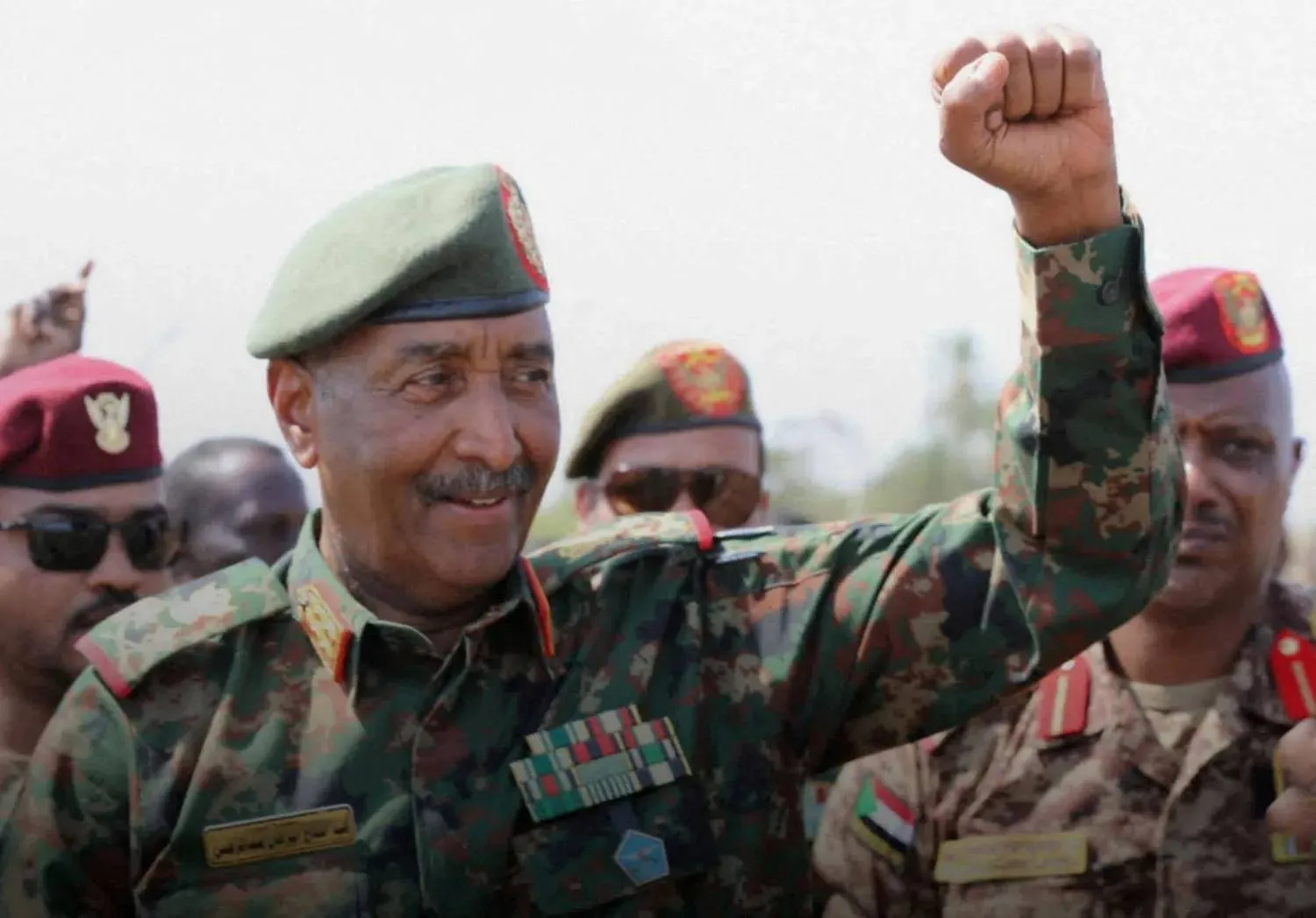
Sudan's army chief Abdel Fattah al-Burhan gestures to soldiers inside the presidential palace after the Sudanese army said it had taken control of the building, in the capital Khartoum, Sudan March 26, 2025. Sudan Transitional Sovereignty Council/Handout via REUTERS
TT

Sudan’s al-Burhan Orders Investigation Into Deadly Airstrike on Gold Mine

Sudan's army chief Abdel Fattah al-Burhan gestures to soldiers inside the presidential palace after the Sudanese army said it had taken control of the building, in the capital Khartoum, Sudan March 26, 2025. Sudan Transitional Sovereignty Council/Handout via REUTERS

Sudan's army chief Abdel Fattah al-Burhan has ordered a probe into what he called a "painful incident" near the Egyptian border, where an airstrike hit a gold mine two days earlier.

The estimated death toll from the airstrike has risen to more than 200 dead, with dozens wounded and missing.

Both the National Umma Party and the Darfur Victims Advocacy organization put the death toll at 200 and the number of injured at around 120.

The Emergency Lawyers, a rights group documenting abuses in the war between Sudan's army and the Rapid Support Forces (RSF), said the strike in the mountainous Jabal al-Uqaydat mining area on Saturday killed 72 people.

In a statement on Monday, Sudan's Transitional Sovereignty Council, which Burhan heads as army chief, said he had formed a fact-finding committee made up of prosecutors, judicial officials and security representatives "to investigate the circumstances of the incident" and "submit a report on the results.”

The council added that Sudanese and Egyptian authorities "had remained in contact" since the strike to determine what happened.

In a phone call with his Sudanese counterpart on Monday, Egyptian Foreign Minister Badr Abdelatty stressed the "mutual respect that binds the two brotherly nations,” including respect for each state's "territorial integrity and safety of its territory and borders.”


Syria Establishes ‘Capital Security Service’ to Bolster Damascus Security

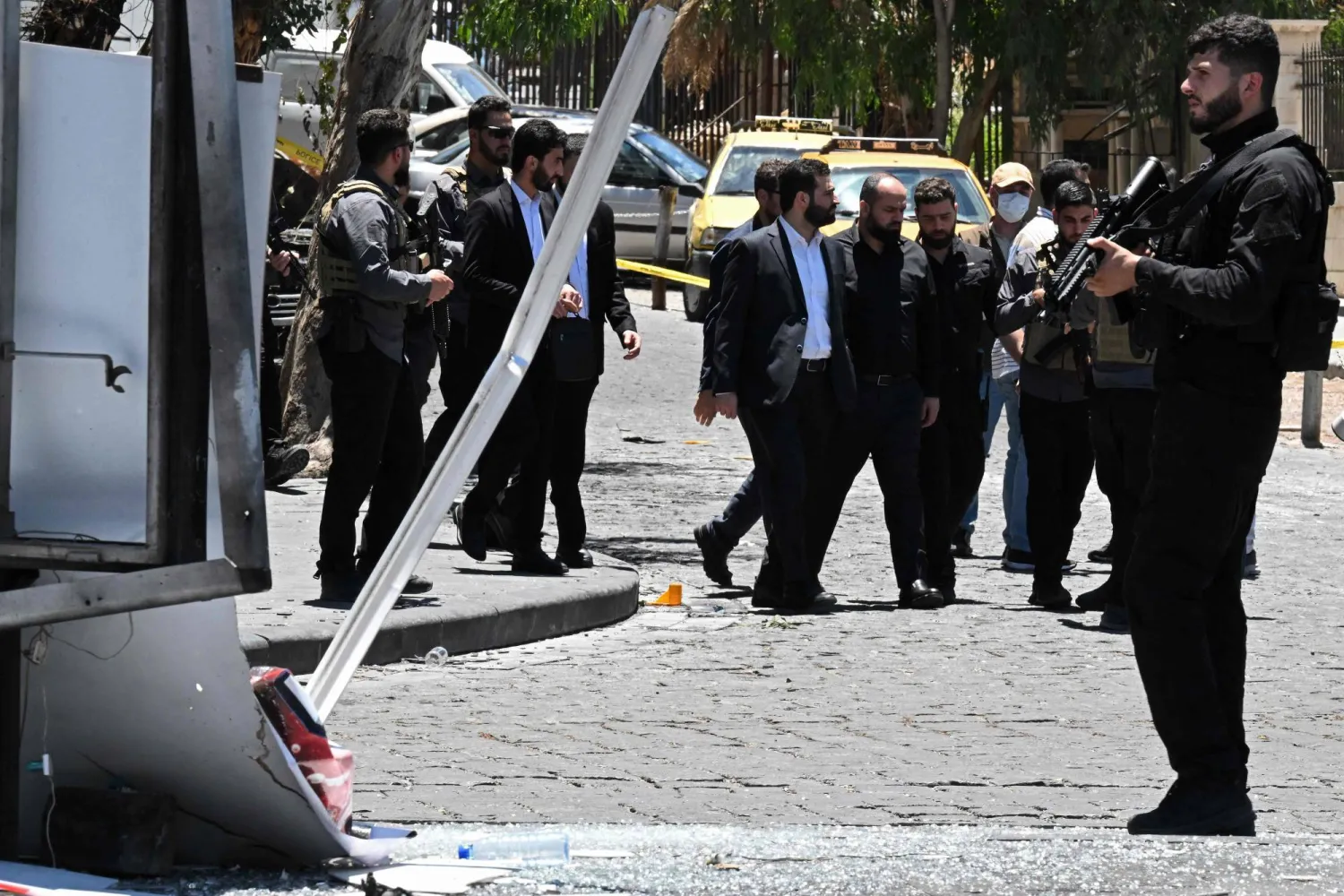
Syria's Interior Minister Anas Khattab (C) inspects an area near the Four Seasons Hotel following two blasts in Damascus on July 7, 2026. (Photo by LOUAI BESHARA / AFP)
TT

Syria Establishes ‘Capital Security Service’ to Bolster Damascus Security

Syria's Interior Minister Anas Khattab (C) inspects an area near the Four Seasons Hotel following two blasts in Damascus on July 7, 2026. (Photo by LOUAI BESHARA / AFP)

Syria established a special security service apparatus for its capital, Damascus, in a bid to bolster security, uncover sleeper cells and thwart attempts to destabilize the city, a senior Syrian military official told Asharq Al-Awsat Tuesday.

The official told the daily that the Capital Security Service was established and Brig. Gen. Abdul Aziz Hilal al-Ahmad appointed as its chief to “bolster security in Damascus through a more targeted approach and uncover any sleeper cells seeking to undermine the capital’s security.”

The official said he did not believe Damascus faced any immediate threat, but warned that “sabotage cells” continued to seek to undermine security in the capital, driven by foreign agendas and ties. He also accused Israel and Iran of seeking to destabilize Syria by backing local sabotage groups operating across several provinces.

The official stressed that Damascus hosts foreign embassies, diplomatic missions and offices of international and United Nations agencies and organizations, making it a key center of state sovereignty. Any breach of the capital’s security would undermine the state’s credibility and authority, he said, adding that the new service was intended to thwart attempts to unsettle the city.

Brig. Gen. Abdul Aziz Hilal al-Ahmad previously headed internal security in Latakia province, where he led operations against armed groups and former military and security figures linked to Bashar al-Assad’s regime after taking office on May 25, 2025.

No official decree announcing al-Ahmad’s appointment has been issued, though security and military sources confirmed it to several media outlets, including Asharq Al-Awsat. On Saturday, the Interior Ministry named Brig. Gen. Nayef al-Ibrahim as his successor in Latakia.

Since the ouster of the former regime, Syria’s new authorities have worked to rebuild and modernize the security sector with regional and international support. However, repeated security incidents in Damascus over the past two years have underscored persistent instability and security gaps, with experts saying much work remains to prevent further bombings.

Wael Alwan, executive director of the Jusoor Center for Studies, told Asharq Al-Awsat that authorities were working to restore security and stability across Syria, but intelligence reports pointed to activity in Damascus by Iran-backed Hezbollah and affiliated local groups, as well as ISIS.

He said previous attacks by ISIS cells and remnants of the former regime appeared aimed more at generating media attention than striking strategic security, political or military targets, citing rocket fire toward the Mazzeh area and explosions during the French president’s visit.

Alwan said Iran-backed groups, ISIS and Israeli interference sought to portray Syria as unstable and its government as unable to maintain security, undermining recovery by deterring investment, curbing tourism and deepening economic and social pressures. He added that Iran stood to benefit from chaos, which could create opportunities for its allied militias and former regime loyalists to return, rebuild their networks and expand their influence.

Alwan said the establishment of the Capital Security Service reflected the government’s cautious approach and efforts to preempt security threats by strengthening surveillance and intelligence capabilities to track former regime loyalists, ISIS cells and Iran-backed operatives, and thwart attacks before they occur.

For his part, Syrian political and security researcher Diaa Qaddour told Asharq Al-Awsat that the appointment was part of a broader restructuring of security agencies following the ouster of the former regime, reflecting a focus on securing the capital against threats from ISIS and dormant Iran-linked cells to reinforce state authority and prevent chaos.