
The G20 In Speech Of Saudi Arabia's Crown Princehttps://english.aawsat.com/home/article/2626726/g20-speech-saudi-arabias-crown-prince
The G20 In Speech Of Saudi Arabia's Crown Prince
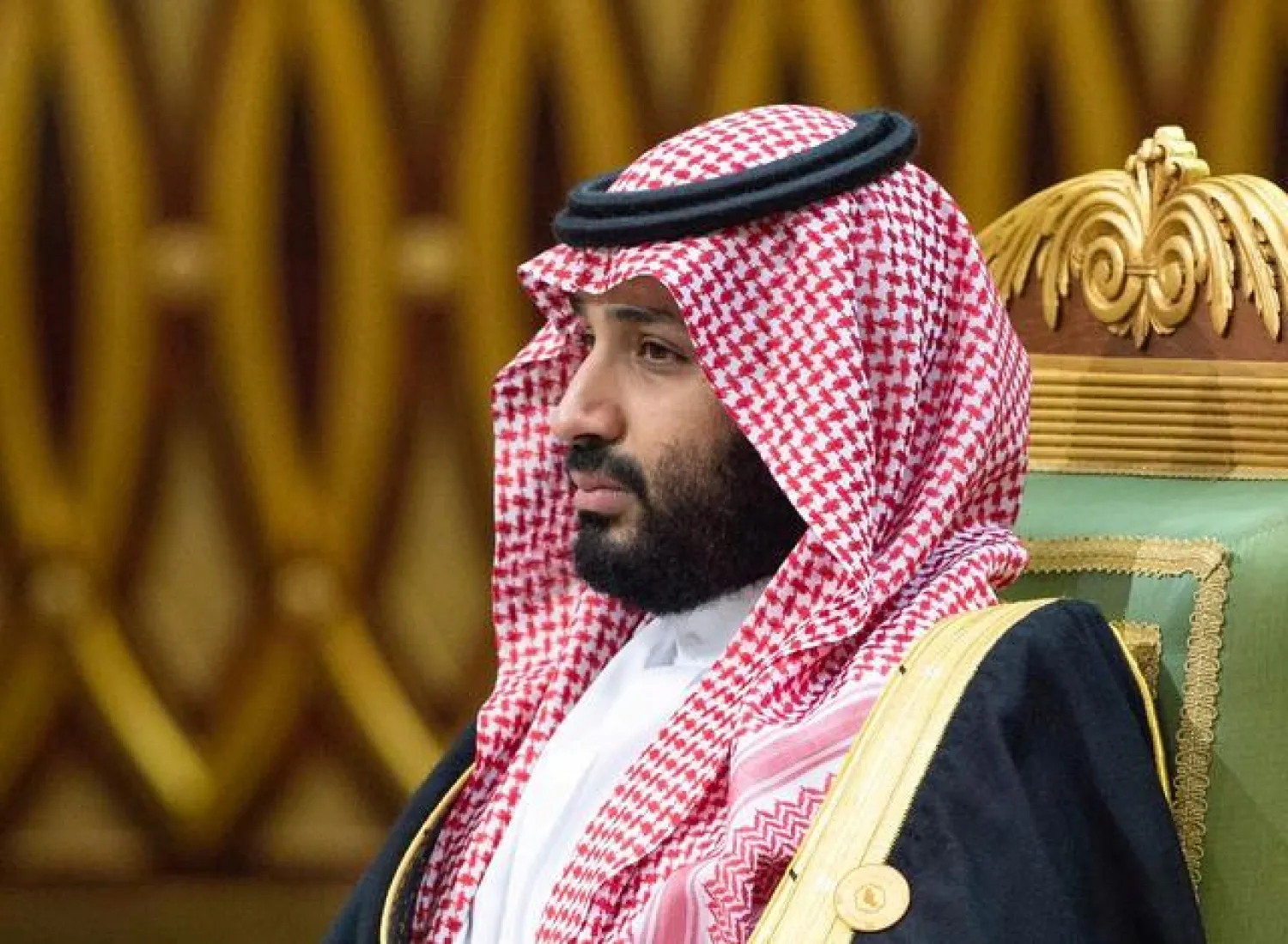
Saudi Arabia’s Crown Prince Mohammed bin Salman attends the Gulf Cooperation Council's (GCC) 40th Summit in Riyadh, Saudi Arabia December 10, 2019. Bandar Algaloud/Courtesy of Saudi Royal Court/Handout via REUTERS
The speech of Saudi Crown Prince Mohammed bin Salman last week highlighted the G20 priorities, focusing on the effects of the COVID-19 pandemic on the economy, growth of non-oil GDP, unemployment rate, digital competitiveness and protection of the environment.
Prince Mohammed bin Salman touched on the effects of the pandemic in the G20 member-states, explaining that Saudi Arabia was one of the top 10 countries in dealing with the economic consequences of the sanitary crisis.
He also expressed optimism that growth would accelerate with the end of the pandemic and the return to normal life.
The Kingdom will be one of the fastest growing G20 countries in non-oil GDP in the coming years, he noted.
During the speech, the Crown Prince pointed out that while unemployment increased in some of the G20 countries to about 20 percent, the Kingdom maintained its efforts to reduce the rate to 7 percent before 2030.
On the shift in technical progress, the Crown Prince underlined that the Kingdom achieved the first position in digital competitiveness at the level of the G20 over the past three years.
He also highlighted the protection of the environment as one of the main axes of the Saudi presidency of the G20.
The Crown Prince also said that Saudi Arabia adopted many initiatives for the next four years to raise the percentage of vegetation, revealing that the kingdom has massive plans to protect the world's environment as part of its G20 presidency.
Saudi Arabia Condemns Iranian Attacks on Kuwait and Bahrainhttps://english.aawsat.com/gulf/5289571-saudi-arabia-condemns-iranian-attacks-kuwait-and-bahrain
Saudi Arabia Condemns Iranian Attacks on Kuwait and Bahrain
The Saudi Ministry of Foreign Affairs expressed the Kingdom of Saudi Arabia’s strongest condemnation and denunciation of the blatant Iranian attacks against the State of Kuwait and the Kingdom of Bahrain, as well as against the security and freedom of navigation in the Strait of Hormuz, SPA reported.
The Kingdom reaffirmed its categorical rejection of these attacks, which constitute a violation of international law and the Charter of the United Nations. The Kingdom also reiterated that such violations undermine international efforts to restore security and stability in the region.
The Kingdom further renewed its solidarity with the State of Kuwait and the Kingdom of Bahrain and affirmed its full support for all measures they take to safeguard their sovereignty and security.
Saudi Aramco Helicopter Crash Kills 14 Nationalshttps://english.aawsat.com/gulf/5289560-saudi-aramco-helicopter-crash-kills-14-nationals
A Leonardo AW139 helicopter, the model operated in Aramco's aviation fleet, with a seating capacity of 14 passengers.
A helicopter belonging to Saudi oil giant Aramco crashed on Sunday in Ras Tanura on Saudi Arabia's eastern coast on the Gulf, west of the Strait of Hormuz, killing 14 nationals, the state news agency reported, adding that the cause was unknown.
"The relevant authorities have launched a full investigation to determine the cause of the crash," the state news agency added.
The incident took place at 6 a.m. local time (0300 GMT), the state agency said.
Lebanon Under Pressure to Dismantle the Parallel Economy and Exit the FATF Grey Listhttps://english.aawsat.com/business/5289556-lebanon-under-pressure-dismantle-parallel-economy-and-exit-fatf-grey-list
Lebanon Under Pressure to Dismantle the Parallel Economy and Exit the FATF Grey List
A Cabinet session chaired by President General Joseph Aoun at Baabda Palace (Lebanese Presidency).
The decision by the Financial Action Task Force (FATF) to keep Lebanon on its "grey list" of jurisdictions with strategic deficiencies in combating money laundering and terrorist financing has not triggered any new repercussions for cross-border financial transactions. Rather, it has served as a warning to the government's executive and monetary authorities that the grace period is nearing its end for completing the legal and procedural measures needed to dismantle the "parallel economy" and curb illicit cash flows operating outside the formal financial sector.
While the devastating consequences of the recent war on the humanitarian, reconstruction and economic fronts have provided mitigating grounds, according to a senior financial official, to explain the slow pace of reforms required from the relevant authorities, particularly administrative, judicial and security bodies, they do not diminish the risks associated with prolonging Lebanon's sovereign stay in an environment of growing suspicion generated by the parallel economy and the continued exploitation of the financial system's persistent fragility.
Intertwined Tracks
The financial official, who spoke to Asharq Al-Awsat, said it is no secret that the political and economic tracks have become deeply intertwined, to the point of running in parallel and perhaps advancing simultaneously. The objectives of establishing the state's exclusive control over arms and restoring the legitimacy of financial and commercial activities now go hand in hand, requiring the authorities to make an explicit commitment to international requirements and conditions that would secure external support to end the war as a first priority and launch the recovery process through the International Monetary Fund, paving the way for Lebanon's safe exit from the catastrophic deterioration of most of its sovereign and financial ratings.
International pressure, from both governments and institutions, continues to emphasize the need to curb illicit financial channels, including designated non-financial businesses and professions as well as certain non-bank financial institutions, particularly those linked to Hezbollah. Foremost among them is Al-Qard Al-Hassan Association, along with similar activities targeted by the international community and international financial institutions.
One of Al-Qard Al-Hasan institution's buildings in Beirut's southern suburbs (file photo- AP)
Positive Assessment of the Legitimate Financial Sector
Despite Lebanon's continued placement on the grey list, the country's legitimate financial sector continues to receive a positive assessment based on an integrated legal and administrative framework that complies with the strictest international standards. Particular recognition has been given to the central bank's measures aimed at rigorously verifying the sources and destinations of funds, restricting cash and electronic payments, financial transactions and transfers to banks and licensed financial companies, and strengthening the judiciary's central role in combating all forms of financial crime.
According to statements by Banque du Liban Governor Karim Souaid, removing Lebanon from the grey list is a top priority because the country cannot play a credible role in the global financial system unless it achieves that objective. He noted that remaining on the list affects not only Lebanon's reputation but also restricts correspondent banking relationships and increases the cost of financial transactions.
Accordingly, the governor stressed that "no honest account of this crisis can ignore the parallel economy, including illicit financial flows, money laundering operations and corrupt practices that have infiltrated and weakened Lebanon's financial system." He also reaffirmed the central bank's firm and non-negotiable commitment to the principles of disclosure, transparency and accountability.
Banque du Liban has already implemented a broad package of measures in line with this approach. These include engaging specialized firms to combat the "parallel economy," deploying advanced financial monitoring tools, strengthening Know Your Customer (KYC) requirements, enhancing due diligence procedures, enforcing beneficial ownership transparency requirements, significantly improving the quality of suspicious transaction reports, and strengthening cooperation with relevant regional and international financial bodies.
People walk outside Lebanon's Central Bank building in Beirut, Lebanon April 4, 2025. REUTERS/Mohamed Azakir
Forensic Audit
In coordination with the Ministries of Finance and Justice, the central bank has also launched a forensic audit conducted by Alvarez & Marsal. The firm's mandate extends well beyond reviewing the funds disbursed by the central bank at the request of previous governments to finance the subsidy program. It covers all payments made up to the end of 2023, funds transferred to commercial banks through international transfers, and payments made by the central bank on behalf of the state.
The governor also affirmed that the central bank is cooperating with Lebanese judicial authorities by providing all information and financial analyses permitted by law in support of judicial proceedings. It is likewise cooperating with judicial authorities in Switzerland, France, Germany, Liechtenstein, Luxembourg, the United Kingdom and other countries where legal proceedings involving illicitly transferred Lebanese funds are underway.
Lebanese President General Joseph Aoun meets with the Governor of the Central Bank of Lebanon in Baabda (X)
Lebanon's Commitments
Under the latest FATF assessment issued at the end of last week, Lebanon has committed at the highest political level to work with the organization to strengthen the effectiveness of its anti-money laundering and counter-terrorist financing framework, despite the country's difficult social, economic and security challenges. This requires continued coordination in implementing the agreed action plan to address the identified strategic deficiencies.
The action plan comprises ten key points identified in the Mutual Evaluation Report. The foremost priority is conducting targeted assessments of money laundering and terrorist financing risks and ensuring that the necessary policies and mitigation measures are in place. It also calls for strengthening mechanisms that ensure the effective and timely execution of requests for mutual legal assistance, extradition and asset recovery.
Without ranking them by importance, the authorities are also required to strengthen designated non-financial businesses' and professions' understanding of money laundering and terrorist financing risks and to impose effective, proportionate and dissuasive sanctions for violations of AML/CFT obligations. They must also ensure that beneficial ownership information is continuously updated and that adequate sanctions and appropriate measures are in place to mitigate risks associated with legal persons, particularly companies and other legal entities.
In the same context, the authorities are expected to make greater use of financial intelligence, reports and analytical products produced by the Special Investigation Commission (SIC), while demonstrating a sustained increase, both quantitatively and qualitatively, in money laundering investigations, prosecutions and court judgments in line with the identified level of risk.
The obligations also include improving asset recovery mechanisms and strengthening the ability to detect and intercept the illicit cross-border movement of cash, precious metals and precious stones. Likewise, Lebanon is expected to pursue terrorist financing investigations and strengthen information-sharing with foreign partners regarding such investigations, in accordance with the recommendations of the Mutual Evaluation Report.
In addition, the authorities are required to strengthen the immediate and effective implementation of targeted financial sanctions, particularly among designated non-financial businesses and professions and certain non-bank financial institutions. They must also implement targeted, risk-based oversight of higher-risk non-profit organizations while ensuring that legitimate activities carried out by those organizations are neither disrupted nor discouraged.
لم تشترك بعد
انشئ حساباً خاصاً بك لتحصل على أخبار مخصصة لك ولتتمتع بخاصية حفظ المقالات وتتلقى نشراتنا البريدية المتنوعة