



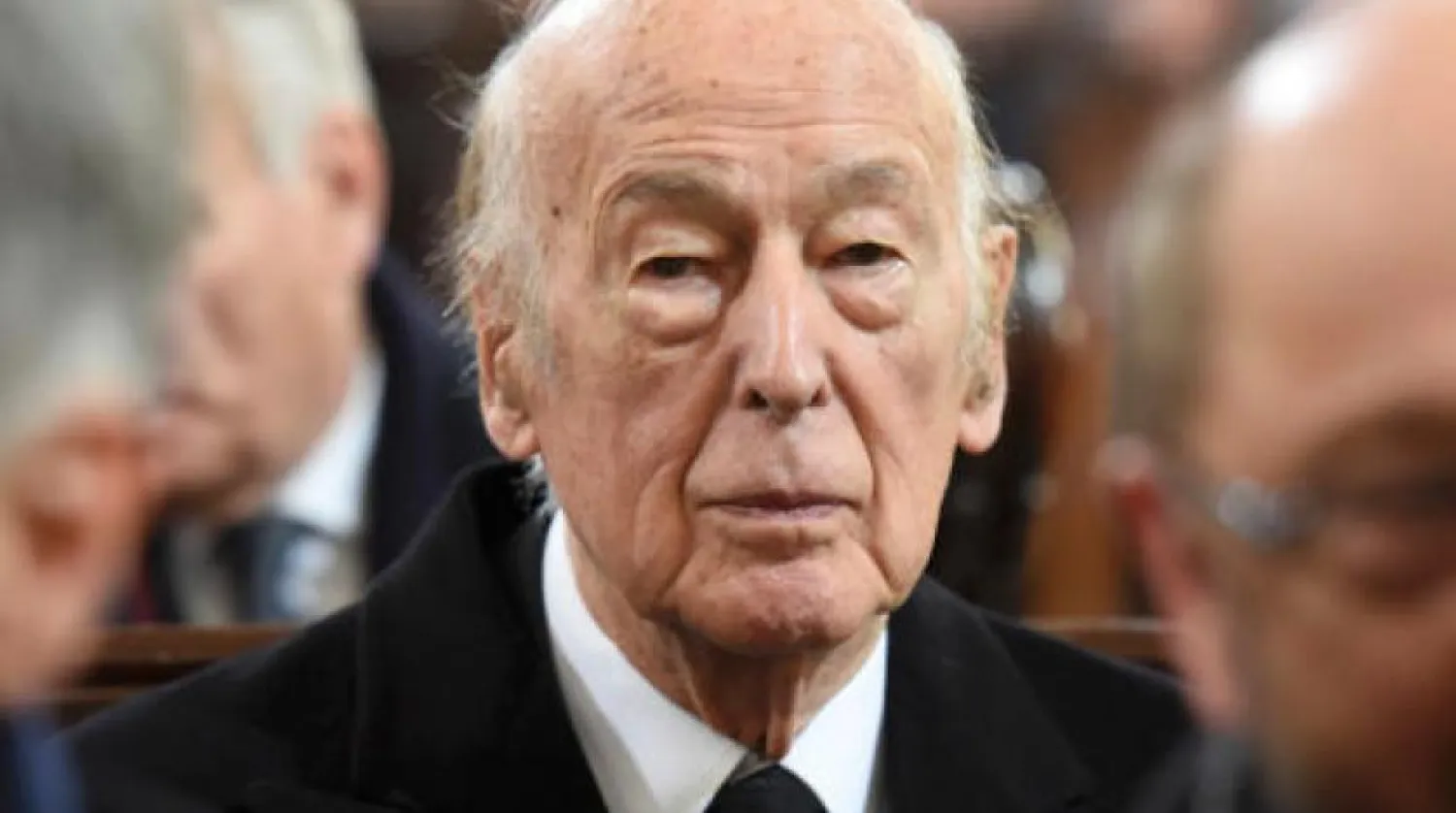

Former French president Valery Giscard d'Estaing, a leading advocate of European integration who led his country into a new modern era, has died of COVID-19, his family said. He was 94.
Giscard, who had been in hospital several times in recent months for heart problems, died late Wednesday "surrounded by his family" at the family home in the Loire region.
"His state of health had worsened and he died as a consequence of COVID-19," the family said in a statement sent to AFP, adding that his funeral would be strictly private, according to his wishes.
French President Emmanuel Macron paid tribute to his predecessor, saying Giscard's seven-year term had "transformed France".
"His death has plunged the French nation into mourning", Macron said, describing Giscard as "a servant of the state, a politician of progress and freedom".
Giscard made one of his last public appearances on September 30 last year for the funeral of another former president, Jacques Chirac, who had been his prime minister.
He became the 20th century's youngest president at 48 when in 1974 he beat his Socialist rival Francois Mitterrand, to whom he then lost after his seven-year term in 1981 in a failed re-election bid.
His presidency marked a clear break from the Gaullist conservatism of postwar France, which had been dominated by Charles de Gaulle and his successor Georges Pompidou.
In France, he is remembered for his radical reform drive, which included the legalization of abortion, the liberalization of divorce and the lowering of the voting age to 18.
In Europe, he helped drive moves towards a monetary union, in close cooperation with his German counterpart chancellor Helmut Schmidt, with whom he became friends and whose leadership years almost overlapped with his own.
Together they launched the European Monetary System (EMS), a precursor of today's single currency, the euro.


