
Forgotten Syrians Need Winter Help, Says Author Gaiman

Fantasy author Gaiman, right, asked his Twitter followers to share their experiences of being warm to help inspire his poem - AFP
TT

Forgotten Syrians Need Winter Help, Says Author Gaiman

Fantasy author Gaiman, right, asked his Twitter followers to share their experiences of being warm to help inspire his poem - AFP

The world can't forget the plight of Syrian refugees this winter despite the global upheaval caused by Covid-19, fantasy author Neil Gaiman said on Tuesday as he helped launch the UN refugee program's cold weather appeal.

The award-winning writer said the pandemic had exposed weaknesses in governments' ability to respond to crises, and should serve as a reminder that refugees are ordinary people dealing with upheaval.

"The thing that if anything 2020 has intensified, is that we are all one step away from being refugees," Gaiman, Goodwill Ambassador for UNHCR, the UN Refugee Agency, told AFP.

"For most refugees, that's their plot too. They had plans for their life, they were trying to be where they were because most people like being where they are, and then everything went wrong," he said.

Gaiman, famed for his surreal novels collaborated with hundreds of fans and artists to release a new animated version of his crowd-sourced poem, "What You Need to Be Warm".

"People are incredibly resilient, people are imaginative, people are creative," he said.

"But for a lot of people, and for a lot of refugees, 2020 may have been the final aftershock of the earthquake that finally brings down the house."

UNHCR has warned that winter 2020 -- for some their ninth away from home -- is likely to be the harshest yet for the more than six million Syrian refugees who fled their country during the near-decade long civil war.

Annual challenges such as snow and freezing temperatures will be harder to manage as Covid-19 has drastically affected relief campaigns.

"It's very easy to forget the refugee crisis, it's very easy to forget that there are nearly 80 million people forcibly displaced right now in the world," said Gaiman. "And we can't forget them.

"It's getting really cold out there; it's even colder if you're living in a tent."

Lisa Abou Khaled, UNHCR's spokesperson in Beirut, told AFP 2020 had been the "hardest year yet" for the one million Syrians exiled in Lebanon.

She said many were struggling to survive freezing temperatures and torrential rain in makeshift shelters.

"Life is made even tougher by the devastating impact of Covid-19," she said.

To help raise awareness, Gaiman asked his followers on Twitter to share their memories of being warm.

He received more than 25,000 words in response, using them as inspiration for the poem, which has now been turned in to an animated short drawing on artworks from artists and refugees.

"Twitter can be a cesspit," he said.

"It can be the worst place in the world and yet, sometimes, you can go out and say 'what does it mean to be warm?' and get 25,000 words of replies from people and all of them evoke memory, childhood, the joy of coming from a cold place to a warm place."

Gaiman, who explained how many of his family members perished in the Holocaust, ends the poem: "You have the right to be here."

He said 2020 had shown the fragility of even democratic governments and modern health care systems, just as the 2015 refugee crisis in Europe laid bare the extent of human suffering in those fleeing conflict.

"If Covid had got worse, if governmental handling of it got worse, I can absolutely see a world in which people are trying to figure out how to get out of the United Kingdom and to go somewhere else that's safer," said Gaiman.

"It's good to welcome people in because one day you may want to be welcomed."


Why is North Korea Ramping Up Criticism of Japan?

News coverage showing file footage of a North Korean missile launch is seen on a screen at Seoul Station in Seoul on August 12, 2026. (Photo by GREG BAKER / AFP)
TT

Why is North Korea Ramping Up Criticism of Japan?

News coverage showing file footage of a North Korean missile launch is seen on a screen at Seoul Station in Seoul on August 12, 2026. (Photo by GREG BAKER / AFP)

North Korea has stepped up a campaign of rhetoric against Japan's military ‌buildup and its security ties with the United States and South Korea, saying they threaten regional stability. The criticism in more than a dozen state media attacks since early July has coincided with an unusual silence over the North's own missile launches, raising questions about Pyongyang's broader strategic messaging, according to Reuters.

WHY IS NORTH KOREA TALKING MORE ABOUT JAPAN?

North Korean statements have targeted Japan's acquisition of counter-strike capabilities, testing of a US-made Tomahawk cruise missile, rising defense spending and Tokyo's annual defense white paper.

Last week, Kim Yo Jong, the influential sister of leader Kim Jong Un, warned of "additional military options" in response to what she described as Japan's transformation into a military power. On Tuesday, a KCNA commentary described Japan's 2026 defense white paper as a "re-invasion-minded" document aimed at justifying military expansion.

The latest broadside came on Friday, when North Korea criticized annual US-South Korean Ulchi Freedom Shield military drills and accused US-Japan-South Korea military cooperation of evolving into a "nuclear alliance". Washington and Seoul say the drills are defensive.

Another KCNA commentary accused Washington of pursuing a strategy that lowers the threshold for nuclear weapons use and cited US extended deterrence commitments to South Korea and Japan.

HOW HAS ‌JAPAN CHANGED ITS ‌DEFENCE STANCE?

Japan in 2022 announced plans to double defense spending to 2% of GDP to ‌counter ⁠growing security threats ⁠from China, Russia and North Korea.

A major part of that expansion includes spending on long-range missiles such as the US-made Tomahawk, which can strike targets more than 1,000 km (621 miles) away. Prime Minister Sanae Takaichi’s government is expected this year to revise Japan’s national security strategy, a move some analysts will likely lead to further increases in defense spending, including on drones and arms production.

IS THIS REALLY ABOUT JAPAN?

Analysts say Japan is only part of the story.

Park Won-gon, a professor at Seoul's Ewha Womans University, said the primary goal is to frame Northeast Asia as a contest between rival camps.

"The biggest objective is to create a US-South Korea-Japan versus North Korea-China-Russia framework," Park said.

He said Pyongyang wants stronger backing ⁠from Beijing and Moscow to cement its escape from diplomatic isolation and to bolster arguments that its ‌nuclear arsenal is necessary.

South Korea's Unification Ministry expressed a similar view on Thursday after ‌North Korean First Vice Foreign Minister Jang Kum-chol criticized Seoul's plans to acquire nuclear-powered submarines and accused South Korea, the United States and Japan of ‌preparing a "second AUKUS" in Northeast Asia. The ministry said North Korea appears to view South Korea's submarine plans, Japan's evolving security posture ‌and trilateral military cooperation as threats to the regional balance of power, as it increasingly aligns itself with China and Russia. Kyungnam University professor of North Korean studies Lim Eul-chul said North Korea's messaging increasingly mirrors China's concerns about Japan's military expansion.

WHY IS NORTH KOREA STAYING SILENT ABOUT ITS MISSILE TESTS?

The heightened rhetoric has coincided with unusual silence on North Korea's recent missile launches, which were condemned by South Korea, Japan and the United States.

Despite conducting ‌ballistic missile tests last week and again this week, state media has yet to report either, departing from its usual pattern of publicizing tests within a day.

Analysts say the launches may ⁠have involved upgrades to existing missile ⁠systems rather than new weapons, reducing their propaganda value. Shin Jong-woo of the Korea Defense and Security Forum said the tests may have involved improved short-range ballistic missiles developed with Russian technical assistance and potentially destined for Russia.

Kim Yong-hyun, a professor at Dongguk University, said North Korea may be avoiding publicity if launches are connected to prospective military exports.

WHAT DOES RUSSIA HAVE TO DO WITH IT?

North Korea's growing military cooperation with Russia has become a central factor in assessments of its weapons programs. Ukrainian President Volodymyr Zelenskiy has repeatedly said Russia continues to use North Korean missiles against Ukraine and has accused Pyongyang of providing Moscow with missiles, ammunition and a further promise of troops for the war effort.

Analysts say battlefield feedback and Russian assistance may have helped North Korea improve the accuracy and performance of some missile systems.

Shin said recent launches could have been tests of upgraded variants before deployment or export.

WHAT IS NORTH KOREA TRYING TO ACHIEVE?

Analysts say North Korea is seeking to cast the region in terms of competing blocs, with Pyongyang, Beijing and Moscow on one side and Washington, Seoul and Tokyo on the other.

Portraying US-South Korea-Japan cooperation as an increasingly threatening military and nuclear alliance helps Pyongyang justify its weapons programs, bolster Chinese and Russian backing and argue that its nuclear arsenal is a necessary response to a worsening security environment, they say.


Mazen Al-Sudairi Brings Financial Expertise as Saudi Market Expands Globally

Mazen bin Turki Al-Sudairi (Asharq Al-Awsat)
TT

Mazen Al-Sudairi Brings Financial Expertise as Saudi Market Expands Globally

Mazen bin Turki Al-Sudairi (Asharq Al-Awsat)

Mazen bin Turki Al-Sudairi will lead the board of Saudi Arabia’s Capital Market Authority after a royal order appointed him chairman with the rank of minister, as the kingdom’s capital market rapidly expands, deepens its offerings, strengthens ties with global markets and seeks to attract more foreign investment.

Al-Sudairi brings a career rooted in financial markets and investment before moving into government and policymaking, combining technical expertise in market analysis with institutional experience inside government.

His appointment comes as Saudi Arabia’s capital market enters a new phase of growth focused on greater depth and openness, a broader investor base and a stronger presence in global markets, alongside the economic and investment transformation under Saudi Vision 2030.

The royal order appointed Al-Sudairi chairman of the Capital Market Authority’s board with the rank of minister, succeeding Mohammed El-Kuwaiz. He takes charge of the market regulator as the financial sector assumes an increasingly important role in financing economic growth and attracting domestic and international capital.

Since 2024, Al-Sudairi has served as an adviser at the General Secretariat of the Council of Ministers at an excellent grade, adding a government dimension to his background in finance and investment. The role broadened his experience from analyzing markets and investments to working in an environment closely connected to policymaking and decision-making.

He holds a master’s degree in finance from HEC Paris in France and a bachelor’s degree in industrial engineering from King Saud University, an academic background combining financial knowledge with the analytical and quantitative training associated with engineering.

Al-Sudairi has extensive experience in financial services and capital markets. He served as head of research at Al Rajhi Capital, where he monitored company and sector performance and analyzed economic and financial developments and their impact on investor decisions.

He also headed sell-side research at Al-Istithmar Capital, adding experience in managing investment research and responding to market developments and investor needs during a period of rapid regulatory and investment change in the Saudi market.

Earlier, Al-Sudairi worked as an analyst covering the energy and petrochemicals sectors at Samba Capital, two of the most influential sectors in the Saudi economy and capital market. The role gave him direct experience analyzing companies and industries exposed to energy markets, global developments, commodity prices and economic cycles.

His career also took him outside Saudi Arabia, where he worked in equity research at Bank Degroof in Belgium. The experience added an international dimension to his background and gave him practical exposure to market and company analysis in a European financial environment.

Al-Sudairi is a recognized name in financial research and market analysis, having built experience across Saudi and international financial and investment institutions. His roles have been closely tied to assessing markets, analyzing companies and sectors, and evaluating investment opportunities.

His career spans financial and economic analysis, investment research and government work. After years of leading research functions at Saudi financial institutions and analyzing equities and sectors, his move into government added experience in institutional work and policymaking.

Al-Sudairi takes the helm of the Capital Market Authority’s board as the market becomes increasingly important as a channel for financing companies and projects, supporting private-sector growth, expanding savings and investment options, and connecting the Saudi economy more closely with global capital flows.


From War Amnesty to Prison Amnesty... What Has Changed in Lebanon in 35 Years?

A general view of parliament building in Beirut, Lebanon, March 24, 2026. (Reuters)
TT

From War Amnesty to Prison Amnesty... What Has Changed in Lebanon in 35 Years?

A general view of parliament building in Beirut, Lebanon, March 24, 2026. (Reuters)

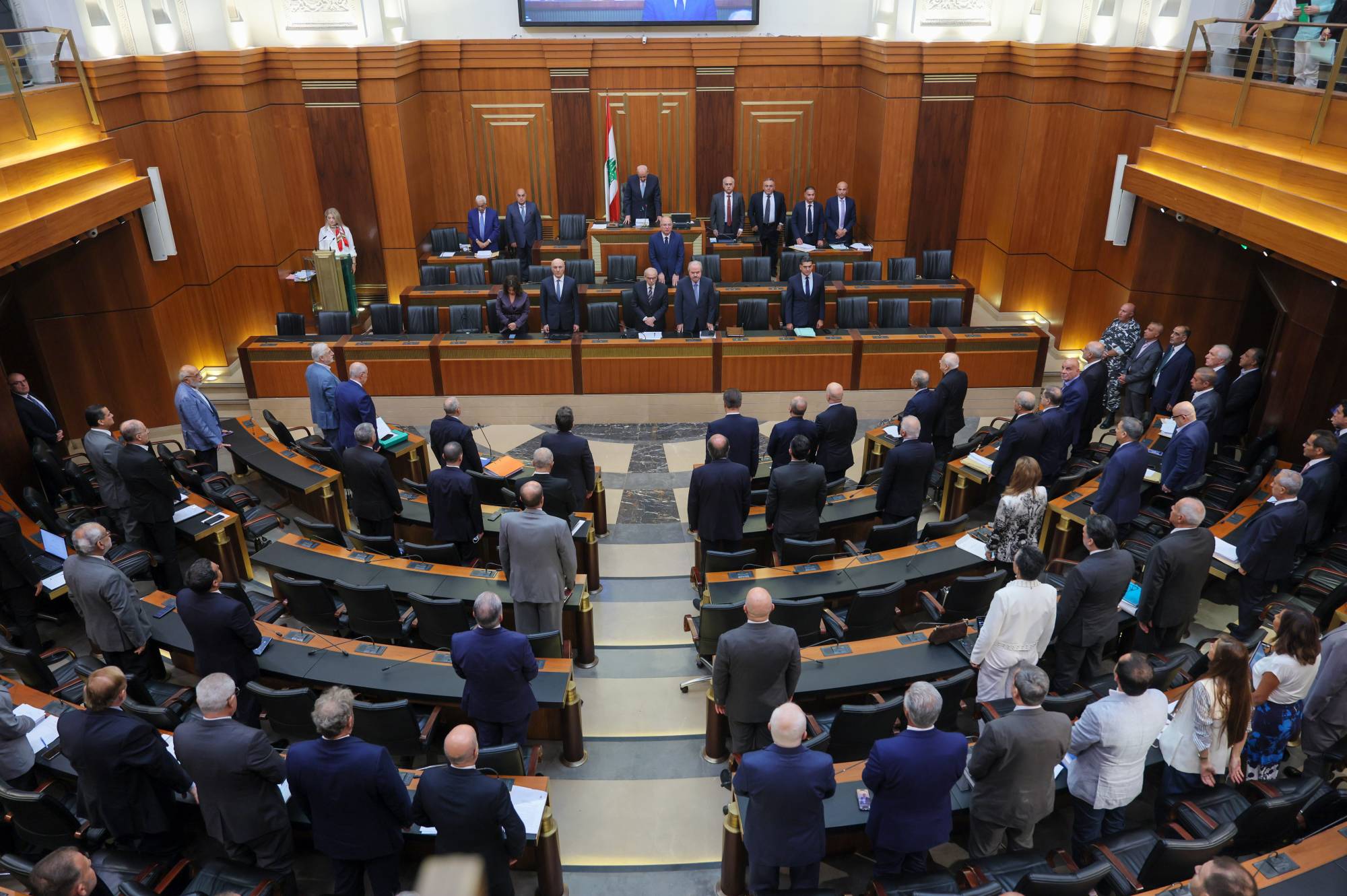
The Lebanese parliament's landmark approval of an amnesty law on Wednesday, 35 years after the 1991 amnesty, has revived debate on the different circumstances that prompted Lebanon to resort to amnesty twice.

While the first was enacted to turn the page on the 1975-90 civil war and kick off a new political chapter in the country, the 2026 law came to address the conditions of detainees and convicts, prolonged detentions, and the prison crisis, amid political considerations that led to parliament to ratify it.

‘Public oblivion’

Former Minister of Social Affairs Rashid Derbas brought the discussion back to the philosophy of amnesty itself, telling Asharq Al-Awsat that "the general amnesty issued in 1991 came following the civil war, in hopes of closing a chapter and entering a new era."

He explained that "the philosophy of general amnesty is fundamentally based on establishing public oblivion, meaning closing a page of the past and opening a new one."

Commenting on the current amnesty law, Derbas wondered: "Is it reasonable for a person to remain all this long time without a trial? Is it reasonable for certain accusations and cases to drag on to this extent? It was necessary to address this issue,” but unfortunately, it fell victim to political wrangling for years.

Former Justice Minister Ibrahim Najjar drew a legal and political distinction between the two experiences, telling Asharq Al-Awsat that "there is a very big difference between the law of August 26, 1991, and the law of August 12, 2026."

He explained that "from a political standpoint, the 1991 general amnesty law aimed to turn the page on the war and conclude all prosecutions associated with it. This is evidenced by the fact that it broadly covered crimes committed before March 28, 1991, specifically war-related crimes of a political nature, with some specific exceptions."

Najjar added that "the 1991 law therefore had a political, reconciliatory character, meaning it aimed to restore the smooth functioning of coexistence, which was its primary political goal."

As for the new legislation, he placed it in a different framework, stating that "the 2026 law has specific political dimensions in Lebanon and Syria, in addition to being related to prison conditions and the high number of detainees and convicts."

Najjar stressed that "the law issued on Wednesday is not a general amnesty for crimes committed before a specific date, because it targets specific categories and cases. It is closer to a socio-penal law concerned with addressing the conditions of detainees and convicts through an exceptional reduction of certain sentences."

He pointed out that "the 2026 law excluded many crimes and felonies, including the killing of military personnel, crimes referred to the Judicial Council, premeditated murder, money laundering, financial crimes, and drug felonies."

"This Lebanese law has clear Syrian dimensions, and it has also benefited some Lebanese who had sought refuge in Israel," he added.

Lebanese lawmakers attend a parliamentary session to discuss a proposed general amnesty law, the abolition of the death penalty and the salaries of retired members of Lebanon's security forces in Beirut, Lebanon, 11 August 2026. (EPA)

Political settlement

Former MP and Minister Butros Harb interpreted the current law from an angle that combines politics and humanitarian considerations.

Speaking to Asharq Al-Awsat, Harb stated: "In part, the current amnesty is a political settlement more than a purely judicial move, even though it includes a humanitarian aspect that cannot be ignored."

At the same time, he stressed that addressing the conditions of prisoners should not lead to "overlooking the rights of the Lebanese Army and its victims, particularly in cases related to those who engaged in clashes with it."

He explained that "there is a humanitarian aspect that must be taken into account, because the Lebanese judiciary was influenced at certain stages and did not exercise its powers with the required speed, whether in terms of settling cases or issuing verdicts."

He noted that "there are individuals who spent long periods in prison that, in some cases, exceeded the sentence that could have been issued against them had they been tried within normal timeframes."

This "demands a humanitarian and legal solution to the problem," he remarked.

However, he noted that the amnesty file "has also unfortunately turned into a subject of sectarian debates, especially regarding the cases of Islamists who fought the army."

Harb criticized the double standards related to the army in the ongoing debate. "Some of those who today declare their concern for the army were, unfortunately, among the forces that helped inflict major losses on it, whether during the Lebanese civil war or in the clashes the country witnessed in later years."

The issue must not turn into fodder for political debates at the expense of the army or the rights of its victims, he urged.

‘Fundamentally different’

He said the 1991 and current amnesty are "fundamentally different."

He explained that the 1991 amnesty happened during "exceptional political circumstances that followed the Taif Agreement" and the end of the civil war.

"At that time, Lebanon was emerging from a long war, and it was necessary to turn the page on that chapter and enter a new era allowing the rebuilding of the state. Therefore, the amnesty was part of a broader national political settlement."

"Today, however, the problem is different even if it has a political aspect because it is primarily linked to a judicial and humanitarian failure that must be addressed," Harb stressed.

"The issue required a solution because it is unacceptable for individuals to remain in prison for years due to delayed trials or the failure to settle their cases," he said.