


In a Year Dominated by Pandemic, Many Other Dramas Unfolded

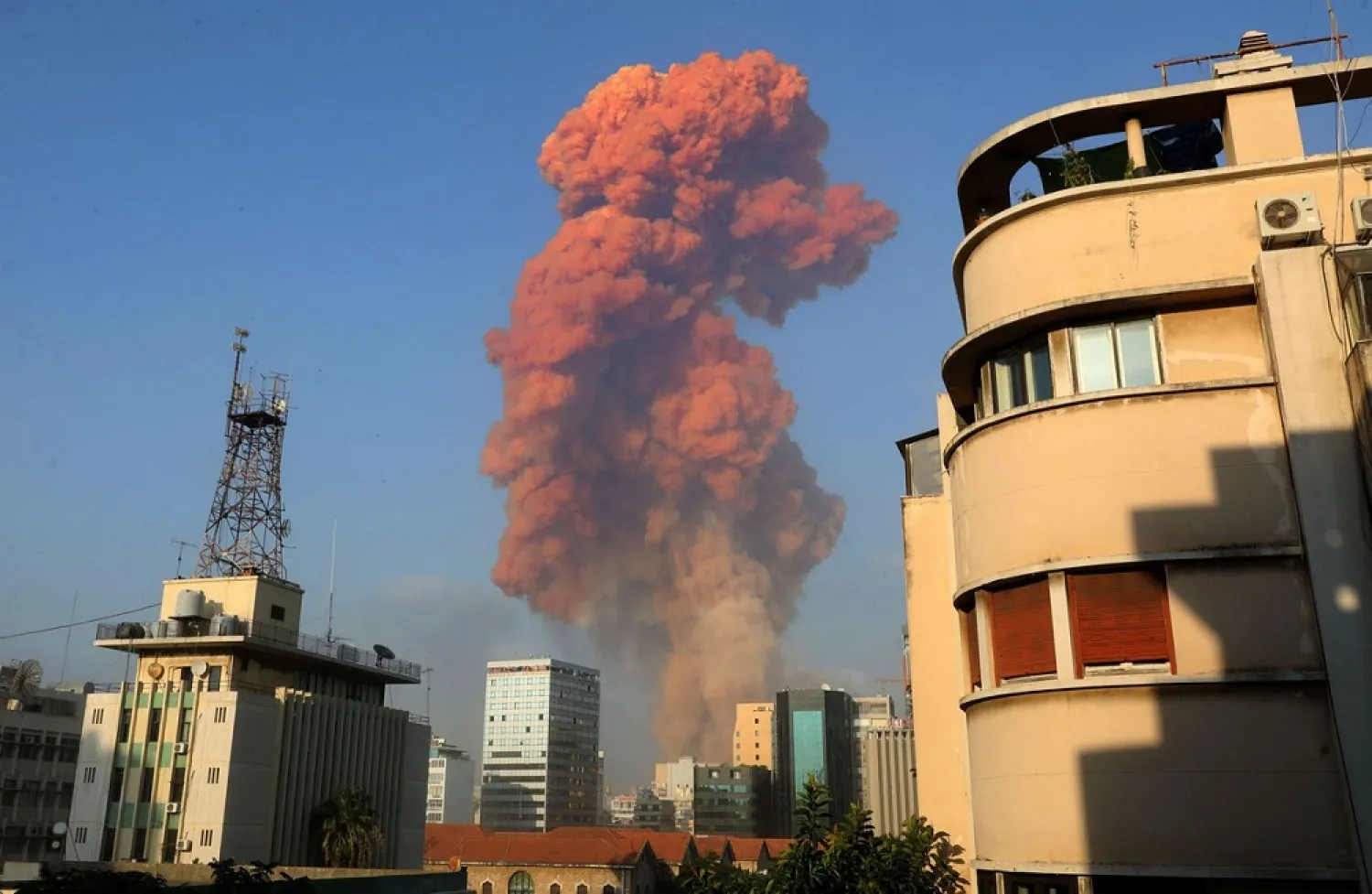
Smoke rises after the explosion at Beirut port, Beirut, Lebanon, on August 4, 2020. (Getty Images)
TT

In a Year Dominated by Pandemic, Many Other Dramas Unfolded

Smoke rises after the explosion at Beirut port, Beirut, Lebanon, on August 4, 2020. (Getty Images)

Not since World War II has a single phenomenon dominated the news worldwide as the COVID-19 pandemic has in 2020. In the United States, a tumultuous presidential election and a wave of protests over racial injustice also drew relentless coverage.

Overshadowed, to an extent, were other dramatic developments. Among them: China’s crackdown on Hong Kong’s democracy; an apocalyptic explosion in Beirut; the shocking helicopter-crash death of basketball icon Kobe Bryant and his daughter.

Some seemingly epic events early in the year now seem distant, like President Donald Trump’s impeachment trial and the January announcement by Prince Harry and Meghan Markle that they were exiting their prominent roles in Britain’s royal family. Just a few weeks later came the long-awaited Brexit, Britain’s formal withdrawal from the European Union.

As most of the world battled COVID, armed conflicts broke out between Armenia and Azerbaijan and in Ethiopia's Tigray region. Afghanistan's seemingly endless war dragged on, even as the warring sides warily edged into peace talks. Massive protests challenged the ruling powers in Belarus and Thailand.

Due to past instances of sexual assault and sexual abuse, Hollywood mogul Harvey Weinstein received a 23-year prison sentence and the Boy Scouts of America filed for bankruptcy protection.

Some other major events of 2020:

Iran: The year ended as it began with tensions between Iran and the US inflamed by the killing of a top official. On Jan. 3, a US drone strike killed Revolutionary Guard Gen. Qassem Soleimani. Iran responded with a missile attack that injured dozens of US troops in Iraq. In December, a mysterious attack near Tehran killed a nuclear scientist whom the US and others had identified as organizing Iran’s effort to seek nuclear weapons two decades ago. Iran blamed that attack on Israel.

Beirut Explosion: Lebanon’s capital was devastated in August by one of the largest non-nuclear explosions ever recorded. A fire detonated a stockpile of nearly 3,000 tons of ammonium nitrates left to rot at a port warehouse. The explosion tore through Beirut, sucking in the air and blowing up homes as windows shattered for miles around. More than 200 people were killed and thousands injured, compounding the woes of a nation already beset by mass protests and economic meltdown.

Hong Kong: China imposed a sweeping national security law in Hong Kong. The ensuing crackdown on dissent effectively voided China’s pledge to allow the city to maintain rights promised for 50 years following the 1997 handover from British colonial rule. The arrests of leading opposition figures and the expulsion of local lawmakers -- prompting the entire opposition camp to resign — led numerous countries to curtail legal cooperation with Hong Kong. The US imposed travel bans and financial sanctions.

Opioids: Purdue Pharma, the maker of OxyContin, pleaded guilty to three criminal charges, formally taking responsibility for its part in an opioid epidemic that has contributed to the deaths of more than 470,000 Americans over two decades. Purdue admitted impeding efforts to combat the addiction crisis. The pleas arose from a settlement that includes $8.3 billion in penalties and forfeitures, but victims’ advocates worried that Purdue’s owners, the Sackler family, might emerge with their fortune largely intact.

Notable Deaths: For sports fans worldwide, 2020 was sadly bookended by the deaths of two popular superstars — basketball’s Kobe Bryant, 41, and football’s Diego Maradona, 60. Among those killed along with Bryant in the helicopter crash was his 13-year-old daughter Gianna, herself a promising athlete. Other revered figures who died included US civil rights leader John Lewis, guitarist Eddie Van Halen, and actors Chadwick Boseman and Sean Connery. Many admirers of liberal US Supreme Court Justice Ruth Bader Ginsburg not only mourned her death, but deplored her replacement by a conservative, Amy Coney Barrett.

France-Muslims: The October beheading of a teacher by an 18-year-old Chechen outside Paris, followed by the killing of three people in Nice by a Tunisian migrant, prompted France to declare its highest-level security alert. The attacks came amid a trial over the 2015 massacre at the satiric newspaper Charlie Hebdo, which had published offensive cartoons of the Prophet Mohammed. The teacher had showed the cartoons to his class while discussing freedom of expression. The move was vigorously defended by President Emmanuel Macron. The caricatures and Macron’s stance fueled calls from Muslim nations to boycott French products; and some French Muslims resented the security crackdown.

Hurricanes: It was such a historically busy hurricane season that forecasters had to turn to the Greek alphabet after running out of assigned names. In the US, Louisiana took the brunt of the onslaught: three hurricanes and two tropical storms. The worst to hit the state was Hurricane Laura, which swept ashore in August. In November, several Central American countries were ravaged by two Category 4 hurricanes. In Tennessee, an outbreak of tornadoes in March killed 25 people.

Israel-Diplomacy: Israeli Prime Minister Benjamin Netanyahu scored a diplomatic coup in September by signing historic accords with the United Arab Emirates and Bahrain at the White House. It was Israel’s first normalization deal with Arab countries in more than 25 years. Later, Sudan and Morocco also pledged warmer official relations with Israel. The moves enabled Netanyahu to deliver welcome accomplishments to his electorate while under fire for his handling of the coronavirus crisis and his ongoing corruption trial.

Wildfires: Thousands of wildfires raged throughout the western US, claiming dozens of lives, destroying thousands of homes, and bringing apocalyptic scenes of orange skies and hazardous air. Months before the usual start of the wildfire season, drought, extreme warm temperatures and winds gusting up to 100 mph fueled some of the most destructive blazes in the region’s history. Scientists say climate change is responsible for more intense and frequent extreme events such as storms, droughts, flooding and wildfires -- including massive brush fires that raged for months in Australia.



Modi Breaks Netanyahu’s Isolation with 16 Cooperation Agreements

The Indian Prime Minister listens to the Israeli Prime Minister during an exceptional session of the Knesset on Wednesday (EPA)
TT

Modi Breaks Netanyahu’s Isolation with 16 Cooperation Agreements

The Indian Prime Minister listens to the Israeli Prime Minister during an exceptional session of the Knesset on Wednesday (EPA)

In a move seen as breaking Israel’s relative international isolation amid its ongoing war in Gaza, Indian Prime Minister Narendra Modi signed 16 agreements with Israel during a two-day visit to the country.

Modi arrived in Israel on Wednesday for talks aimed at strengthening ties in trade and defense. The visit was marked by an unusually warm reception. Israeli Prime Minister Benjamin Netanyahu personally welcomed Modi at the airport and later accompanied him to address the Knesset, Israel’s parliament, where lawmakers applauded and cheered.

Netanyahu hailed Modi as “a great global leader and a great friend; more than that, a great brother.”

He added: “They say India has achieved tremendous accomplishments. That is not accurate. It should be said that thanks to your leadership, your wisdom, and your determination, India has achieved its successes.”

The Israeli premier also thanked Modi for India’s assistance during the recent Gaza war, noting that New Delhi had supplied Israel with ammunition and drones.

Sixteen Agreements and a Historic Honor

The Israeli government announced the signing of 16 bilateral agreements during the visit. In a symbolic gesture, Knesset Speaker Amir Ohana awarded Modi the “Knesset Medal,” marking the first time the honor has been bestowed on a visiting leader.

This is Modi’s second visit to Israel since taking office, nearly nine years after his first trip in 2017.

Beyond political symbolism, the relationship carries significant economic weight. India is Israel’s second-largest trading partner in Asia. According to India’s Ministry of Commerce and Industry, total bilateral trade reached $3.62 billion in fiscal year 2025.

Renewed Indian Condemnation of October 7

For his part, Modi declared that “India stands with Israel at this moment and beyond.” Addressing the Knesset plenary, he offered condolences for those killed in the Oct. 7, 2023 attack launched by Hamas, describing it as a “terrorist and brutal attack.”

Modi also praised a plan proposed by US President Donald Trump that he said would safeguard Palestinian national rights.

Expanding Strategic Ties, Secrecy

Observers view the visit not merely as a reflection of improved relations, but as a major step in advancing strategic cooperation. The agreements include memoranda of understanding designed to deepen coordination across several sectors, particularly in security, with officials describing the partnership as a “distinguished strategic relationship.”

Security sources revealed that the two sides reached an arrangement establishing a “confidentiality framework,” allowing India access to previously restricted Israeli systems. These reportedly include advanced air defense systems and integration into Israel’s laser-based air defense network. India is also expected to receive licenses to manufacture certain Israeli weapons systems domestically.

The Israeli daily Yedioth Ahronoth quoted a senior political official as saying the agreement would provide greater flexibility to security agencies and enable both countries to rely on one another when necessary, calling it “a major revolution.”

Writing in the right-leaning newspaper Israel Hayom, columnist and former lawmaker Zvi Hauser, a political ally of Netanyahu, said one of the key issues Modi and Netanyahu would discuss is Iran’s future and the prospects for the fall of its regime. Hauser suggested that Israel, India, and a post-Revolution Iran could form a powerful strategic alliance in the region.


Cuba Says It Killed Four Gunmen on Speedboat Trying to Infiltrate from US

Cuban coast guard ships docked at the port of Havana. (AFP) 
TT

Cuba Says It Killed Four Gunmen on Speedboat Trying to Infiltrate from US

Cuban coast guard ships docked at the port of Havana. (AFP) 

Cuba said it thwarted the attempt of gunmen trying to infiltrate from the United States as its coastguard opened fire on Wednesday at a Florida-registered speedboat near its shores, killing four people and wounding six.

Havana's Interior Ministry said the speedboat's passengers opened fire on a coast guard vessel that approached them near an island off the country's northern coast.

The ministry claimed the passengers were armed and intended to “carry out an infiltration for terrorist purposes.”

Handguns, assault rifles and improvised explosive devices were recovered on the speedboat, according to the statement, along with other tactical gear.

The ministry said the 10 passengers are all Cuban citizens living in the US.

US Secretary of State Marco Rubio said Washington was seeking its own facts about the shooting and would “respond accordingly.”

“We're not going to base our conclusions on what they've (Cuba) told us, and I'm very, very confident that we will know the full story of what happened here,” Rubio told reporters while on a trip to the Caribbean nation of St Kitts and Nevis. “As we gather more information, then we'll be prepared to respond accordingly.”

James Uthmeier, Florida's attorney general, said he would direct local law enforcement to investigate the incident.

“The Cuban government cannot be trusted, and we will do everything in our power to hold these communists accountable,” he said.

In an earlier statement posted on X, the Cuban interior ministry said the Florida-registered vessel was detected near Cayo Falcones, in the country's central Villa Clara province on Wednesday morning.

When a Cuban boat carrying five members of the ministry's border guard approached the vessel for identification, “the crew of the violating speedboat opened fire” and wounded the Cuban commander, the statement said.

It added that “As a consequence of the confrontation, as of the time of this report, four aggressors on the foreign vessel were killed and six injured.”

Those injured were evacuated and given medical assistance, the statement said.

In Washington, US Vice President JD Vance said the White House was “monitoring” the incident but added that he hoped it was not a serious one.

“Certainly, you know, a situation that we're monitoring, hopefully it's not as bad as we fear it could be. But can't say more, because I just don't know more,” Vance told reporters.

The confrontation comes amid heightened tensions between the United States and Cuba, which lies just 160 km across the Florida Straits. It also comes as the US softened a virtual oil siege of the island imposed by President Donald Trump in January after the US ouster of top Cuba ally, Nicolas Maduro of Venezuela.

Before Maduro's capture by US forces on 3 January, Cuba had relied on Venezuela for about half its fuel needs.

Faced with an outcry from Caribbean leaders, worried that starving Cuba of oil would cause the economy to quickly collapse, the US said it would allow shipments of Venezuelan oil for “commercial and humanitarian use.”


US Arrests Ex-Air Force Pilot for Training Chinese Military

Former Air Force pilot Gerald Brown (photo circulated on social media)
TT

US Arrests Ex-Air Force Pilot for Training Chinese Military

Former Air Force pilot Gerald Brown (photo circulated on social media)

The US Justice Department announced the arrest on Wednesday of a former Air Force fighter pilot who allegedly trained Chinese military personnel without authorization.

Gerald Brown, 65, was arrested in Indiana after having recently returned to the United States from China, where he had been since December 2023, a Justice Department statement said.

He is accused of having "conspired with foreign nationals to provide combat aircraft training to pilots in the Chinese Air Force" without a required license from the US State Department, AFP quoted the statement as saying.

FBI director Kash Patel posted on X: "Major story... the FBI and our partners have arrested a former US Air Force Pilot who was allegedly training pilots in the Chinese military."

Brown had a 24-year career in the US Air Force during which he "commanded sensitive units with responsibility for nuclear weapons delivery systems, led combat missions, and served as a fighter pilot instructor and simulator instructor on a variety of fighter and attack aircraft."

He had retired from the military in 1996 and worked as a cargo pilot, the statement said, but he later began a role as a US defense contractor training pilots to fly the A-10 and state-of-the-art F-35 fighter jets.

He allegedly began negotiating a contract in August 2023 with Stephen Su Bin -- a Chinese national who was imprisoned in the United States for four years beginning in 2016 over another espionage scheme -- and traveled in December 2023 to China to begin his training job.

"The Chinese government continues to exploit the expertise of current and former members of the US armed forces to modernize China's military capabilities," said Roman Rozhavsky, an official with the FBI's Counterintelligence and Espionage Division.

"This arrest serves as a warning that the FBI and our partners will stop at nothing to hold accountable anyone who collaborates with our adversaries to harm our service members and jeopardize our national security," he added.