


Australia to Take China to WTO Over Barley Tariffs

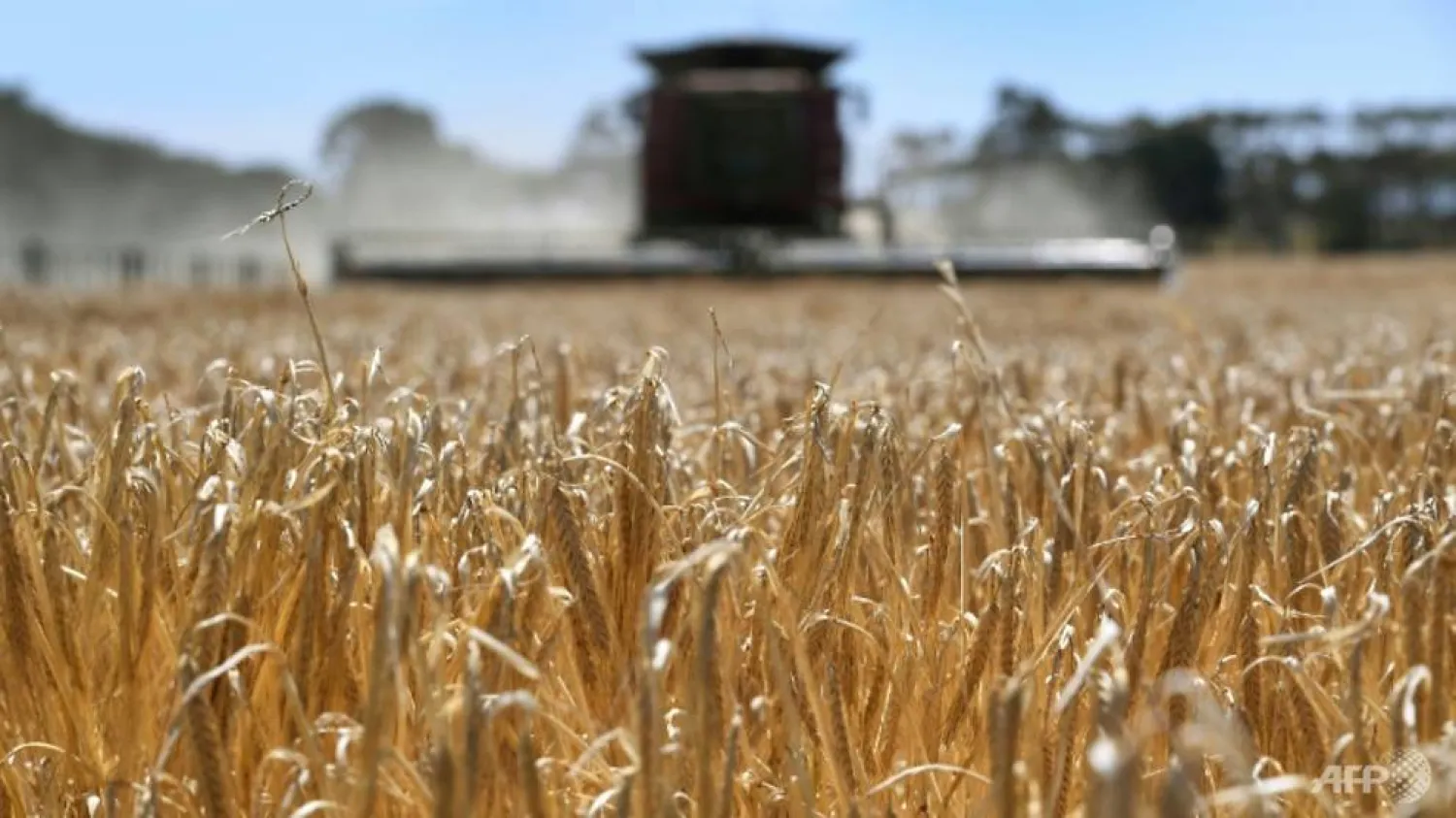
Australia's barley exports to China had been worth around US$1 billion a year before a recent drought |AFP
TT

Australia to Take China to WTO Over Barley Tariffs

Australia's barley exports to China had been worth around US$1 billion a year before a recent drought |AFP

Australia said Wednesday it will ask the World Trade Organization to probe Chinese tariffs on barley imports, ramping up tensions between the two a day after Canberra hit out at a reported ban on coal exports as a breach of WTO rules.

The move would mark the first time Australia has taken a complaint to the group but Trade Minister Simon Birmingham warned further actions could follow in other sectors as relations between the trading partners continues to sour.

He said Beijing's 80 percent surcharge on barley shipments from Australia "lack basis" and "are not underpinned by facts and evidence".

"We are highly confident that based on the evidence, data, and analysis that we have put together already, Australia has an incredibly strong case," Birmingham added.

China argues that the grain is produced with government subsidies and sold below cost, so is subject to anti-dumping duties.

Australia's barley exports to China had been worth around US$1 billion a year before a recent drought, and are used most notably in beer-making.

Industry body GrainGrowers Australia welcomed the decision and said Chinese tariffs could cost the sector around US$1.9 billion over the next five years.

Experts say Beijing has been considering restricting Australian barley imports since 2018 owing to worries that China -- which produces only around 20 percent of what it needs of the crop -- is overly dependent on imports.

Australia-China relations are at their lowest ebb since the 1989 Tiananmen Square crackdown, with Beijing rolling out a string of economic sanctions against Australian products.

Each dispute has been billed as a technical issue, but many in Canberra believe the sanctions are retribution for Australia pushing back against Chinese influence at home and in the Asia-Pacific, as well as its call earlier this year for a probe into the origins of the coronavirus.

At least 13 Australian sectors have been subjected to tariffs or some form of disruption, including beef, coal, copper, cotton, lobsters, sugar, timber, tourism, universities, wine, wheat, and wool.

On Tuesday, Prime Minister Scott Morrison said Beijing had yet to confirm state media reports that Australia's multibillion-dollar coal exports are now subject to an informal ban.

The Global Times said Sunday that power plants were being steered toward buying their coal domestically, as well as from countries other than Australia.

"If that were the case, then that would obviously be in breach of WTO rules," Morrison said. "It would be obviously in breach of our own free-trade agreement and so we would hope that is certainly not the case."

The tensions have called into question Australia's highly successful economic model -- based on supplying the raw materials for China's breakneck emergence as a modern economy.

China's foreign ministry on Tuesday said that any trade measures taken against Australia were "in line with China's laws and regulations and international practices. They are also responsible steps to safeguard the interests of domestic industries and consumers".

"Recently we've seen many reports in which Australia dresses up as a victim, pointing an accusing finger at China, directly or by insinuation. This move is meant to confound the public and we will never accept it."

Australia had until now shied away from taking the disputes to the Geneva-based organization, fearing resolution could take years, open Australia up to retaliatory claims and worsen relations further.

But Birmingham said: "We have a series of different actions that China has taken during the course of the year and each come with slightly different criteria for how you might respond at the WTO."



Saudi Business Confidence Index Remains Optimistic

A street in the Saudi capital, Riyadh (Reuters)
TT

Saudi Business Confidence Index Remains Optimistic

A street in the Saudi capital, Riyadh (Reuters)

Saudi Arabia’s Business Confidence Index remained in optimistic territory at 52.1 points in March, underscoring private sector resilience despite geopolitical challenges.

The index fell from 60.7 in February but stayed above the neutral 50 threshold, reflecting continued confidence in stable economic activity and sustained growth across key sectors, according to the General Authority for Statistics (GASTAT).

A statement released by GASTAT said that the BCI for the industrial sector recorded 50.8 points, maintaining an optimistic level despite a decline of 15.8 percent compared to February.

The BCI for the services sector recorded 52.0 points, maintaining an optimistic level despite a decline of 14.9 percent compared to February, it said.

Regarding the BCI in the construction sector, the data revealed that in March, it recorded an optimistic level at 53 points, confirming the continued positive confidence among establishments in the sector, the statement added.


Syria Nears Correspondent Bank Account Deal with Türkiye, Mulls Currency Swap

This picture shows stacks of Syrian lira banknotes at the Commercial Bank of Syria in Damascus, on November 10, 2022. (Photo by LOUAI BESHARA / AFP)
TT

Syria Nears Correspondent Bank Account Deal with Türkiye, Mulls Currency Swap

This picture shows stacks of Syrian lira banknotes at the Commercial Bank of Syria in Damascus, on November 10, 2022. (Photo by LOUAI BESHARA / AFP)

Syria ‌is in the final stages of establishing a correspondent bank account with neighboring Türkiye's central bank and will also discuss a potential currency swap aimed at boosting trade, the Syrian central bank chief said.

Türkiye has been the main backer of the Syrian government of President Ahmed al-Sharaa since the ousting of Bashar al-Assad in late 2024. Al-Sharaa has been seeking to rebuild state institutions and the ‌economy after ‌more than a decade of war, sanctions ‌and ⁠financial isolation, Reuters said.

Trade between ⁠the two countries has surged but businesses say the lack of a cross-border payments system was one of the biggest impediments to further growth and investment. A correspondent bank account would help to facilitate cross-border payments and trade finance transactions ⁠which traders say are currently cash only ‌and handled by traditional ‌money transfer offices.

In written responses to Reuters questions, Syria's ‌central bank Governor AbdulKader AlHussrieh said he expected Syrian-Turkish ‌cooperation to expand "into integrated payment systems, cross-border settlements, and more structured trade finance frameworks".

"Cooperation with Türkiye, particularly between the Central Bank of Syria and Turkish authorities, is accelerating ‌and becoming increasingly institutionalized," said AlHussrieh, who was on a two-day working visit to ⁠ Türkiye ⁠this week.

Turkish state lender Ziraat Bank and smaller private Aktif Bank were also expected to begin Syrian operations "in the near term", he said.

Türkiye 's exports to Syria jumped following Assad's ouster by 60% to $3.5 billion last year, official data show, while Syria's imports were at $235 million. The countries aim to almost triple trade volume to $10 billion over the medium term.

"This ambition will require a fully functioning financial system in Syria, supported by strong correspondent banking relationships," AlHussrieh said.


OPEC Chief Stresses Commitment to Support Market Stability

Al Ghais spoke on Thursday at the 16th High-Level Meeting of the Energy Dialogue between OPEC and the EU in Brussels
TT

OPEC Chief Stresses Commitment to Support Market Stability

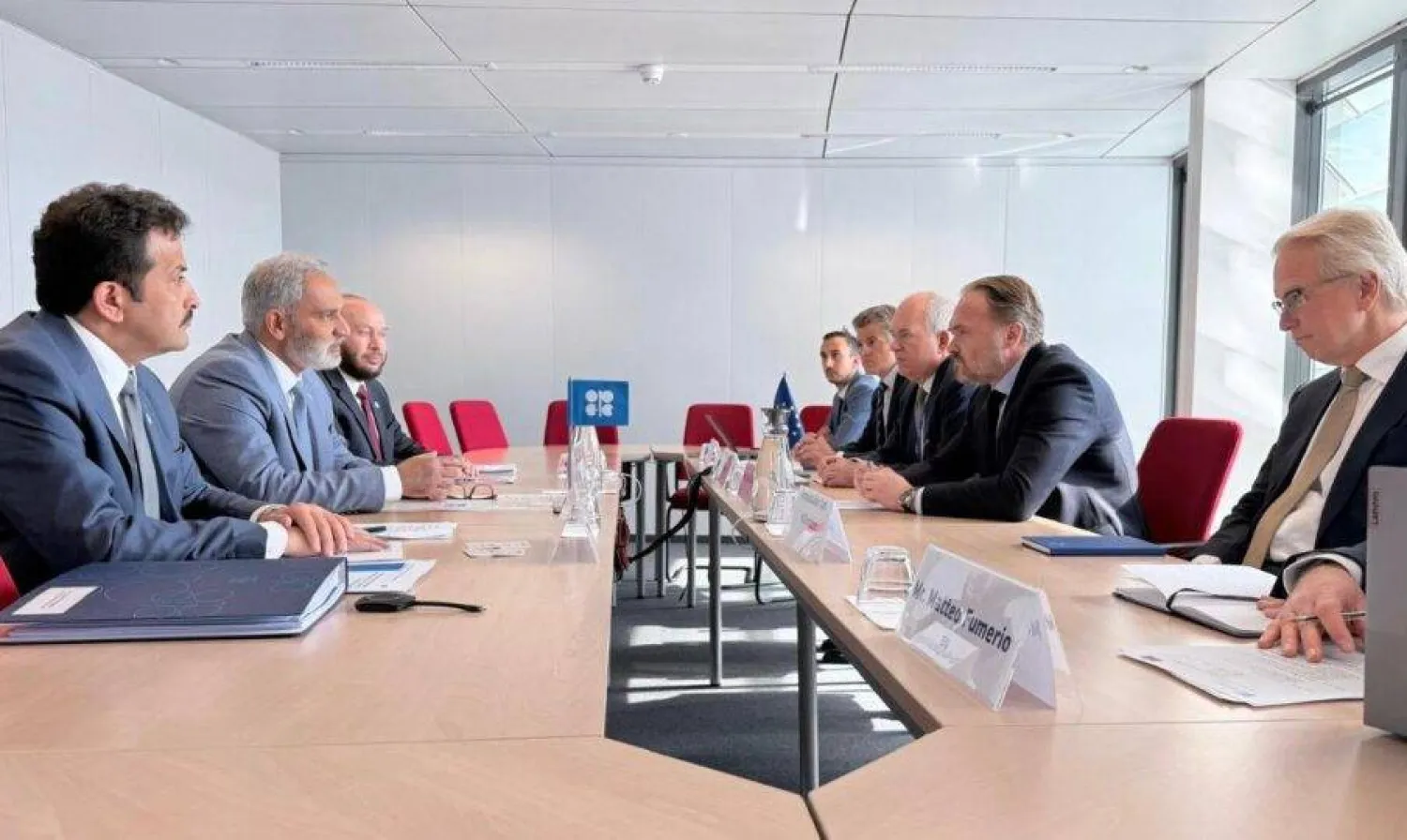
Al Ghais spoke on Thursday at the 16th High-Level Meeting of the Energy Dialogue between OPEC and the EU in Brussels

OPEC Secretary General Haitham Al Ghais has reiterated the Organization of the Petroleum Exporting Countries’ commitment to support market stability and emphasized the need for long-term investment in all energies to meet expected future demand growth.

Al Ghais spoke on Thursday at the 16th High-Level Meeting of the Energy Dialogue between OPEC and the European Union (EU) at the European Commission Headquarters in Brussels.

The meeting was co-chaired by Al Ghais and European Commissioner for Energy and Housing Dan Jørgensen.

The dialogue was first established in 2005, making it OPEC’s longest-standing dialogue. Since then, the cooperation has included 16 high-level, five technical and numerous bilateral meetings in both Vienna and Brussels, ten joint studies, the co-hosting of numerous workshops and roundtables and the facilitation of valuable exchanges on energy market outlooks.

Al Ghais reflected on the productive collaboration between the two organizations over more than two decades, and emphasized the value of exchanging views on energy issues of common interest.

The importance of the dialogue is evident in a dynamically evolving global environment, which creates challenges for global energy markets and the global economy more broadly, Al Ghais said.

Moreover, he underscored the benefits of dialogue to help navigate market challenges, reiterating OPEC’s commitment to support market stability and emphasizing the need for long-term investment in all energies to meet expected future demand growth.

Discussions focused on the current oil and energy market outlook, including supply and demand dynamics, macroeconomic conditions, the evolving global energy mix and the need for balanced and realistic approaches to future energy pathways. The meeting also highlighted the need for all energies to help deliver energy security and energy availability, and all technologies to help achieve emissions reductions.

OPEC reiterated its commitment to maintaining open and constructive dialogue and to continue strengthening cooperation within the framework of the OPEC-EU Energy Dialogue.

It was agreed that the next High-Level Meeting of the OPEC-EU Energy Dialogue will take place in November 2026 in Vienna.