

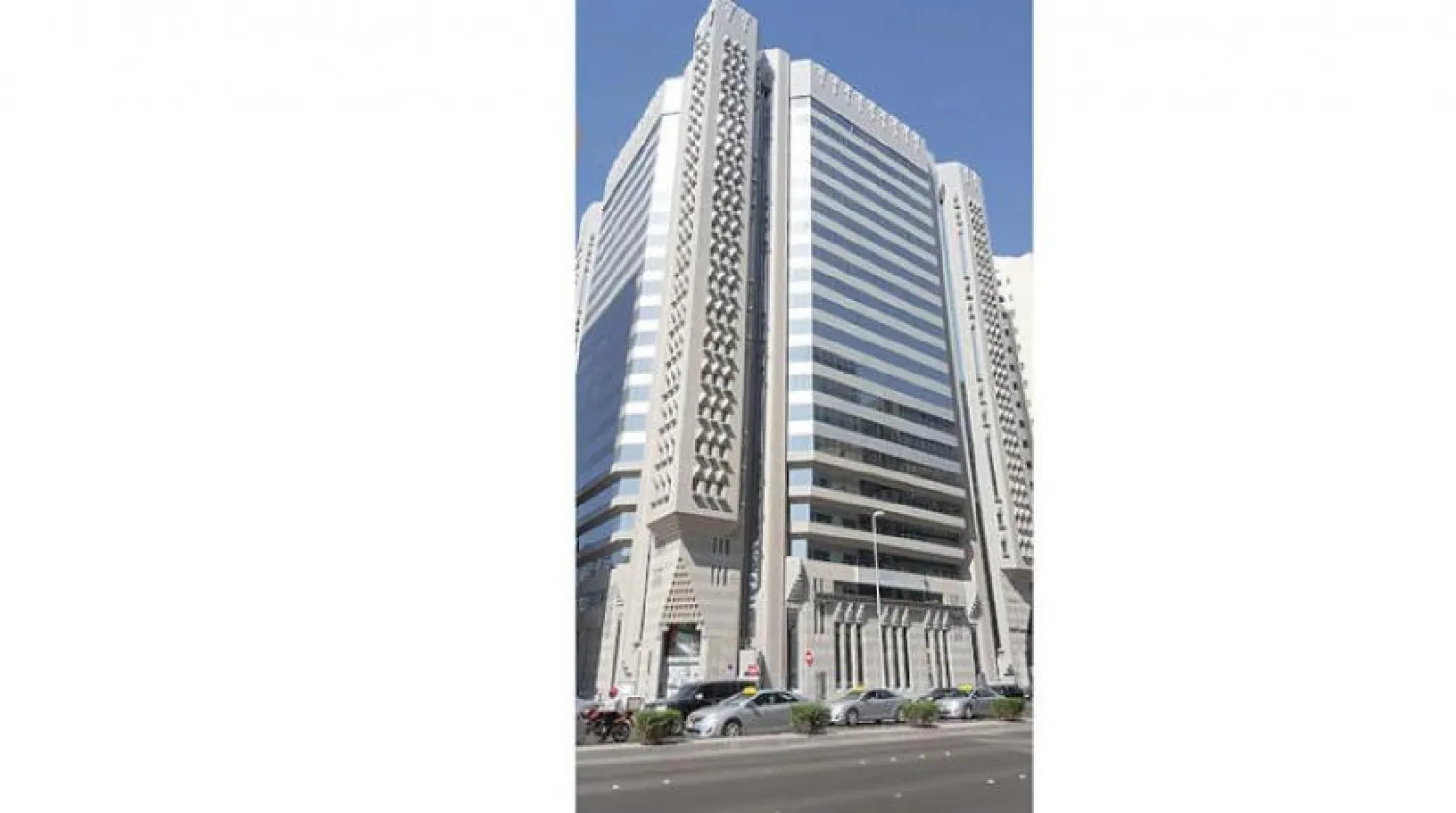

Abu Dhabi's ADX, Tel Aviv Stock Exchange Sign MOU

Abu Dhabi Securities Exchange and Tel Aviv Stock Exchanges sign MoU
TT

Abu Dhabi's ADX, Tel Aviv Stock Exchange Sign MOU

Abu Dhabi Securities Exchange and Tel Aviv Stock Exchanges sign MoU

Abu Dhabi Securities Exchange (ADX) and the Tel Aviv Stock Exchange (TASE) have signed a Memorandum of Understanding, the first time an Arab exchange has entered into a commercial relationship with the state of Israel, Emirates News Agency (WAM) reported Wednesday.

The MoU was signed by Mohamed Ali Al Shorafa Al Hammadi, Chairman of ADX, and Amnon Neubach, Chairman of TASE, at a virtual signing ceremony, WAM said.

The MoU forms an important part of the UAE’s efforts to expand diplomatic and commercial cooperation with Israel, by laying out a road map towards developing bilateral relations through the stimulation of economic growth and the promotion of technological innovation, it added.

According to WAM, the MoU will facilitate the development of channels of communication to foster co-operation between the two exchanges and contribute to the growth of the capital markets in the UAE and Israel.

One of the key purposes of the MoU between ADX and TASE is to explore potential opportunities for collaboration, including the cross-listing of securities; mutual trading by each exchange’s respective members; facilitating investor access to each other’s markets; creating new fintech and other market infrastructure technologies, and sharing data and other information to enable the development of new products.

"As the relationship between the UAE and Israel enters a new era, the path is open for businesses from both countries to collaborate with each other and unlock commercial opportunities. The MoU ADX and TASE have signed is an early example of such collaboration and evidence of our commitment to drive value in the region through trade and commerce,” said Al Hammadi.

Chief Executive of ADX Saeed Hamad Al Dhaheri added that the MoU illustrates how exchanges can partner for the mutual benefit by sharing ideas, information, and initiatives.

As for Neubach, he looked forward to working closely together with the Abu Dhabi Securities Exchange.

“We are confident that this MOU will strengthen the capital markets of Israel and the United Arab Emirates and will provide important opportunities for listed companies in both countries,” WAM quoted him as saying.

"The development of the Tel Aviv Stock Exchange’s international exposure is one of our key strategies. This remarkable MoU is an important event and a testament to the opportunity that Israel’s capital markets represent for international investors seeking Israeli technology and high growth companies,” CEO of the Tel Aviv Stock Exchange Ittai Ben Zeev said.



Gold Set for Third Weekly Gain as US Rate Outlook Offsets Dollar Strength

FILE PHOTO: Customers crowd around a jewelry showroom during Akshaya Tritiya, a major gold-buying festival, in Kochi, India April 28, 2017. REUTERS/Sivaram V/File Photo
TT

Gold Set for Third Weekly Gain as US Rate Outlook Offsets Dollar Strength

FILE PHOTO: Customers crowd around a jewelry showroom during Akshaya Tritiya, a major gold-buying festival, in Kochi, India April 28, 2017. REUTERS/Sivaram V/File Photo

Gold steadied on Friday as US-Iran ceasefire uncertainty lingered, but the metal stayed on course for a third consecutive weekly climb as investors priced in earlier and deeper US rate cuts, supporting non-yielding bullion.

Spot gold held its ground at $4,764.54 per ounce by 0532 GMT. The metal, however, has gained 1.8% so far this week.

US gold futures for June delivery fell 0.6% to $4,787.80.

The ‌dollar index strengthened, ‌making greenback-priced bullion more expensive for holders of other currencies, Reuters said.

"There's ‌a ⁠lack of clarity ⁠about the way that the ceasefire is evolving in the Middle East and what that means to energy markets... so we're in sort of a little bit of a holding pattern (with gold) going into the final session of the week," said Kyle Rodda, senior financial market analyst at Capital.com.

Spot gold has fallen about 10% since the US-Israel conflict with Iran ⁠erupted on February 28, with elevated energy prices sparking ‌inflation concerns and the prospect of ‌higher US interest rates.

The fragile two-week ceasefire between the US and Iran showed further ‌strain on Friday, as Washington accused Tehran of breaching promises on ‌the Strait of Hormuz.

Brent crude, however, has slid more than 11% this week on optimism that the ceasefire could reopen the Strait of Hormuz, through which about 20% of the world's oil and liquefied natural gas passes.

"If things break down, (gold) ‌could end up back in mid-$4,000's pretty quickly. But if the ceasefire holds and the peace deal starts ⁠to look more ⁠likely, then we could push through $5,000," Rodda added.

On the data front, the US Personal Consumption Expenditures index, the Federal Reserve's preferred inflation gauge, advanced 2.8% in the 12 months through February, in line with estimates, and likely rose further in March.

Investors are now looking out for March's US Consumer Price Index data, due later in the day, for further clues on Fed's monetary policy direction.

Markets are pricing in a 31% chance for a US rate cut of at least 25 basis points at the Fed's December meeting, according to CME's FedWatch Tool, up from 20% in the prior session.

Among other metals, spot silver rose 1.3% to $76.03 per ounce, platinum lost 2% to $2,061.10, and palladium fell 0.2% to $1,553.92.


Saudi Business Confidence Index Remains Optimistic

A street in the Saudi capital, Riyadh (Reuters)
TT

Saudi Business Confidence Index Remains Optimistic

A street in the Saudi capital, Riyadh (Reuters)

Saudi Arabia’s Business Confidence Index remained in optimistic territory at 52.1 points in March, underscoring private sector resilience despite geopolitical challenges.

The index fell from 60.7 in February but stayed above the neutral 50 threshold, reflecting continued confidence in stable economic activity and sustained growth across key sectors, according to the General Authority for Statistics (GASTAT).

A statement released by GASTAT said that the BCI for the industrial sector recorded 50.8 points, maintaining an optimistic level despite a decline of 15.8 percent compared to February.

The BCI for the services sector recorded 52.0 points, maintaining an optimistic level despite a decline of 14.9 percent compared to February, it said.

Regarding the BCI in the construction sector, the data revealed that in March, it recorded an optimistic level at 53 points, confirming the continued positive confidence among establishments in the sector, the statement added.


Syria Nears Correspondent Bank Account Deal with Türkiye, Mulls Currency Swap

This picture shows stacks of Syrian lira banknotes at the Commercial Bank of Syria in Damascus, on November 10, 2022. (Photo by LOUAI BESHARA / AFP)
TT

Syria Nears Correspondent Bank Account Deal with Türkiye, Mulls Currency Swap

This picture shows stacks of Syrian lira banknotes at the Commercial Bank of Syria in Damascus, on November 10, 2022. (Photo by LOUAI BESHARA / AFP)

Syria ‌is in the final stages of establishing a correspondent bank account with neighboring Türkiye's central bank and will also discuss a potential currency swap aimed at boosting trade, the Syrian central bank chief said.

Türkiye has been the main backer of the Syrian government of President Ahmed al-Sharaa since the ousting of Bashar al-Assad in late 2024. Al-Sharaa has been seeking to rebuild state institutions and the ‌economy after ‌more than a decade of war, sanctions ‌and ⁠financial isolation, Reuters said.

Trade between ⁠the two countries has surged but businesses say the lack of a cross-border payments system was one of the biggest impediments to further growth and investment. A correspondent bank account would help to facilitate cross-border payments and trade finance transactions ⁠which traders say are currently cash only ‌and handled by traditional ‌money transfer offices.

In written responses to Reuters questions, Syria's ‌central bank Governor AbdulKader AlHussrieh said he expected Syrian-Turkish ‌cooperation to expand "into integrated payment systems, cross-border settlements, and more structured trade finance frameworks".

"Cooperation with Türkiye, particularly between the Central Bank of Syria and Turkish authorities, is accelerating ‌and becoming increasingly institutionalized," said AlHussrieh, who was on a two-day working visit to ⁠ Türkiye ⁠this week.

Turkish state lender Ziraat Bank and smaller private Aktif Bank were also expected to begin Syrian operations "in the near term", he said.

Türkiye 's exports to Syria jumped following Assad's ouster by 60% to $3.5 billion last year, official data show, while Syria's imports were at $235 million. The countries aim to almost triple trade volume to $10 billion over the medium term.

"This ambition will require a fully functioning financial system in Syria, supported by strong correspondent banking relationships," AlHussrieh said.