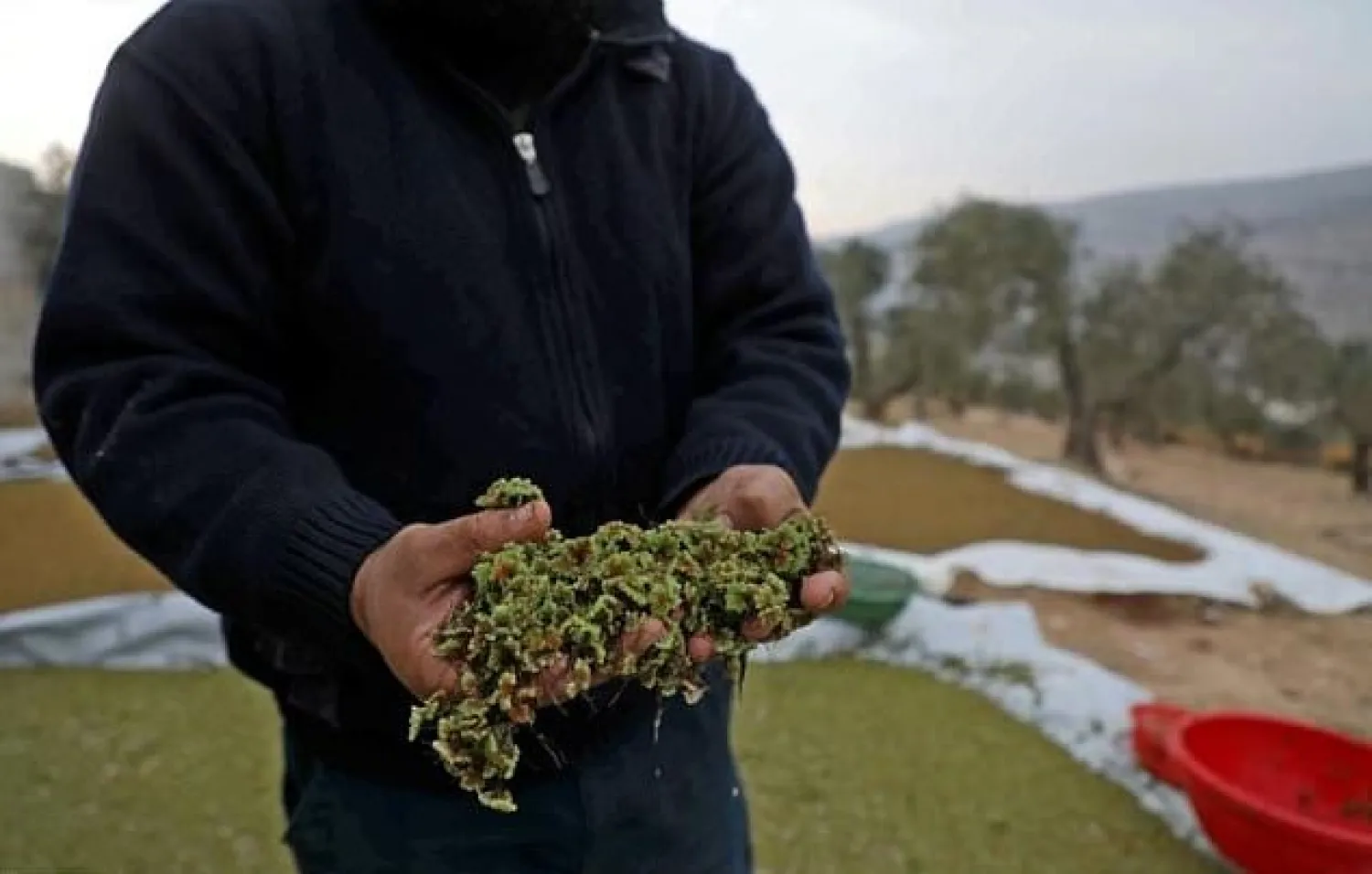

Struggling Syria Farmers Turn to Tropical Fern for Fodder

Syrian farmer Ayman Ibrahim is so satisfied with the results that he started selling his surplus Azolla production to other farmers - AFP
TT

Struggling Syria Farmers Turn to Tropical Fern for Fodder

Syrian farmer Ayman Ibrahim is so satisfied with the results that he started selling his surplus Azolla production to other farmers - AFP

To dodge skyrocketing prices for animal fodder in Syria's last major rebel bastion, farmer Ayman Ibrahim has turned to an aquatic fern used as a fertilizer in Asian rice paddies.

Azolla, which looks more like a pond weed than a fern, is regarded as an invasive plant in much of the world but is used to feed livestock in parts of southeast Asia.

Ibrahim, a former tailor who took up farming in the Idlib region after fleeing fighting in Syria's second city of Aleppo in 2016, says the plant has given him huge savings over traditional animal feeds like hay or silage.

Azolla is highly productive with the ability to double its weight in seven days, according to the UN Food and Agriculture Organization, AFP reported.

The plant is rich in proteins and has been used as a feed for cattle, fish and poultry in Vietnam; and for pigs in Singapore and Taiwan.

"We want Azolla to spread here," Ibrahim told AFP on his farm overlooking the town of Kfar Takharim.

"The animals want to eat it," he said, scooping up Azolla weeds from a shallow pool using a kitchen strainer.

"There is a big difference between offering them a green plant and dry feed."

The 25-year-old father of two started raising livestock in the Idlib region after he failed to find work as a tailor.

But in the years since he started, the Syrian pound has plummeted in value, leading to sharp increases in the cost of imported goods.

Compounded by the coronavirus pandemic, the economic crisis has led food prices to increase by 249 percent, plunging millions into hunger.

The cost of animal fodder also rose sharply so Ibrahim embarked on a search for a cheaper alternative.

"After a year of researching on the internet, I found out about the water fern and was able to import it from Egypt via Turkey," he said

Imported as live plants not as spores, Azolla was at first difficult to transport to Syria, especially since it can't survive long without water, Ibrahim said.

The first four shipments fell through, with the plants arriving dead.

Ibrahim then reduced the size of his order and improved transport so that the plant could arrive before drying out.

His first 10 kilograms (22 pounds) of viable Azolla arrived last June.

"We immediately planted them in the pools," where they have replaced 70 percent of the animal fodder he was previously using.

The cost of feeding his livestock has fallen from $300 a month to $100 at most.

Ibrahim is so satisfied with the results that he started selling his surplus Azolla production to other farmers.

"I was surprised by the high demand," he said.

Nationwide, the economic crisis has led to the loss of 30 to 40 percent of Syria's livestock, according to FAO, with many farmers unable to feed their families let alone their animals.

Ahmad al-Kawan, an agriculture official in Idlib, said the livestock sector in the region had been especially hard hit.

"This has led to a sharp increase in the price of meat and dairy, leading to more food insecurity," he told AFP.

Struggling to survive, Omar Asha too turned to Azolla to cut down the cost of feeding his animals.

The 48-year-old Aleppo native, who now lives in Idlib, managed to get hold of the plant locally and now grows it in ponds to feed to his chickens and sheep.

He said it had reduced his fodder costs by 60 percent.

He also noticed his sheep were producing more milk and gaining weight more quickly than before.

"The best thing about the Azolla plant is that I paid for it only once, when buying it," he said.

"After I planted it, it turned into free renewable fodder."


Israel-Lebanon Direct Negotiations Expected Next Week in Washington

The Israeli Ambassador to the United States, Yechiel Leiter, who is expected to lead the negotiations on the Israeli side. (Reuters)
TT

Israel-Lebanon Direct Negotiations Expected Next Week in Washington

The Israeli Ambassador to the United States, Yechiel Leiter, who is expected to lead the negotiations on the Israeli side. (Reuters)

Negotiations between Israel and Lebanon are expected next week in Washington, according to a person familiar with the matter, a day after deadly Israeli strikes targeted several areas simultaneously around the country and pounding the capital, Beirut.

"We can confirm that the Department will host a meeting next week to discuss ongoing ceasefire negotiations with Israel and Lebanon," the US official told AFP.

The announcement came after Israeli Prime Minister Benjamin Netanyahu said he had approved direct talks focused on disarming Iran-backed Hezbollah.

Netanyahu said there is no ceasefire in Lebanon and his country will keep striking Hezbollah.

According to several Israeli media outlets, Israel’s ambassador to Washington, Yechiel Leiter, is expected to lead the negotiations on behalf of the Israeli side.

Quoted by his office, Netanyahu said: “Following Lebanon’s repeated requests to begin direct negotiations with Israel, I gave my instructions yesterday to engage in direct talks with Lebanon as soon as possible”.

He added that the negotiations will address the disarmament of Hezbollah and the establishment of peaceful relations between Israel and Lebanon.

But a Lebanese government official said on Thursday that Lebanon seeks a ceasefire before the onset of negotiations with Israel.

Meanwhile a Hezbollah lawmaker confirmed the party’s rejection of any direct negotiations between Lebanon and Israel, calling instead for an Israeli withdrawal from the south of the country.

New Strikes

Previously, Netanyahu had affirmed that strikes against “Hezbollah” would continue “wherever necessary” until security is fully restored for residents of northern Israel.

On Thursday evening, the Israel army said it struck Hezbollah rocket launch platforms in Lebanon.

Two days after a US-Iran ceasefire, the international community fears that the truce could be undermined by the continued Israeli strikes in Lebanon.

In Beirut, rescue teams are still searching through the rubble for victims of the simultaneous strikes carried out by Israel on several areas on Wednesday. The strikes left more than 300 dead and over 1,100 injured, according to Lebanese authorities.

In southern Lebanon, strikes killed at least five people, while Hezbollah announced that its fighters are engaged in direct confrontations with Israeli forces in the area.

The Israeli army again warned residents of several neighborhoods in Beirut’s southern suburbs to evacuate ahead of new airstrikes.

The US-Iran ceasefire is faltering after Israel pounded Beirut and as Iran maintains its grip on the Strait of Hormuz while truce talks remain uncertain.

Both Tehran and Washington are claiming victory and exerting pressure, with talks on a permanent deal set to begin soon in Islamabad and US Vice President JD Vance set to lead the US delegation.

Israeli strikes made Wednesday the deadliest day in Lebanon since the war began, with more than 300 people killed. There are lingering disagreements over whether the ceasefire covers the Lebanese militant group Hezbollah. Iran is warning of “STRONG responses” if attacks on its militant ally don’t stop.


Grundberg Urges Need to Keep Yemen out of Regional Escalation

Grundberg meets with Prime Minister and Minister of Foreign Affairs Shaya Zindani in Aden. (Yemeni government)
TT

Grundberg Urges Need to Keep Yemen out of Regional Escalation

Grundberg meets with Prime Minister and Minister of Foreign Affairs Shaya Zindani in Aden. (Yemeni government)

UN Special Envoy for Yemen Hans Grundberg concluded a visit to Aden, where he met with senior Yemeni government officials to discuss the implications of recent regional and national developments on prospects for peace in Yemen, and priorities for the political, economic and military/security tracks of the UN-led mediation process.

He met with Presidential Leadership Council Member Mahmood Al-Subihi and Prime Minister and Minister of Foreign Affairs Shaya Zindani.

Discussions focused on the regional escalation and its impact on Yemen, as well as on internal developments, including efforts to stabilize the situation in southern governorates. The envoy also briefed on the status of ongoing negotiations related to conflict-related detainees, said UN Office of the Special Envoy of the Secretary-General for Yemen in a statement.

The government’s economic priorities, including the adoption of the 2026 budget and strategic plan were at the center of Grundberg’s discussions with Minister of Finance Marwan Bin Ghanem, and Minister of Oil and Minerals Mohammed Bamaqa. The meetings focused on financial stabilization, including revenue and budgetary priorities, as well as advancing the resumption of fuel production and exports to support economic recovery.

Grundberg’s meeting with Minister of State for Women’s Affairs Ahed Jasoos, focused on the importance of inclusive participation, including the meaningful engagement of women in political, and public decision-making processes, as well as the economic empowerment of women and the need to strengthen social and legal protections.

The envoy also met with Central Bank of Yemen Governor Ahmed Ahmed Ghaleb, with discussions focusing on economic stabilization measures and the broader financial context, including monetary challenges and opportunities for advancing reforms.

In his meeting with Minister of State and Governor of Aden Abdulrahman Sheikh, Grundberg discussed local dynamics and ongoing efforts to support stability and service delivery in the governorate.

He met with members from civil society and media as part of the broader inclusion efforts of the Office.

In all his engagements, the envoy reiterated the importance of shielding Yemen from regional escalations, supporting economic stability, and preserving space for a Yemeni-led political process under UN auspices.


Indonesia Urges 'Thorough' Probe on Lebanon Peacekeeper Deaths

UNIFIL vehicles in southern Lebanon. (Reuters)
TT

Indonesia Urges 'Thorough' Probe on Lebanon Peacekeeper Deaths

UNIFIL vehicles in southern Lebanon. (Reuters)

Indonesia said Friday it had submitted a joint statement on peacekeeper security with dozens of allied nations to the United Nations after three of its blue helmets were killed in Lebanon.

In the joint statement, the countries urged the UN Security Council to conduct a thorough investigation into the incidents in Southern Lebanon that killed three Indonesian peacekeepers and wounded several others, including from France, Ghana, Nepal, and Poland, said AFP.

The Foreign Ministry in Jakarta said 73 countries and UN observer nations supported the statement, delivered by Indonesia's permanent representative to the UN, Umar Hadi, in New York.

"The safety and security of UN peacekeepers are non-negotiable. We urge the UN Security Council to use all available instruments to strengthen protection for peacekeeping forces amid an increasingly dangerous situation," the ministry quoted Umar as saying.

"Troop-contributing countries also call for an end to violence in Lebanon, de-escalation of tensions, and encourage all parties to return to the negotiating table to achieve a peaceful settlement," it added.

Three Indonesian peacekeepers died in two separate blasts in southern Lebanon in late March.

A third blast less than a week later -- inside a UN facility in southern Lebanon -- injured three more Indonesian soldiers.

The deadly incidents sparked calls from Indonesian authorities for an investigation and security guarantees for peacekeeping forces.

The Foreign Ministry has called the attacks "unacceptable".

It urged the UN Security Council "to immediately convene a meeting of troop-contributing countries to UNIFIL (the UN Interim Force in Lebanon) to conduct a review and take measures to enhance the protection of personnel serving with UN Interim Force in Lebanon".

President Prabowo Subianto has said he "strongly condemns every heinous act that undermines peace and causes the deaths of our nation's soldiers".