


Yemen Govt Defies Terrorism after Surviving Assassination Attempt in Aden

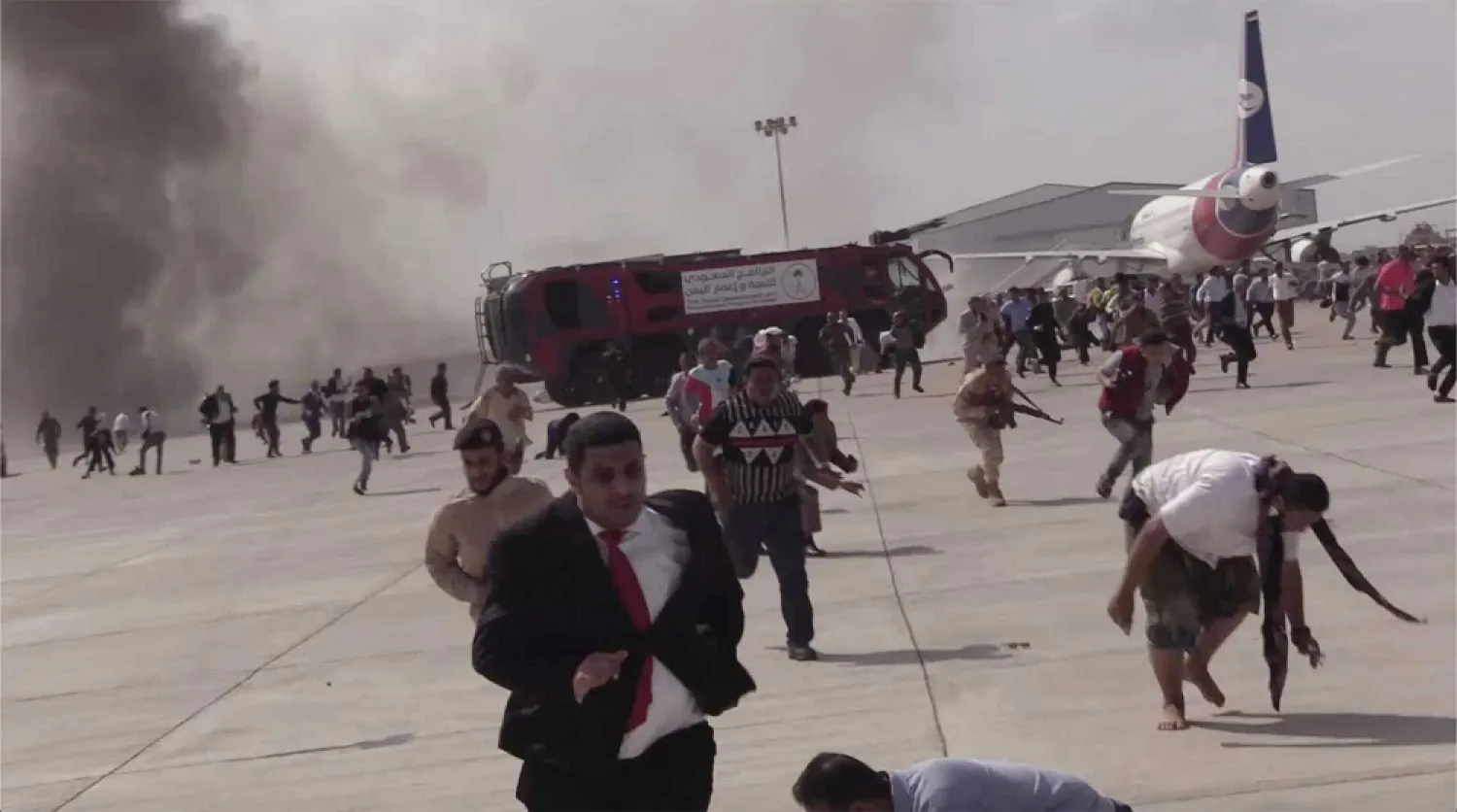
People run following an explosion at the airport in Aden, Yemen, shortly after a plane carrying the newly formed government landed on Wednesday, Dec. 30, 2020. (AP)
TT

Yemen Govt Defies Terrorism after Surviving Assassination Attempt in Aden

People run following an explosion at the airport in Aden, Yemen, shortly after a plane carrying the newly formed government landed on Wednesday, Dec. 30, 2020. (AP)

The Yemeni government vowed that it will continue to forge ahead with its duties until the Iran-backed Houthi coup is defeated and the state is restored.

It made its remarks shortly after a terrorist attack struck Aden international airport on Wednesday moments after a plane landed carrying the newly formed cabinet for government-held parts of Yemen.

At least 22 people were killed and dozens wounded in the attack. Prime Minister Maeen Abdulmalik said all members of the cabinet were “fine”.

Loud blasts and gunfire were heard shortly after the plane arrived from Riyadh. A local security source said three mortar shells had landed on the airport’s hall.

“We and the members of the government are in the temporary capital of Aden and everyone is fine,” Maeen tweeted from Maasheq palace. “The cowardly terrorist act that targeted Aden airport is part of the war that is being waged against the Yemeni state and its great people.”

President Abdrabbuh Mansur Hadi ordered the formation of an investigation team to probe the attack. It is headed by the interior minister and members of security and intelligence agencies. It will operate in coordination with the Saudi-led Arab coalition.

In a telephone call with the premier, Hadi said the Houthi terrorist attacks will not deter the legitimate government from carrying out its duties in the interim capital Aden.

“The forces of good will always prevail over the forces of evil,” he stressed.

Vice President Ali Mohsen al-Ahmar said the cowardly airport attack will not deter the government and coalition from restoring normalcy and the authority of the state in liberated regions, vowing in a telephone call with the PM that the criminals will be held accountable.

Parliament Speaker Sultan al-Barkani said the cowardly airport attack will only increase the determination of parties that are loyal to Yemen.

Information Minister Moammar al-Eryani accused the Houthis of being behind the attack.

Spokesman for the Southern Transitional Council (STC), Nizar Haitham, confirmed the safety of everyone who was on board the government plane.

He told Asharq Al-Awsat that the undersecretary of the ministry of public works, Yasmine al-Awadi, was killed.

“I condemn the cowardly attack on Aden Airport timed to coincide with the arrival of the new government. A despicable attempt to cause carnage and chaos and bring suffering when Yemenis had chosen to move forward together,” tweeted British Ambassador to Yemen Michael Aron.



Saddam Haftar Assures Shaibani of General Command’s Readiness to Support Syrian People

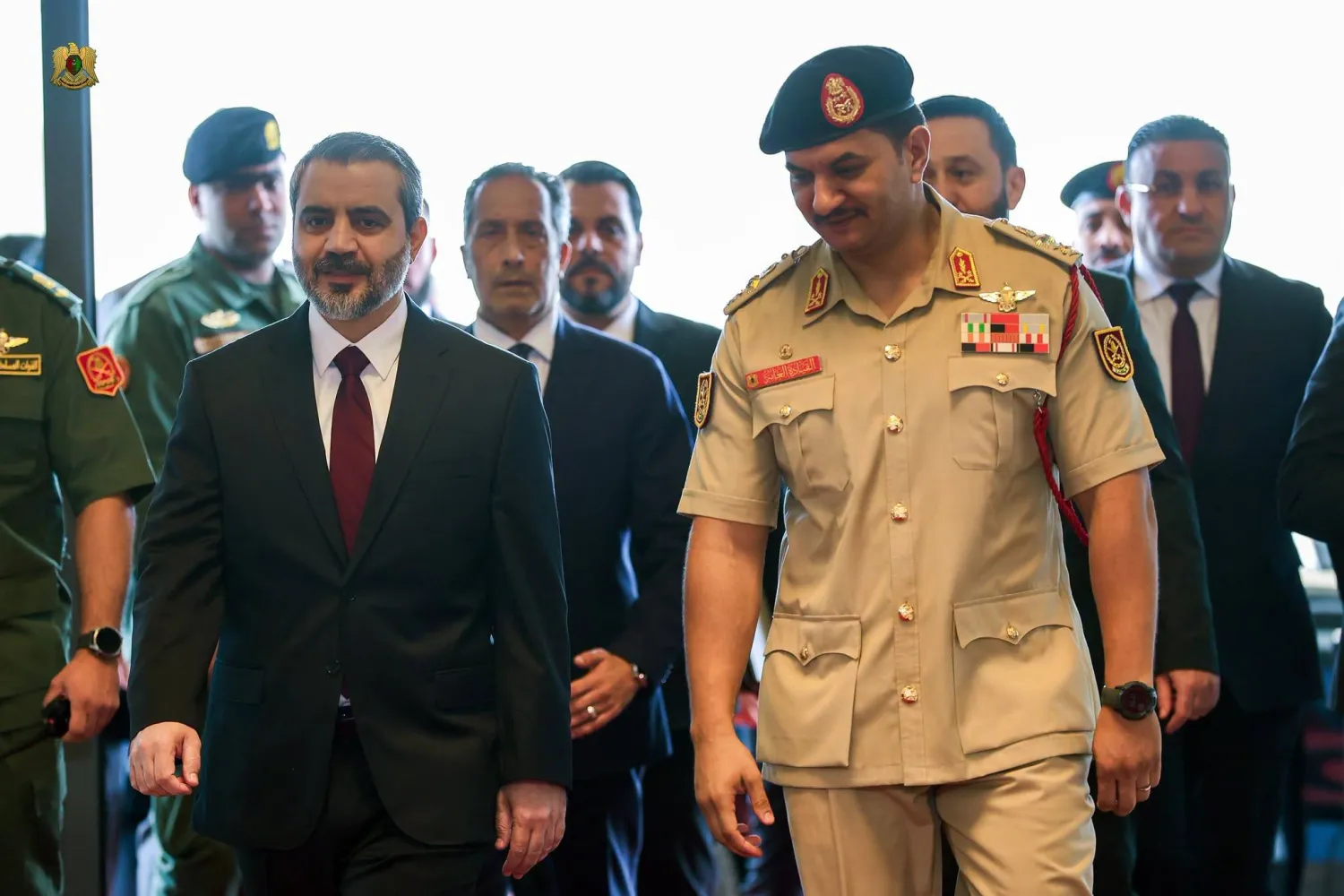
General Saddam Haftar, deputy commander-in-chief of the Libyan National Army, and Syrian Foreign Minister Asaad al-Shaibani in Benghazi. (LNA General Command)
TT

Saddam Haftar Assures Shaibani of General Command’s Readiness to Support Syrian People

General Saddam Haftar, deputy commander-in-chief of the Libyan National Army, and Syrian Foreign Minister Asaad al-Shaibani in Benghazi. (LNA General Command)

General Saddam Haftar, deputy commander-in-chief of the Libyan National Army, discussed with Syrian Foreign Minister Asaad al-Shaibani several issues of common interest during the minister’s first visit to Benghazi.

They also underlined the depth of the fraternal and historical relations uniting the Libyan and Syrian people.

Libya and Syria restored diplomatic ties after nearly 14 years after Shaibani visited Tripoli in August. Talks discussions aimed to strengthen bilateral relations and expand joint cooperation between the two countries, culminating in the reopening of the Syrian embassy in Libya.

The LNA General Command said on Sunday that Saddam praised the role of the Syrian leadership "in achieving security and stability in Syria, overcoming the challenges faced during the transition phase, and working to restore normalcy and open up to the international community."

He underscored the General Command's support for the Syrian leadership, and “its readiness to provide everything within its power to support the brotherly Syrian people to help Syria regain its position in the Arab and international arenas.”

For his part, Shaibani expressed the Syrian leadership's keenness to support everything that would achieve permanent stability in Libya.


139 Migrants, Including Children, Die After Boat Capsizes off Djibouti

 A portion of the vessel floats after it capsized while carrying about 305 people from Djibouti to Yemen. (Kennedy Omondi Okoth/International Organization for Migration/Handout via Reuters)
A portion of the vessel floats after it capsized while carrying about 305 people from Djibouti to Yemen. (Kennedy Omondi Okoth/International Organization for Migration/Handout via Reuters)
TT

139 Migrants, Including Children, Die After Boat Capsizes off Djibouti

 A portion of the vessel floats after it capsized while carrying about 305 people from Djibouti to Yemen. (Kennedy Omondi Okoth/International Organization for Migration/Handout via Reuters)
A portion of the vessel floats after it capsized while carrying about 305 people from Djibouti to Yemen. (Kennedy Omondi Okoth/International Organization for Migration/Handout via Reuters)

At least 139 people, including children, have died after a boat carrying more than 300 migrants capsized off the coast of Djibouti in east Africa, the International Organization for Migration said Sunday.

That number only includes those buried by authorities in Djibouti. Others have been buried by the migrants themselves, but they won't be added to the official count until authorities can verify the bodies, Alexandre Coissac, IOM Chief of Mission in Djibouti, told the AP via the phone.

“What is terrible is that they were buried with no names, in a common grave, like in a war situation,” Coissac said. “They all have a mother, a father, and we may never learn what happened.”

Coissac said the migrants boarded the ship in the evening of Oct. 8 and that it sank very soon after, close to the shore, “mainly because it was overcrowded.”

“The local authorities did their best,” Coissac said, “but they were overwhelmed with all the bodies that kept coming at once towards the shore.”

He said authorities were bringing the surviving migrants to the IOM rescue center in Obock where they received medical assistance after swallowing sea water, and psychological support.

“They're all in a state of shock,” Coissac, who visited the area of the shipwreck Saturday, said. “I tried to talk to some of them but it's very difficult.”

Some of the migrants in the IOM center are already aware that their family members died during the shipwreck. Others were given access to phones to call loved ones back home to notify them they are alive.

At least 84 people remained missing in one of the deadliest shipwrecks yet on the popular but perilous crossing from the Horn of Africa to the Arabian Peninsula, where many migrants seek work in Gulf nations.

The boat was traveling from Djibouti to Yemen when it capsized on Thursday night or Friday morning, according to the IOM. More than 80 people survived, all of them Ethiopian nationals, it said.

The Geneva-based UN migration agency said the vessel had 305 people on board and warned that the death toll could still rise.

Personal items likely belonging to the migrants, including shoes, were seen on a beach in a video shared by IOM. Rescue work continued as fears grew for the missing.

Tens of thousands of migrants from the Horn of Africa travel every year through Djibouti and across the Bab al-Mandeb Strait towards Gulf countries in search of safety and economic opportunities, the IOM said in its statement.

That movement has continued despite newly escalating fighting in Yemen, on the other side of the strait.

“This is a devastating loss of life,” said Coissac. “This tragedy is a stark reminder of the dangers faced by migrants along this migration corridor as they seek economic opportunities.”

In recent weeks, at least 2,000 Yemenis have received aid in Djibouti as the fighting has escalated in Yemen between the legitimate government and Iranian-backed Houthi militia.

That's the opposite direction from the movement of the migrants who died in the shipwreck and the typical migration patterns of recent years: The tens of thousands who cross from eastern Africa toward Yemen each year have typically been looking for work in the Gulf.

Over 900 migrants died or went missing along the route last year, according to IOM’s Missing Migrants Project.

“No one gets into a boat like that unless they believe there is no other safe way,” IOM Director-General Amy Pope said. “We cannot keep treating these deaths as normal. Safe and legal pathways save lives. I am asking governments and donors to act before the next boat goes down.” 


Washington Targets Hezbollah’s Alternative Funding Networks

Hezbollah supporters hold up a portrait of the group’s former secretaries-general, Hassan Nasrallah and Hashem Safieddine, during the second anniversary of their assassinations in Beirut’s southern suburbs (AP). 
TT

Washington Targets Hezbollah’s Alternative Funding Networks

Hezbollah supporters hold up a portrait of the group’s former secretaries-general, Hassan Nasrallah and Hashem Safieddine, during the second anniversary of their assassinations in Beirut’s southern suburbs (AP). 

The United States is stepping up efforts to track alternative financing channels used by Hezbollah as tighter sanctions threaten its traditional sources of funding, particularly Iranian money that has long underpinned the group’s military and security capabilities and political influence in Lebanon.

Washington’s campaign extends beyond restricting Iranian transfers to tracing foreign funding networks and cross-border commercial activities that Hezbollah could use to compensate for any decline in Tehran’s support.

A Reuters report last week that Hezbollah had received $200 million in cash from Iran the previous month to assist tens of thousands of families displaced by the war prompted a response from the US State Department.

The department expressed doubt that the money had reached Hezbollah but reaffirmed its commitment to maintaining pressure on the group’s funding sources through sanctions, while supporting the legitimate Lebanese government’s efforts to rebuild southern Lebanon.

New round of sanctions

Sami Nader, director of the Middle East Institute for Strategic Affairs, described the measures as part of a new round of US sanctions aimed at tightening financial pressure on Iran and its regional affiliates.

“The issue is not specifically Hezbollah, but primarily Iran,” Nader told Asharq Al-Awsat, pointing to a recent US announcement describing Hezbollah as an integral part of Iran’s Revolutionary Guard Corps.

Nader said Tehran had developed alternative channels to circumvent financial restrictions, particularly through gold and cryptocurrencies.

He described an expanding network of such activities across the region, with links to Iran and Hezbollah.

The latest sanctions are designed to target these alternative mechanisms, he explained.

Nader added that if cryptocurrency offices linked to these networks are found to exist, Lebanese authorities would likely be asked to shut them down and take action against them, while also tightening oversight of gold transactions.

Four sources of financing

Hezbollah has long relied on multiple funding sources, particularly under previous Lebanese administrations that turned a blind eye to billions of dollars reaching the group, including through official border crossings.

Economist Antoine Farah identified four principal sources of financing: The first was direct Iranian support, provided through regular transfers from Tehran. The second involved illicit activities, particularly drug smuggling and the Captagon trade, which Farah said Hezbollah had engaged in both inside Lebanon and abroad, notably in several Latin American countries. The third consisted of substantial donations from Shiite financiers and supporters around the world. The fourth was a network of front businesses established to generate additional revenue, launder money and conceal the origins and destinations of funds.

Farah told Asharq Al-Awsat that Hezbollah’s ability to draw on most of these sources had declined considerably, while the group faced mounting pressure from legislative and regulatory measures being strengthened in Lebanon.

Stricter financial oversight

Farah highlighted amendments being introduced to Law No. 44 on combating money laundering and terrorist financing, particularly provisions requiring the identification of the ultimate beneficial owners of companies and commercial enterprises.

Identifying who ultimately benefits from commercial activities, while tracing the origins and destinations of funds, would help restrict the operations of front businesses established by Hezbollah, he explained.

Farah also pointed to measures being taken by Banque du Liban, Lebanon’s central bank, to regulate currency exchange dealers and money transfer companies.

He said the measures were making it increasingly difficult to exploit these sectors to transfer money and channel financing to Hezbollah.