


Lebanon: Bassil’s Call to Discuss New Political System Remains Unanswered

Graffiti painted on a wall near the damaged port area in Beirut, Lebanon on August 16, 2020. Photo: Reuters
TT

Lebanon: Bassil’s Call to Discuss New Political System Remains Unanswered

Graffiti painted on a wall near the damaged port area in Beirut, Lebanon on August 16, 2020. Photo: Reuters

A call by former Minister Gebran Bassil to hold a national dialogue to agree on a new political system raised questions regarding its timing and real purpose.

Bassil, President Michel Aoun’s son-in-law and the head of the Free Patriotic Movement (FPM), said that the Lebanese needed a new pact, “which would be based on our choices, not imposed on us by developments.”

In a news conference on Sunday, he said the solution was the creation of a “civil state with vast decentralization.”

Hezbollah’s Secretary-General Hassan Nasrallah was the first to put forward the idea of a founding conference in 2012, when he called for “holding a national founding conference to discuss building a strong state in Lebanon.”

Nasrallah’s call at the time was not answered, as most of the political forces refused to discuss changing the regime before deciding on the fate of Hezbollah’s weapons.

While official sources in Hezbollah preferred not to comment on Bassil’s invitation, sources in Amal Movement emphasized that the latter was not against any dialogue to develop the Lebanese system, “although we are convinced that any change to this system, which does not stem from a national consensus, will not lead to positive results.”

For his part, Member of the Future Movement MP Mohammad al-Hajjar said he was not surprised by Bassil’s call for a system change, as “(the FPM) has never believed in the Taif Agreement.”

“Bassil’s invitation leads us to chaos and into the unknown because no one knows where things might take us if we open the discussion on a fateful topic in this difficult situation the country is going through,” he remarked.

The Progressive Socialist Party (PSP), for its part, does not seem enthusiastic about reconsidering the political system in the current circumstance, as expressed by MP Bilal Abdallah.

“Is this the right time to reformulate the system in Lebanon amid disease and starvation, the crisis of deposits, the dollar exchange rate, unemployment, and emigration?” He asked.

Sources in the Lebanese Forces party stressed that the main reason for the current crisis lied in the failure to implement the Constitution since 1990, whether with regards to the Syrian presence or to Hezbollah’s arms.

The solution is to fully implement the Taif agreement by calling on Hezbollah to hand over its weapons to the Lebanese State, the LF sources underlined.



EU Condemns Israel's West Bank Control Measures

The Israeli settlement of Har Homa, seen from the West Bank city of Bethlehem, Tuesday, Dec. 17, 2024. (AP)
TT

EU Condemns Israel's West Bank Control Measures

The Israeli settlement of Har Homa, seen from the West Bank city of Bethlehem, Tuesday, Dec. 17, 2024. (AP)

The European Union on Monday condemned new Israeli measures to tighten control of the West Bank and pave the way for more settlements in the occupied Palestinian territory, AFP reported.

"The European Union condemns recent decisions by Israel's security cabinet to expand Israeli control in the West Bank. This move is another step in the wrong direction," EU spokesman Anouar El Anouni told journalists.


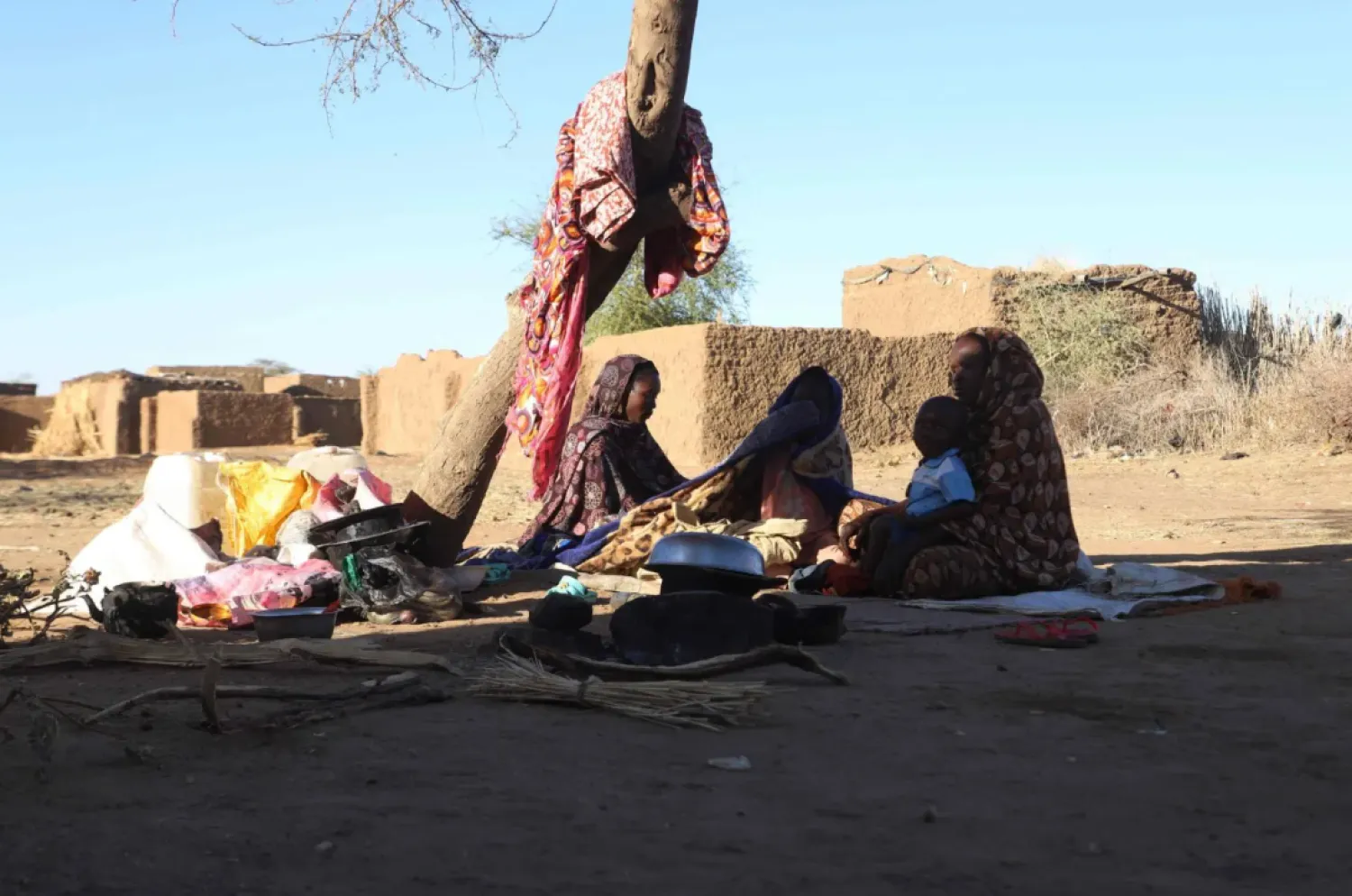
Atrocities in Sudan's El-Fasher Were 'Preventable Human Rights Catastrophe'

Sudanese displaced people who left El Fasher after its fall, sit in the shade in Tawila at the Rwanda camp reception point on December 17, 2025. (Photo by AFP)
TT

Atrocities in Sudan's El-Fasher Were 'Preventable Human Rights Catastrophe'

Sudanese displaced people who left El Fasher after its fall, sit in the shade in Tawila at the Rwanda camp reception point on December 17, 2025. (Photo by AFP)

The atrocities unleashed on El-Fasher in Sudan's Darfur region last October were a "preventable human rights catastrophe", the United Nations said Monday, warning they now risked being repeated in the neighbouring Kordofan region.


"My office sounded the alarm about the risk of mass atrocities in the besieged city of El-Fasher for more than a year ... but our warnings were ignored," UN rights chief Volker Turk told the Human Rights Council in Geneva.


He added that he was now "extremely concerned that these violations and abuses may be repeated in the Kordofan region".


Arab League Condemns Israel's Decisions to Alter Legal, Administrative Status of West Bank

A general view shows the opening session of the meeting of Arab foreign ministers at the Arab League Headquarters (Reuters)
TT

Arab League Condemns Israel's Decisions to Alter Legal, Administrative Status of West Bank

A general view shows the opening session of the meeting of Arab foreign ministers at the Arab League Headquarters (Reuters)

The General Secretariat of the Arab League strongly condemned decisions by Israeli occupation authorities to impose fundamental changes on the legal and administrative status of the occupied Palestinian territories, particularly in the West Bank, describing them as a dangerous escalation and a flagrant violation of international law, international legitimacy resolutions, and signed agreements, SPA reported.

In a statement, the Arab League said the measures include facilitating the confiscation of private Palestinian property and transferring planning and licensing authorities in the city of Hebron and the area surrounding the Ibrahimi Mosque to occupation authorities.

It warned of the serious repercussions of these actions on the rights of the Palestinian people and on Islamic and Christian holy sites.

The statement reaffirmed the Arab League’s firm support for the legitimate rights of the Palestinian people, foremost among them the establishment of their independent state on the June 4, 1967 borders, with East Jerusalem as its capital.