


Iran, Pressured by Blackouts and Pollution, Targets Bitcoin

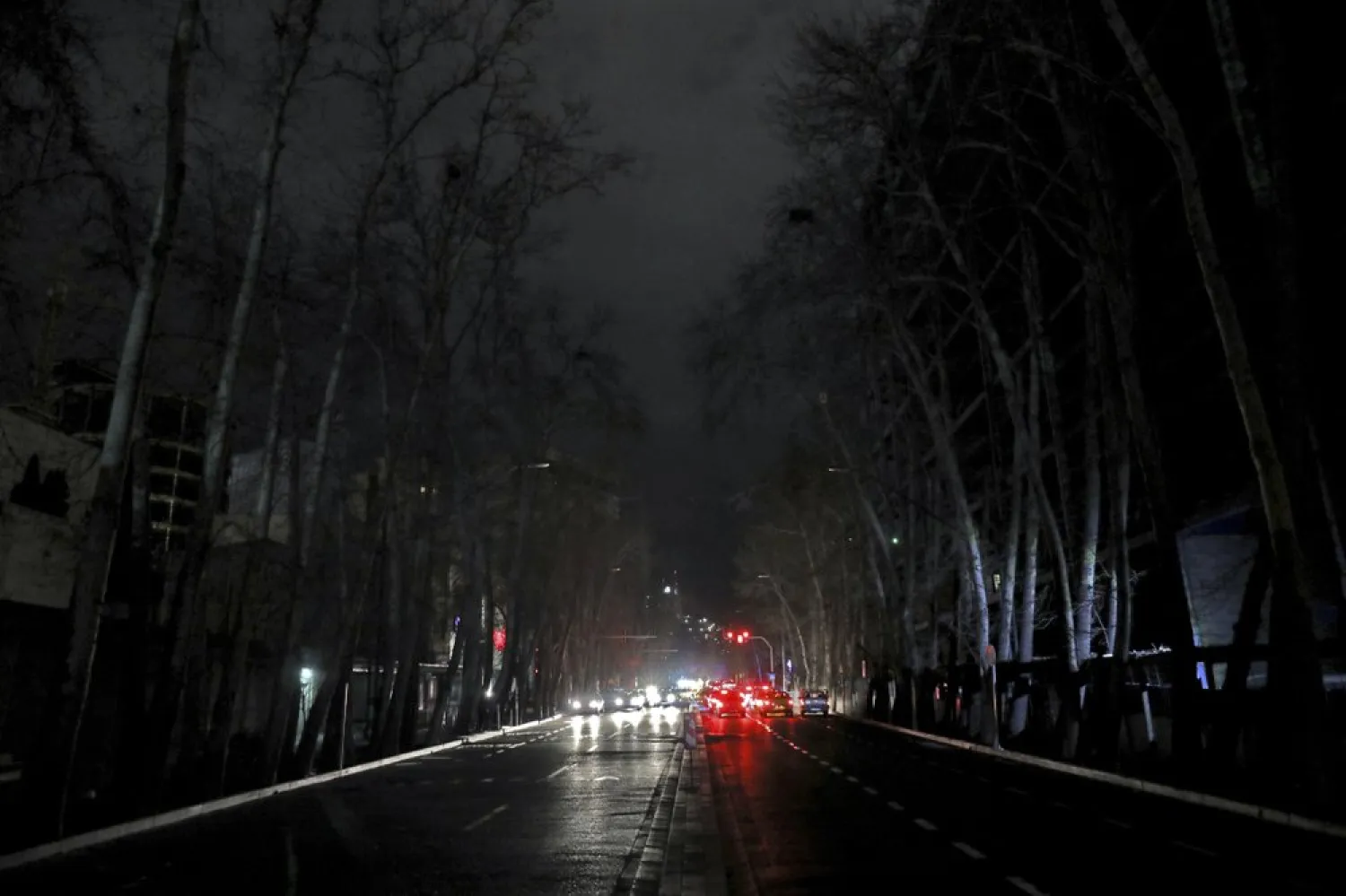
Cars drive on an unlit street during a blackout in Tehran, Iran, Wednesday, Jan 20, 2021. Speculation has gripped social media in Iran that Bitcoin is to blame for a series of recent power blackouts across the country. The government launched a major crackdown on Bitcoin processing centers which use immense amounts of electricity and are a huge burden on the power grid. (AP Photo/Ebrahim Noroozi)
TT

Iran, Pressured by Blackouts and Pollution, Targets Bitcoin

Cars drive on an unlit street during a blackout in Tehran, Iran, Wednesday, Jan 20, 2021. Speculation has gripped social media in Iran that Bitcoin is to blame for a series of recent power blackouts across the country. The government launched a major crackdown on Bitcoin processing centers which use immense amounts of electricity and are a huge burden on the power grid. (AP Photo/Ebrahim Noroozi)

Iran's capital and major cities plunged into darkness in recent weeks as rolling outages left millions without electricity for hours. Traffic lights died. Offices went dark. Online classes stopped.

With toxic smog blanketing Tehran skies and the country buckling under the pandemic and other mounting crises, social media has been rife with speculation. Soon, fingers pointed at an unlikely culprit: Bitcoin.

Within days, as frustration spread among residents, the government launched a wide-ranging crackdown on Bitcoin processing centers, which require immense amounts of electricity to power their specialized computers and to keep them cool — a burden on Iran's power grid.

Authorities shuttered 1,600 centers across the country, including, for the first time, those legally authorized to operate.

As the latest in a series of conflicting government moves, the clampdown stirred confusion in the crypto industry — and suspicion that Bitcoin had become a useful scapegoat for the nation's deeper-rooted problems.

Since former President Donald Trump unilaterally withdrew in 2018 from Tehran’s nuclear accord with world powers and re-imposed sanctions on Iran, cryptocurrency has surged in popularity in Iran.

For Iran, anonymous online transactions made in cryptocurrencies allow individuals and companies to bypass banking sanctions that have crippled the economy. Bitcoin offers an alternative to cash printed by sovereign governments and central banks — and in the case of Iran and other countries under sanctions like Venezuela, a more stable place to park money than the local currency.

“Iranians understand the value of such a borderless network much more than others because we can’t access any kind of global payment networks,” said Ziya Sadr, a Tehran-based Bitcoin expert.

“Bitcoin shines here."

On Tehran's outskirts and across Iran's south and northwest, windowless warehouses hum with heavy industrial machinery and rows of computers that crunch highly complex algorithms to verify transactions. The transactions, called blocks, are then added to a public record, known as the blockchain.

“Miners” adding a new block to the blockchain collect fees in bitcoins, a key advantage amid the country’s currency collapse.

Iran's rial, which had been trading at 32,000 to the dollar at the time of the 2015 nuclear deal, has tumbled to around 240,000 to the dollar these days.

Iran's government has sent mixed messages about Bitcoin. On one hand, it wants to capitalize on the soaring popularity of digital currency and sees value in legitimizing transactions that fly under Washington’s radar.

It authorized 24 Bitcoin processing centers that consume an estimated 300 megawatts of energy a day, attracted tech-savvy Chinese entrepreneurs to tax-free zones in the country's south and permitted imports of computers for mining.

Amir Nazemi, deputy minister of telecommunications and information, declared last week that cryptocurrency "can be helpful” as Iran struggles to cope with sanctions on its oil sector.

On the other hand, the government worries about limiting how much money is sent abroad and controlling money laundering, drug sales and internet criminal groups.

Iranian cryptocurrency miners have been known to use ransomware in sophisticated cyber attacks, such as in 2018 when two Iranian men were indicted in connection with a vast cyber assault on the city of Atlanta.

On Thursday, British cybersecurity firm Sophos reported it found evidence tying crypto-miners in Iran's southern city of Shiraz to malware that was secretly seizing control of thousands of Microsoft servers.

Iran is now going after unauthorized Bitcoin farms with frequent police raids. Those who gain authorization to process cryptocurrency are subject to electricity tariffs, which miners complain discourage investment.

“Activities in the field are not feasible because of electricity tariffs,” said Mohammad Reza Sharafi, head of the country’s Cryptocurrency Farms Association.

Despite the government giving permits to 1,000 investors, only a couple dozen server farms are active, he added, because tariffs mean Bitcoin farms pay five times as much for electricity as steel mills and other industries that consume far more power.

Now, miners say, the government’s decision to close down major Bitcoin farms operating legally seems designed to deflect concerns about the country's repeated blackouts.

As Tehran went dark last week, a video showing industrial computers whirring away at a massive Chinese cryptocurrency farm spread online like wildfire, prompting outrage about Bitcoin’s outsized thirst for electricity.

Within days, the government closed that plant despite its authorization to operate, The Associated Press reported.

“The priority is with households, commercial, hospitals and sensitive places,” said Mostfa Rajabi Mashhadi, spokesman of Iran's electricity supply department, noting that illegal farms sucked up daily some 260 megawatts of electricity.

Although Bitcoin mining strains the power grid, experts say it's not the real reason behind Iran's electricity outages and dangerous air pollution. The telecommunications ministry estimates that Bitcoin consumes less than 2% of Iran's total energy production.

“Bitcoin was an easy victim here,” said Kaveh Madani, a former deputy head of Iran’s Department of Environment, adding that “decades of mismanagement” have left a growing gap between Iran's energy supply and demand.

Bitcoin “mining's energy footprint is not insignificant but these problems are not created overnight," he said.

“They simply need one trigger to spiral out of control.”

Sanctions targeting Iran’s aging oil and gas industry have compounded the challenges, leaving Iran unable to sell its products abroad, including its low-quality, high-sulfur fuel oil known as mazut.

If the hazardous oil isn't sold or shipped it must be swiftly burned — and it is, in 20% of the country’s power plants, according to environmental official Mohammad Mehdi Mirzai.

The smoldering fuel blackens the skies, particularly when the weather cools and wind carries emissions from nearby refineries and industrial sites into Tehran.

During the power blackouts, thick layers of pollution coated mountain peaks and hovered over cities, with readings of dangerous fine particulate pollution spiking to over 200 micrograms per cubic meter, a level considered “dangerously” unhealthy.

As the government publicized its clampdown on Bitcoin farms, miners balked at all the blame over their energy guzzling. Many warned that despite its potential to become a cryptocurrency utopia, Iran would continue to fall behind.

“These moves harm the country,” said Omid Alavi, a cryptocurrency consultant.

“Many neighboring nations are attracting foreign investors.”


Trump Refuses to Apologize for Video Depicting Obama and Wife as Apes

FILE PHOTO: US President Donald Trump and first lady Melania Trump see off former US President Barack Obama and his wife Michelle Obama as they depart following Trump's inauguration at the Capitol in Washington, US January 20, 2017. REUTERS/Jonathan Ernst/File Photo
TT

Trump Refuses to Apologize for Video Depicting Obama and Wife as Apes

FILE PHOTO: US President Donald Trump and first lady Melania Trump see off former US President Barack Obama and his wife Michelle Obama as they depart following Trump's inauguration at the Capitol in Washington, US January 20, 2017. REUTERS/Jonathan Ernst/File Photo

President Donald Trump’s racist social media post featuring former President Barack Obama and his wife, Michelle Obama, as primates in a jungle was deleted Friday after a backlash from both Republicans and Democrats who criticized the video as offensive.

Trump said later Friday that he won't apologize for the post: “I didn't make a mistake,” he said.

The Republican president’s Thursday night post was blamed on a staffer after widespread backlash, from civil rights leaders to veteran Republican senators, for its treatment of the nation’s first Black president and first lady. A rare admission of a misstep by the White House, the deletion came hours after press secretary Karoline Leavitt dismissed “fake outrage” over the post. After calls for its removal — including by Republicans — the White House said a staffer had posted the video erroneously.

The post was part of a flurry of overnight activity on Trump's Truth Social account that amplified his false claims that the 2020 election was stolen from him, despite courts around the country and Trump's first-term attorney general finding no evidence of systemic fraud.

Trump has a record of intensely personal criticism of the Obamas and of using incendiary, sometimes racist, rhetoric — from feeding the lie that Obama was not a native-born US citizen to crude generalizations about majority-Black countries.

The post came in the first week of Black History Month and days after a Trump proclamation cited “the contributions of black Americans to our national greatness” and “the American principles of liberty, justice, and equality.”

An Obama spokeswoman said the former president, a Democrat, had no response.

‘An internet meme’

Nearly all of the 62-second clip appears to be from a conservative video alleging deliberate tampering with voting machines in battleground states as 2020 votes were tallied. At the 60-second mark is a quick scene of two jungle primates, with the Obamas’ smiling faces imposed on them.

Those frames originated from a separate video, previously circulated by an influential conservative meme maker. It shows Trump as “King of the Jungle” and depicts Democratic leaders as animals, including Joe Biden, who is white, as a jungle primate eating a banana.

“This is from an internet meme video depicting President Trump as the King of the Jungle and Democrats as characters from the Lion King,” Leavitt said by text.

Disney's 1994 feature film that Leavitt referenced is set on the savannah, not in the jungle, and it does not include great apes.

“Please stop the fake outrage and report on something today that actually matters to the American public,” Leavitt added.

By noon, the post had been taken down, with responsibility placed on a Trump subordinate.

Trump, answering questions from reporters accompanying him Friday night aboard Air Force One, said the video was about fraudulent elections and that he liked what he saw.

“I liked the beginning. I saw it and just passed it on, and I guess probably nobody reviewed the end of it,” he said.

Asked if he condemned the video's racism, Trump said, “Of course I do.”

The White House explanation raises questions about control of Trump’s social media account, which he's used to levy import taxes, threaten military action, make other announcements and intimidate political rivals. The president often signs his name or initials after policy posts.

The White House did not immediately respond to an inquiry about how posts are vetted and when the public can know when Trump himself is posting.

Mark Burns, a pastor and a prominent Trump supporter who is Black, said Friday on X that he'd spoken “directly” with Trump and that he recommended to the president that he fire the staffer who posted the video and publicly condemn what happened.

“He knows this is wrong, offensive, and unacceptable,” Burns posted.

Congressional Black Caucus Chairwoman Yvette Clarke, D-N.Y., told The Associated Press she does “not buy the White House's commentary.”

Condemnation across the political spectrum Trump and White House social media accounts frequently repost memes and artificial intelligence-generated videos. As Leavitt did Friday, Trump allies typically cast them as humorous.

This time, condemnations flowed from across the spectrum — along with demands for an apology that doesn't appear to be coming.


Clintons Call for Their Epstein Testimony to Be Public

Images of former US President Bill Clinton are on display as Chairman of the House Oversight Committee James Comer (R-KY) speaks during a meeting to vote on whether to hold Clinton and former Secretary of State Hillary Clinton in contempt of Congress for defying subpoenas to testify in the panel's investigation of the late convicted offender Jeffrey Epstein, on Capitol Hill in Washington, D.C., US, January 21, 2026. REUTERS/Kevin Lamarque
TT

Clintons Call for Their Epstein Testimony to Be Public

Images of former US President Bill Clinton are on display as Chairman of the House Oversight Committee James Comer (R-KY) speaks during a meeting to vote on whether to hold Clinton and former Secretary of State Hillary Clinton in contempt of Congress for defying subpoenas to testify in the panel's investigation of the late convicted offender Jeffrey Epstein, on Capitol Hill in Washington, D.C., US, January 21, 2026. REUTERS/Kevin Lamarque

Former US president Bill Clinton and his wife Hillary are calling for their congressional testimony on ties to convicted sex trafficker Jeffrey Epstein to be held publicly, to prevent Republicans from politicizing the issue.

Both Clintons had been ordered to give closed-door depositions before the House Oversight Committee, which is probing the deceased financier's connections to powerful figures and how information about his crimes was handled, said AFP.

Democrats say the probe is being weaponized to attack political opponents of President Donald Trump -- himself a longtime Epstein associate who has not been called to testify -- rather than to conduct legitimate oversight.

House Republicans had previously threatened a contempt vote if the Democratic power couple did not show up to testify, which they have since agreed to do.

But holding the deposition behind closed doors, Bill Clinton said Friday, would be akin to being tried at a "kangaroo court."

"Let's stop the games & do this the right way: in a public hearing," the former Democratic president said on X.

Hillary Clinton, former secretary of state, said the couple had already told the Republican-led Oversight Committee "what we know."

"If you want this fight...let's have it in public," she said Thursday.

The Justice Department last week released the latest cache of so-called Epstein files -- more than three million documents, photos and videos related to its investigation into Epstein, who died from what was determined to be suicide while in custody in 2019.

Bill Clinton features regularly in the files, but no evidence has come to light implicating either Clinton in criminal activity.

The former president has acknowledged flying on Epstein's plane in the early 2000s for Clinton Foundation-related humanitarian work, but said he never visited Epstein's private island.

Hillary Clinton, who ran against Trump for president in 2016, said she had no meaningful interactions with Epstein, never flew on his plane and never visited his island.


Two Airports in Poland Closed Due to Russian Strikes on Ukraine

Lublin Airport is unavailable due to military activity involving NATO aircraft (Reuters)
TT

Two Airports in Poland Closed Due to Russian Strikes on Ukraine

Lublin Airport is unavailable due to military activity involving NATO aircraft (Reuters)

Two airports in southeastern Poland were suspended from operations as a precaution due to Russian strikes on nearby Ukraine territory, Polish authorities said on Saturday.

"In connection with the need to ensure the possibility of the free operation of military aviation, the airports in Rzeszow and Lublin ‌have temporarily ‌suspended flight operations," ‌Polish Air ⁠Navigation Services Agency ‌posted on X.

Both cities are close to the country's border with Ukraine, with Rzeszow being NATO's main hub for arms supplies to Ukraine, Reuters said.

Military aviation had begun operating in Polish airspace due to Russian ⁠strikes on Ukraine, the Operational Command of ‌the Polish Armed Forces said on ‍X.

"These actions are ‍of a preventive nature and ‍are aimed at securing and protecting the airspace, particularly in areas adjacent to the threatened regions," the army said.

Flight tracking service FlightRadar24 posted on X that the closure involved NATO aircraft operating in the area.

The ⁠US Federal Aviation Administration said in a notice to airmen that both airports were inaccessible due to the military activity related to ensuring state security.

Last month, Rzeszow and Lublin suspended operations for a time, but the authorities said then that the military aviation operations were routine and there had been no threat to ‌Polish airspace.
