


New Book Sees a 'New Possible' Emerging from 2020's Tumult

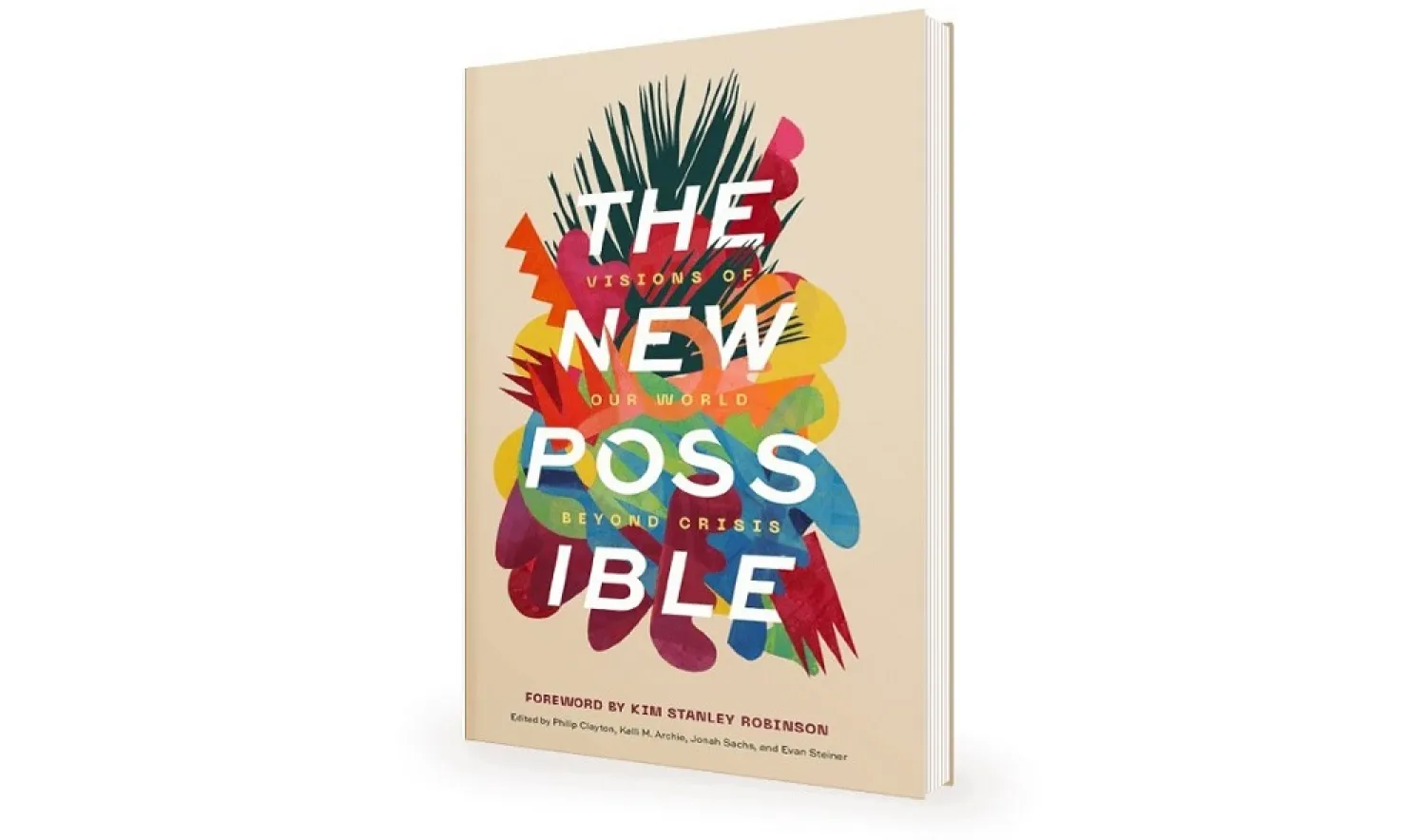
This undated image provided by Wipf and Stock Publishers shows the book cover of "The New Possible". (Wipf and Stock Publishers via AP)
TT

New Book Sees a 'New Possible' Emerging from 2020's Tumult

This undated image provided by Wipf and Stock Publishers shows the book cover of "The New Possible". (Wipf and Stock Publishers via AP)

In pop culture, 2020 has been understandably reviled as the “hell year.” It tormented us with a lethal pandemic spiraling out of control, thousands of shuttered businesses, violent protests over racial injustice, raging wildfires and political extremism and lies that underpinned January's harrowing coup attempt at the US Capitol.

But what if all that tumult actually laid the foundation for societal revival? That's the premise offered by an eclectic group of writers, academics, scientists, environmentalists, and technology engineers in “The New Possible,” a collection of essays that explore what and how the world might rebuild from the rubble of the past year.

The group behind the book doesn't lack for ambition. People from science fiction novelist Kim Stanley Robinson to Buddhist monk Jack Kornfield suggest ways to reshape technology, the economy, the environment, the food supply, government and community in hopes that people can eventually look back at 2020 as a reawakening and not a death rattle.

“People can tell our systems are broken, and not just in a subtle way, not just like we need to tweak a few things or throw a few bad apples out,” said Justin Rosenstein, a former Google and Facebook engineer who contributed an essay on building a “democratic economy.” “The rules of the system are rigged against us. They are not designed to serve the interests of humanity, they are not designed to serve the interests of nature.”

Rosenstein was one of the driving forces behind the book, which was released last week. Some critics may see him as part of the problem, given that he invented the Facebook “Like” button that helped propel the success of a social network that has become a massive funnel of misinformation that has become a source of consternation and regret for him and other one-time Facebook backers like investor Roger McNamee.

“It is very tempting to hate the players rather than look at the game and realize it’s the problem,” Rosenstein said. “We have new technology that can enable us to harness our collective intelligence in ways that has never been possible before.”

The book is backed by One Project, a nonprofit group Rosenstein started as part of his effort to improve the way we live and work. He also was a protagonist in “The Social Dilemma,” a Netflix documentary about the dark side of social media released four months before the Jan. 6 insurrection at the Capitol.

Another “Social Dilemma” standout, former Google engineer Tristan Harris, founded the Center for Humane Technology in 2018r to nudge the industry away from building services and devices designed to attract and hold onto our attention. His considers his essay a kind of sequel to the Netflix documentary and its warning about how Facebook and Twitter can tear people apart instead of bringing them together.

“We have been screaming at the top of our lungs about this train running off the cliff for a long time and then it culminated in Jan. 6,” Harris told the AP, referring to the insurrection at the US Capitol incited by former President Donald Trump. “We have trapped the entire global psyche inside this Vegas-style dopamine machine that has become the host of our democratic conversations.”

“The New Possible” aims to spur change through 28 essays divided into 10 categories — Earth, Us, Change, Wealth, Work, Food, Education, Love, Community and Tomorrow. The contributors the gamut from best-selling author Michael Pollan to high school teen activist Anisa Nanavati.

The contributors quickly embraced idea last spring, said Philip Clayton, one of the book's editors and president of the Institute for Ecological Civilization. In the eight months since work on the essays began, Clayton believes the sequence of events that bookended the Nov. 3 election have turned “The New Possible” into a Kairos book, referring to the ancient Greek word for an opportune time in history.

“This is the one of the few moments in life,” Clayton said, “when the world points to you and says, ‘Are you going to make that inner change or are you not going to transform?'“


Riyadh Art Unveils Tuwaiq Sculpture 2026

The exhibition site on Tahlia Street was strategically chosen for its historical legacy of innovation to provide a conceptual framework for the works. SPA
TT

Riyadh Art Unveils Tuwaiq Sculpture 2026

The exhibition site on Tahlia Street was strategically chosen for its historical legacy of innovation to provide a conceptual framework for the works. SPA

The Royal Commission for Riyadh City, via its Riyadh Art program, has launched the Tuwaiq Sculpture 2026 exhibition on Prince Mohammed bin Abdulaziz Street (Tahlia).

Open to the public from February 9 to 22, the exhibition showcases 25 new artworks themed "Traces of What Will Be," exploring transformation and urban renewal.

The sculptures were crafted during a live phase from January 10 to February 5, during which artists from 18 countries used local stone and recycled metals, allowing the public to witness the creative process firsthand.

The exhibition site on Tahlia Street was strategically chosen for its historical legacy of innovation to provide a conceptual framework for the works.

Overseen by a panel of international experts, the exhibition serves as an interactive cultural platform featuring workshops and panel discussions to foster community engagement.

All 2026 pieces will join Riyadh Art's permanent collection, which has hosted over 170 artists since 2019 and already installed more than 60 sculptures across the city to integrate contemporary art into Riyadh's urban fabric.


Syrian Culture Minister Applauds Saudi Pavilion at Damascus Book Fair

The 2026 Damascus International Book Fair is held from February 6 to 16 - SPA
TT

Syrian Culture Minister Applauds Saudi Pavilion at Damascus Book Fair

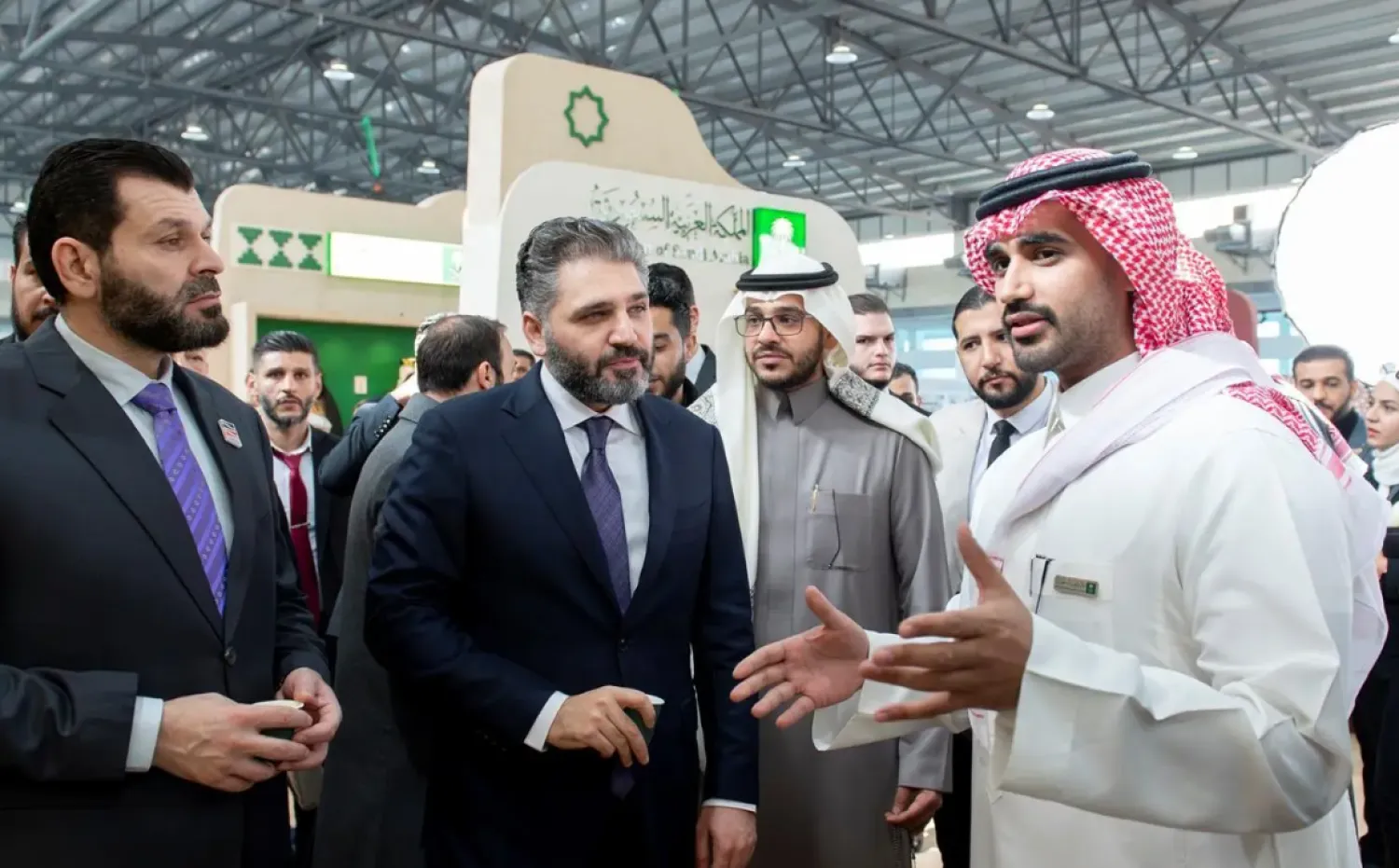
The 2026 Damascus International Book Fair is held from February 6 to 16 - SPA

Syrian Minister of Culture Mohammed Yassin Saleh visited the Kingdom’s pavilion at the 2026 Damascus International Book Fair, held from February 6 to 16, where the Kingdom is serving as the Guest of Honor.

He commended the efforts of the Literature, Publishing and Translation Commission in showcasing the rich diversity of the Saudi cultural and literary scene. The pavilion features exhibitions of manuscripts, a Saudi fashion corner, and archaeological replicas, SPA reported.

The minister reviewed the commission's Tarjim translation initiative and Saudi literature comics.

This participation at the 2026 Damascus International Book Fair showcases Saudi creativity and fosters cultural dialogue, supporting Saudi Vision 2030’s goals of knowledge exchange and cultural leadership.


Saudi Arabia, Syria Underline Depth of their Cultural Ties

Syrian President al-Sharaa receives the Saudi minister of culture and the accompanying delegation at the Conference Palace in Damascus on Thursday. (SPA)
TT

Saudi Arabia, Syria Underline Depth of their Cultural Ties

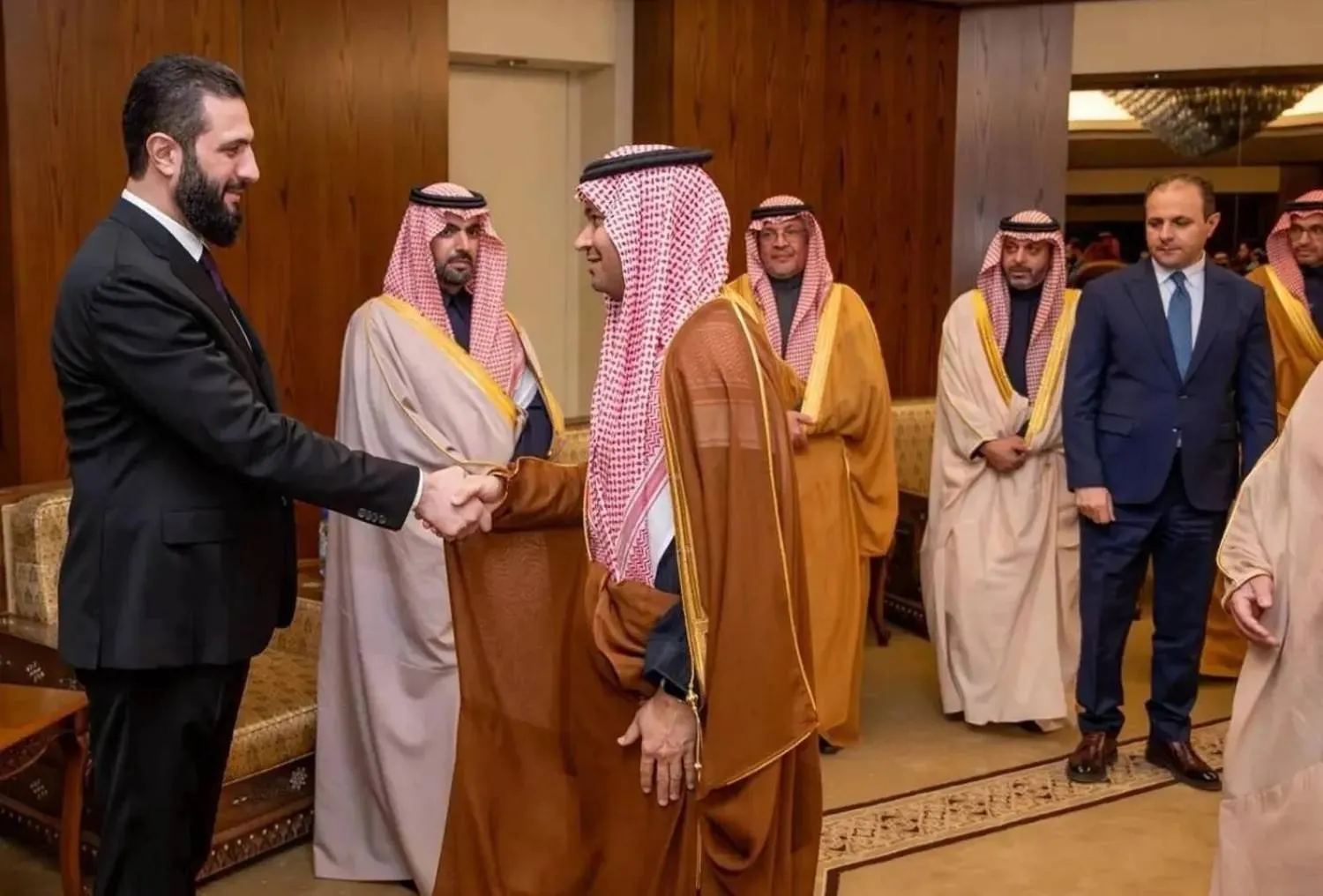
Syrian President al-Sharaa receives the Saudi minister of culture and the accompanying delegation at the Conference Palace in Damascus on Thursday. (SPA)

Saudi Arabia and Syria underlined the strength of their cultural relationship during high-level meetings held in Damascus on Thursday, on the sidelines of the opening of the Damascus International Book Fair 2026, where the Kingdom is participating as guest of honor.

Syrian President Ahmad al-Sharaa received Saudi Minister of Culture Prince Badr bin Abdullah bin Farhan at the Conference Palace in the capital.

Earlier the same day, Prince Badr met with his Syrian counterpart, Minister of Culture Mohammad Yassin Saleh, during an official visit to attend the fair. T

he Saudi minister congratulated Syria on hosting the exhibition and expressed his wishes for continued prosperity, progress, and stability for the Syrian government and people.

Both meetings highlighted the depth of cultural relations between the two countries, the importance of expanding joint cultural cooperation across various fields, and the alignment of positions on issues of mutual interest in a way that serves both nations.

The Saudi delegation included senior officials and advisers, among them representatives from the Royal Court, the Ministry of Culture, and the King Abdulaziz Public Library, reflecting broad institutional engagement in the visit.

In the evening, Prince Badr attended the opening ceremony of the fair’s special session, held under the patronage and in the presence of al-Sharaa. The event drew wide official and cultural participation, including Arab ministers, political and intellectual figures, and a distinguished group of writers and cultural figures.

In a post on the X platform, Prince Badr thanked “our brothers in Syria for their generous hospitality and their efforts in organizing the Damascus International Book Fair.”

The minister also inaugurated the Kingdom’s pavilion at the fair in the presence of the Syrian minister of culture and the Qatari minister of culture.

Saudi Arabia’s guest-of-honor participation continues until Feb. 16 and reflects its growing prominence and leadership in the Arab and global cultural landscape.

This participation aligns with Saudi Vision 2030, which places culture at the heart of national development, viewing it as a space for dialogue, a bridge for civilizational communication, and a tool for strengthening ties among Arab peoples.

The Saudi Literature, Publishing and Translation Commission is leading the Kingdom’s participation, highlighting the development of the cultural sector and reaffirming the central role of books as carriers of knowledge and awareness.

The Saudi pavilion boasts a comprehensive cultural program featuring intellectual seminars, poetry evenings, a manuscript exhibition, traditional Saudi fashion displays, hospitality corners, archaeological replicas, and performing arts that express the depth of the Kingdom’s cultural heritage.

On the sidelines of the visit, Prince Badr, accompanied by Minister Saleh, toured the National Museum of Damascus, which houses rare artifacts spanning prehistoric eras, ancient Syrian civilizations, classical and Islamic periods, as well as traditional and modern art.