


Iran Deepens Breach of Nuclear Deal at Underground Enrichment Site

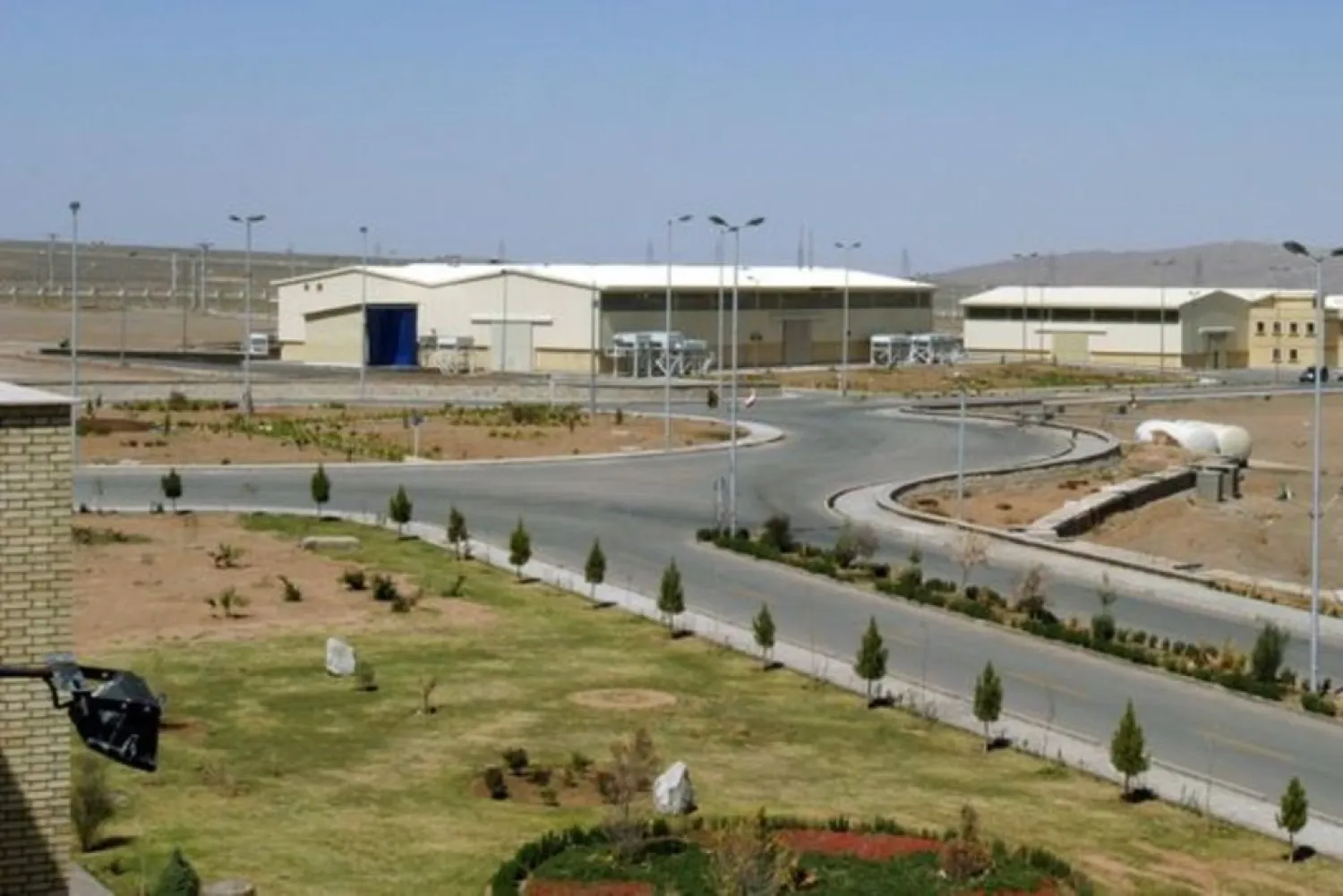
A view of the Natanz uranium enrichment facility 250 km (155 miles) south of the Iranian capital Tehran, March 30, 2005. (Reuters)
TT

Iran Deepens Breach of Nuclear Deal at Underground Enrichment Site

A view of the Natanz uranium enrichment facility 250 km (155 miles) south of the Iranian capital Tehran, March 30, 2005. (Reuters)

Iran has deepened a key breach of its 2015 nuclear deal, enriching uranium with a larger number of advanced centrifuge machines in an underground plant as it faces off with the new US administration on salvaging the accord.

Tehran has recently accelerated its breaches of the deal, raising pressure on US President Joe Biden as both sides say they are willing to come back into compliance with the badly eroded agreement if the other side moves first.

Iran began its breaches in 2019 in response to Washington’s withdrawal in 2018 under then-President Donald Trump and the reimposition of US economic sanctions against Tehran that were lifted under the deal.

The accord says Iran can refine uranium only at its main enrichment site - an underground plant at Natanz - with first-generation IR-1 centrifuges. Last year Iran began enriching there with a cascade, or cluster, of much more efficient IR-2m machines and in December said it would install three more.

“Iran has completed the installation of one of these three cascades, containing 174 IR-2m centrifuges, and, on 30 January 2021, Iran began feeding the cascade with UF6,” the International Atomic Energy Agency said in a report obtained by Reuters on Tuesday, referring to uranium hexafluoride feedstock.

The IAEA later confirmed that Tehran had started enriching with the second cascade.

Tehran is also pressing ahead with the installation of more advanced centrifuges, the report indicated. Of the remaining two cascades of IR-2m machines, installation of one had begun while the other’s installation was “nearing completion”, it said.

Iran’s ambassador to the IAEA, Kazem Gharibabadi, said on Twitter Tehran had also started installing IR-6 centrifuges at Fordow, a site dug into a mountain where Iran has begun enriching uranium to the 20% purity it last achieved before the 2015 deal. The IAEA report made no mention of that.

Earlier on Tuesday Israel’s energy minister said it would now take Iran about six months to produce enough fissile material for one nuclear weapon, a timeline almost twice as long as that anticipated by a senior Biden administration official.

Iran denies any intent to weaponize enrichment. The nuclear deal sets a limit of 3.67% enrichment purity, suitable for producing civilian nuclear energy and far below the 90% that is weapons-grade.



Iran Offers Clemency to over 2,000 Convicts, Excludes Protest-related Cases

FILE - In this photo obtained by The Associated Press, Iranians attend an anti-government protest in Tehran, Iran, Jan. 9, 2026. (UGC via AP, File)
TT

Iran Offers Clemency to over 2,000 Convicts, Excludes Protest-related Cases

FILE - In this photo obtained by The Associated Press, Iranians attend an anti-government protest in Tehran, Iran, Jan. 9, 2026. (UGC via AP, File)

Iran's supreme leader Ali Khamenei granted pardons or reduced sentences on Tuesday to more than 2,000 people, the judiciary said, adding that none of those involved in recent protests were on the list.

The decision comes ahead of the anniversary of the Iranian revolution, which along with other important occasions in Iran has traditionally seen the supreme leader sign off on similar pardons over the years.

"The leader of the Islamic revolution agreed to the request by the head of the judiciary to pardon or reduce or commute the sentences of 2,108 convicts," the judiciary's Mizan Online website said.

The list however does not include "the defendants and convicts from the recent riots", it said, quoting the judiciary's deputy chief Ali Mozaffari.

Protests against the rising cost of living broke out in Iran in late December before morphing into nationwide anti-government demonstrations that peaked on January 8 and 9.

Tehran has acknowledged that more than 3,000 people died during the unrest, including members of the security forces and innocent bystanders, and attributed the violence to "terrorist acts".

Iranian authorities said the protests began as peaceful demonstrations before turning into "foreign-instigated riots" involving killings and vandalism.

International organizations have put the toll far higher.

The US-based Human Rights Activists News Agency (HRANA) says it has verified 6,964 deaths, mostly protesters.


Macron Says Wants ‘European Approach’ in Dialogue with Putin

Russian President Vladimir Putin attends a meeting with Moscow Mayor Sergei Sobyanin at the Kremlin in Moscow, Russia February 9, 2026. (Sputnik/Vyacheslav Prokofyev/Pool via Reuters)
TT

Macron Says Wants ‘European Approach’ in Dialogue with Putin

Russian President Vladimir Putin attends a meeting with Moscow Mayor Sergei Sobyanin at the Kremlin in Moscow, Russia February 9, 2026. (Sputnik/Vyacheslav Prokofyev/Pool via Reuters)

French President Emmanuel Macron has said he wants to include European partners in a resumption of dialogue with Russian leader Vladimir Putin nearly four years after Moscow's invasion of Ukraine.

He spoke after dispatching a top adviser to Moscow last week, in the first such meeting since Russia launched its full-scale invasion of Ukraine in February 2022.

"What did I gain? Confirmation that Russia does not want peace right now," he said in an interview with several European newspapers including Germany's Suddeutsche Zeitung.

"But above all, we have rebuilt those channels of discussion at a technical level," he said in the interview released on Tuesday.

"My wish is to share this with my European partners and to have a well-organized European approach," he added.

Dialogue with Putin should take place without "too many interlocutors, with a given mandate", he said.

Macron said last year he believed Europe should reach back out to Putin, rather than leaving the United States alone to take the lead in negotiations to end Russia's war against Ukraine.

"Whether we like Russia or not, Russia will still be there tomorrow," Suddeutsche Zeitung quoted the French president as saying.

"It is therefore important that we structure the resumption of a European discussion with the Russians, without naivety, without putting pressure on the Ukrainians -- but also so as not to depend on third parties in this discussion."

After Macron sent his adviser Emmanuel Bonne to the Kremlin last week, Russia's Foreign Minister Sergei Lavrov on Thursday said Putin was ready to receive the French leader's call.

"If you want to call and discuss something seriously, then call," he said in an interview to state-run broadcaster RT.

The two presidents last spoke in July, in their first known phone talks in over two-and-a-half years.

The French leader tried in a series of phone calls in 2022 to warn Putin against invading Ukraine and travelled to Moscow early that year.

He kept up phone contact with Putin after the invasion but talks had ceased after a September 2022 phone call.


Seven Killed in Gold Mine Accident in Eastern China, State Media CCTV Reports

Gold mine in China (archive-Reuters)
TT

Seven Killed in Gold Mine Accident in Eastern China, State Media CCTV Reports

Gold mine in China (archive-Reuters)

Seven people were killed in a gold mine accident in China's eastern Shandong province, and authorities were investigating, state-run CCTV reported, sending shares of the mine owner, Zhaojin Mining Industry, down 6% on Tuesday, Reuters said.

The accident occurred on Saturday when a cage fell ‌down a mine ‌shaft, CCTV reported ‌late ⁠on Monday ‌night.

The emergency management and public security departments were investigating the cause of the accident, and whether there had been an attempt to cover it up, the ⁠report added.

The mine is owned by ‌leading gold producer Zhaojin ‍Mining Industry, according ‍to the Qichacha company registry. Shares ‍of the company were down 6.01%, as of 0525 GMT. A person who answered Zhaojin's main phone line told Reuters that the matter was under investigation and ⁠declined to answer further questions.

China's emergency management ministry on Monday held a meeting on preventing accidents during the upcoming Lunar New Year holiday. It announced inspections of mines, chemical companies, and other hazardous operations. Also on Saturday, an explosion at a biotech company ‌in northern China killed eight people.