Russia Expels EU Diplomats, Ignores Bloc's Call to Free Navalny

Russian opposition activist Alexei Navalny at a court hearing Friday in Moscow.(Babuskinsky District Court via AP)
TT

Russia Expels EU Diplomats, Ignores Bloc's Call to Free Navalny

Russian opposition activist Alexei Navalny at a court hearing Friday in Moscow.(Babuskinsky District Court via AP)

Russia on Friday expelled diplomats from three EU member states it accused of attending illegal protests in support of jailed Kremlin critic Alexei Navalny, and pointedly ignored a public call by the EU's top diplomat to free the opposition politician.

The expulsions, which affected diplomats from Germany, Poland and Sweden, appear to have wrecked an EU attempt to re-engage with Moscow being spearheaded by Josep Borrell, the EU's foreign policy chief, who was in Russia for talks on Friday.

German Chancellor Angela Merkel called the move unjustified and a further step away from the rule of law in Russia, while Poland summoned the Russian ambassador over the decision.

Navalny, President Vladimir Putin's most prominent critic, was jailed this week for almost three years for parole violations he calls trumped up, a move the West condemned.

Russia announced the expulsions after Borrell used a joint news conference with Foreign Minister Sergei Lavrov to call for Russia to free Navalny immediately.

Lavrov did not respond directly to the appeal but complained about what he described as human rights abuses in the EU and called the 27-nation bloc an unreliable partner.

Borrell had earlier said that the Navalny case was a low point for ties between Russia and the EU. He said there was not yet a formal proposal for new EU sanctions on Russia but that the 27-member bloc would have a discussion next month about relations with Moscow.

"I have conveyed to Minister Lavrov our deep concern and our appeal for his (Navalny's) release and for the launch of an investigation over his poisoning," Borrell told the news conference. "Over the last years our relationship has been marked by fundamental differences and a lack of trust."

Navalny was arrested on Jan. 17 on his return from treatment in Germany, where he was flown in August after falling ill from what German officials concluded was poisoning with a military-grade nerve agent. The Kremlin has questioned whether Navalny was poisoned and denied blame for his illness.

Lavrov said it was up to Brussels if it wanted to impose sanctions on Russia, but that the EU was behaving more and more like Washington in its use of unilateral sanctions.

"We share the view that a further deterioration of ties is fraught with negative and highly unpredictable consequences," Lavrov said.

A few hours after the talks, Russia announced the expulsion of the diplomats, saying they had taken part in illegal protests last month against Navalny's jailing. The foreign ministry said Moscow considered their actions unacceptable.

Despite close trade ties and energy interdependence, Russia's political relations with the European Union soured after Moscow annexed Crimea from Ukraine in 2014.

Navalny was back in court on Friday for another trial, accused of slandering a World War Two veteran who took part in a promotional video backing changes last year that let Putin run for up to two more terms. Navalny at the time described those in the video as traitors and lackeys. He denies the slander charge.

In comments by video link at the trial, the veteran called on Navalny to apologize publicly.

"This case in general was intended as a kind of PR process because the Kremlin needs the headlines: Navalny slandered a veteran," Navalny told the court.

The next hearing in the case is on Feb. 12.


Netanyahu Skeptical of an Iran Breakthrough

Israel's Prime Minister Benjamin Netanyahu leaves after a meeting with US President Donald Trump at the White House February 11, 2026, in Washington, DC. (Photo by Brendan Smialowski / AFP)
TT

Netanyahu Skeptical of an Iran Breakthrough

Israel's Prime Minister Benjamin Netanyahu leaves after a meeting with US President Donald Trump at the White House February 11, 2026, in Washington, DC. (Photo by Brendan Smialowski / AFP)

Israeli Prime Minister Benjamin Netanyahu said he was skeptical that US nuclear talks with Iran will lead to a breakthrough but described his meeting with US President Donald Trump at the White House as “excellent.”

Speaking to reporters Thursday in Washington before boarding a plane to return to Israel, Netanyahu said Trump’s terms and Iran’s “understanding that they made a mistake the last time when they did not reach an agreement, may lead them to agree to conditions that will enable a good agreement to be reached.”

While he said he did “not hide my general skepticism” about any deal, he stressed that any agreement must include concessions about Iran’s ballistic missiles program and support for militant proxies.

He added that the conversation Wednesday with Trump, which lasted more than two hours, included a number of other subjects, including Gaza and regional developments but focused on the negotiations with Iran.


German Court Rejects Palestinian's Claim over Weapons Exports

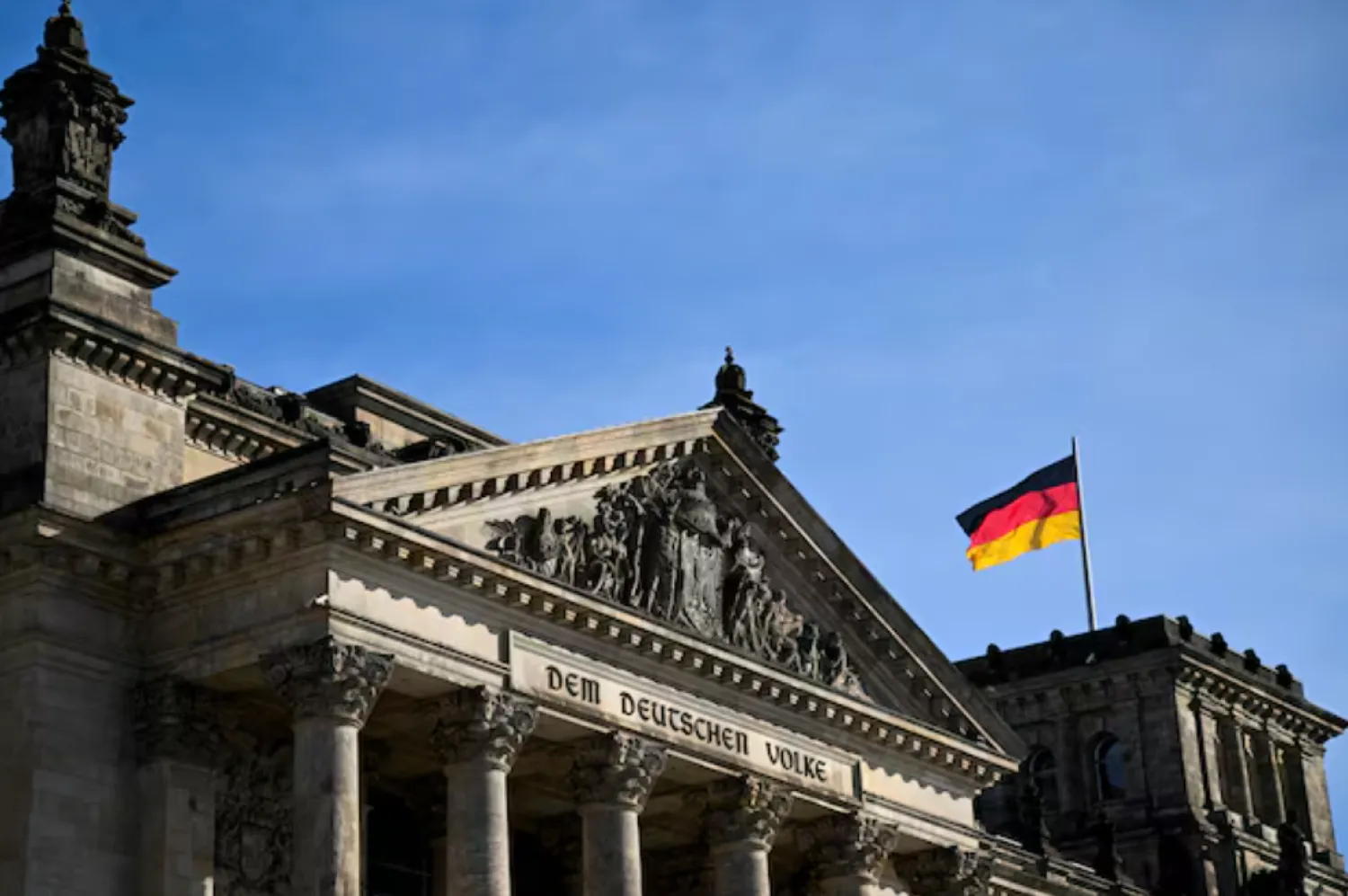
A view shows the front of the Reichstag building, the seat of the German parliament, the Bundestag, in Berlin, Germany March 5, 2025. REUTERS/Annegret Hilse/File Photo
TT

German Court Rejects Palestinian's Claim over Weapons Exports

A view shows the front of the Reichstag building, the seat of the German parliament, the Bundestag, in Berlin, Germany March 5, 2025. REUTERS/Annegret Hilse/File Photo

Germany's highest court on Thursday threw out a case brought by a Palestinian civilian from Gaza seeking to sue the German government over its weapons exports to Israel.

The complainant, supported by the European Center for Constitutional and Human Rights (ECCHR), had been seeking to challenge export licences for German parts used in Israeli tanks deployed in Gaza.

After his case was rejected by lower courts in 2024 and 2025, he had appealed to the Federal Constitutional Court.

But the court in Karlsruhe dismissed the case, stating that "the complainant has not sufficiently substantiated that the specialized courts misjudged or arbitrarily denied a possible duty to protect him", AFP reported.

While Germany is obliged to protect human rights and respect international humanitarian law, this does not mean the state is necessarily obliged to take specific action on behalf of individuals, the court said.

"It is fundamentally the responsibility of the state authorities themselves to decide how they fulfil their general duty of protection," it added.

The ECCHR called the decision "a setback for civilian access to justice".

"The court acknowledges the duty to protect but only in the abstract and refuses to ensure its practical enforcement," said Alexander Schwarz, co-director of the NGO's International Crimes and Legal Accountability program.

"For people whose lives are endangered by the consequences of German arms exports, access to justice remains effectively closed," he said.

The ECCHR had been hoping for a successful appeal after the Constitutional Court ruled last year that Germany had "a general duty to protect fundamental human rights and the core norms of international humanitarian law, even in cases involving foreign countries".

In that case, two Yemenis had been seeking to sue Berlin over the role of the US Ramstein airbase in a 2012 drone attack.

The complainant was one of five Palestinians who initially brought their case against the German government in 2024.


2 Israelis Charged with Using Classified Military Information to Place Bets

The Israeli Iron Dome air defense system intercepts missiles during an Iranian attack on Tel Aviv, Israel, June 18, 2025. (AP Photo/Leo Correa, File)
TT

2 Israelis Charged with Using Classified Military Information to Place Bets

The Israeli Iron Dome air defense system intercepts missiles during an Iranian attack on Tel Aviv, Israel, June 18, 2025. (AP Photo/Leo Correa, File)

Two Israelis have been charged with using classified military information to place bets on how future events will unfold, Israeli authorities said Thursday, accusing the individuals of “serious security offenses.”

A joint statement by the Israeli Ministry of Defense, domestic security service Shin Bet and police said that a civilian and a reservist are suspected of placing bets on the US-based prediction market Polymarket on future military operations based on information that the reservist had access to, The AP news reported.

Israel’s Attorney General’s Office decided to prosecute the two individuals following a joint investigation by police, military intelligence and other security agencies that resulted in several arrests. The two face charges including bribery and obstruction of justice.

Authorities offered no details on the identity of the two individuals or the reservist's rank or position in the Israeli military but warned that such actions posed a “real security risk” for the military and the Israeli state.

Israel’s public broadcaster Kan had reported earlier that the bets were placed in June ahead of Israel’s war with Iran and that the winnings were roughly $150,000.

Israel's military and security services “view the acts attributed to the defendants very seriously and will act resolutely to thwart and bring to justice any person involved in the activity of using classified information illegally,” the statement said.

The accused will remain in custody until the end of legal proceedings against them, the Prosecutor's Office said.

Prediction markets are comprised of typically yes-or-no questions called event contracts, with the prices connected to what traders are willing to pay, which theoretically indicates the perceived probability of an event occurring.

Their use has skyrocketed in recent years, but despite some eye-catching windfalls, traders still lose money everyday. In the US, the trades are categorized differently than traditional forms of gambling, raising questions about transparency and risk.