

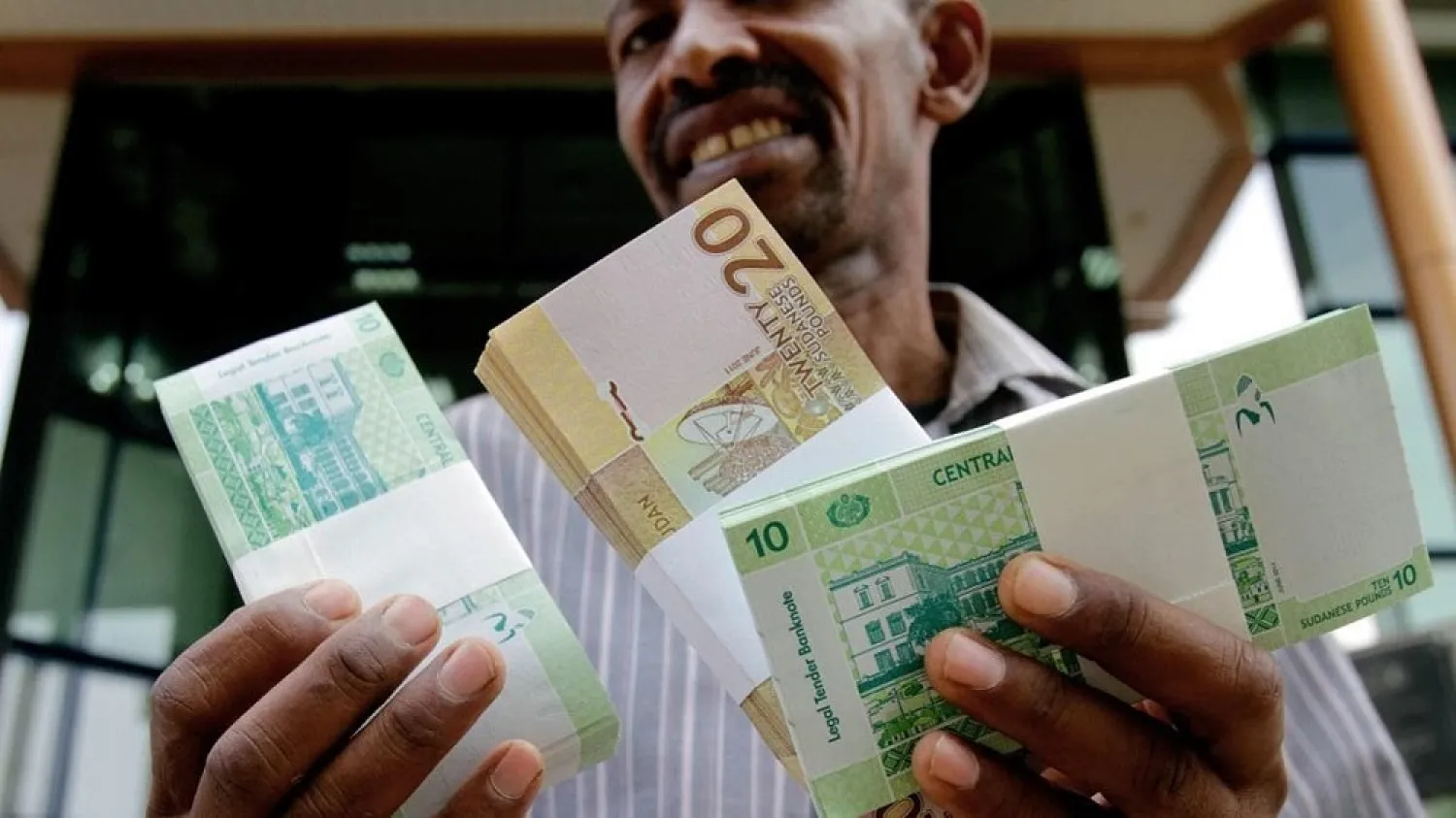

Sudan Floats Currency, Part of Measures to Overhaul Economy

A Sudanese man shows freshly-minted notes of the new Sudanese pound in Khartoum. (AFP file photo)
TT

Sudan Floats Currency, Part of Measures to Overhaul Economy

A Sudanese man shows freshly-minted notes of the new Sudanese pound in Khartoum. (AFP file photo)

Sudan took the unprecedented but expected step of floating its currency Sunday, meeting a major demand by international financial institutions to help transitional authorities overhaul the battered economy.

The flotation is the boldest economic measure taken by the joint military-civilian government that has ruled the African country after a popular uprising. The revolt led to the military’s overthrow of president Omar al-Bashir in April 2019. The country has since been on a fragile path to democracy with daunting economic challenges representing a major threat to that transition.

The flotation move could provoke a popular backlash as the price of goods and services rise in response to the fall of the pound’s value and possible hike in the price of fuel and other essential goods. There were already sporadic protests over dire living conditions in the past couple of weeks in the capital, Khartoum and other parts of the country.

The US dollar had been trading at over 350 pounds to the dollar on the black market, while its official rate was at 55 pounds to the dollar. Following the flotation, local media reported banks were selling the dollar at an average of 375 pounds, and buying the US currency for an average of 390, in an attempt to attract those trading in the unofficial currency market.

Sudan’s currency will now fluctuate according to supply and demand, according to a statement by the Central Bank of Sudan. It said the flotation is part of measures the transitional government has embarked on to help stabilize the country’s economy.

The central bank said it will announce a daily flexible indicative rate that banks and other exchange bureaus are required to trade at within 5% above or below, according to a letter sent to banks.

The Central Bank said the flotation would help “normalization of ties with international and regional financial institutions and friendly countries to ensure the flow of grants and loans” into Sudan's economy.

“Our economy is in a situation that cannot be addressed without making such a decision,” Finance Minister Gibril Ibrahim told a news conference in Khartoum. “It is in our interest, in the interest of the country, and in the interest of the citizen.”

The US Embassy in Khartoum welcomed the “courageous” move, saying it paves the way for debt relief and significantly increases the impact of international assistance.

“This decision will also help Sudanese companies and attract international investment as both local and foreign companies will no longer encounter difficulties doing business in Sudan because of the dual exchange rate,” it said.

The move was a key demand by the International Monetary Fund. Sudan should conclude a 12-month Staff Monitoring Program with the IMF to win relief on its foreign debt, which is at $70 billion. The IMF was expected to brief its board on Sudan's measures in March.

Sunday's move came after Prime Minister Abdalla Hamdok announced a Cabinet reshuffle to add rebel ministers. The reshuffle was part of a deal the transitional government struck last year with a rebel alliance.

Sudan has for years struggled with an array of economic woes, including a huge budget deficit and widespread shortages of essential goods and soaring prices of bread and other staples. The country's annual inflation soared past 300% last month, one of the world's highest rates.

The country was plunged into an economic crisis when the oil-rich south seceded in 2011 after decades of war, taking with it more than half of public revenues and 95% of exports.

Since the overthrow of Bashir, the transitional government has been working to transform Sudan’s economic system and rejoin the international community after over two decades of isolation.

Sudan was also an international pariah after it was placed on the United States’ list of state sponsors of terror early in the 1990s. This largely excluded the country from the global economy and prevented it from receiving loans from international institutions like the IMF.

Former President Donald Trump removed Sudan from the blacklist after the transitional government agreed to pay $335 million in compensation for victims of attacks carried out by Osama bin Laden’s al-Qaeda network while the terror leader was living in Sudan. The removal also was an incentive for Sudan to normalize ties with Israel.



Saudi-Polish Investment Forum Explores Prospects for Economic and Investment Cooperation

The forum brought together government officials, business leaders, and investors from both countries with the aim of enhancing economic cooperation - SPA
TT

Saudi-Polish Investment Forum Explores Prospects for Economic and Investment Cooperation

The forum brought together government officials, business leaders, and investors from both countries with the aim of enhancing economic cooperation - SPA

The Saudi-Polish Investment Forum was held today at the headquarters of the Federation of Saudi Chambers in Riyadh, with the participation of Minister of Investment Khalid Al-Falih, Minister of Finance of the Republic of Poland Andrzej Domański, and Vice President of the Federation of Saudi Chambers Emad Al-Fakhri.

The forum brought together government officials, business leaders, and investors from both countries with the aim of enhancing economic cooperation, expanding investment partnerships in priority sectors, and exploring high-quality investment opportunities that support sustainable growth in Saudi Arabia and Poland.

During a dedicated session, the forum reviewed economic and investment prospects in both countries through presentations highlighting promising opportunities, investment enablers, and supportive legislative environments.

Several specialized roundtables addressed strategic themes, including the development of the digital economy, with a focus on information and communication technologies (ICT), financial technologies (fintech), and artificial intelligence-driven innovation, SPA reported.

Discussions also covered the development of agricultural value chains from production to market access through advanced technologies, food processing, and agricultural machinery. In addition, participants examined ways to enhance the construction sector by developing systems and materials, improving execution efficiency, and accelerating delivery timelines. Energy security issues and the role of industrial sectors in supporting economic transformation and sustainability were also discussed.

The forum witnessed the announcement of two major investment agreements. The first aims to establish a framework for joint cooperation in supporting investment, exchanging information and expertise, and organizing joint business events to strengthen institutional partnerships.

The second agreement focuses on supporting reciprocal investments through the development of financing and insurance tools and the stimulation of joint ventures to boost investment flows.

The forum concluded by emphasizing the importance of continued coordination and dialogue between the public and private sectors in both countries to deepen Saudi-Polish economic relations and advance shared interests.


Gold Rises as Dollar Slips, Focus Turns to US Jobs Data

FILE PHOTO: An employee places ingots of 99.99 percent pure gold in a workroom at the Novosibirsk precious metals refining and manufacturing plant in the Siberian city of Novosibirsk, Russia, September 15, 2023. REUTERS/Alexander Manzyuk/File Photo
TT

Gold Rises as Dollar Slips, Focus Turns to US Jobs Data

FILE PHOTO: An employee places ingots of 99.99 percent pure gold in a workroom at the Novosibirsk precious metals refining and manufacturing plant in the Siberian city of Novosibirsk, Russia, September 15, 2023. REUTERS/Alexander Manzyuk/File Photo

Gold prices rose on Monday, buoyed by a softer dollar as investors braced for a week packed with US economic data that could offer more clues on the US Federal Reserve's monetary policy.

Spot gold rose 1.2% to $5,018.56 per ounce by 9:30 a.m. ET (1430 GMT), extending a 4% rally from Friday.

US gold futures for April delivery also gained 1.3% to $5,042.20 per ounce.

The US dollar fell 0.8% to a more than one-week low, making greenback-priced bullion cheaper for overseas buyers.

"The big mover today (in gold prices) is the US dollar," said Bart Melek, global head of commodity strategy at TD Securities, adding that expectations are growing for weak economic data, particularly on the labor front, Reuters reported.

Investors are closely watching this week's release of US nonfarm payrolls, consumer prices and initial jobless claims for fresh signals on monetary policy, with markets already pricing in at least two rate cuts of 25 basis points in 2026.

US nonfarm payrolls are expected to have risen by 70,000 in January, according to a Reuters poll.

Lower interest rates tend to support gold by reducing the opportunity cost of holding the non-yielding asset.

Meanwhile, China's central bank extended its gold buying spree for a 15th month in January, data from the People's Bank of China showed on Saturday.

"The debasement trade continues, with ongoing geopolitical risks driving people into gold," Melek said, adding that China's purchases have had a psychological impact on the market.

Spot silver climbed 2.9% to $80.22 per ounce after a near 10% gain in the previous session. It hit an all-time high of $121.64 on January 29.

Spot platinum was down 0.2% at $2,092.95 per ounce, while palladium was steady at $1,707.25.

"A slowdown in EV sales hasn't really materialized despite all the policy softening, so I do see that platinum and palladium will possibly slow down," after a bullish run in 2025, WisdomTree commodities strategist Nitesh Shah said.


Al-Rumayyan: PIF Investments in Local Content Exceed $157 Billion

Yasir Al-Rumayyan speaks to the audience in the opening speech of the Public Investment Fund Private Sector Forum (Asharq Al-Awsat)
TT

Al-Rumayyan: PIF Investments in Local Content Exceed $157 Billion

Yasir Al-Rumayyan speaks to the audience in the opening speech of the Public Investment Fund Private Sector Forum (Asharq Al-Awsat)

Yasir Al-Rumayyan, governor of Saudi Arabia’s Public Investment Fund (PIF), announced that spending by the sovereign fund’s programs, initiatives, and companies on local content reached 591 billion riyals ($157 billion) between 2020 and 2024.

He added that the fund’s private sector platform has created more than 190 investment opportunities worth over 40 billion riyals ($10 billion).

Speaking at the opening of the PIF Private Sector Forum on Monday in Riyadh, Al-Rumayyan said the fund is working closely with the private sector to deepen the impact of previous achievements and build an integrated economic system that drives sustainable growth through a comprehensive investment cycle methodology.

He described the forum as the largest platform of its kind for seizing partnership and collaboration opportunities with the private sector, highlighting the fund’s success in turning discussions into tangible projects.

Since 2023, the forum has attracted 25,000 participants from both public and private sectors and has witnessed the signing of over 140 agreements worth more than 15 billion riyals, he pointed out.

Al-Rumayyan emphasized that the meeting comes at a pivotal stage of the Kingdom’s economy, where competitiveness will reach higher levels, sectors and value chains will mature, and ambitions will be raised.

PIF Private Sector Forum aims to support the fund’s strategic initiative to engage the private sector, showcase commercial opportunities across PIF and its portfolio companies, highlight potential prospects for investors and suppliers, and enhance cooperation to strengthen the local economy.