
As Bollywood Evolves, Women Find Deeper Roles

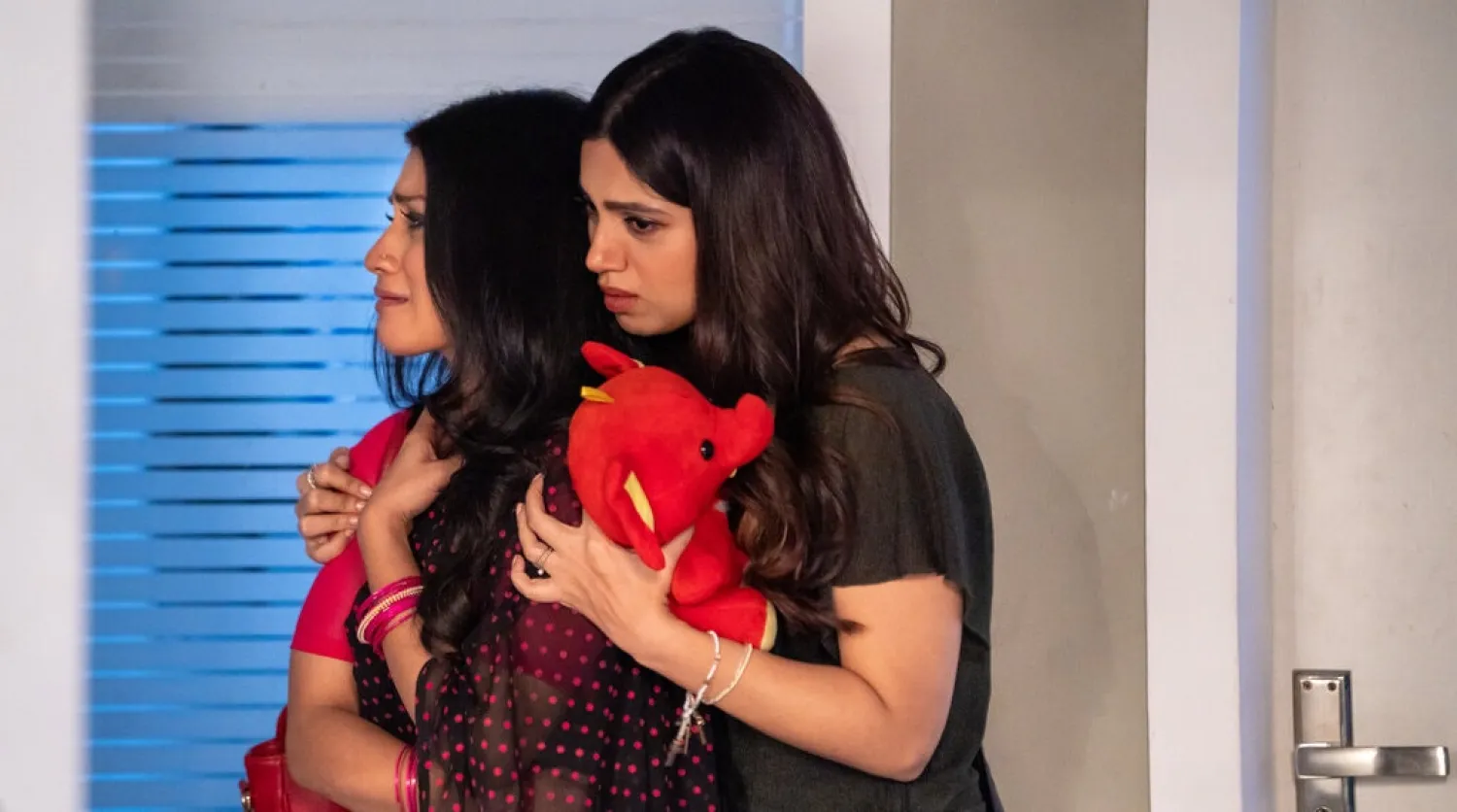
Motherhood is a theme in “Dolly Kitty Aur Woh Chamakte Sitare,” which tells the story of two women on parallel paths of self-discovery. In one scene, Konkona Sen Sharma (Dolly), left, is held by Bhumi Pednekar (Kitty).Credit...Netflix
TT

As Bollywood Evolves, Women Find Deeper Roles

Motherhood is a theme in “Dolly Kitty Aur Woh Chamakte Sitare,” which tells the story of two women on parallel paths of self-discovery. In one scene, Konkona Sen Sharma (Dolly), left, is held by Bhumi Pednekar (Kitty).Credit...Netflix

“Women are born to make sacrifices for men.”

This dialogue comes from the 1995 Bollywood film “Dilwale Dulhania Le Jayenge,” where the main character, Simran, has fallen in love but her family has already arranged for her to marry someone else. Her mother asks her to sacrifice that love in deference to her father’s wishes.

For Bollywood, the world’s largest film industry, the road to an authentic portrayal of women has been bumpy. In India’s Hindi film realm, onscreen mothers have long been depicted as passive housewives who bow to patriarchal pressures.

But this portrayal is being challenged. A number of movies in recent years have shown mothers, and women overall, as full and complex human beings — not melodramatic side characters, but outspoken, independent leads who are in charge of their own fates.

“Tribhanga,” which was released on Netflix in January, is one such film. The story follows Anuradha (Kajol), an actress and dancer, who must face the demons of her past when her estranged mother, Nayantara (Tanvi Azmi), ends up in the hospital. Nayantara, who is a highly accomplished writer, gets to tell her side of the story in flashbacks, through conversations with a disciple who is recording material for a biography.

Written and directed by the actress Renuka Shahane, “Tribhanga” covers topics not typical of Bollywood films, like single motherhood, sexual abuse and open relationships. Nayantara herself is shown leaving her husband so she can pursue a career, date as a single mother and casually drink when she feels like it. What she doesn’t realize is that one of her boyfriends sexually abused Anu — and the cycle of trauma repeats when Anu’s daughter gets bullied for being born outside marriage.

“My mother has always shared her fallibility with me,” Shahane said in a video interview last month. “The fun aspect of growing up with her was that I could see her as a human being.”

Shahane took this real-life inspiration and incubated it into a script she worked on for nearly six years. For the characters, she said, it was important to depict women as complex, if flawed, people. “They are individuals first, and they are very talented, beautiful, strong women, but they also have their feelings.”

But audiences, and the industry, haven’t always been so welcoming — women-led films in the past decade like “The Dirty Picture” (2011) and “Kahaani” (2012) did well at the box office, while others, like the 2018 film “Veere Di Wedding” did not. Still, mothers were often depicted adhering to traditional gender roles, doting on their families, and wholly focused on their children’s lives. In the 2001 family drama “Kabhi Khushi Kabhie Gham,” the mother (played by Jaya Bachchan) is shown as being telepathically aware of her son’s emotions and presence, whether he is physically near her or not. And the 1999 film “Hum Saath Saath Hain” placed the mother’s preference for her youngest son at the center of the story’s conflict.

The move toward having a more three-dimensional portrayal of onscreen mothers has been developing for decades. According to Beheroze Shroff, a professor of Asian-American Studies at the University of California, Irvine, it began in the 1950s, when post-independence India was breaking the shackles of colonialism. Shroff said that in the 1957 film “Mother India,” the ideal mother was depicted as a daughter of the nation, both committed to her domestic duties and to her country. But as India globalized, transnational trends and free-market capitalism proliferated, and by the 1990s, there was a growing need to address a then-burgeoning diaspora audience. This created a conflict between showing women as dutiful versus as they really are, when more viewers worldwide were petitioning for more accurate representation.

Regarding the recent, women-led movies like “Tribhanga,” Shroff said that the challenging of the mother figure role was necessary to make the characters more true to life. “A mother has to be three dimensional, especially when she is no longer dependent on financial assistance from the husband.”

In more recent years, the growing investment of global streaming platforms in India has also sped up the progress, Shroff said. “Somehow capitalism aids creativity and aids new voices.”

A lot of this comes back to the audience. International viewers on streaming platforms, especially in large markets like the United States, tends to be more open to seeing women in different roles — which makes catering to them more logical, and profitable.

Shroff said that streaming services “have a certain sensibility that they want to see in the kind of narratives that they are promoting on their platform. That has been a great boon for women filmmakers, women writers, women behind the camera and in front of the camera.”

Alankrita Shrivastava, the director of the 2019 film “Dolly Kitty Aur Woh Chamakte Sitare” (streaming on Netflix), agreed that the shift is happening now because of women who have worked their way up within the industry, but thinks change is also happening because of more eclectic audience interests. “I feel like the audience may also be opening up a little more to stories which don’t necessarily have the male, upper caste, cisgender heterosexual hero at the center of the universe," she said.

(The New York Times)


‘Family Under Pressure’ at Berlin Film Festival

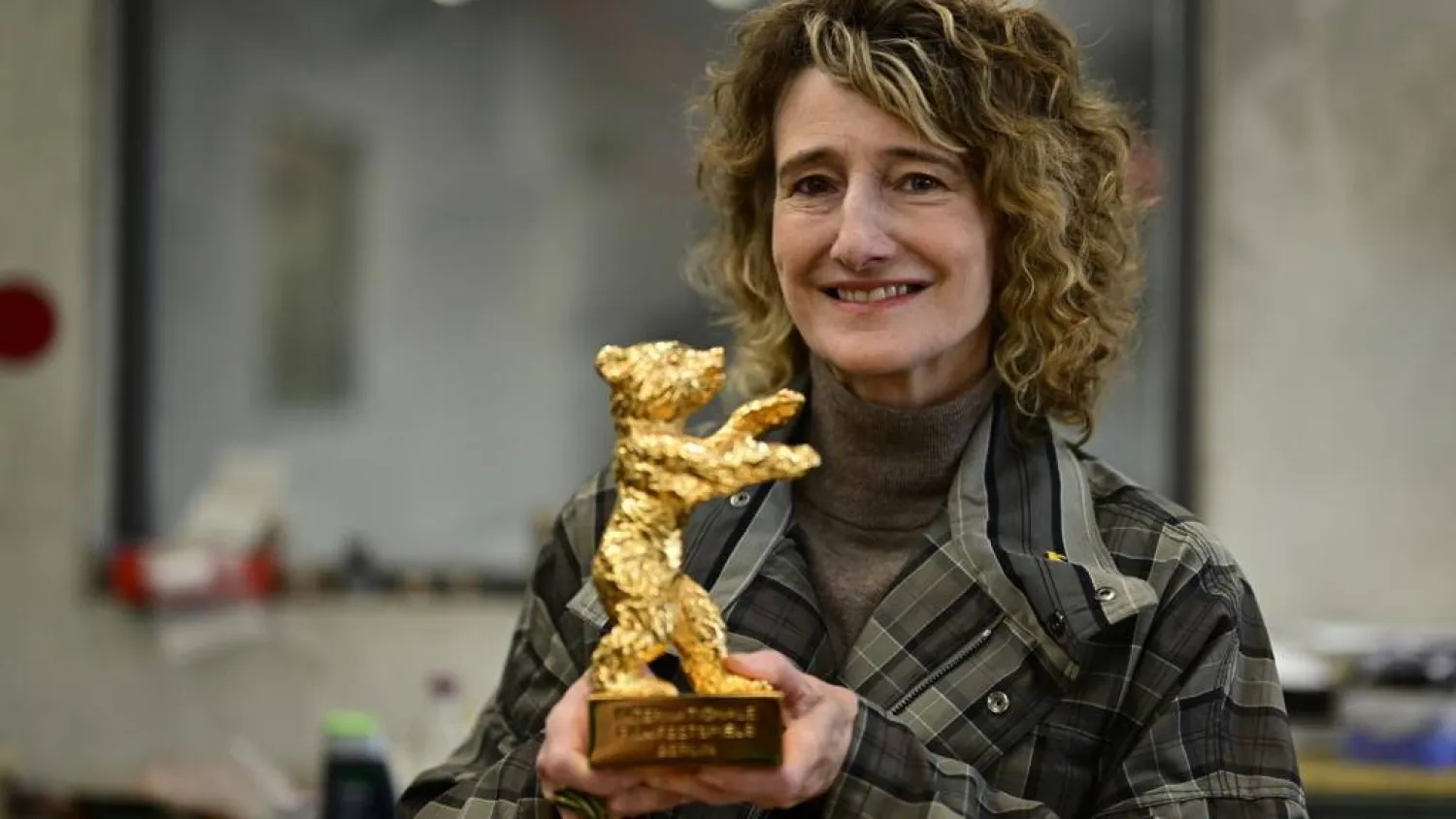
Of more than 200 films shown during the Berlin Film Festival, 22 will compete for the coveted Golden Bear. (AFP)
TT

‘Family Under Pressure’ at Berlin Film Festival

Of more than 200 films shown during the Berlin Film Festival, 22 will compete for the coveted Golden Bear. (AFP)

The 76th edition of the Berlin Film Festival opens on Thursday, featuring productions from over 80 countries and with German film legend Wim Wenders presiding over this year's jury.

AFP sat down with festival director Tricia Tuttle, who is in her second year at the helm, for a look-ahead at Europe's first big cinema festival of the year.

Here are five things to expect from this year's festival, which runs until February 22.

- 'Reflecting international cinema' -

Of more than 200 films shown during the10-day festival, 22 will compete for the coveted Golden Bear, which was won last year by the drama "Dreams" from Norwegian director Dag Johan Haugerud.

In assembling this year's diverse program, Tuttle said that "the guiding principle was to reflect where international cinema is right now".

She said that she had noticed "family and intimacy under pressure, questions of care, power, belonging, and the experience of living between worlds" as themes running through this year's selection.

"Many of the films look at how private lives are shaped by larger political and social forces."

The festival will also honor Malaysian actor Michelle Yeoh -- who won the best actress Oscar in 2023 for "Everything Everywhere All at Once" -- with a lifetime achievement award.

- Spotlight on women directors -

As in 2025, women directed most of the films being screened at the festival.

Among those in the official competition, nine out of 22 were directed by women, a higher proportion than at the Cannes or Venice festivals.

"One thing that is encouraging for me is the number of second and third time female film-makers who have made strong work," Tuttle said.

The opening film, "No Good Men", is itself the third feature-length film from Afghan director Shahrbanoo Sadat.

"It's about Afghan women's experience, which you wouldn't see if it wasn't for Shahrbanoo's work," Tuttle said.

Sadat fled her home country following the Taliban takeover in 2021 and now lives in Hamburg.

- American films remain elusive -

In contrast to Cannes or Venice, which regularly attract Oscar contenders, Berlin does not feature as many large-scale US productions and the sprinkle of stardust that often accompanies them.

"Some of the biggest authored films of the year, those sort of commercial-arthouse crossover films, haven't launched out of festivals this year," Tuttle noted, perhaps in a nod to titles such as "One Battle After Another", "Sinners" and "Marty Supreme".

For such films, which can easily cost more than $100 million to make, producers and distributors are increasingly keen on controlling all aspects of a film's release.

"Festivals can be busy, noisy places where you might not get the cut-through that you want," according to Tuttle -- not to mention running the risk of negative reviews from critics.

- The era of co-productions -

This year's festival will notably feature European co-productions with financing from several countries.

According to Tuttle, "there's an opportunity right now for Europe, for European producers to work together" as the industry more broadly continues to fracture.

She cites the example of Joachim Trier's "Sentimental Value", nominated for nine Oscars, which is a co-production between Norway, Denmark, France and Germany.

"Sentimental Value is a film that is made by many countries in terms of investment, but it's very much the work of an author and a really important filmmaker," said Tuttle.

- Streaming platforms almost absent -

Unlike in Venice, where three Netflix-produced films entered the official competition, the giants of the streaming world are relatively marginal in Berlin.

"There's real value to be had in theatrical exhibition, not just because there's money to be made there ... but also, for us as movie fans, it's the best way to see a film," said Tuttle.

The only Netflix film at this year's Berlinale will feature in the "Special Presentation" section -- outside of the official competition.

"Un hijo proprio" ("A Child of My Own") is a documentary-length feature telling the story of a Mexican woman who invents a pregnancy in an attempt to escape pressure from her family to have a child.


Movie Review: Stephen Curry's Animated Basketball Movie 'GOAT' Is a Disappointing Air Ball

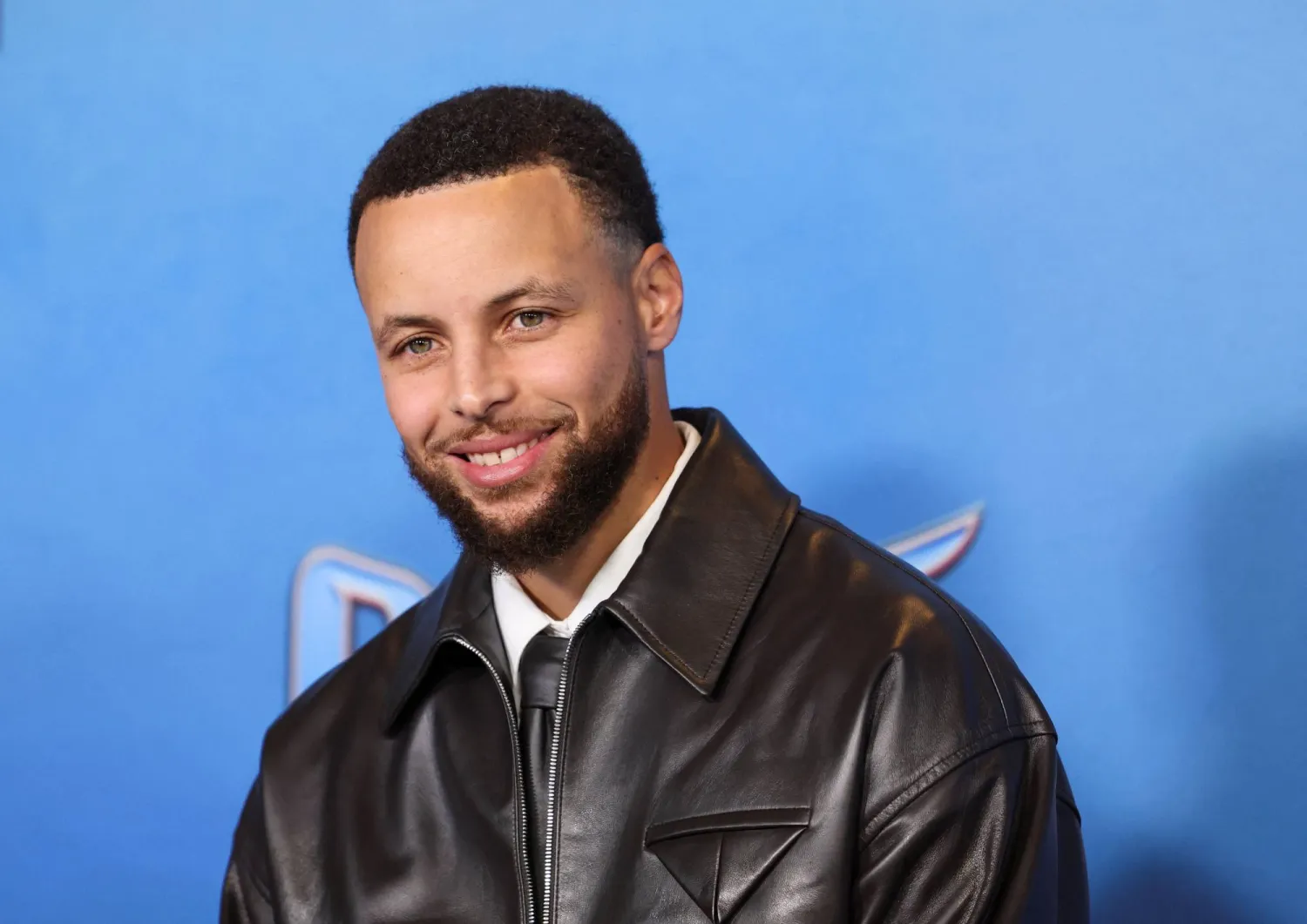
 Stephen Curry attends a premiere for the film "GOAT", in Los Angeles, California, US, February 6, 2026. (Reuters)
Stephen Curry attends a premiere for the film "GOAT", in Los Angeles, California, US, February 6, 2026. (Reuters)
TT

Movie Review: Stephen Curry's Animated Basketball Movie 'GOAT' Is a Disappointing Air Ball

 Stephen Curry attends a premiere for the film "GOAT", in Los Angeles, California, US, February 6, 2026. (Reuters)
Stephen Curry attends a premiere for the film "GOAT", in Los Angeles, California, US, February 6, 2026. (Reuters)

You'd expect an animated basketball movie with four-time NBA champion Stephen Curry in the producer's chair to be an easy lay-up. So why is “GOAT” such a brick?

Despite a wondrously textured, kinetic world and some interesting oddball characters, the movie is undone by a predictable, saccharine script. It’s as easy to see the steps coming as a Curry three-pointer arching into the net.

The movie has the kind of lazy, thin writing that feels like it all could have derived from a Hollywood happy hour gettogether: “Bro, bro. Wait. What if the GOAT was an actual goat?”

It centers on Will Harris, a goat with dreams of becoming a great baller, voiced by “Stranger Things” star Caleb McLaughlin. Undersized and an orphan — again with the orphans, guys? — Will is a delivery driver for a diner and late on his rent. He's a great outside shooter but a liability in the paint, unless he learns, that is.

He lives in Vineland — a hectic urban landscape with graffiti and living vines that choke the playgrounds — and is a rabid supporter of the local franchise, the Thorns. His idol is veteran Jett Fillmore, a leopard who's the league's all-time leading scorer, nicely voiced by Gabrielle Union. The Thorns are a bit of a mess, despite Jett's brilliance.

The game here is called roarball, a high-intensity, co-ed, multi-animal, full-contact sport derived from basketball with a hollow ball that has small holes. It's a “Mad Max” sport — ultraviolent, unofficiated and the dangers lurk not just from the beefy opponents but from the arena itself. The championship award is called the Claw.

The best part of the movie may be the environments for the other arenas — lava in one, a swamp with stalagmites and stalactites in another, plus an ice-bound one and another with desert sandstorms and rocks. Homefield advantage is a big thing in this league.

There seem to be only two kinds of points scored here — blazing windmills, cutting tomahawks and spectacular alley-oop dunks or slow-mo threes from so far downtown they might as well be in a different zip code. No mid-range jumpers, bro.

This universe is divided into “bigs” and “smalls” — rhinos, bears and giraffes on one side, gerbils and capybara on the other — and Will is deemed a small. “Smalls can’t ball,” he is told, condescendingly.

But Will — thanks to a viral video — improbably gets signed to the Thorns by the team's owner (a cynical warthog voiced wonderfully by Jenifer Lewis). It's seen as a shameless publicity stunt that no one wants, especially Jett, who needs a winning season after being taunted by “All stats, no Claw.”

Now, predictably, in Aaron Buchsbaum and Teddy Riley script, comes the bulk of the movie, giving a steady “The Karate Kid” or “Air Bud” vibe as it charts Will's steady rise to honored teammate and franchise future, despite Jett insisting she's not ready to go: “I’m the GOAT. I’m not passing the torch.”

The lessons are good — the importance of teamwork and believing in yourself — but the testosterone-fueled violence on the courts is WWE extreme. There are unnecessary plugs for Mercedes and Under Armor, and hollow slogans like “Dream big” and “Roots run deep.”

Some of the most interesting characters end up on the Thorns, a fragile, somewhat broken team that includes a rhino (voiced by David Harbour), a delicate ostrich (Nicola Coughlan), a gonzo Komodo dragon (Nick Kroll) and a desultory giraffe (Curry).

The Komodo dragon, named Modo, is the best of the bunch, an insane, unpredictable creature full of electricity. “If Modo was any more of a snack, he’d eat himself,” he declares. Could he get his own movie?

Directed by “Bob’s Burgers” veteran Tyree Dillihay and Adam Rosette, “GOAT” is targeted to Gen Alpha, leveraging cellphone screens and online likes, virality and diss tracks. It's not as funny as it thinks it is and tiresome in its overly familiar redemption arc.

Another potential basketball GOAT — Michael Jordan — gave us a clunker of a live-action- animated basketball movie in “Space Jam” exactly 30 years ago and “GOAT,” while not as bad as that mess, is an air ball none the same.


Music World Mourns Ghana's Ebo Taylor, Founding Father of Highlife

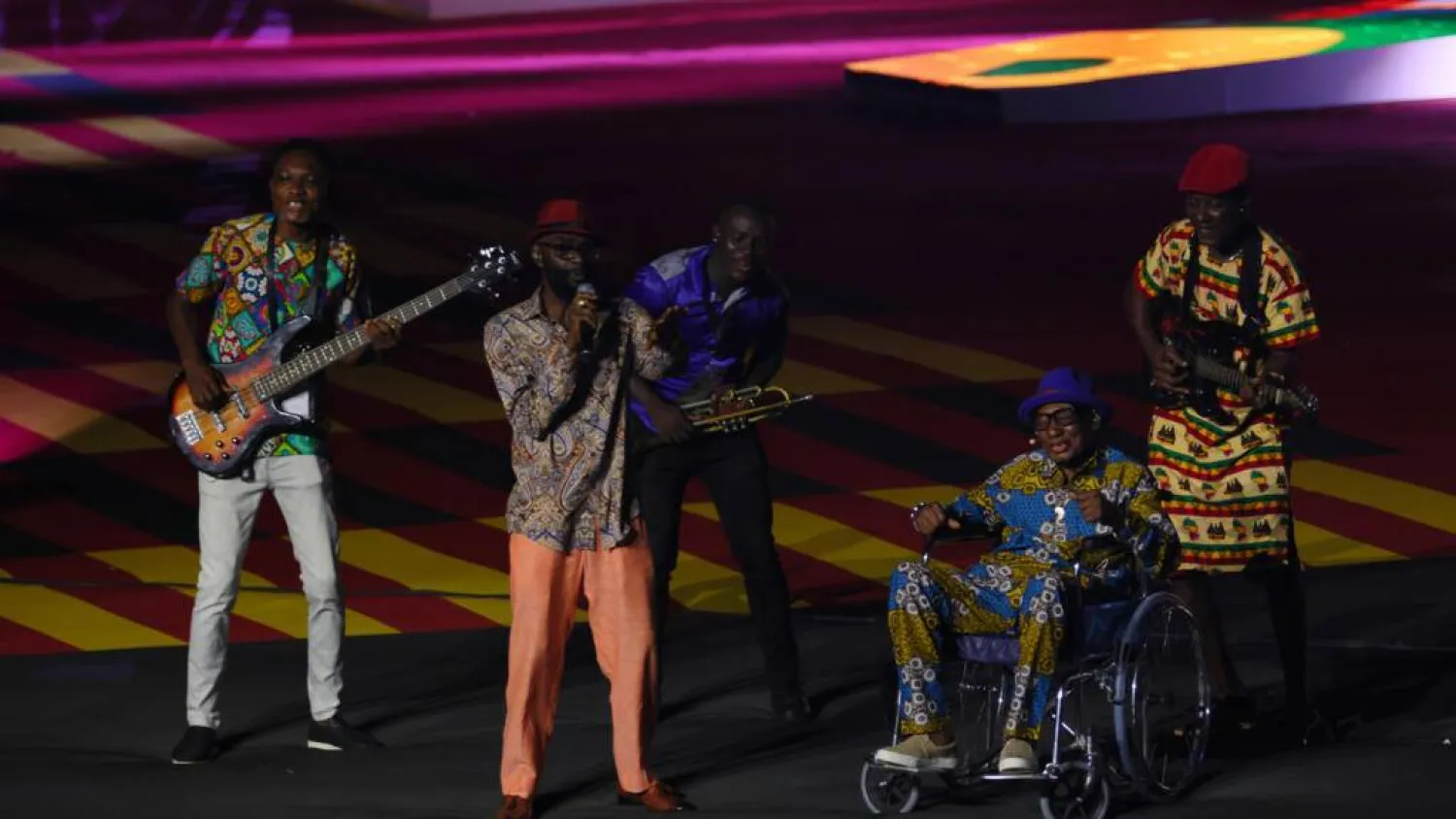
Ebo Taylor, who kept performing into his 80s, was instrumental in introducing Ghanaian highlife to international listeners. Nipah Dennis / AFP
TT

Music World Mourns Ghana's Ebo Taylor, Founding Father of Highlife

Ebo Taylor, who kept performing into his 80s, was instrumental in introducing Ghanaian highlife to international listeners. Nipah Dennis / AFP

Tributes have been pouring in from across Ghana and the world since the death of Ghanaian highlife legend Ebo Taylor.

A guitarist, composer and bandleader who died on Saturday, Taylor's six-decade career played a key role in shaping modern popular music in West Africa, said AFP.

Often described as one of the founding fathers of contemporary highlife, Taylor died a day after the launch of a music festival bearing his name in the capital, Accra, and just a month after celebrating his 90th birthday.

Highlife, a genre blending traditional African rhythms with jazz and Caribbean influences, was recently added to UNESCO's Intangible Cultural Heritage list.

"The world has lost a giant. A colossus of African music," a statement shared on his official page said. "Your light will never fade."

The Los Angeles-based collective Jazz Is Dead called him a pioneer of highlife and Afrobeat, while Ghanaian dancehall star Stonebwoy and American producer Adrian Younge, who his worked with Jay Z and Kendrick Lamar, also paid tribute to his legacy.

Nigerian writer and poet Dami Ajayi described him as a "highlife maestro" and a "fantastic guitarist".

- 'Uncle Ebo' -

Taylor's influence extended far beyond Ghana, with elements of his music appearing in the soul, jazz, hip-hop and Afrobeat genres that dominate the African and global charts today.

Born Deroy Taylor in Cape Coast in 1936, he began performing in the 1950s, as highlife was establishing itself as the dominant sound in Ghana in the years following independence.

Known for intricate guitar lines and rich horn arrangements, he played with leading bands including the Stargazers and the Broadway Dance Band.

In the early 1960s, he travelled to London to study music, where he worked alongside other African musicians, including Nigerian Afrobeat pioneer Fela Kuti.

The exchange of ideas between the two would later be seen as formative to the development of Afrobeat, a political cocktail blending highlife with funk, jazz and soul.

Back in Ghana, Taylor became one of the country's most sought-after arrangers and producers, working with stars such as Pat Thomas and CK Mann while leading his own bands.

His compositions -- including "Love & Death", "Heaven", "Odofo Nyi Akyiri Biara" and "Appia Kwa Bridge" -- gained renewed international attention decades later as DJs, collectors and record labels reissued his music. His grooves were sampled by hip-hop and R&B artists and helped introduce new global audiences to Ghanaian highlife.

Taylor continued touring into his 70s and 80s, performing across Europe and the United States as part of a late-career renaissance that cemented his status as a cult figure among younger musicians.

Many fans affectionately referred to him as "Uncle Ebo", reflecting both his longevity and mentorship of younger artists.

For many, he remained a symbol of highlife's golden era and of a generation that carried Ghanaian music onto the world stage.