


Beat Poet, Publisher Lawrence Ferlinghetti Dies at 101

Author Lawrence Ferlinghetti recites a poem after he was awarded the Literarian Award for Outstanding Service to the American Literary Community at the National Book Awards in New York, on Nov. 16, 2005. (AP)
TT

Beat Poet, Publisher Lawrence Ferlinghetti Dies at 101

Author Lawrence Ferlinghetti recites a poem after he was awarded the Literarian Award for Outstanding Service to the American Literary Community at the National Book Awards in New York, on Nov. 16, 2005. (AP)

Lawrence Ferlinghetti, the poet, publisher, bookseller and activist who helped launch the Beat movement in the 1950s and embodied its curious and rebellious spirit well into the 21st century, has died at age 101.

Ferlinghetti, a San Francisco institution, died Monday at his home, his son Lorenzo Ferlinghetti said. A month shy of his 102nd birthday, Ferlinghetti died “in his own room,” holding the hands of his son and his son’s girlfriend, “as he took his last breath." The cause of death was lung disease. Ferlinghetti had received the first dose of the COVID vaccine last week, his son said Tuesday.

Few poets of the past 60 years were so well known, or so influential. His books sold more than 1 million copies worldwide, a fantasy for virtually any of his peers, and he ran one of the world’s most famous and distinctive bookstores, City Lights. Although he never considered himself one of the Beats, he was a patron and soul mate and, for many, a lasting symbol — preaching a nobler and more ecstatic American dream.

“Am I the consciousness of a generation or just some old fool sounding off and trying to escape the dominant materialist avaricious consciousness of America?” he asked in “Little Boy,” a stream of consciousness novel published around the time of his 100th birthday

He made history. Through the City Lights publishing arm, books by Jack Kerouac, William S. Burroughs and many others came out and the release of Allen Ginsberg’s landmark poem “Howl” led to a 1957 obscenity case that broke new ground for freedom of expression.

He also defied history. The Internet, superstore chains and high rents shut down numerous booksellers in the Bay Area and beyond, but City Lights remained a thriving political and cultural outlet, where one section was devoted to books enabling “revolutionary competence,” where employees could get the day off to attend an anti-war protest.

“Generally, people seem to get more conservative as they age, but in my case, I seem to have gotten more radical,” Ferlinghetti told Interview magazine in 2013. “Poetry must be capable of answering the challenge of apocalyptic times, even if this means sounding apocalyptic.”

The store even endured during the coronavirus outbreak, when it was forced to close and required $300,000 to stay in business. A GoFundMe campaign quickly raised $400,000.

Ferlinghetti, tall and bearded, with sharp blue eyes, could be soft-spoken, even introverted and reticent in unfamiliar situations. But he was the most public of poets and his work wasn’t intended for solitary contemplation. It was meant to be recited or chanted out loud, whether in coffee houses, bookstores or at campus gatherings.

His 1958 compilation, “A Coney Island of the Mind,” sold hundreds of thousands of copies in the US alone. Long an outsider from the poetry community, Ferlinghetti once joked that he had “committed the sin of too much clarity.” He called his style “wide open” and his work, influenced in part by E.E. Cummings, was often lyrical and childlike: “Peacocks walked/under the night trees/in the lost moon/light/when I went out/looking for love,” he wrote in “Coney Island.”

Ferlinghetti also was a playwright, novelist, translator and painter and had many admirers among musicians. In 1976, he recited “The Lord’s Prayer” at the Band’s farewell concert, immortalized in Martin Scorsese’s “The Last Waltz.”

He lived long and well despite a traumatic childhood. His father died five months before Lawrence was born in Yonkers, New York, in 1919, leaving behind a sense of loss that haunted him, yet provided much of the creative tension that drove his art. His mother, unable to cope, had a nervous breakdown two years after his father’s death. She eventually disappeared and died in a state hospital.

Ferlinghetti spent years moving among relatives, boarding homes and an orphanage before he was taken in by a wealthy New York family, the Bislands, for whom his mother had worked as a governess. He studied journalism at the University of North Carolina at Chapel Hill, received a master’s in literature from Columbia University, and a doctorate degree from the Sorbonne in Paris. His early influences included Ernest Hemingway, Thomas Wolfe and Ezra Pound.

Ferlinghetti hated war, because he was in one. In 1945, he was a Navy commander stationed in Japan and remembered visiting Nagasaki a few weeks after the US had dropped an atom bomb. The carnage, he would recall, made him an “instant pacifist.”

In the early 1950s, he settled in San Francisco and married Selden Kirby-Smith, whom he divorced in 1976. (They had two children). Ferlinghetti also became a member of the city’s rising literary movement, the so-called San Francisco Renaissance, and soon helped establish a gathering place. Peter D, Martin, a sociologist, had opened a paperback store in the city’s North Beach section and named it after a recent Charlie Chaplin film, “City Lights.” When Ferlinghetti saw the storefront, in 1953, he suggested he and Martin become partners. Each contributed $500.

Ferlinghetti later told The New York Times: “City Lights became about the only place around where you could go in, sit down, and read books without being pestered to buy something.”

The Beats, who had met in New York in the 1940s, now had a new base. One project was City Lights’ Pocket Poets series, which offered low-cost editions of verse, notably Ginsberg’s “Howl.”

Ferlinghetti published “Howl and Other Poems” in 1956, but customs officials seized copies of the book that were being shipped from London, and Ferlinghetti was arrested on obscenity charges. After a highly publicized court battle, a judge in 1957 ruled that “Howl” was not obscene, despite its sexual themes, citing the poem’s relevance as a criticism of modern society. A 2010 film about the case, “Howl,” starred James Franco as Ginsberg and Andrew Rogers as Ferlinghetti.

Ferlinghetti would also release Kerouac’s “Book of Dreams,” prison writings by Timothy Leary and Frank O’Hara’s “Lunch Poems.” Ferlinghetti risked prison for “Howl,” but rejected Burrough’s classic “Naked Lunch,” worrying that publication would lead to “sure premeditated legal lunacy.”

Ferlinghetti’s eyesight was poor in recent years, but he continued to write and to keep regular hours at City Lights. The establishment, meanwhile, warmed to him, even if the affection wasn’t always returned. He was named San Francisco’s first poet laureate, in 1998, and City Lights was granted landmark status three years later. He received an honorary prize from the National Book Critics Circle in 2000 and five years later was given a National Book Award medal for “his tireless work on behalf of poets and the entire literary community.”

In 2012, Ferlinghetti won the Janus Pannonius International Poetry Prize from the Hungarian PEN Club. When he learned the country’s right-wing government was a sponsor, he turned the award down.


Saudi Arabia, Syria Underline Depth of their Cultural Ties

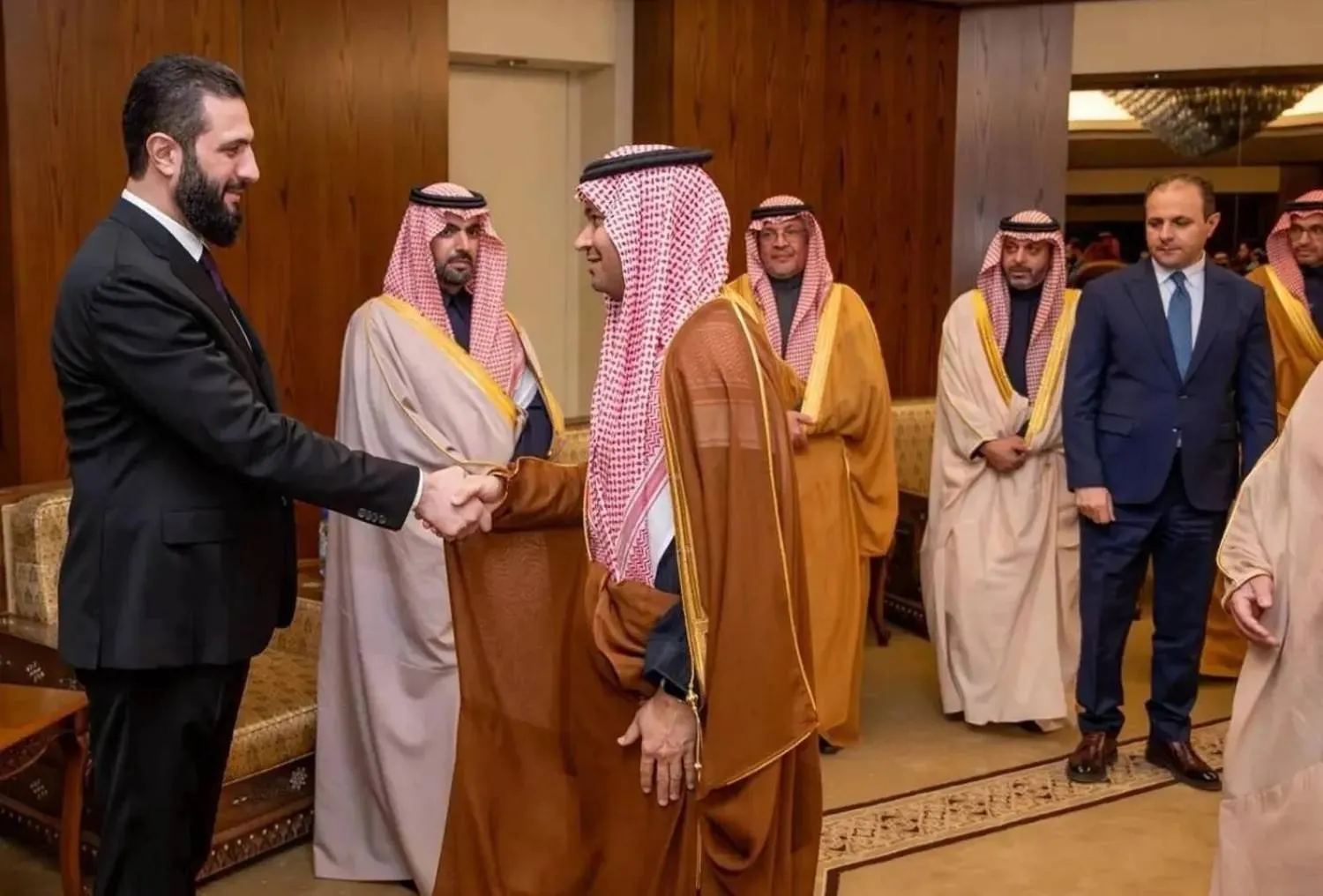
Syrian President al-Sharaa receives the Saudi minister of culture and the accompanying delegation at the Conference Palace in Damascus on Thursday. (SPA)
TT

Saudi Arabia, Syria Underline Depth of their Cultural Ties

Syrian President al-Sharaa receives the Saudi minister of culture and the accompanying delegation at the Conference Palace in Damascus on Thursday. (SPA)

Saudi Arabia and Syria underlined the strength of their cultural relationship during high-level meetings held in Damascus on Thursday, on the sidelines of the opening of the Damascus International Book Fair 2026, where the Kingdom is participating as guest of honor.

Syrian President Ahmad al-Sharaa received Saudi Minister of Culture Prince Badr bin Abdullah bin Farhan at the Conference Palace in the capital.

Earlier the same day, Prince Badr met with his Syrian counterpart, Minister of Culture Mohammad Yassin Saleh, during an official visit to attend the fair. T

he Saudi minister congratulated Syria on hosting the exhibition and expressed his wishes for continued prosperity, progress, and stability for the Syrian government and people.

Both meetings highlighted the depth of cultural relations between the two countries, the importance of expanding joint cultural cooperation across various fields, and the alignment of positions on issues of mutual interest in a way that serves both nations.

The Saudi delegation included senior officials and advisers, among them representatives from the Royal Court, the Ministry of Culture, and the King Abdulaziz Public Library, reflecting broad institutional engagement in the visit.

In the evening, Prince Badr attended the opening ceremony of the fair’s special session, held under the patronage and in the presence of al-Sharaa. The event drew wide official and cultural participation, including Arab ministers, political and intellectual figures, and a distinguished group of writers and cultural figures.

In a post on the X platform, Prince Badr thanked “our brothers in Syria for their generous hospitality and their efforts in organizing the Damascus International Book Fair.”

The minister also inaugurated the Kingdom’s pavilion at the fair in the presence of the Syrian minister of culture and the Qatari minister of culture.

Saudi Arabia’s guest-of-honor participation continues until Feb. 16 and reflects its growing prominence and leadership in the Arab and global cultural landscape.

This participation aligns with Saudi Vision 2030, which places culture at the heart of national development, viewing it as a space for dialogue, a bridge for civilizational communication, and a tool for strengthening ties among Arab peoples.

The Saudi Literature, Publishing and Translation Commission is leading the Kingdom’s participation, highlighting the development of the cultural sector and reaffirming the central role of books as carriers of knowledge and awareness.

The Saudi pavilion boasts a comprehensive cultural program featuring intellectual seminars, poetry evenings, a manuscript exhibition, traditional Saudi fashion displays, hospitality corners, archaeological replicas, and performing arts that express the depth of the Kingdom’s cultural heritage.

On the sidelines of the visit, Prince Badr, accompanied by Minister Saleh, toured the National Museum of Damascus, which houses rare artifacts spanning prehistoric eras, ancient Syrian civilizations, classical and Islamic periods, as well as traditional and modern art.


UNESCO Honors Al-Bisht Al-Hasawi as Thousands Flock to Al-Ahsa Festival

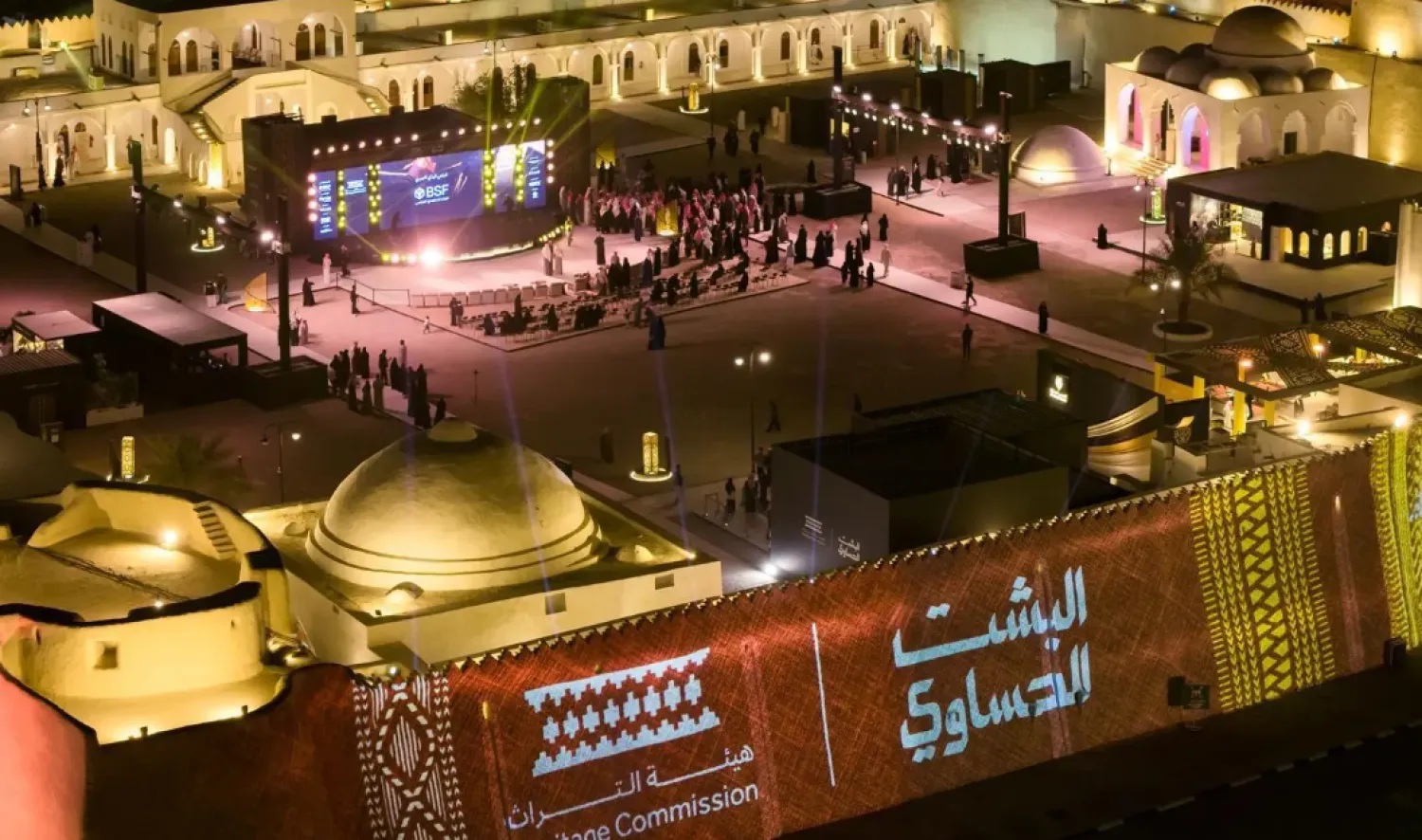
Visitors can explore interactive displays, participate in live workshops, and witness the meticulous process of tailoring this iconic symbol of prestige - SPA
TT

UNESCO Honors Al-Bisht Al-Hasawi as Thousands Flock to Al-Ahsa Festival

Visitors can explore interactive displays, participate in live workshops, and witness the meticulous process of tailoring this iconic symbol of prestige - SPA

The third edition of Al-Bisht Al-Hasawi Festival is drawing thousands of regional and international visitors to Ibrahim Palace in historic Al-Hofuf.

Organized by the Heritage Commission, this year’s festival celebrates the inscription of the Bisht on UNESCO’s Representative List of the Intangible Cultural Heritage of Humanity.

The event showcases Al-Ahsa’s centuries-old tradition of hand-weaving and gold embroidery, a craft passed down through generations of local families, SPA reported.

Visitors can explore interactive displays, participate in live workshops, and witness the meticulous process of tailoring this iconic symbol of prestige.

With UNESCO's participation and representatives from six countries, the festival has evolved into a global platform for cultural dialogue, cementing the Bisht’s status as a world-class cultural treasure.


Saudi, Syrian Culture Ministers Tour National Museum of Damascus

The ministers observed the museum’s extensive collections spanning prehistoric eras to modern art. SPA
TT

Saudi, Syrian Culture Ministers Tour National Museum of Damascus

The ministers observed the museum’s extensive collections spanning prehistoric eras to modern art. SPA

Saudi Minister of Culture Prince Badr bin Abdullah bin Farhan and his Syrian counterpart, Mohammed Yassin Saleh, have toured the National Museum of Damascus during the Kingdom’s participation as guest of honor at the 2026 Damascus International Book Fair.

The ministers observed on Thursday the museum’s extensive collections spanning prehistoric eras to modern art.

A particular focus was placed on the Arab-Islamic wing, featuring significant artifacts from the Umayyad period.

The Kingdom's participation as guest of honor at the 2026 Damascus International Book Fair, which runs until February 16, stems from the role culture plays within Saudi Vision 2030.