


UN Report: 79% of Displaced People in Marib Are Women, Children

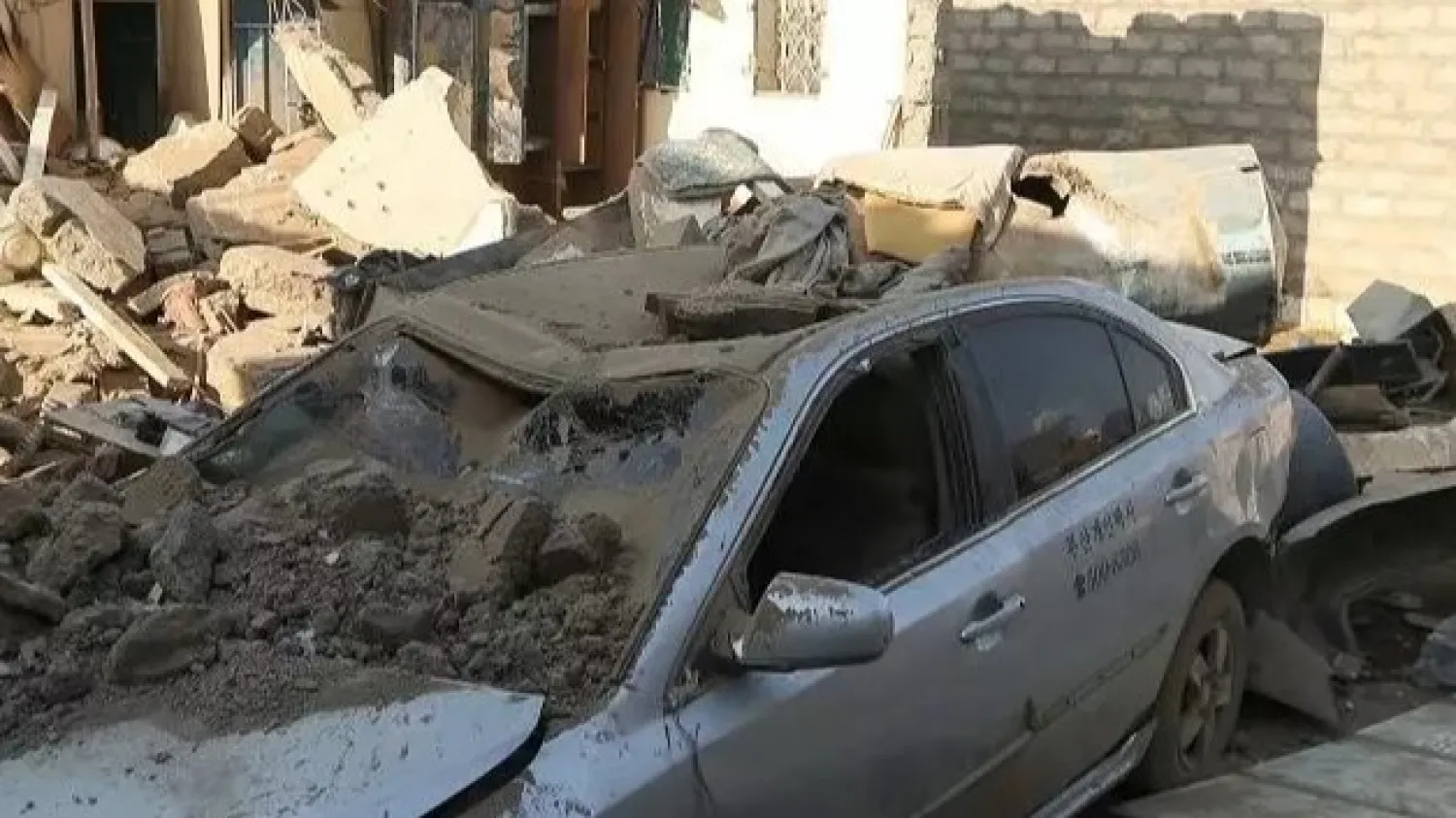
Girls stand at the site of a Houthi ballistic missile attack over the populated district of Rawda in Marib, Yemen February 6, 2020. © Ali Owidha / Reuters
TT

UN Report: 79% of Displaced People in Marib Are Women, Children

Girls stand at the site of a Houthi ballistic missile attack over the populated district of Rawda in Marib, Yemen February 6, 2020. © Ali Owidha / Reuters

The United Nations issued a report describing the tragic conditions of the displaced people in the Yemeni governorate of Marib.

Women and children represent over 79 percent of the total displaced people in Marib, read the report issued by the United Nations High Commissioner for Refugees on Tuesday.

Most displaced families (90 percent) live in extreme poverty on less than $1.4 per day, it said, noting that most of them resort to harmful coping mechanisms.

These include cutting on the number of meals, not visiting health facilities, or choosing child labor and early marriage for their survival.

Dubbed “Humanitarian and Displacement Situation in Marib Governorate,” the report said humanitarian needs in the governorate are growing as fighting escalates affecting civilians and triggering new displacements in Mahliyah, Jabal Murad, Medghal, Raghwan, al-Jubah, and Sirwah districts.

It pointed out that the majority of the displacement is from or within Sirwah, where families are fleeing for the second or third time from three of the largest hosting sites, namely, al-Zur, Dhanah al-Sawabin, and Danah al-Hayal.

According to the report, the displaced population mostly rely on the support of their friends and relatives and external assistance to meet their most basic needs, including food, shelter, health, water, and sanitation.

“The most vulnerable of the displaced families, 30 percent of those assessed, have no income.”

Some 40 percent of the displaced families live in makeshift shelters and unfinished buildings, it explained, pointing that those who found rented houses struggle to pay rent regularly, and about a quarter of the children assessed do not attend school.

Notably, Marib hosts approximately one million displaced Yemenis from across the country, most of them have been sheltering there since the start of the Yemen conflict in 2015.

The UN report affirms that public services and infrastructures cannot cope with the large influx of internally displaced persons.

“Most of the newly displaced families have sought refuge in existing, overcrowded and underserved hosting sites in Sirwah, Marib city, al-Wadi and al-Jubah districts and nearby areas.”

Lack of resources, access constraints, and insecurity are increasingly hindering the delivery of aid to civilians in Marib, with severe consequences for the most vulnerable, it stressed.

During the period between Feb. 20 and March 30, 2021, the UNHCR and partners conducted protection monitoring exercises to assess the needs and priorities of some 16,300 displaced Yemenis in Marib, including those displaced by the recent escalation of violence.

Results of the protection monitoring, the report said, showed the extreme vulnerability of the displaced families, even months after displacement.

The report further highlighted the insufficient wash facilities. It said 25 percent of the displaced families do not have access to toilets, showers, or handwashing facilities near their shelters.

Displaced families struggle to access water for drinking, cooking, and washing. About 41 percent of the families assessed reported having to walk more than 15 minutes to access water.

Over 92 percent of families assessed have received food assistance in the last three months.

According to the families interviewed, to address their most urgent needs, they would need cash (97.9 percent), non-food items (97 percent), shelter (89.7 percent), and water and sanitation services (86.7 percent).



Libya Says UK to Analyze Black Box from Crash That Killed General

Military personnel carry portraits of the Libyan chief of staff, General Mohamed al-Haddad (2-R), and his four advisers, who were killed in a plane crash in Türkiye, during an official repatriation ceremony at the Ministry of Defense headquarters in Tripoli, Libya, 27 December 2025. (EPA)
TT

Libya Says UK to Analyze Black Box from Crash That Killed General

Military personnel carry portraits of the Libyan chief of staff, General Mohamed al-Haddad (2-R), and his four advisers, who were killed in a plane crash in Türkiye, during an official repatriation ceremony at the Ministry of Defense headquarters in Tripoli, Libya, 27 December 2025. (EPA)

Libya said on Thursday that Britain had agreed to analyze the black box from a plane crash in Türkiye on December 23 that killed a Libyan military delegation, including the head of its army.

General Mohammed al-Haddad and four aides died after a visit to Ankara, with Turkish officials saying an electrical failure caused their Falcon 50 jet to crash shortly after takeoff.

Three crew members, two of them French, were also killed.

The aircraft's black box flight recorder was found on farmland near the crash site.

"We coordinated directly with Britain for the analysis" of the black box, Mohamed al-Chahoubi, transport minister in the Government of National Unity (GNU), said at a press conference in Tripoli.

Haddad was very popular in Libya despite deep divisions between west and east.

Haddad was chief of staff for the Tripoli-based GNU.

Chahoubi told AFP a request for the analysis was "made to Germany, which demanded France's assistance" to examine the aircraft's flight recorders.

"However, the Chicago Convention stipulates that the country analyzing the black box must be neutral," he said.

"Since France is a manufacturer of the aircraft and the crew was French, it is not qualified to participate. The United Kingdom, on the other hand, was accepted by Libya and Turkey."

After meeting the British ambassador to Tripoli on Tuesday, Foreign Minister Taher al-Baour said a joint request had been submitted by Libya and Türkiye to Britain "to obtain technical and legal support for the analysis of the black box".

Chahoubi told Thursday's press briefing that Britain "announced its agreement, in coordination with the Libyan Ministry of Transport and the Turkish authorities".

He said it was not yet possible to say how long it would take to retrieve the flight data, as this depended on the state of the black box.

"The findings will be made public once they are known," Chahoubi said, warning against "false information" and urging the public not to pay attention to rumors.


STC Says Handing over Positions to National Shield Forces in Yemen's Hadhramaut, Mahra

National Shield forces in Hadhramaut. (National Shield forces)
TT

STC Says Handing over Positions to National Shield Forces in Yemen's Hadhramaut, Mahra

National Shield forces in Hadhramaut. (National Shield forces)

Southern Transitional Council (STC) forces in Yemen began on Thursday handing over military positions to the government’s National Shield forces in the Hadhramaut and al-Mahra provinces in eastern Yemen.

Local sources in Hadhramaut confirmed to Asharq Al-Awsat that the handover kicked off after meetings were held between the two sides.

Speaking on condition of anonymity, the sources said the National Shield commanders met with STC leaderships to discuss future arrangements. The sourced did not elaborate, but they confirmed that Emirati armored vehicles, which had entered Balhaf port in Shabwah were seen departing on a UAE vessel, in line with a Yemeni government request.

The National Shield is overseen by Presidential Leadership Council (PLC) Chairman Dr. Rashad al-Alimi.

A Yemeni official described Thursday’s developments as “positive” step towards uniting ranks and legitimacy against a common enemy – the Houthi groups.

The official, also speaking on condition of anonymity, underscored to Asharq Al-Awsat the importance of “partnership between components of the legitimacy and of dialogue to resolve any future differences.”

Meanwhile, on the ground, Yemeni military sources revealed that some STC forces had refused to quit their positions, prompting the forces to dispatch an official to Hadhramaut’s Seiyun city to negotiate the situation.


One Dead as Israeli Forces Open Fire on West Bank Stone-Throwers

Israeli troops during a military operation in the Palestinian village of Qabatiya, near the West Bank city of Jenin, 27 December 2025. (EPA)
TT

One Dead as Israeli Forces Open Fire on West Bank Stone-Throwers

Israeli troops during a military operation in the Palestinian village of Qabatiya, near the West Bank city of Jenin, 27 December 2025. (EPA)

The Israeli military said its forces killed a Palestinian in the occupied West Bank in the early hours on Thursday as they opened fire on people who were throwing stones at soldiers.

Two other people were hit on a main ‌road near the ‌village of Luban ‌al-Sharqiya ⁠in Nablus, ‌the military statement added. It described the people as militants and said the stone-throwing was part of an ambush.

Palestinian authorities in the West Bank said ⁠a 26-year-old man they named as ‌Khattab Al Sarhan was ‍killed and ‍another person wounded.

Israeli forces had ‍closed the main entrance to the village of Luban al-Sharqiya, in Nablus, and blocked several secondary roads on Wednesday, the Palestinian Authority's official news agency WAFA reported.

More ⁠than a thousand Palestinians were killed in the West Bank between October 2023 and October 2025, mostly in operations by security forces and some by settler violence, the UN has said.

Over the same period, 57 Israelis were killed ‌in Palestinian attacks.