KSRelief’s Al-Rabeeah Discusses Support for Yemen, Exposes Houthi Targeting of Humanitarian Relief https://english.aawsat.com/home/article/2922431/ksrelief%E2%80%99s-al-rabeeah-discusses-support-yemen-exposes-houthi-targeting
KSRelief’s Al-Rabeeah Discusses Support for Yemen, Exposes Houthi Targeting of Humanitarian Relief
Saudi Arabia continues to support the building of neighboring Yemen’s coronavirus vaccination capacity, King Salman Humanitarian Aid and Relief Center (KSRelief) General Supervisor Abdullah Al-Rabeeah reaffirmed on Thursday
Speaking at an online videoconference organized by the National Council of US-Arab Relations, Al-Rabeeah revealed that talks were ongoing between KSRelief and the Yemeni government to extend more support to the war-torn country.
After contacting Prime Minister Maeen Abdulmalik Saeed, KSRelief arranged for the delivery of a number of testing kits and machines and cameras to authorities at Yemen’s health ministry, noted Al-Rabeeah.
Since the outbreak of the coronavirus pandemic, Saudi Arabia has stood in solidarity with the Yemeni health sector and government institutions fighting the spread of the pandemic.
On the challenges facing humanitarian relief work in Yemen, Al-Rabeeah cited security threats and hostility carried out by Houthis against aid workers in the battle-weary country.
“KSRelief convoys have been targeted in more than 35 incidents,” said Al-Rabeeah, adding that 39 arbitrary detentions and 31 muggings have targeted the organization’s workers and aid supplies in Yemen.
Al-Rabeeah also shed light on Houthi militias recruiting and deploying child soldiers to fight on battlefronts.
“Over 25,000 children have been recruited,” he said, adding that KSRelief is working on rehabilitating minors that were drafted by Houthi militias.
According to Al-Rabeeah, KSRelief launched a rehabilitation program that offers psychological, social, educational and family counseling services to prevent those children from becoming a threat in the future.
As for Saudi Arabia’s record of ongoing support for Yemenis, Al-Rabeeah reminded that the kingdom hosts over half a million Yemeni refugees that it treats as “visitors, not asylum seekers.”
Yemenis in Saudi Arabia have been granted official documents all over the kingdom, stressed Al-Rabeeah.
He also pointed out that Yemeni children are offered free access to public schools and health programs in Saudi Arabia.
Officials Say Israeli Forces Killed Six in Gaza, Including Childhttps://english.aawsat.com/arab-world/5342425-officials-say-israeli-forces-killed-six-gaza-including-child
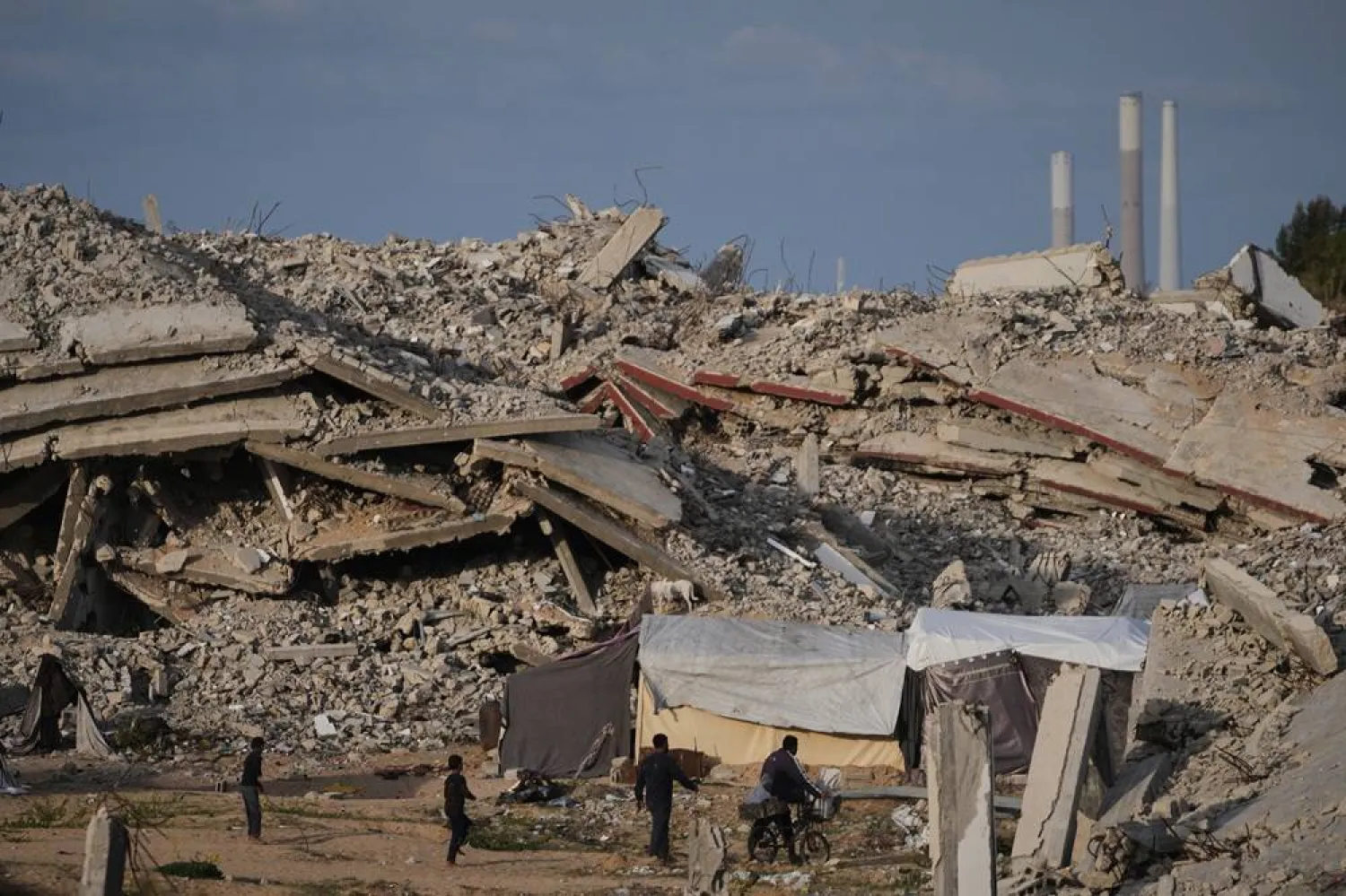
Palestinians walk through the rubble of buildings destroyed during the Israel-Hamas war in Gaza City, Tuesday, Nov. 17, 2026. (AP)
TT
TT
Officials Say Israeli Forces Killed Six in Gaza, Including Child
Palestinians walk through the rubble of buildings destroyed during the Israel-Hamas war in Gaza City, Tuesday, Nov. 17, 2026. (AP)
Israeli forces killed six people across the Gaza Strip on Tuesday, including a six-year-old boy, the civil defense agency and hospitals in the war-ravaged Palestinian territory told AFP.
Israel and Hamas regularly accuse each other of violating the ceasefire that came into effect in October 2025, after two years of war triggered by the Palestinian movement's unprecedented attack on Israel on October 7, 2023.
Mahmoud Bassal, spokesman for Gaza's civil defense agency, told AFP that a total of six people were killed and several injured "as a result of Israeli fire" on Tuesday.
Israel's military told AFP it was looking into the reports, adding that it struck "several terrorists" in Gaza on Tuesday, and was "not aware" of any six-year-old killed by its fire.
Bassal said that two people including a 21-year-old and a six-year-old boy were killed by Israeli fire in the central Gaza city of Deir el-Balah.
Nasser Hospital, in Gaza's south, confirmed the two deaths and identified the child as Iyas al-Namnam.
Bassal said that two people were killed in an Israeli drone bombing near northern Gaza's Jabalia camp. Al-Shifa hospital in nearby Gaza City confirmed the two deaths.
Bassal added that one man was killed by bombing and another by Israeli live fire in southern Gaza, with Nasser Hospital confirming both deaths.
More than 1,600 Palestinians have been killed since the start of the ceasefire, according to an AFP tally based on data from the Gaza health ministry, which operates under Hamas authority and whose figures are considered reliable by the United Nations.
During the same period, the Israeli military has reported the loss of seven soldiers, as well as one civilian contractor.
Kataib Hezbollah Warns Iraqi Forces Against Entering Jurf al-Sakharhttps://english.aawsat.com/arab-world/5342417-kataib-hezbollah-warns-iraqi-forces-against-entering-jurf-al-sakhar
A fighter with the Iran-backed Kataib Hezbollah carries a rocket-propelled grenade launcher in Jurf al-Sakhar, in Iraq's Babil province, south of Baghdad, Tuesday, Nov. 17, 2026. (AP)
TT
TT
Kataib Hezbollah Warns Iraqi Forces Against Entering Jurf al-Sakhar
A fighter with the Iran-backed Kataib Hezbollah carries a rocket-propelled grenade launcher in Jurf al-Sakhar, in Iraq's Babil province, south of Baghdad, Tuesday, Nov. 17, 2026. (AP)
The Iran-backed Kataib Hezbollah in Iraq vowed on Tuesday to confront government forces if they try to enter its main stronghold near Baghdad, denying allegations that it is smuggling oil from the area.
The standoff between Kataib Hezbollah and Iraqi authorities is shaping up to be the first major test of the new government’s resolve to disarm nonstate armed groups.
Abu Taleb al-Saidi of Kataib Hezbollah made the comments a day after Iraqi Prime Minister Ali al-Zaidi said security forces would enter Jurf al-Sakhar, south of Baghdad in Babil province, later this week. Local media reported that the group had until Friday to leave.
Kataib Hezbollah, one of Iraq’s most powerful armed groups, wields considerable influence in Jurf al-Sakhar and has maintained an armed presence there for more than a decade.
The planned move by al-Zaidi is part of his push to disarm Iran-backed groups by mid-2027. The move by both rival sides raises alarms of internal fighting that has been mostly avoided since the 2003 US-led invasion that removed Saddam Hussein from power.
Two officials from Kataib Hezbollah told The Associated Press that Gen. Esmail Qaani, who heads the foreign wing of Iran’s Revolutionary Guard, arrived in Baghdad on Monday to take part in mediation to end the tension. The officials, who spoke on condition of anonymity because they were not authorized to comment publicly, gave no further details.
The United States backs efforts to disarm Iran-backed groups in Iraq as part of its push to reduce Tehran’s influence in the region, including in Iraq and Lebanon. Washington has described Kataib Hezbollah as an “Iran-backed terrorist organization.”
Lebanese authorities will likely be watching the standoff in Jurf al-Sakhar closely. They have made little progress in carrying out their own plan to disarm Lebanon’s Hezbollah, which is allied with but separate from Kataib Hezbollah.
Also Tuesday, an Iraqi judicial committee inspected Jurf al-Sakhar following allegations by authorities that Kataib Hezbollah had used the area to smuggle oil worth tens of millions of dollars.
The state news agency quoted an unnamed senior official as saying the judicial committee was accompanied by a government committee. The inspection aimed to examine the circumstances of the alleged smuggling and identify sites where violations had occurred.
The agency quoted al-Zaidi as saying that all suspects involved in the oil smuggling operations will be referred to the judiciary and that legal measures will be taken against them. He also ordered the dismissal of nine security and administrative officials in Babil governorate, including the Babil police chief, commanders and directors of security and intelligence agencies, and the director of the State Company for Oil Pipelines.
Ali al-Nheir, a member of the parliament’s investigative committee, told the state news agency that the investigation that included thermal imaging showed 25 tanker trucks each carrying 36,000 liters.
“The reports reviewed by the committee were shocking, and included evidence and documents proving the existence of smuggling operations,” al-Nheir said about Jurf al-Sakhar.
Another Kataib Hezbollah official, who spoke on condition of anonymity, told journalists touring Jurf al-Sakhar on Tuesday that two facilities in the area refine oil. He said the fuel was used only to run the group’s vehicles and power generators and denied allegations of smuggling.
The official said Jurf al-Sakhar had been hit more than 35 times since the US and Israel began attacking Iran in late February.
He warned that if “a war is imposed on us we will fight.”
Yemen’s Government Activates Emergency Plans to Protect Airports and Border Crossingshttps://english.aawsat.com/arab-world/5342275-yemen%E2%80%99s-government-activates-emergency-plans-protect-airports-and-border
A displaced boy wearing an FC Barcelona jersey walks outside a tent at a displacement camp on the outskirts of Aden, Yemen, Wednesday, Nov. 11, 2026. (AP Photo/Abdulnasser Alseddik)
Yemen’s Government Activates Emergency Plans to Protect Airports and Border Crossings
A displaced boy wearing an FC Barcelona jersey walks outside a tent at a displacement camp on the outskirts of Aden, Yemen, Wednesday, Nov. 11, 2026. (AP Photo/Abdulnasser Alseddik)
Military developments in Yemen have prompted the government to raise the level of preparedness at vital facilities and activate emergency plans at airports and land border crossings.
The move comes as displacement caused by Houthi escalation has expanded, surpassing 347,000 people, while the United Nations warns that civilian casualties since last August have exceeded 300 killed and wounded.
The latest measures reflect concerns that the repercussions of the fighting could spread to transportation, navigation, and supply sectors, particularly amid growing threats linked to the Bab al-Mandab Strait, one of the world's most important maritime trade routes.
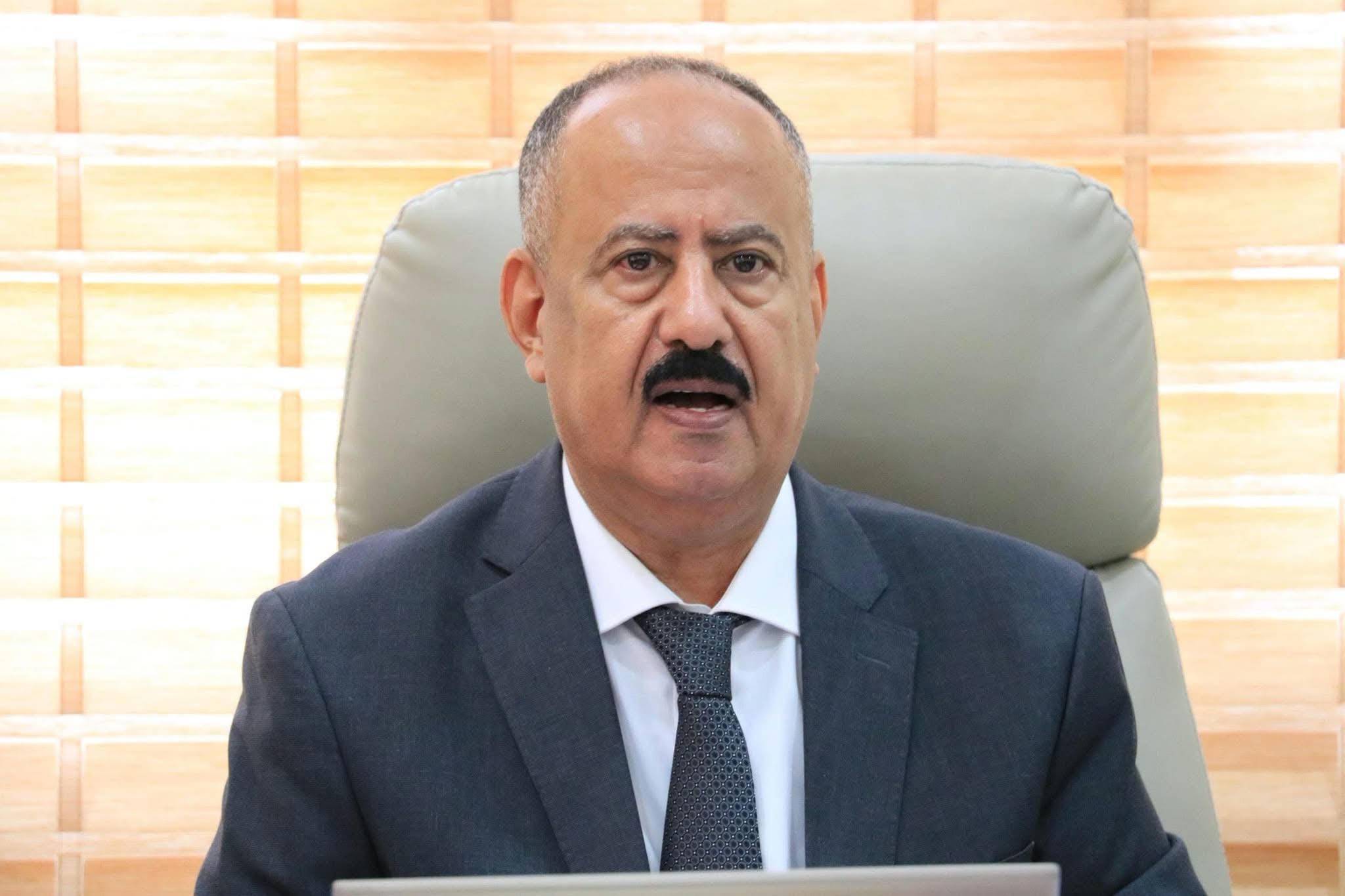
Yemeni Transport Minister Mohsen al-Omari instructed authorities to increase readiness and vigilance at airports and land crossings, activate emergency plans, tighten security and monitoring procedures, and strengthen coordination with local authorities and security agencies to ensure uninterrupted operations and the safety of critical infrastructure.
Yemeni Transport Minister Mohsen al-Omari (goverment media)
The directives were issued during a meeting with officials from the Civil Aviation and Meteorology Authority, the Land Transport Regulatory Authority, and directors of airports and border crossings to review emergency plans and the level of preparedness across ministry-affiliated institutions.
Al-Omari stressed that current circumstances require greater coordination and preparedness, noting the strategic importance of Bab al-Mandab as a vital waterway for global shipping and commerce.
He warned that any threat to international maritime routes would have consequences extending far beyond Yemen and impact global trade, and stressed that safeguarding maritime security is a shared responsibility requiring serious international action and close coordination with the Yemeni government and Saudi Arabia, which he said continues to support Yemen.
The minister also stated that Yemen has “no future under the Houthis,” describing the militias as an extremist sectarian and ideological project backed by Iran. He called for continued vigilance and strict adherence to government directives regarding developments in Bab al-Mandab and other vital areas.
Rising Wave of Displacement
Alongside the government measures, the humanitarian impact of the conflict continues to worsen. The International Organization for Migration (IOM) reported that the number of displaced people in Yemen has exceeded 347,000, including more than 14,000 individuals displaced during the last three days of the reporting period.
The organization documented the displacement of 18,780 people, representing 3,130 families, between November 8 and 14, indicating the continued flight of civilians from conflict zones and insecure areas.
Taiz Governorate has received the largest number of displaced people, hosting 143,130 individuals (41% of all recorded cases), followed by Lahj with 91,314 people (26%) and Aden with 70,404 people (20%). Additional displaced populations were recorded in Abyan, Hodeidah, Shabwa, Marib, Hadramawt, Al-Mahra, and Al-Dhalea.
The UN Office for the Coordination of Humanitarian Affairs (OCHA) reported that humanitarian agencies and partners have managed to deliver emergency assistance to more than 270,000 displaced people, roughly two-thirds of the total displaced population. More than 202,000 people have received emergency cash assistance.
In the health sector, aid programs reached over 103,000 displaced individuals, while a measles and rubella vaccination campaign launched on November 7 vaccinated more than 600,000 children.
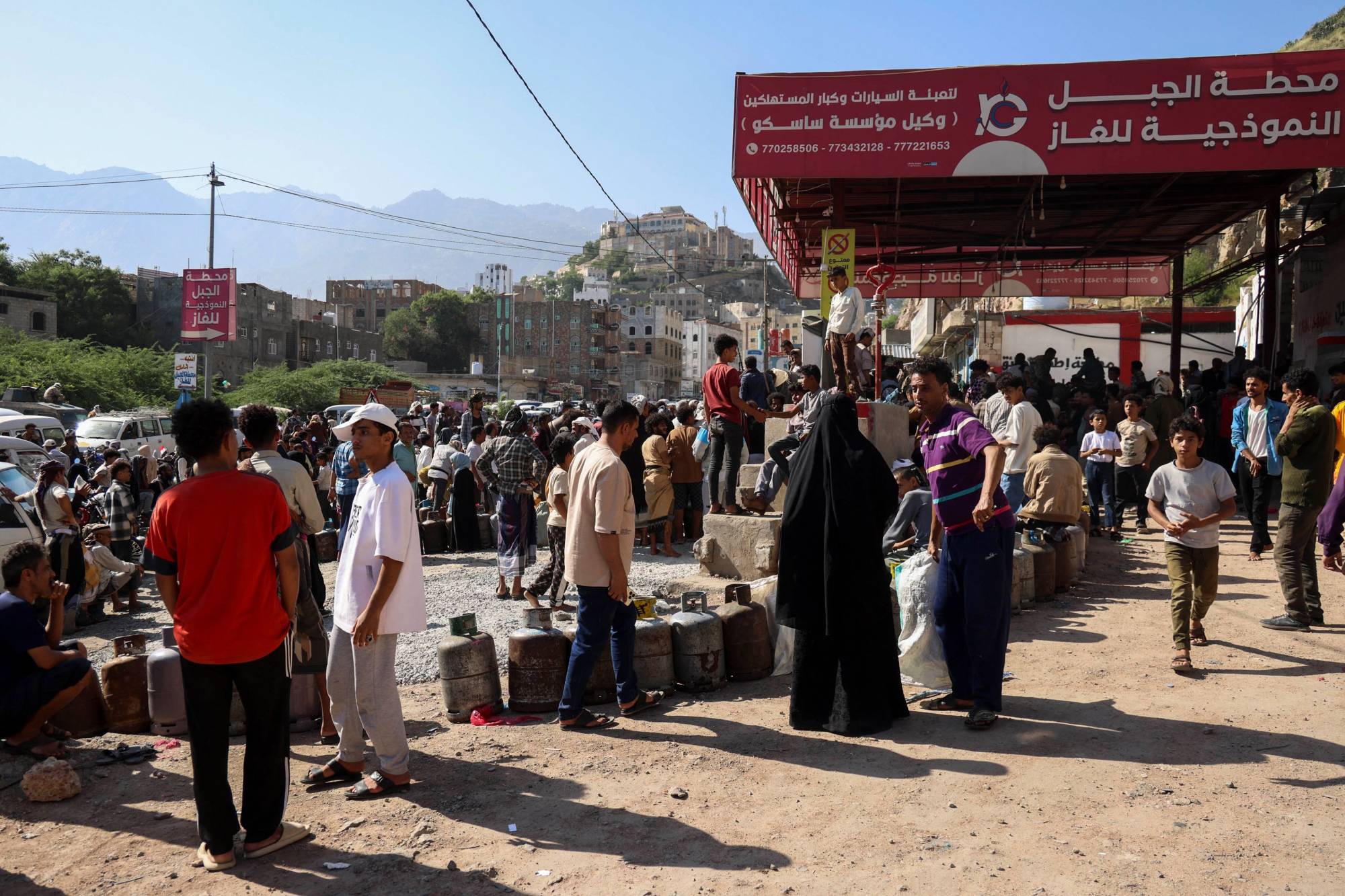
Yemenis line up to refill gas bottles at a refilling station in Taiz on October 19, 2026. (Photo by Ahmad AL-BASHA / AFP)
Civilian Casualties
The UN Human Rights Office documented more than 300 civilian casualties (killed and wounded) since the beginning of August, including over 70 deaths in cases verified by the organization.
According to the office, children account for more than one-third of all victims and nearly half of those killed. It warned that the true toll is likely much higher because the published figures include only cases independently verified by the UN.
These figures underscore the growing humanitarian consequences of the escalation, as fighting and displacement continue while the government seeks to secure critical infrastructure and reduce risks to transportation, shipping, and trade.
لم تشترك بعد
انشئ حساباً خاصاً بك لتحصل على أخبار مخصصة لك ولتتمتع بخاصية حفظ المقالات وتتلقى نشراتنا البريدية المتنوعة