


Saudi Grant to Yemen: Oil Derivatives, Power Sustainability Program

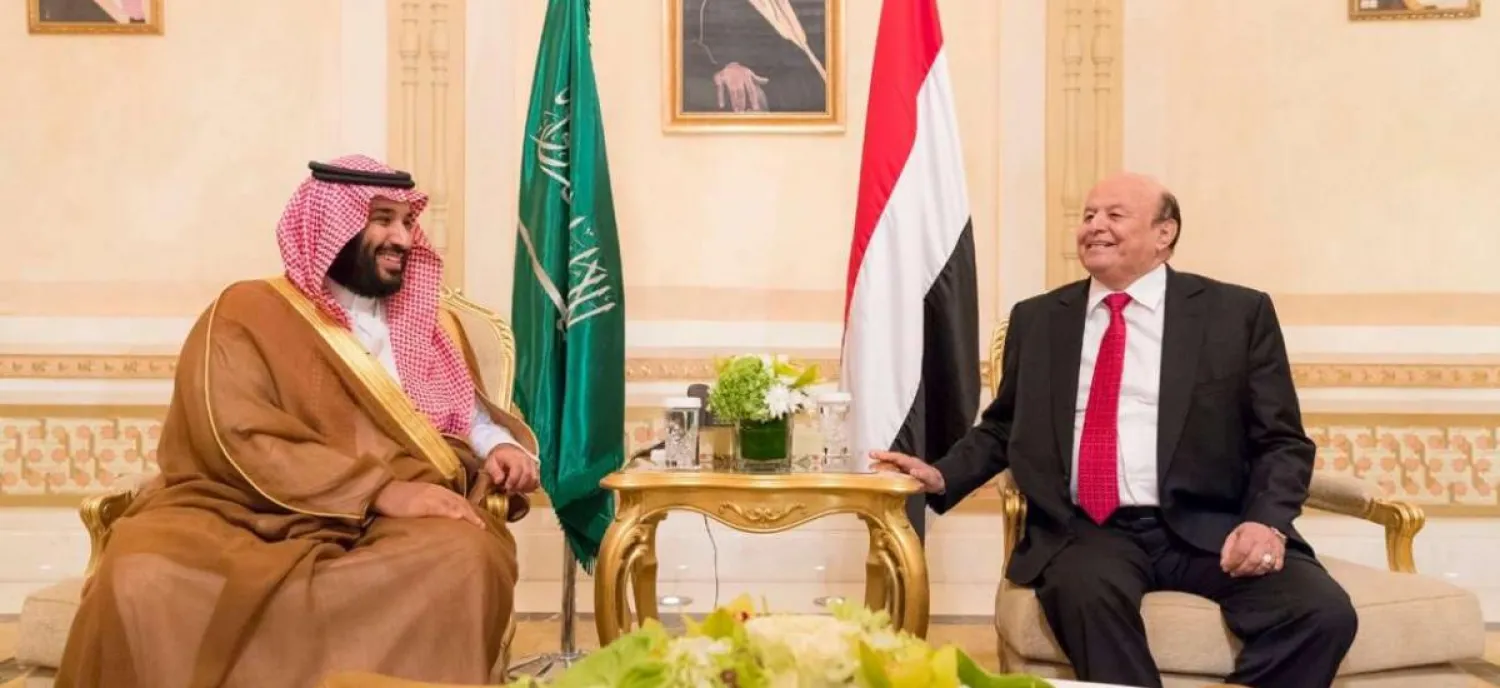
Saudi Crown Prince Mohammed bin Salman meets Yemen’s President Abd Rabbu Mansour Hadi in Riyadh. (Reuters file photo)
TT

Saudi Grant to Yemen: Oil Derivatives, Power Sustainability Program

Saudi Crown Prince Mohammed bin Salman meets Yemen’s President Abd Rabbu Mansour Hadi in Riyadh. (Reuters file photo)

A Saudi grant to Yemen, recently announced by Crown Prince Mohammed bin Salman during a phone call with Yemeni President Abd Rabbu Mansour Hadi, would provide oil derivatives worth USD 422 million through the Saudi Program for the Development and Reconstruction of Yemen (SPDRY).

The new grant will not be limited to lighting homes and stores, but establishes a broader concept that guarantees the development of a qualified and sustainable electricity sector.

Anwar Kalashat, Yemeni Minister of Electricity, told Asharq Al-Awsat that the estimated fuel grant would represent “the difference in the price of electricity fuel that will be guaranteed by the Saudi government.”

He explained: “We buy fuel from Saudi Arabia at the local market price plus the 15 percent VAT and the costs of shipping to the port of Aden, while the Saudi government pays the price difference.”

The SPDRY has set up a strategy to raise the capabilities of the government and electricity institutions, to combat corruption, and to ensure transparency and the participation of the various sectors through the following mechanism: the Yemeni government pays the value of oil derivatives at local prices, which represent 25 percent of the global market value, and the Kingdom covers the price difference that exceeds 75 percent.

An electronic platform was launched to clarify the ongoing procedure, operation and revenue collection, for the purpose of transparency.

The Saudi program will also work with Yemeni authorities to develop plans aimed at raising the production capacity of power stations by relying on gas or solar energy.

Kalashat said his country has ordered 54,000 tons of diesel and 25,000 tons of fuel oil as the first batch, with an estimated value of USD 10 million dollars, which the Yemeni government settled in advance with the value-added tax.

“This amount was paid to the SPDRY and will be transferred to Aramco,” the minister added. “The shipping costs will be borne by the Yemeni government, while the difference in the global price will be paid by Saudi Arabia.”

Kalashat continued: “We, as a government, are keen to ensure that the fuel is distributed to the stations in a transparent manner and is utilized properly. We also want to be honest with our people and our brothers in Saudi Arabia and make sure that the grant has reached its beneficiaries.”

The minister underlined the need to improve the electricity service in the future and create strategic solutions to replace the costly diesel.

He added that the government would work on a plan to make use of the Saudi grant to achieve clear and visible reforms in the electricity sector.

“The support cannot last forever as it is provided for a year within a financial ceiling of USD 422 million dollars... Then, we should rely on ourselves and enable the institution to be sustainable in the future,” he stressed.


Saudi Arabia Discusses Means to Ease Regional Tensions

Saudi Foreign Minister Prince Faisal bin Farhan bin Abdullah and Iranian Foreign Minister Abbas Araghchi. (Asharq Al-Awsat)
TT

Saudi Arabia Discusses Means to Ease Regional Tensions

Saudi Foreign Minister Prince Faisal bin Farhan bin Abdullah and Iranian Foreign Minister Abbas Araghchi. (Asharq Al-Awsat)

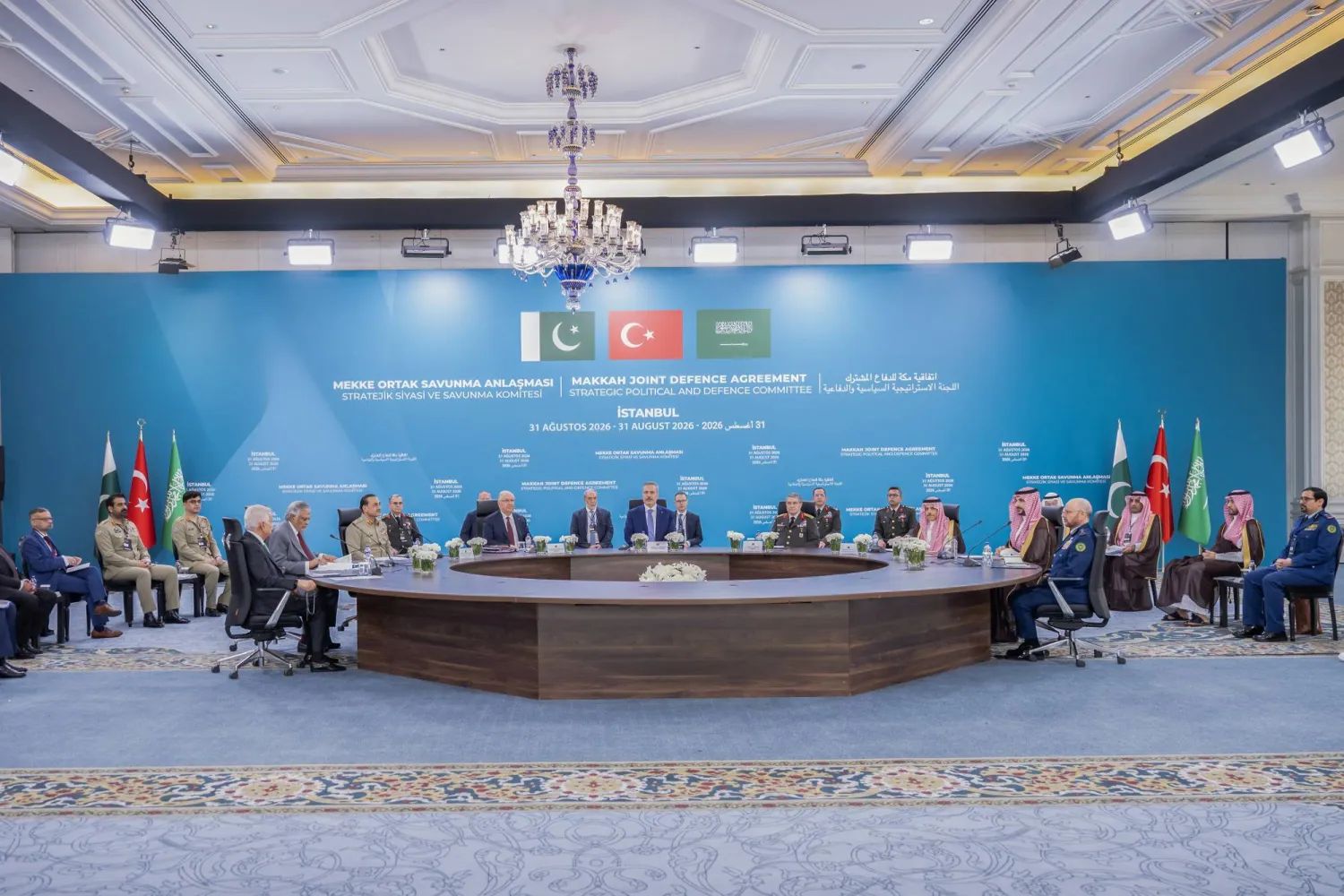
Saudi Foreign Minister Prince Faisal bin Farhan bin Abdullah held on Monday a series of a telephone calls with his various counterparts to tackle efforts to ease tensions in the region.

He held talks with Iranian Foreign Minister Abbas Araghchi on regional developments and means to contain the tensions.

He also received a telephone call from Afghanistan’s FM Amir Khan Muttaqi.

Prince Faisal telephoned Qatari Prime Minister and Foreign Minister Sheikh Mohammed bin Abdulrahman, Omani FM Badr Albusaidi and Egyptian FM Dr. Badr Abdelatty to discuss regional developments and joint efforts to restore security and stability.


Bahrain Revokes Nationality of 69 Individuals for Hailing Iranian Attacks

Bahrain Revokes Nationality of 69 Individuals for Hailing Iranian Attacks
TT

Bahrain Revokes Nationality of 69 Individuals for Hailing Iranian Attacks

Bahrain Revokes Nationality of 69 Individuals for Hailing Iranian Attacks

Bahraini sources said the authorities in Bahrain have revoked the nationality of individuals hailing the hostile acts carried out by Iran against Bahrain.

The sources said on Monday that, in implementation of the Royal directives, the nationality of 69 individuals of non-Bahraini origin has been revoked for sympathizing with and glorifying the criminal Iranian hostile acts.

Iran had launched repeated attacks on Bahrain and other Gulf states during the war it waged against the United States and Israel.

Last week, Hamad bin Isa Al Khalifa, King of Bahrain, tasked Salman bin Hamad Al Khalifa, the Crown Prince and Prime Minister, with immediately initiating strict measures against those involved in undermining national security, including reviewing their entitlement to hold Bahraini nationality.

The Bahrain News Agency reported that King Hamad, during a meeting with senior officials in the Kingdom, said the state is proceeding with full resolve to address the repercussions of the war, noting the assignment of the Crown Prince and Prime Minister, in the coming phase, “to implement comprehensive and decisive measures, by establishing appropriate programmes to address any shortcomings identified, whether in defence or in the economy.”

This is in addition to “the immediate commencement of taking the necessary action against anyone who has allowed themselves to betray the nation or undermine its security and stability, and to consider who deserves Bahraini nationality and who does not, so that the necessary measures are applied against them, especially as the situation remains delicate, and we must rely on what is dictated by the national conscience, on the basis that the nation is a great trust in honour and custom, with no leniency in squandering it or failing in its duties.”


Saudi Crown Prince Receives Written Message from Bangladeshi Prime Minister

Prince Mohammed bin Salman bin Abdulaziz Al Saud, Crown Prince and Prime Minister, chairs the Cabinet meeting in Jeddah. (SPA)
TT

Saudi Crown Prince Receives Written Message from Bangladeshi Prime Minister

Prince Mohammed bin Salman bin Abdulaziz Al Saud, Crown Prince and Prime Minister, chairs the Cabinet meeting in Jeddah. (SPA)

Saudi Prince Mohammed bin Salman bin Abdulaziz Al Saud, Crown Prince and Prime Minister, received a written message from Prime Minister of the People’s Republic of Bangladesh Tarique Rahman concerning relations between the two countries.

The message was received by Vice Minister of Foreign Affairs Waleed Elkhereiji during his meeting today in Riyadh with Foreign Affairs Adviser to the Bangladeshi prime minister Humayun Kabir, SPA reported.

The meeting reviewed bilateral relations and discussed topics of mutual interest.