Changing Griffiths Won’t Settle Yemen War, Says UK Ambassador Aron

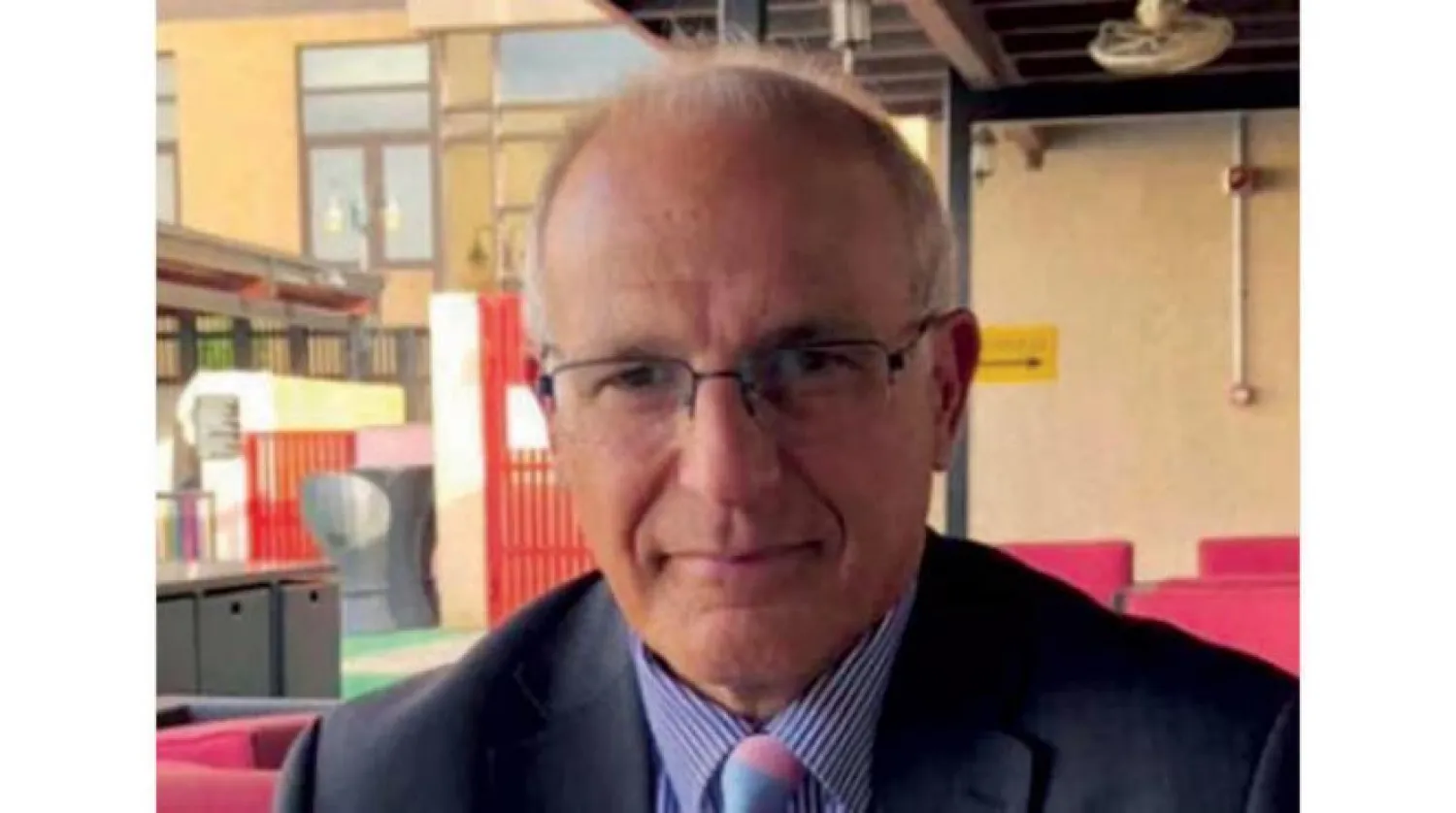
British Ambassador to Yemen Michael Aron | Asharq Al-Awsat
TT

Changing Griffiths Won’t Settle Yemen War, Says UK Ambassador Aron

British Ambassador to Yemen Michael Aron | Asharq Al-Awsat

Changing UN Special Envoy for Yemen Martin Griffiths will not settle the six-year conflict there. Still, his appointment as Under-Secretary-General for Humanitarian Affairs and Emergency Relief Coordinator fulfills the diplomat’s “dream,” the UK ambassador to Yemen, Michael Aron, told Asharq Al-Awsat.

“We need Houthis to be serious. Is the current plan a failure? Maybe. Accordingly; we need new efforts, but the envoy is no problem,” said Aron, adding that the solution lies in the hands of Yemenis.

Commenting on the UN’s last week announcement appointing Griffiths as a humanitarian coordinator, Aron said: “The new position is his dream.”

“He wants it because it is an excellent new position,” said the British diplomat while noting that Griffiths’ new appointment was an advancement.

“I think that three years is enough,” Aron noted, adding that the diplomacy in Yemen now needs new efforts from another person.

The selection of a new envoy is in the hands of the UN Secretary-General and Security Council, he reaffirmed, while adding that Griffiths will travel to Jordan and Saudi Arabia respectively in the coming ten days.

However, Aron ruled out the possibility of Griffiths meeting with Houthis after the Iran-backed group having first refused to meet him in Muscat.

As for who will succeed Griffiths, he laughed off rumors of his nomination for the post.

“No, I am not among the candidates for the position,” he confirmed.

When asked about what a new envoy could bring to the table of negotiations for resolving the conflict in battle-weary Yemen, Aron said: “I think the only thing that can help solve the problem is Houthis admitting a settlement is better than a protracted war.”

“I do not think that Houthis want the war to continue forever under any circumstance,” he noted, reaffirming that Houthis are also Yemeni citizens, despite their seeming misunderstanding of current conditions and politics.


Israel’s Ben-Gvir Advocates Killing ‘30 to 40’ People in Gaza Nightly While Speaking to Ex-Hostage

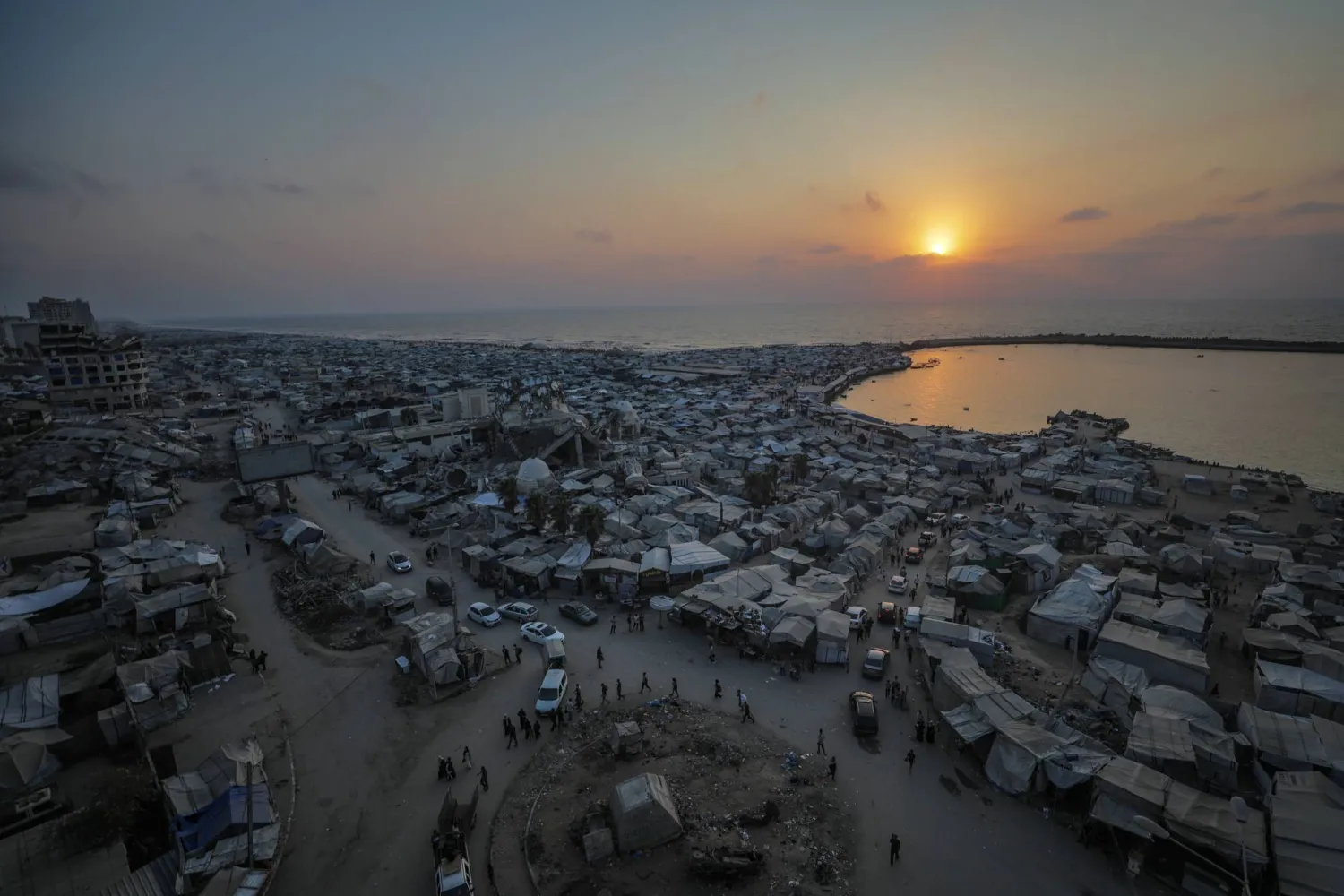
Thousands of makeshift tents of displaced Palestinian families are put up on the beach in western Gaza City, Gaza Strip, 14 August 2026. (EPA)
TT

Israel’s Ben-Gvir Advocates Killing ‘30 to 40’ People in Gaza Nightly While Speaking to Ex-Hostage

Thousands of makeshift tents of displaced Palestinian families are put up on the beach in western Gaza City, Gaza Strip, 14 August 2026. (EPA)

An extremist Israeli lawmaker in Prime Minister Benjamin Netanyahu's coalition publicly advocated for killing “30 to 40” people in Gaza each night, comments that surfaced Sunday and were quickly shared by Palestinian media.

Minister of National Security Itamar Ben-Gvir made the statement while speaking to a former Gaza-held hostage, Rom Braslavski, on Braslavski's podcast. The two were discussing Israel's recovery from the Hamas attack of Oct. 7, 2023, when Ben-Gvir criticized Israel's recent drawdown of strikes in Gaza.

“It’s no secret, I disagree with the prime minister,” he said. “I think targeted assassinations should be carried out in Gaza, taking down 30 to 40 every night. Not just those who pose an immediate threat — there are people there who are not worthy of life. They shouldn’t live. They’re not even people.”

In the past, similar statements by Ben-Gvir and other Israeli officials were widely condemned. Many have been presented to the UN’s world court as evidence of genocidal intent. Israel denies it has committed genocide in Gaza.

Israel’s domestic media has made scarce mention of the statement, highlighting how once-fringe ideologies like Ben-Gvir’s are surging in the leadup to Israeli elections Oct. 27.

Figures like Ben-Gvir have become more popular among Israelis since Hamas’ brutal attack in 2023, when the fighters killed about 1,200 people and took 251 hostage. Many hostages have recounted long-term starvation, physical and psychological abuse and, in some cases, sexual abuse.

Ben-Gvir does not have power over the country’s military and cannot order strikes on Gaza. But, after operating for decades within Israel's far-right fringe, he is now one of the most influential people in the country.

He has substantial control over key parts of Israel’s security apparatus, running the country’s prisons — where thousands of Palestinians from Gaza and the West Bank are incarcerated — as well as the national police force.

He has previously boasted of lessening food rations for Palestinian prisoners. Israel’s top court ruled in 2025 that the prison service under Ben-Gvir was depriving Palestinians of a minimum subsistence diet.

Ben-Gvir criticizes drawdown of Israeli strikes in Gaza

Until recently, Israel was striking Gaza nearly every day, attacks that have killed over 1,250 people since an October truce deal came into effect, according to Gaza’s Health Ministry.

Israel's military, which says the strikes have targeted Hamas fighters, appeared to ease off on the attacks in a quiet concession to US President Donald Trump after Netanyahu rejected the president’s latest attempt to move the truce forward.

Israeli media last week reported that the authority for carrying out strikes has now been limited to the army’s chief of staff, raising the ire of right-wing lawmakers such as Ben-Gvir.

Ben-Gvir advocates mass emigration, expulsion of Palestinians from Gaza

In the same taped appearance, the lawmaker advocated for mass emigration of Palestinians from Gaza — a proposal that international lawyers say could amount to ethnic cleansing — and resettlement of Gaza by Israel.

Twenty years ago, Israel withdrew from the Gaza Strip, dismantling a block of 21 Jewish settlements known as “Gush Katif” and pulling out its forces.

“I see all of Gaza as ours,” said Ben-Gvir in the interview. “Settlements not just in Gush Katif but throughout Gaza, encouraging as much emigration as possible, sending them to their countries, and for the terrorists, no emigration, nothing, just to kill them one by one.”

Trump’s latest proposal involves Hamas gradually giving up its weapons while Israeli forces halt their attacks and begin withdrawing from Gaza. Hamas accepted the deal, although the group linked the surrender of its heaviest weapons to the creation of a Palestinian state, something Israel’s current government and most of its political class adamantly reject.

Netanyahu says Israel will not retreat from any of its positions in Gaza until Hamas has been completely disarmed. The stance leaves other elements of the ceasefire, including the deployment of international forces and any reconstruction of the devastated territory, on hold.



Pope Calls for an End to West Bank Israeli Settler Violence Against Palestinians

Israeli troops arrive during a military raid in the town of Qusra, south of Nablus, West Bank, 16 August 2026. (EPA)
TT

Pope Calls for an End to West Bank Israeli Settler Violence Against Palestinians

Israeli troops arrive during a military raid in the town of Qusra, south of Nablus, West Bank, 16 August 2026. (EPA)

Pope Leo called on Sunday for an end to violence against Palestinians in the occupied West Bank, amid a surge of attacks by militant settlers and a siege in the territory's village of Qusra.

Israeli settlers encircled houses after cutting off water and electricity, in what rights groups have said is a concerted effort to seize more land, ‌and further ‌eat into territory where Palestinians aim ‌to ⁠establish a state.

"I ⁠renew my appeal for an end to the repeated violence against the Palestinian civilian population in the West Bank," the Pope said, without mentioning specific confrontations or attacks.

"I urgently ask the international community to take ⁠action so as to advance the ‌two-state solution, for ‌a fair and lasting peace," the Pope added after ‌noon prayers at his Castel Gandolfo residence ‌outside Rome.

The Vatican has long backed the idea of a future Palestinian state, which has been recognized by more than 150 of 193 ‌UN member states as encompassing the Gaza Strip and West Bank, including East ⁠Jerusalem.

Israeli ⁠Prime Minister Benjamin Netanyahu's right-wing coalition government has overseen massive settlement construction in the West Bank that Finance Minister Bezalel Smotrich says is aimed at burying the idea of such a state.

The United Nations and most governments consider the settlements to be illegal under international law related to military occupation. Israel seized the West Bank in the 1967 war, but argues the territory is disputed rather than occupied.


Egypt’s Sisi Discusses Gaza with Trump Envoy Kushner

Egyptian President Abdel Fattah al-Sisi. (dpa file)
TT

Egypt’s Sisi Discusses Gaza with Trump Envoy Kushner

Egyptian President Abdel Fattah al-Sisi. (dpa file)

US President Donald Trump's envoy and son-in-law Jared Kushner talked with Egyptian President Abdel Fattah al-Sisi on Sunday about the implementation of the Gaza ceasefire, Sisi's spokesperson said.

The meeting in the Mediterranean city of El-Alamein "stressedthe need for all parties to fulfill their obligations under the Gaza Strip ceasefire agreement", spokesperson Mohamed El-Shennawy said in a statement.