


Journey of Abdul Malik Al-Sheikh…From Diriyah to the US

Journey of Abdul Malik Al-Sheikh…From Diriyah to the US
TT

Journey of Abdul Malik Al-Sheikh…From Diriyah to the US

Journey of Abdul Malik Al-Sheikh…From Diriyah to the US

"My Journey from Diriyah to the United States" by Saudi Writer Abdul Malik Al-Sheikh, is a biography-like book in which he wrote about a valuable experience and explored different situations and events in his life that started in a simple environment far from the sophistication of modern cities…before he moved to the crowded and lively city of New York to study.

He lived between the palms of Diriyah, the first capital of Saudi Arabia, and the old neighborhoods of Riyadh, where he witnessed the growth of his country, and its urban advancement, and studied in its schools. But, when the opportunities of studying abroad emerged, he was the first to join. He traveled to the US and started a new academic journey. After years of fatigue and bitter separation from his family and beloved ones, he returned to his home country to serve in leading positions in both the private and public sectors. Then, he decided to retire, took a break, and started recalling memories that took him back to many unforgettable scenes, which he highlighted in a book that speaks of his journey.

The writer's memory unleashed all the scenes it stored from Diriyah, his hometown, where he spent his childhood. He kept visiting the city and enjoyed spending time in it as a child, mostly in his uncles' farm "Om Jarrar", where he was born in 1955. Then, he moved to a mud house in the "Al-Bujairi" neighborhood, which has been restored and turned into a park, an open space, and a tourist landmark in the capital. He explored the challenges from his childhood, like crossing the route leading from the palace to the other side of the farm, passing by a pool currently known as "Al Litha;" and the small store that children and residents visited every day. Sweets, dinner table essentials, and parental orders were an integral part of the day in that region.

He also wrote about the children of Diriyah and their hobbies. At the time, they believed that burning one of their hands could help them hunt birds with a small tool similar to a catapult, and played a popular local game named "Tash ma Tash," during which they used to gather and open an agitated soda bottle.

Among the many things he recalled in his book were his memories in Riyadh, including the region nearby the Grand Mosque also known as Imam Turki bin Abdullah Mosque. It was a commercial area featuring many markets, the popular streets "Tamiri" and "Al-Wazir, and the "Dakhna" street, also known as "The Street of Scholars," in the heart of the city, where scholars and judges lived, including Saudi Arabia's Mufti Sheikh Mohammad Ibrahim.

Al Sheikh recalled the Mohammadiya School established in 1953, where he studied, in Al Salam Street, in which lived Prince Abdullah bin Abdul Rahman, the brother of King Abdul Aziz. The prince owned a palace and a farm to the west of the school, which were turned into a museum many years ago. The writer then joined an institute in the "Al Batha" neighborhood, which included a street that had the same name, and is considered one of the most prominent streets in Riyadh. He also didn't forget the capital's historic towns, and the popular hobbies in each of them.

While reading the book, you might be surprised by some situations that the author lived while studying in the United States, in 1975. New York was his first stop. He arrived in the city on a Friday, on which his country's consulate was closed. He had to wait until Monday, and spent three days in the hotel, afraid of the so-called New York criminal groups.

"I pictured Abu Al Ala' Al Ma'arri as a prisoner, and I had two choices: to stay in my room and never come out; or to get out and face my fears and assumptions regardless of the results. I decided not to waste my days with illusions, because I didn't leave my country and travel to New York to lock myself and live like a prisoner," he wrote.

He finally decided to get out and was surprised to find that all his assumptions were not true.

After returning to Saudi Arabia, he served in major posts. He represented his country's justice ministry in the Saudi-US strategic dialogue commission founded after September 11.

The commission contributed to facilitating mutual visits, in which he took part with other judges and consultants, to many US courts, including the reconciliation office, and the Minnesota Federal Court.

Al Sheikh began his writing journey after he retired from his career, and has joined the Asharq Al-Awsat family.



Culture Being Strangled by Kosovo's Political Crisis

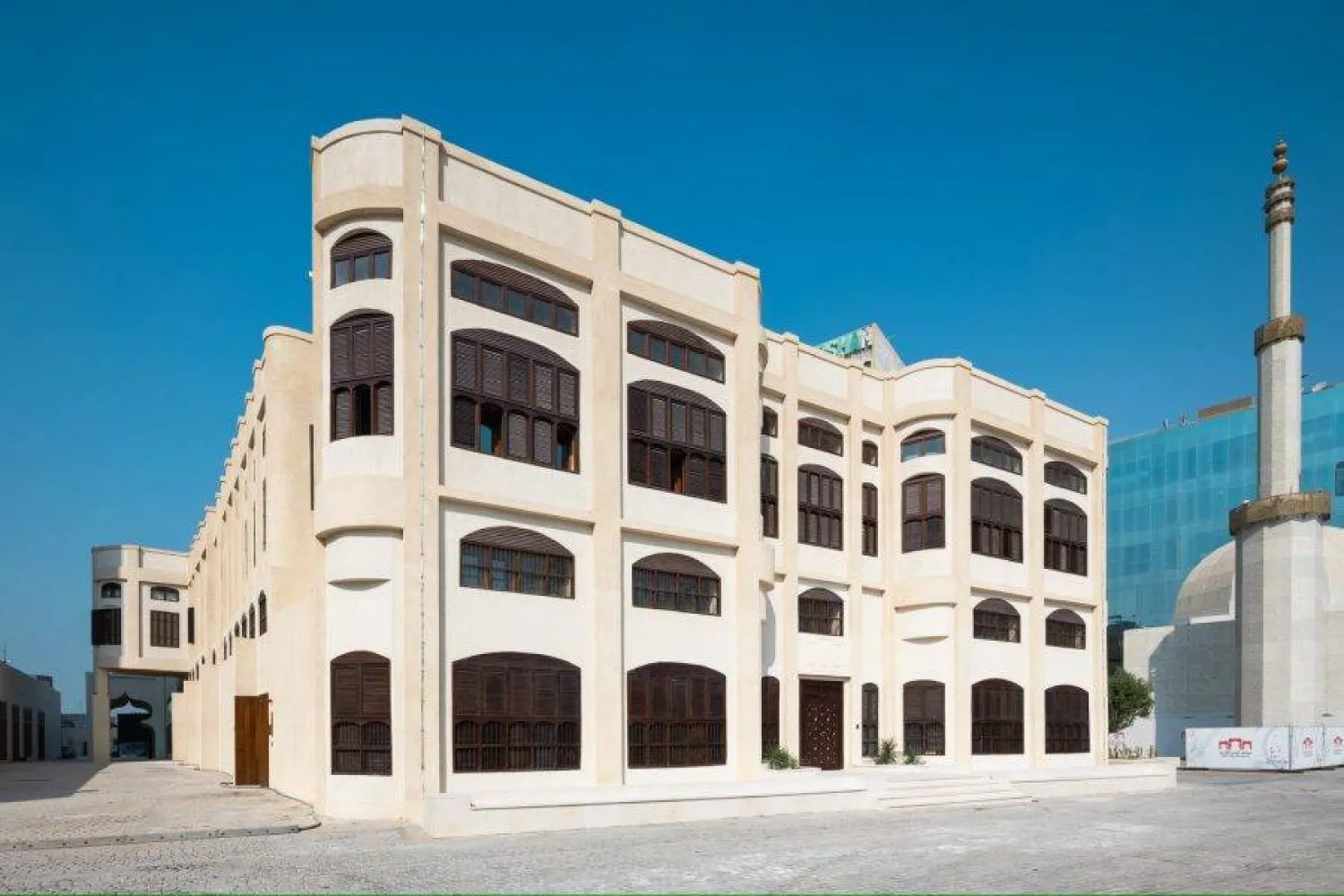
The cinema has been waiting for much-needed repairs for years. Armend NIMANI / AFP
TT

Culture Being Strangled by Kosovo's Political Crisis

The cinema has been waiting for much-needed repairs for years. Armend NIMANI / AFP

Kosovo's oldest cinema has been dark and silent for years as the famous theater slowly disintegrates under a leaky roof.

Signs warn passers-by in the historic city of Prizren that parts of the Lumbardhi's crumbling facade could fall while it waits for its long-promised refurbishment.

"The city deserves to have the cinema renovated and preserved. Only junkies gathering there benefit from it now," nextdoor neighbor butcher Arsim Futko, 62, told AFP.

For seven years, it waited for a European Union-funded revamp, only for the money to be suddenly withdrawn with little explanation.

Now it awaits similar repairs promised by the national government that has since been paralyzed by inconclusive elections in February.

And it is anyone's guess whether the new government that will come out of Sunday's snap election will keep the promise.

'Collateral damage'

Cinema director Ares Shporta said the cinema has become "collateral damage" in a broader geopolitical game after the EU hit his country with sanctions in 2023.

The delayed repairs "affected our morale, it affected our lives, it affected the trust of the community in us," Shporta said.

Brussels slapped Kosovo with sanctions over heightened tensions between the government and the ethnic Serb minority that live in parts of the country as Pristina pushed to exert more control over areas still tightly linked to Belgrade.

Cultural institutions have been among the hardest-hit sectors, as international funding dried up and local decisions were stalled by the parliamentary crisis.

According to an analysis by the Kosovo think tank, the GAP Institute for Advanced Studies, sanctions have resulted in around 613 million euros ($719 million) being suspended or paused, with the cultural sector taking a hit of 15-million-euro hit.

'Ground zero'

With political stalemate threatening to drag on into another year, there are warnings that further funding from abroad could also be in jeopardy.

Since February's election when outgoing premier Albin Kurti topped the polls but failed to win a majority, his caretaker government has been deadlocked with opposition lawmakers.

Months of delays, spent mostly without a parliament, meant little legislative work could be done.

Ahead of the snap election on Sunday, the government said that more than 200 million euros ($235 million) will be lost forever due to a failure to ratify international agreements.

Once the top beneficiary of the EU Growth Plan in the Balkans, Europe's youngest country now trails most of its neighburs, the NGO Group for Legal and Political Studies' executive director Njomza Arifi told AFP.

"While some of the countries in the region have already received the second tranches, Kosovo still remains at ground zero."

Although there have been some enthusiastic signs of easing a half of EU sanctions by January, Kurti's continued push against Serbian institutions and influence in the country's north continues to draw criticism from both Washington and Brussels.

'On the edge'

Across the river from the Lumbardhi, the funding cuts have also been felt at Dokufest, a documentary and short film festival that draws people to the region.

"The festival has had to make staff cuts. Unfortunately, there is a risk of further cuts if things don't change," Dokufest artistic director Veton Nurkollari said.

"Fortunately, we don't depend on just one source because we could end up in a situation where, when the tap is turned off, everything is turned off."

He said that many in the cultural sector were desperate for the upcoming government to get the sanctions lifted by ratification of the agreements that would allow EU funds to flow again.

"Kosovo is the only one left on the edge and without these funds."


Saudi Culture Ministry Concludes Intangible Cultural Heritage Documentation Project in Al-Ahsa

Saudi Culture Ministry Concludes Intangible Cultural Heritage Documentation Project in Al-Ahsa
TT

Saudi Culture Ministry Concludes Intangible Cultural Heritage Documentation Project in Al-Ahsa

Saudi Culture Ministry Concludes Intangible Cultural Heritage Documentation Project in Al-Ahsa

The Saudi Ministry of Culture concluded the project to survey, document, and archive intangible cultural heritage in Al-Ahsa Governorate by holding a workshop in the governorate, attended by stakeholders and relevant entities, as part of the ministry’s efforts to preserve national cultural heritage and strengthen Saudi cultural identity, reported the Saudi Press Agency on Thursday.

The project included a field survey covering various cities and villages across Al-Ahsa, during which diverse elements of intangible cultural heritage were identified and documented. These included oral traditions, performing arts, skills associated with traditional cultural crafts, social practices, and knowledge related to nature and the local environment.

The work was carried out in cooperation with concerned entities, specialized experts, and local practitioners.

The workshop reviewed the project’s final outcomes and presented reports on documentation and digital archiving activities.

It discussed mechanisms to ensure the sustainability of these efforts and the transmission of this cultural legacy to future generations, contributing to greater community awareness of the value and importance of intangible cultural heritage.


Hail Region Pavilion Showcases Heritage Artifacts at Camel Festival

The pavilion aims to connect visitors to Hail's history and social legacy - SPA
TT

Hail Region Pavilion Showcases Heritage Artifacts at Camel Festival

The pavilion aims to connect visitors to Hail's history and social legacy - SPA

Hail Region pavilion at the Ministry of Interior’s Security Oasis exhibition, part of the 10th King Abdulaziz Camel Festival in Al-Sayahid, features heritage artifacts that reflect the region's renowned hospitality.

The display includes ancient trays and copperware from nearly seventy years ago.

According to SPA, these traditional food preparation and serving vessels have garnered significant interest from visitors. They document daily life in old Hail and its deep-rooted social traditions, particularly in gatherings and special occasions.

The pavilion aims to connect visitors to Hail's history and social legacy, fostering appreciation for national heritage and ensuring cultural preservation for future generations.