Lebanon Currency Drops to New Low as Financial Meltdown Deepenshttps://english.aawsat.com/home/article/3024861/lebanon-currency-drops-new-low-financial-meltdown-deepens
Lebanon Currency Drops to New Low as Financial Meltdown Deepens
The Lebanese pound has lost around 90 percent of its value against the dollar. (AFP)
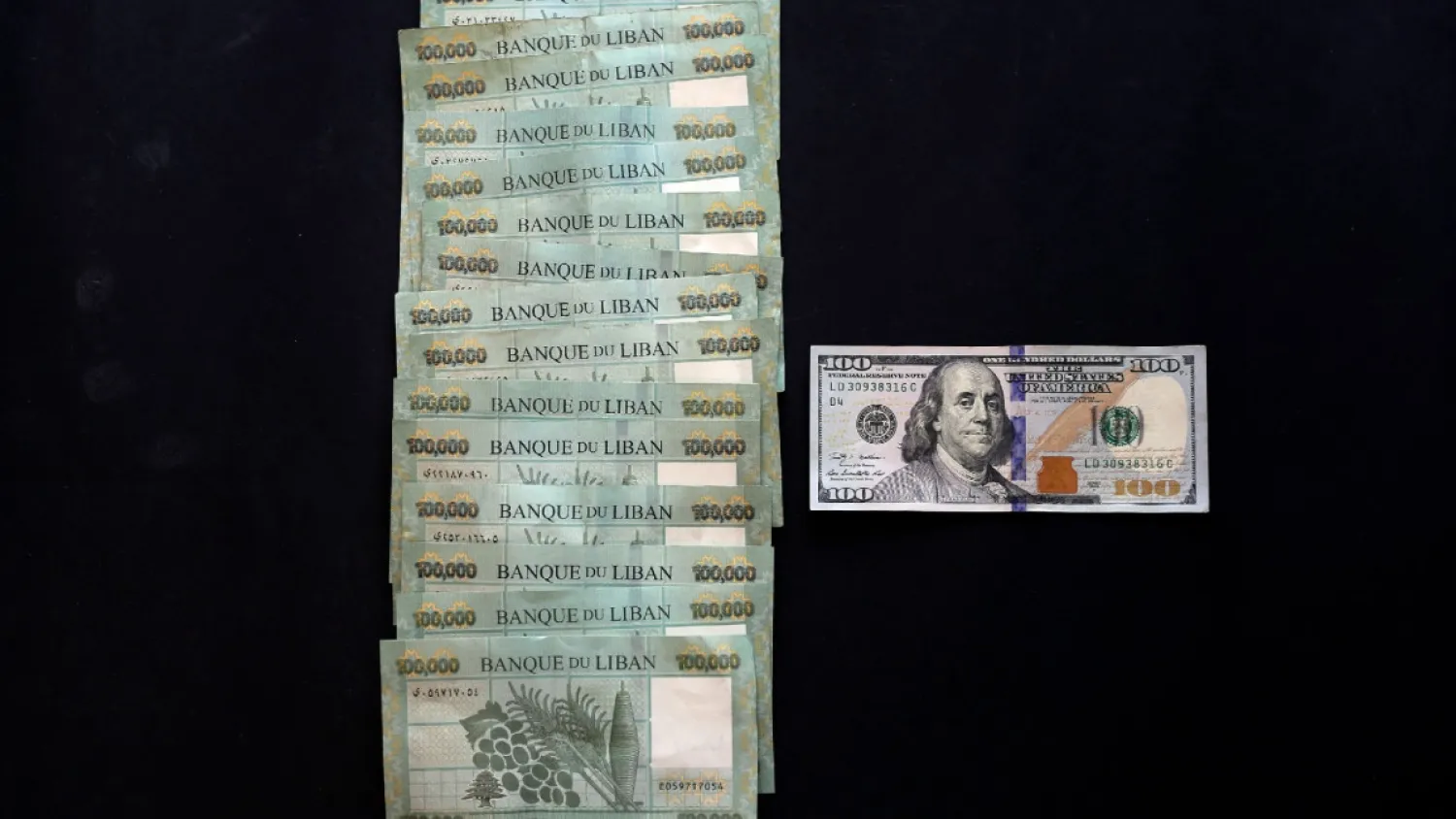
Lebanon's currency crashed past a milestone on Sunday reaching a new low against the dollar, as the country's financial meltdown and political deadlock linger.
Market dealers said the Lebanese pound was trading at around 15,150 to the dollar, losing around 90% of what it was worth in late 2019, when Lebanon's economic and financial crisis erupted.
Lebanon is in the throes of a deep economic meltdown that is threatening its stability. The World Bank has called it one of the deepest depressions of modern history.
The last time the pound hit a low of 15,000 in March protesters took to the streets across Lebanon for over a week, blocking roads by burning tires.
Foreign reserves, used to fund a subsidy program for basic goods including fuel, medicine and wheat, are running out and shortages have been worsening across the board in recent weeks.
Some hospitals are ruling out elective procedures and only performing emergency surgeries to ration what is left of medical supplies. Most pharmacies staged a two-day strike this week as medications run out and hours long car queues for gasoline have frustrated motorists causing squabbles.
The financial collapse is taking place against a backdrop of fractious politicians bickering over cabinet formation.
Prime Minister-designate Salad al-Hariri has been at loggerheads with President Michel Aon over naming ministers since his designation in October. The former government has continued in a caretaker capacity after having resigned in the aftermath of the Aug. 4 Beirut port blast.
Depositors, locked out of their dollar accounts since last year, have been promised some access starting July, with each customer getting $400 in cash and an equivalent in Lebanese pounds at a rate close to market value.
But the International Monetary Fund on Thursday criticized Lebanon's proposal for dollar deposit withdrawals and a capital control law yet to be approved by parliament saying both measures would only be meaningful as part of broader reforms.
Türkiye Pressures Iraq to Operate Kirkuk-Ceyhan Pipeline at Full Capacity Before July 27https://english.aawsat.com/business/5291403-t%C3%BCrkiye-pressures-iraq-operate-kirkuk-ceyhan-pipeline-full-capacity-july-27
Türkiye Pressures Iraq to Operate Kirkuk-Ceyhan Pipeline at Full Capacity Before July 27
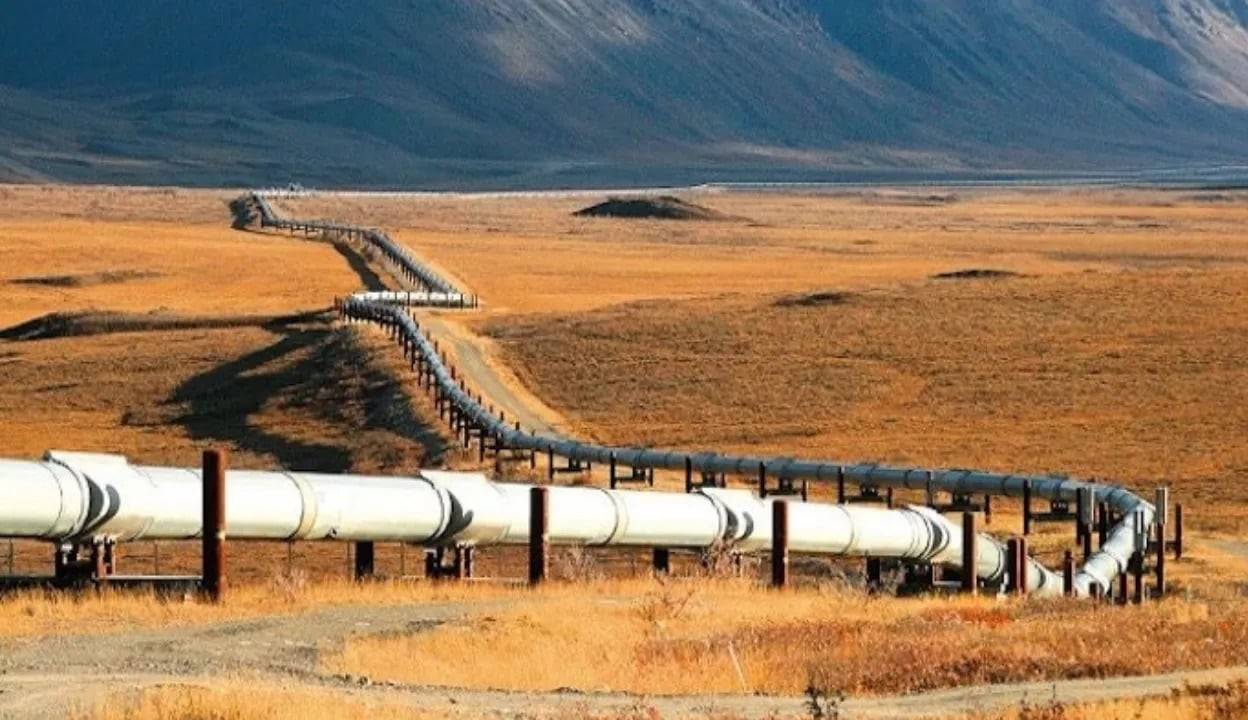
A worker carries out maintenance on the Kirkuk-Ceyhan pipeline, which transports oil from Iraq to Türkiye for export abroad. REUTERS
Baghdad and Ankara are racing to draft a new strategic oil transport agreement as the deadline for a landmark 1973 accord approaches on July 27.
High-level talks opened in Ankara, led by Turkish Energy and Natural Resources Minister Alparslan Bayraktar, with an Iraqi delegation that included the deputy foreign and oil ministers.
The talks focused on an alternative to the current agreement, after Türkiye firmly rejected Baghdad’s request to extend the existing terms for another year.
Ankara is pressing to raise operations on the Kirkuk-Ceyhan pipeline to its full capacity of 1.5 million barrels per day, up from current limited flows of no more than 180,000 bpd. It has threatened to halt exports immediately by the end of the month if no deal is reached, with the final decision resting with President Recep Tayyip Erdogan.
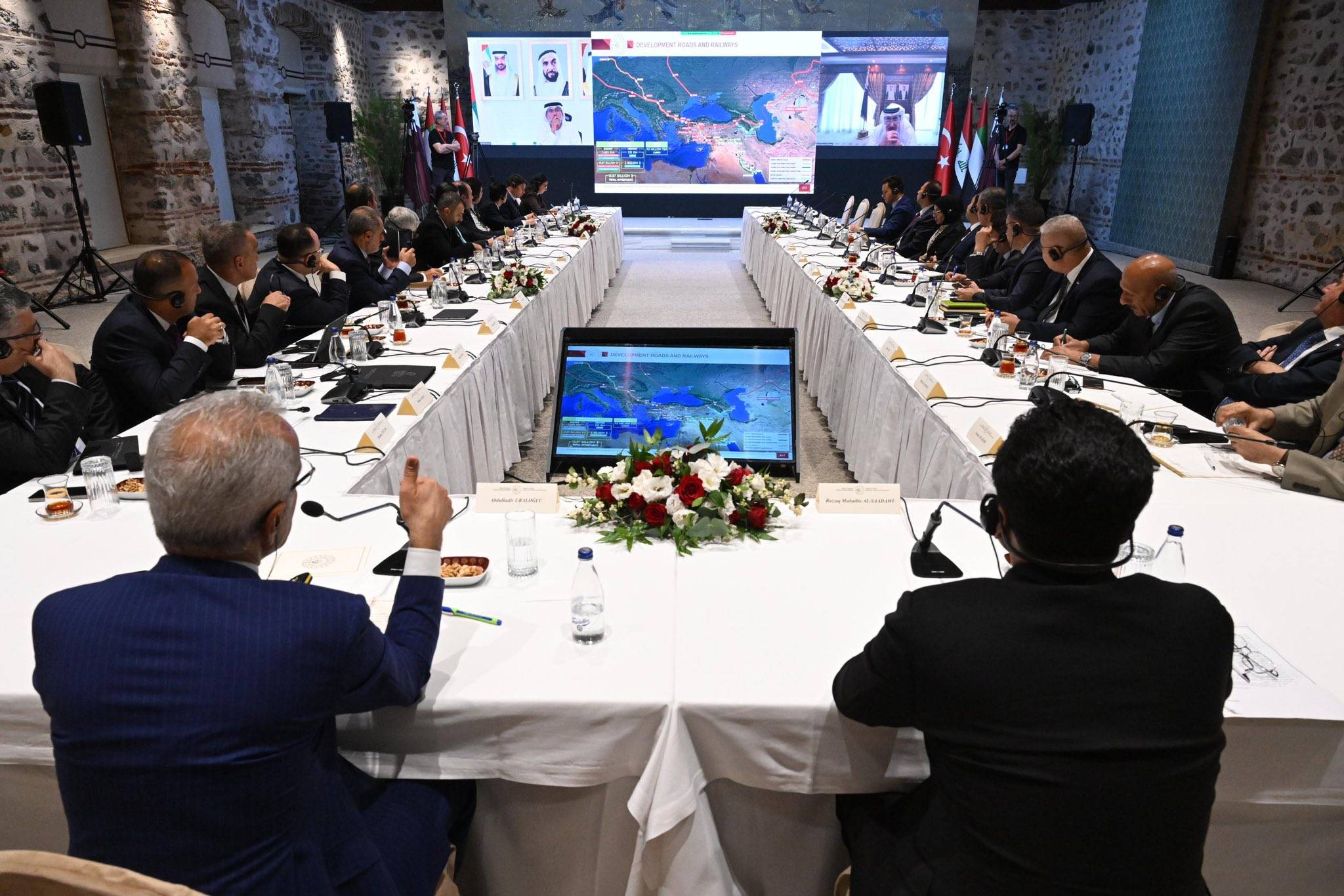
A Turkish-Iraqi meeting in Istanbul on the Development Road project, with ministers from Qatar and the UAE participating via video conference (Turkish Ministry of Transport and Infrastructure)
Arbitration crisis
Ankara says there is no point extending an agreement that has already gone through international arbitration in Paris. It wants a broader deal lasting five to 10 years, with binding clauses requiring Iraq to pay compensation for any unused capacity.
The pressure follows the March 2023 shutdown of the pipeline after an International Chamber of Commerce ruling ordered Türkiye to pay Baghdad $1.5 billion in damages. The halt cost Iraq more than $23 billion before pumping partially resumed late last year.
Bayraktar wrote on X that he met senior officials from Iraq’s oil and foreign ministries in Ankara on Wednesday to discuss energy cooperation, including the Iraq-Türkiye crude oil pipeline that runs from Kirkuk to the port of Ceyhan in Türkiye’s southern province of Adana.
The Iraqi delegation included Deputy Foreign Minister Hussein Bahr Al-Uloom, Deputy Oil Minister Naser Azez Jabbar, and Iraq’s ambassador to Ankara, Majid Al-Lachmawi.
The Kirkuk-Ceyhan pipeline (Turkish media)
New opportunities for cooperation
Bayraktar said the talks focused mainly on the crude oil pipeline between the two countries, as well as wider opportunities for cooperation in natural gas and electricity.
He said Ankara looked forward to working closely with the new Iraqi government to improve existing energy infrastructure and support it through new and innovative links.
Within Ankara’s geopolitical vision for the region, Bayraktar said Türkiye does not see the joint Development Road project merely as a trade corridor for goods.
Instead, he described it as an “integrated strategic energy route” that could strengthen regional supply security and boost trade within the region. He said partnership on the file was crucial to stabilizing regional energy markets.
The Development Road project includes a road and railway extending from Iraq to Türkiye and its ports. It runs about 1,200 km inside Iraq and aims to move goods between Gulf states and Europe.
Turkish sources said Türkiye had rejected extending the agreement on Iraqi oil exports through the Kirkuk-Ceyhan pipeline under the current terms set when it was signed on July 27, 1973.
Ali Nizar, head of Iraq’s state oil marketer SOMO, said the government had informed Türkiye of the extension proposal to keep talks on the pipeline’s future moving without interruption.
Ankara says there is “no benefit in extending an agreement that has been subject to arbitration” and is demanding a new deal. It has proposed a mechanism to guarantee full use of the pipeline, along with other options, including extending it to southern Iraq.
The port of Ceyhan is a vital outlet for Iraqi oil exports. Iraq’s main oil export terminal in Basra has been affected by the closure of the Strait of Hormuz since the start of US-Israeli attacks on Iran in late February, and was also affected by Israeli attacks last year.
Turkish pressure
Türkiye halted oil flows in March 2023 after the International Chamber of Commerce in Paris ordered it to pay Baghdad $1.5 billion in compensation for unauthorized exports by the Kurdistan Regional Government from 2014 to 2018 through the pipeline.
Türkiye, however, said it had not violated the agreement and that Iraq owed it $1.4 billion in compensation.
Türkiye said the pipeline had been ready to resume flows since late 2023 after repairs to some faults.
Before it stopped in 2023, the pipeline carried 450,000 bpd of oil. Estimates suggest the halt in oil exports to Türkiye caused Iraq more than $23 billion in economic losses.
Flows through the pipeline resumed late last year, but a second arbitration case covering the period from 2018 onward remains pending. Another case is before a US court over the enforcement of the arbitration ruling.
Reports said Türkiye was pressing to raise operations on the Kirkuk-Ceyhan pipeline to its full capacity of 1.5 million bpd, compared with current weak flows of no more than 180,000 bpd.
In the current negotiations, Türkiye is seeking a long-term strategic agreement lasting five to 10 years. The deal would include binding clauses requiring Iraq to pay financial compensation for any unused or wasted pipeline capacity throughout the contract period.
Turkish officials said that if talks hit a dead end and the two sides fail to draft a new agreement before the end of the month, Ankara could ask Iraq to stop oil flows through the pipeline immediately.
The sources said the final decision on whether to halt flows or give Iraq more time to reach a deal would remain with Erdogan.
Kuwait's KPC Asks Some Oil Pipeline Bidders to Form Consortiumshttps://english.aawsat.com/business/5291382-kuwaits-kpc-asks-some-oil-pipeline-bidders-form-consortiums
This photograph shows a view of one of Kuwait's first Q8 fuel station ahead of its official inauguration in Kuwait City on July 2, 2026. (Photo by YASSER AL-ZAYYAT / AFP)
Kuwait's KPC Asks Some Oil Pipeline Bidders to Form Consortiums
This photograph shows a view of one of Kuwait's first Q8 fuel station ahead of its official inauguration in Kuwait City on July 2, 2026. (Photo by YASSER AL-ZAYYAT / AFP)
Kuwait Petroleum Corporation is asking some global funds bidding for a $7 billion stake in its oil pipeline network to recruit other investors to help consolidate bids, three sources familiar with the matter told Reuters.
This will also ensure smaller investors that have relationships with KPC can get involved, said the sources, who did not want to be identified publicly as they were not authorized to speak to the media.
The deal is part of a broader push by Gulf state oil companies and sovereign investors to raise funds from infrastructure assets and attract foreign capital, as they look to diversify away from oil and fund domestic investment plans.
Here are some key details:
Blackstone has emerged as a bidder in the KPC deal.
It is the first time it has taken part in a wave of Gulf national oil company infrastructure deals that have attracted rivals like BlackRock and its Global Infrastructure Partners (GIP), as well as KKR and others.
Saudi Aramco, Abu Dhabi's ADNOC and other regional energy companies have pursued similar asset strategies in recent years.
Aramco signed an $11 billion lease and leaseback deal for its Jafurah gas processing facilities with a consortium of funds managed by GIP in a deal that closed in October.
BlackRock's GIP, Brookfield, EIG Global Energy Partners, KKR and Apollo have also advanced to the next stage of the sales process, the sources said.
KPC, EIG, KKR, Apollo, Blackstone, Brookfield and BlackRock declined to comment.
The pipeline sale has lost bidders since the process began, with Macquarie dropping out of the race, while a financing package of around $6 billion is taking shape to support the eventual winner, Reuters has previously reported.
KPC launched the transaction in the early stages of the US-Israeli war on Iran, underscoring Kuwait's intent to press ahead with its fundraising plans despite the geopolitical backdrop.
EU Tells Armenia 'You Can Count on Us' as Russia Keeps Up Economic Pressurehttps://english.aawsat.com/business/5291378-eu-tells-armenia-you-can-count-us-russia-keeps-economic-pressure
Armenian Prime Minister Nikol Pashinyan and European Commission President Ursula von der Leyen hold a joint press conference following their talks in Yerevan on July 2, 2026. (Photo by Karen MINASYAN / AFP)
EU Tells Armenia 'You Can Count on Us' as Russia Keeps Up Economic Pressure
Armenian Prime Minister Nikol Pashinyan and European Commission President Ursula von der Leyen hold a joint press conference following their talks in Yerevan on July 2, 2026. (Photo by Karen MINASYAN / AFP)
The European Union pledged an additional €18 million in economic support for Armenia on Thursday and liberalized some export rules for its goods as Brussels seeks to shore up support for the South Caucasus country amid Russian trade pressure.
Moscow imposed wide-ranging trade restrictions on Armenia in the lead-up to a parliamentary election in June, which saw the incumbent Civil Contract party clinch 49.8% of the votes.
Russia accused the West of interfering in the vote, and joined Armenia's opposition in alleging election violations.
The restrictions from Moscow — imposed as Armenia has sought closer ties to the West and membership of the EU — have hit many key Armenian exports, including fresh produce, flowers, fish and alcoholic products.
Armenia is a member of a Russian-led economic union, and Moscow accounted for about 35% of Armenia's foreign trade last year, compared with 11% for the EU, according to government statistics.
On a visit to the Armenian capital Yerevan on Thursday, European Commission President Ursula von der Leyen told Prime Minister Nikol Pashinyan that Brussels would boost its support and help bring Armenian goods to European markets faster.
"I know Armenia is still facing significant economic pressure from Russia," Reuters quoted von der Leyen as saying. "But rest assured: when pressure mounts on our partners, the EU steps up... You can count on us."
Von der Leyen said the EU would remove tariffs from nearly 80% of Armenian exports heading to the EU, streamlining access to the bloc's roughly 450 million consumers.
The €18 million disbursement announced on Thursday is part of a broader €52 million package the EU drew up for Armenia in early June.
On a visit to Azerbaijan on Wednesday, von der Leyen said Brussels had pledged €200 million in grant funding to boost transport, energy and digital links across the South Caucasus that is designed to support peace between Azerbaijan and Armenia after nearly 40 years of war.
لم تشترك بعد
انشئ حساباً خاصاً بك لتحصل على أخبار مخصصة لك ولتتمتع بخاصية حفظ المقالات وتتلقى نشراتنا البريدية المتنوعة