Review: ‘Summer of Soul’ May Be the Best Doc of the Year

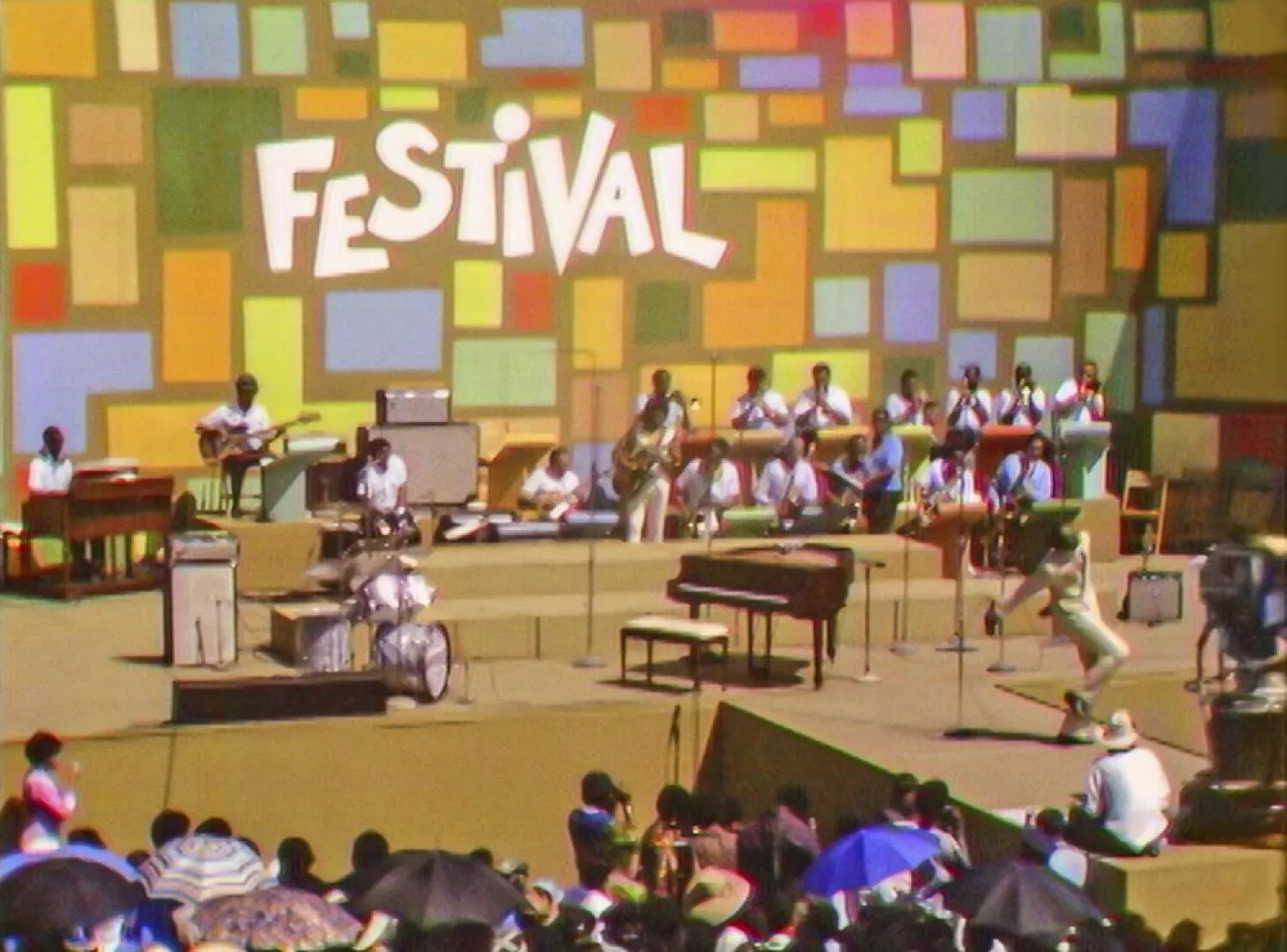
This image released by Searchlight Pictures shows the Harlem Cultural Festival in 1969, featured in the documentary “Summer of Soul.” (Searchlight Pictures via AP)
TT

Review: ‘Summer of Soul’ May Be the Best Doc of the Year

This image released by Searchlight Pictures shows the Harlem Cultural Festival in 1969, featured in the documentary “Summer of Soul.” (Searchlight Pictures via AP)

In the summer of 1969, the same summer as Woodstock, some of the biggest musical acts of the time, like Stevie Wonder, B.B. King, Nina Simone, Sly & the Family Stone, Mahalia Jackson and the Fifth Dimension all performed in New York’s Mount Morris Park.

Woodstock was immortalized. The Harlem Cultural Festival forgotten. But the event is given new light in the must-see documentary “Summer of Soul (...Or When the Revolution Could Not Be Televised).”

Over the course six weekends, some 300,000 people would pass through what is now Marcus Garvey Park to watch the marquee names on the schedule, with the Black Panthers providing security. The brainchild of a born promoter, Tony Lawrence, the free summer concert series was sponsored by Maxwell Coffee and covered by the local news. General Foods even had the foresight to commission someone to film the festival, hiring television veteran Hal Tulchin for the task. The money was so short, they faced the stage west to save on lighting.

By the end, Tulchin, who died in 2017, had amassed some 40 hours of footage of the performances, the massive crowds, the political speeches and the comedy acts. After some failed efforts to sell or do something with it, even with its new nickname “Black Woodstock,” it sat in a basement, largely unseen, for five decades — that is until Ahmir “Questlove” Thompson dusted it off and made out of it a strong contender for the best documentary of the year.

In “Summer of Soul,” Questlove pulls off an extraordinary feat turning these endless hours of footage into not just an exciting concert film, but an elegant and essential historical document of a particularly fraught and powerful moment in history. It is sometimes celebratory, sometimes critical and never less than utterly engaging. And although it’s Questlove’s first film, you’d never know it.

It is extraordinary how much information and music is packed into these two hours. The film delves into the various musical styles of the moment, how some artists like Stevie Wonder and David Ruffin were evolving, the diversity of Harlem itself, the Puerto Rican influence (with commentary from Lin-Manuel Miranda), the divisions in the community (including an emotional Marilyn McCoo talking about the criticisms that the Fifth Dimension had a “white sound”) as well as the local and national sociopolitical context. And somehow nothing feels like it’s getting the short shrift.

Questlove and editor Joshua L. Pearson also know when to feature a full performance as opposed to just clips for ultimate impact. There’s a reason Nina Simone and “Backlash Blues” is saved for last.

And though the performances are riveting — standouts include Mahalia Jackson and Mavis Staples belting out “Take My Hand, Precious Lord” and the Edwin Hawkins Singers’ “O Happy Day” — it’s the shots of the all-ages crowd that makes this film come alive, with the vibrant fashions, the incredible faces, the excitement, the boredom and the humanity of it all packed into every frame.

The question of why this seminal event could be so underknown hovers over every frame. There is an answer provided at the very end, but just be warned: It’s not a satisfying one. If there is any quibble with “Summer of Soul,” it’s that this wasn’t interrogated more. But the film perhaps is smarter to not dwell on that fact. Instead, it’s correcting the wrong and giving this festival its long overdue moment in the sun.


China's First AI Film Hits Cinemas, But Ticket Sales Lag

Nearly 100 people took more than two years to make the film. Hector RETAMAL / AFP
TT

China's First AI Film Hits Cinemas, But Ticket Sales Lag

Nearly 100 people took more than two years to make the film. Hector RETAMAL / AFP

China's first fully AI-generated feature film opens in cinemas on Friday in what promises to be a tough box-office test for the country's booming tech industry as advance ticket sales lag.

More than 10,000 screenings of the sci-fi thriller "Sanxingdui: Future Past" are scheduled for Friday, according to ticketing platform Maoyan.

Public reception, however, has been less than enthusiastic, said AFP.

Presale revenue as of Friday morning stood at 80,000 yuan ($11,980), while total box-office takings were forecast to remain below 150,000 yuan, only a fraction of the reported production cost, according to Maoyan.

Ticket prices range from 20 to 90 yuan, bringing the number sold to a few thousand at most.

Jiang Defu, CEO of the production company Bona Film Group, acknowledged the lukewarm reception in a recent interview but said the film was pushing boundaries.

"We are the first to try it, the first to get a theatrical release permit, and the first to be tested by the audience," he told Chinese film industry outlet Yuli.

"I think that is not easy at all."

Nearly 100 people took more than two years to make the film, which cost more than 10 million yuan ($1.5 million), Bona said, although all the actors, their voices and the backdrops are AI-generated.

The film touches on the theme of humanity in a future shaped by AI.

But that was not enough to convince Iris Yang, who attended a free preview screening of the film on Thursday for acquaintances of the production team and industry workers.

Yang said she would not have paid for a ticket, given the movie's quality.

"If AI generation can match the theatrical experience of 'Avatar', I think I would be willing to pay for it," she said, referring to the US franchise known for the quality of its animation.

AI-generated video has gained popularity in the world's second-largest economy. On Douyin, the Chinese equivalent of TikTok, AI-generated short dramas garnered more than 200 billion views in September alone.

But "the audience won't automatically pay for the tickets just because it's an AI-generated film", independent AI director Zhang Jun told AFP.

Online, Chinese social media users also seemed unconvinced by the launch of AI movies in cinemas.

"If it's free to watch on streaming platforms, it could become legendary. But paying to watch? People are not going to accept it at this stage," one user on Weibo commented.

In Hollywood, the rise of AI has sparked concern among film workers about the prospect of job losses.

An AI-generated sci-fi feature called "Gods Don't Give Gifts" is scheduled for US release on December 4.

And a virtual Hollywood actor called Tilly Norwood, whose interviews have gone viral while fueling job fears, is also set to star in an upcoming movie called "Misaligned".


Spotify Adds 11 Mn Active Users in 3rd Quarter to Reach 788 Mn

FILE PHOTO: Small figurines are seen in front of displayed Spotify logo in this illustration taken February 11, 2022. REUTERS/Dado Ruvic/Ilustration/File Photo
TT

Spotify Adds 11 Mn Active Users in 3rd Quarter to Reach 788 Mn

FILE PHOTO: Small figurines are seen in front of displayed Spotify logo in this illustration taken February 11, 2022. REUTERS/Dado Ruvic/Ilustration/File Photo

Music streaming giant Spotify on Thursday said it had added 11 million monthly active users in the third quarter and had reached 788 million active users by the end of September, in line with the company's forecast.

The uptick represented an 11-percent growth in users compared to a year earlier, Spotify said in a statement, adding that paying subscribers had grown by nine percent compared to a year earlier, reaching 306 million, just above the company's forecasted 305 million.

"This was a quarter where we did what we said. We've built a strong business that keeps compounding," AFP quoted co-chief executive Alex Norstrom as saying in a statement.

Revenue for the third quarter came in at 4.97 billion euros ($5.6 billion), up 16 percent from a year earlier.

Operating income meanwhile rose 15 percent to 672 million euros.

Looking forward, the company said it expected to add 30 million additional active users to the platform by the end of the year to reach 818 million.

Spotify also said it expects to reach 316 paying subscribers.

In recent years, the company has started expanding from music, first investing heavily into podcasts and now offering audiobooks.

In early October, the streaming giant announced that it was expanding access to its audiobook service to more than 180 markets, up from the previous 22.

Amid growing concern across the music industry over AI-generated content overwhelming streaming catalogues, the company has recently taken steps to identify and label AI content.

Earlier this week it reported that it had taken "more than 50 million slop and spam tracks" out of recommendations -- meaning the songs would not be suggested to listeners -- this year.

In August it announced that it was launching a new "AI Persona" badge to identify content producers that are AI-generated and not real people.

In April, the company launched its "Verified by Spotify" badge, signaling that a profile has been reviewed and meets its authenticity standard.


UK Actor Noel Clarke Pleads Not Guilty to Six Offence Charges

Actor Noel Clarke poses for photographers at the British Academy Film Awards Nominees Party at Kensington Palace in London, Britain February 11, 2017. REUTERS/Neil Hall
TT

UK Actor Noel Clarke Pleads Not Guilty to Six Offence Charges

Actor Noel Clarke poses for photographers at the British Academy Film Awards Nominees Party at Kensington Palace in London, Britain February 11, 2017. REUTERS/Neil Hall

British actor and filmmaker Noel Clarke appeared in a London court on Wednesday and pleaded not guilty to six charges, including two counts of sexual assault.

Clarke also denied three ‌counts of ‌voyeurism and ‌one ⁠count of exposing himself, ⁠with the allegations spanning 2007 to 2016, Reuters said.

The 50-year-old stood in the dock at Westminster Magistrates' Court ⁠and spoke only to ‌confirm ‌his name, date of birth ‌and address and ‌enter his not guilty pleas.

He was granted bail ahead of his next ‌appearance at Southwark Crown Court on November ⁠18.

Clarke ⁠is best known for writing and starring in "Kidulthood" (2006), which explored bullying, drug abuse and extreme violence among young people in London, and for a recurring role in sci-fi show "Doctor Who".