Major Blackouts in Iran Prompt Rare Apology from Presidenthttps://english.aawsat.com/home/article/3065541/major-blackouts-iran-prompt-rare-apology-president
Major Blackouts in Iran Prompt Rare Apology from President
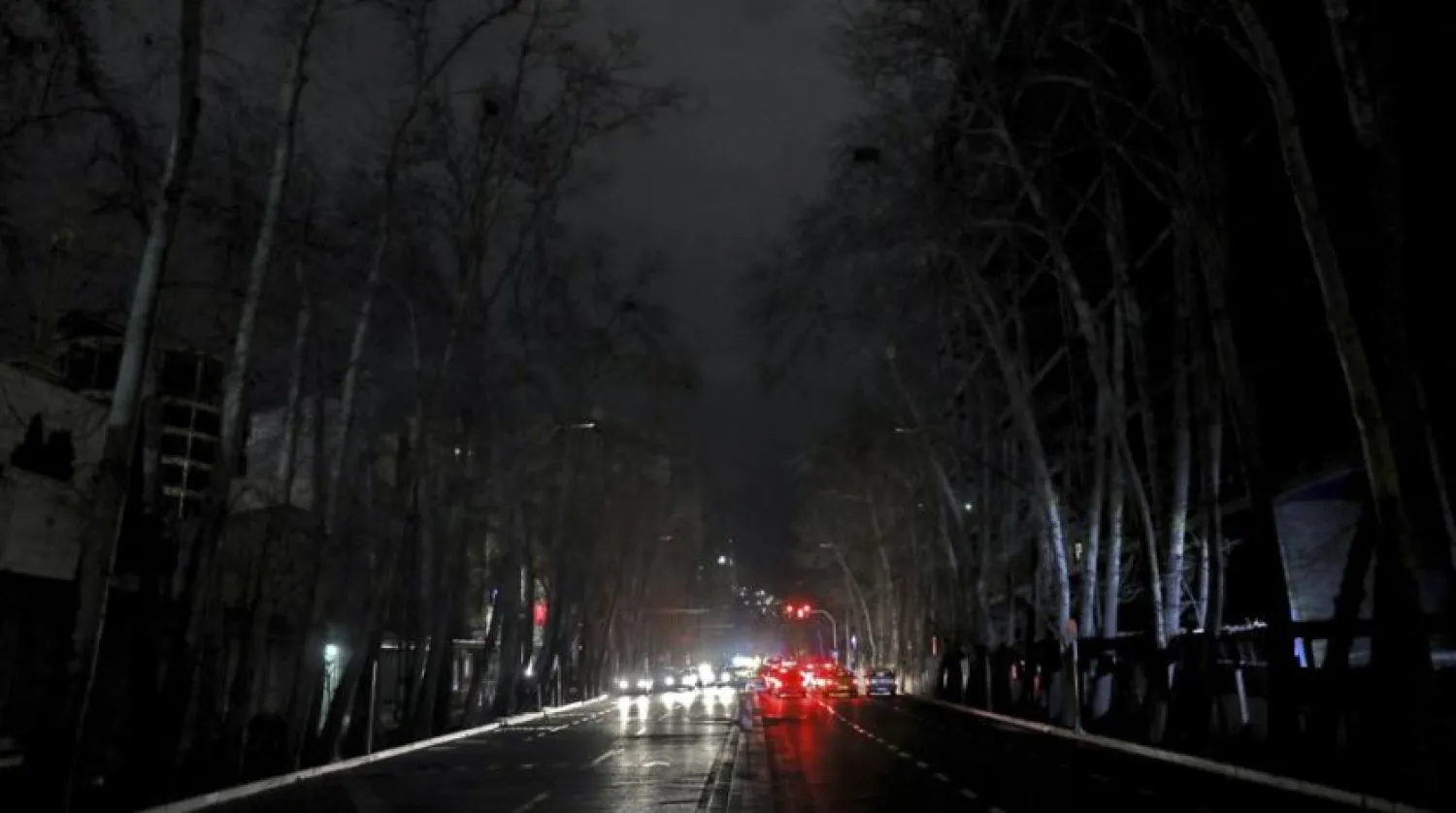
Cars drive on an unlit street during a blackout in Tehran, Iran, Wednesday, Jan 20, 2021. Speculation has gripped social media in Iran that Bitcoin is to blame for a series of recent power blackouts across the country. The government launched a major crackdown on Bitcoin processing centers which use immense amounts of electricity and are a huge burden on the power grid. (AP Photo/Ebrahim Noroozi)
TT
TT
Major Blackouts in Iran Prompt Rare Apology from President
Cars drive on an unlit street during a blackout in Tehran, Iran, Wednesday, Jan 20, 2021. Speculation has gripped social media in Iran that Bitcoin is to blame for a series of recent power blackouts across the country. The government launched a major crackdown on Bitcoin processing centers which use immense amounts of electricity and are a huge burden on the power grid. (AP Photo/Ebrahim Noroozi)
Iran’s outgoing president offered a rare apology Tuesday for the country’s most severe summer power outages in recent memory, as blackouts cripple businesses and darken homes for hours a day.
In a government meeting broadcast live on state TV, President Hassan Rouhani acknowledged that chronic power outages over the past week have caused Iranians “plenty of pain” and expressed contrition in an unusually personal speech, according to the Associated Press.
“My apologies to dear people who have faced these problems and pain,” he said.
In recent days, the regular blackouts have spread chaos and confusion on the streets of the capital, Tehran, and other cities, knocking out traffic lights, shutting factories, disrupting telecommunications and affecting metro systems. Repeaters — devices around cities that enhance mobile phone signals — have failed, along with electronic cash registers.
Some towns in Iran's north reported limited access to water because the power cuts affected the piped supply. Traffic police in the capital have said the sudden power cuts have caught officials completely by surprise.
The rolling outages have given Rouhani, a relative moderate who hands the reins to the hard-line President-elect Ebrahim Raisi in August, one of the last domestic headaches of his presidency. Footage on social media, shared widely by Farsi-language news channels based outside the country, show popular anger over the blackouts breaking into the open, swelling into scattered protests at local electricity offices and gatherings in paralyzed streets. In some videos, anti-government chants echo from darkened high-rises. The Associated Press could not verify the authenticity of the footage.
Officials have blamed the outages on the country's stifling heat, escalating electricity demand and deepening drought that has threatened to snuff out hydroelectric generation.
Temperatures have soared to more than 41 degrees Celsius (106 degrees Fahrenheit) in Tehran and other major cities. In the country’s southern desert, temperatures have hit 50 degrees Celsius (122 degrees Fahrenheit). That's driving electricity demand to new heights, as Iranians deploy heavy duty air-conditioners against the heat, overwhelming the power grid. Officials have responded with scheduled blackouts multiple times a day.
Power demand has peaked in recent days at 66,000 megawatts, surpassing the country’s practical generating capacity of 65,000 megawatts. Companies can actually provide people with even less electricity, closer to 55,000 megawatts — in large part because the aging, sanctions-hit electrical infrastructure leaves power plants prone to repeated technical failures.
Last month, Iran’s sole nuclear power plant underwent an unprecedented emergency shutdown. The facility in the southern port city of Bushehr returned online over the weekend after engineers said they repaired a broken generator.
Electricity facilities have not been properly maintained, and a lack of spare parts have complicated the construction of new plants to keep up with the country's runaway growth. Over the last two decades, modest apartment blocks and local markets have become high-rises, residential complexes and colossal shopping malls all humming with air-conditioners.
While power cuts during the sweltering summer heat happen sporadically in Iran, the lack of recent rainfall has compounded the country’s electrical problems. Rouhani said precipitation had decreased by almost 50% in the last year, leaving dams with dwindling water supplies to fuel the country. Hydroelectric power generation has plummeted to 7,000 megawatts, Rouhani said, down from an estimated average of 12,000 megawatts in recent years.
“When it becomes warm during a drought, we face problems in the time of peak (energy demand),” Rouhani added. "(Power outages) are seriously affecting people, businesses, factories and hospitals."
Officials have suggested that any relief is far off.
“This is not limited to one day,” said Mostafa Nakhai, the spokesman of Iran's parliamentary committee of energy. "We will have this situation for at least one month or more.”
Deadly Attacks Leave Several Wounded in Southeastern Iranhttps://english.aawsat.com/world/5327502-deadly-attacks-leave-several-wounded-southeastern-iran
Deadly Attacks Leave Several Wounded in Southeastern Iran
An image published by the Mizan news agency showing unrest in Zahedan, the capital of Sistan and Baluchestan province, on July 8.
Armed attacks on police and army personnel across Iran’s southeastern Sistan and Baluchestan province left security forces dead and wounded on Wednesday evening. The attackers’ identities and the full casualty toll remained unclear.
Iranian police said an explosion at police headquarters in Golshan County was followed by gunfire from armed attackers. Police killed one assailant and wounded several others, official sources said, while a search for the remaining attackers continued, according to the Tasnim news agency.
A minibus carrying military personnel also came under armed attack in the Nikshahr area as they traveled to a shift change, Tasnim reported, citing the public relations office of the Iranian army’s 88th Armored Division. The official account said serviceman Mohammad Reza Oukati was killed and three others were wounded.
In a third attack, gunmen targeted a police patrol carrying out a security mission along the “Lakhshak–Zahedan/Nosratabad” route, killing officer Vahid Enayat, Tasnim said.
Several attackers were wounded but escaped, prompting Iranian forces to launch a search.
The attacks follow a string of operations and assaults in recent days. On Oct. 5, Iranian sources reported that two police officers were killed and a third was wounded in an attack on a patrol in Bampur, in the same province.
The violence appears to form part of a series of attacks and clashes close together in time across the province. Reports in early October described hours-long clashes near Zahedan. The Revolutionary Guards later said they had killed six people they described as members of an armed group, though accounts concerning the opposing side remained disputed.
Days earlier, Iran’s Intelligence Ministry announced it had dismantled three armed cells in the southeast, arrested 10 people and killed two others in clashes. That suggests security agencies were already on heightened alert in the region before Wednesday’s attacks.
Iran’s Last Supreme Leader: When the Republic Becomes a Networked Organizationhttps://english.aawsat.com/world/5327444-iran%E2%80%99s-last-supreme-leader-when-republic-becomes-networked-organization
Iran’s Last Supreme Leader: When the Republic Becomes a Networked Organization
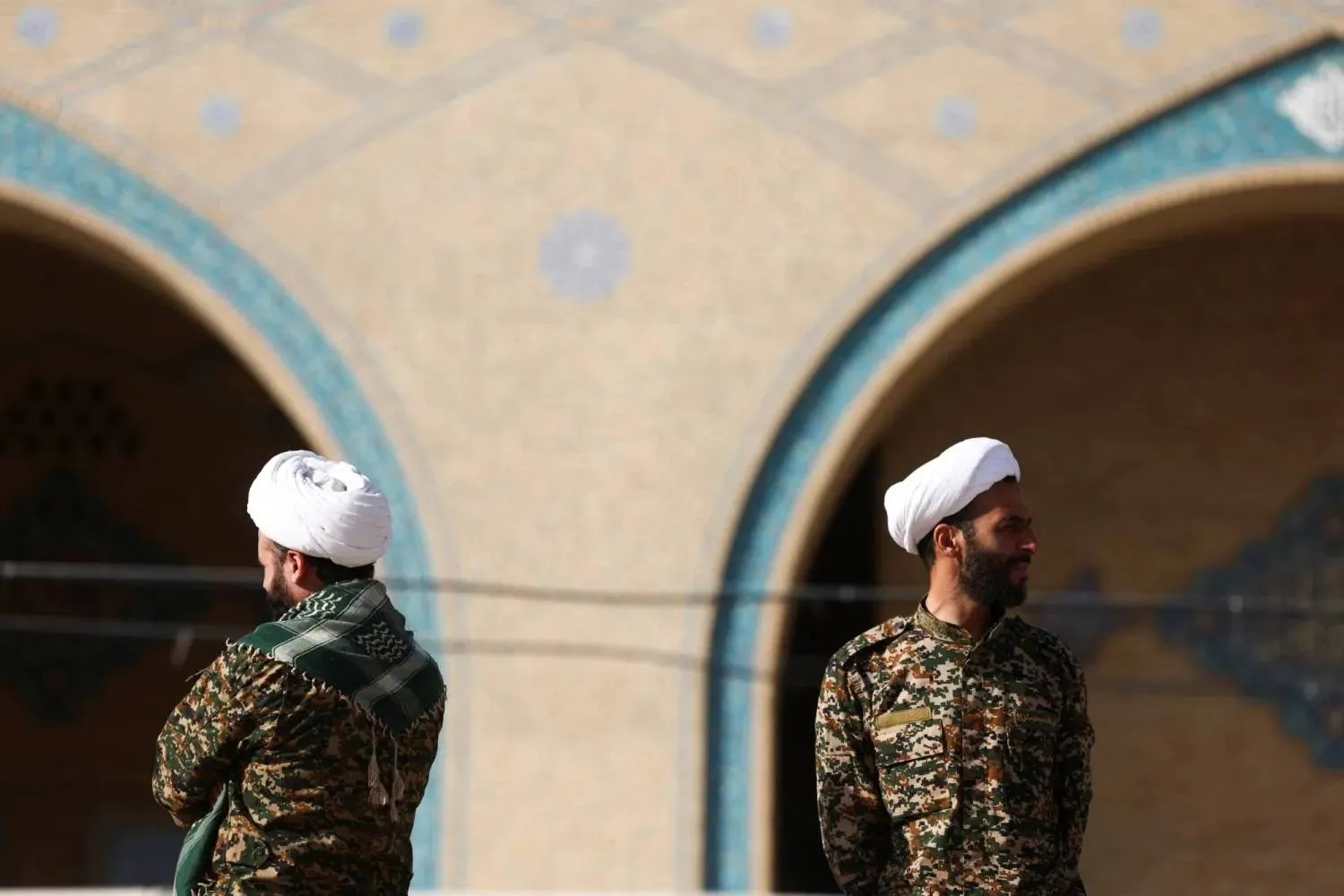
Two Basij members outside Tehran’s Grand Mosalla during a farewell ceremony for Iranian Supreme Leader Ali Khamenei, July 3, 2026. REUTERS
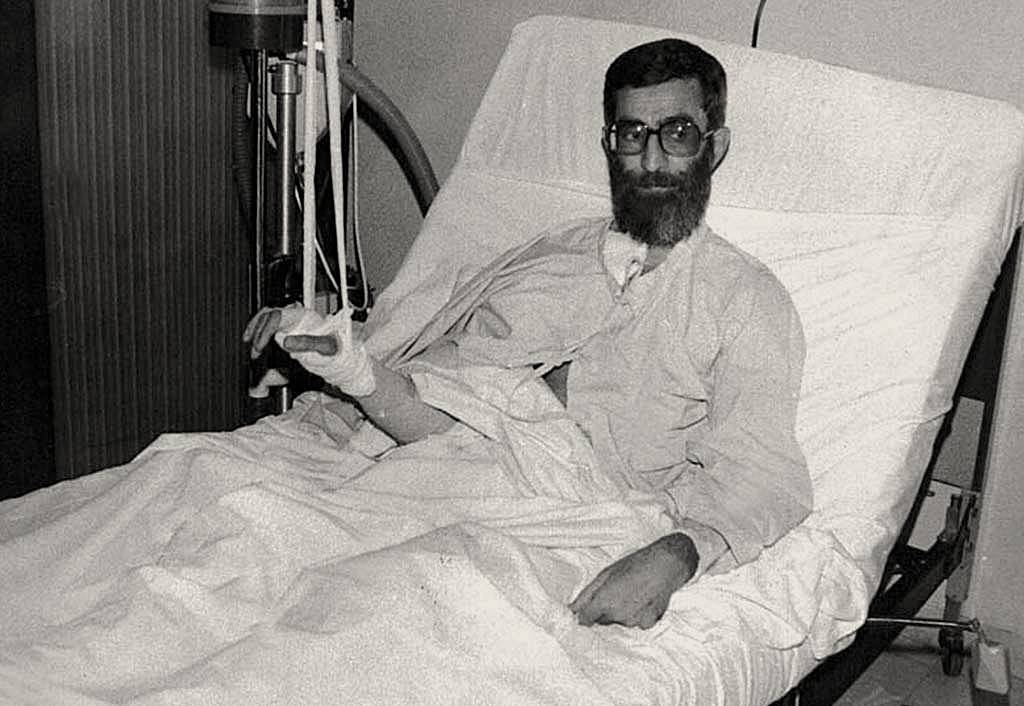
The bomb was hidden in a tape recorder at Tehran’s Abu Dhar mosque. Ali Khamenei was addressing worshippers in June 1981 when it exploded. Several people were injured. He suffered the worst wounds.
“I went to the brink of death, but God brought me back ... I felt he was waiting for me to fulfill a great duty,” Khamenei later recalled. He survived with a paralyzed right hand, convinced that this “duty” awaited him.
Khamenei ruled as Iran’s supreme leader for nearly 37 years, succeeding its first leader, Ruhollah Khomeini. At the height of his power, he sat at the center of complex networks and far-reaching mechanisms for controlling the “Islamic Revolution.”
Then, according to some estimates, roughly 15 minutes of an Israeli air raid in late February ended a long chapter in the Iran we knew. The country appears to have changed, though the nature of that change remains unclear.
Former Supreme Leader Ali Khamenei receives treatment at Baharloo Hospital in Tehran after surviving an assassination attempt in June 1981 (Supreme Leader’s website).
Iran’s third supreme leader, Mojtaba Khamenei, did not inherit his father’s legacy as a conventional leader. That legacy, which was divided among many “sons,” consists of absolute powers, potent religious symbolism, intertwined interests and centralized political, military and financial authority.
This is how fundamentalist organizations adapt when shock and necessity force them to operate through networks of interconnected strands.
Did Khamenei prepare the “Islamic Revolution” to function without a head, through multiple leaders working almost independently? Or did he never imagine his eventual fate, convinced that the “hand of God” protected him, as he repeatedly said in public?
His son Mojtaba may offer an answer to the puzzle of Iran’s deep state, which prepared for the birth of a republic operating as a web of networks.
Either way, Iran today is a republic of dispersed cells, working much like its own “resistance” affiliates.
“We are not talking about a battle now”
The “Islamic Revolution” built its stature on deterrence at a distance. Khamenei probably never imagined the fire of confrontation would reach him. No one articulated that approach more clearly.
In March 2011, he openly welcomed the outbreak of what was then called the “Arab Spring.”
“In these events, one can sense the hand of God’s power,” he said.
In May 2019, supporters enthusiastically chanted a slogan calling for a “battle against America.” Khamenei stopped them.
“We are not talking about a battle now. The issue is resistance.”
After Oct. 7, 2023, Iran faced repeated pressure to respond to Israel and the United States. Instead, Tehran devised “strategic patience,” requiring regional proxies and affiliates to observe lengthy truces.
Khamenei’s strategy clearly combined his religious view of history with Iran’s tactic of keeping the battlefield far from Tehran. That approach held even after Oct. 7, which an Iraqi cleric from Najaf described as “a cup of poison Yahya Sinwar made the supreme leader drink.”
Throughout four decades at the apex of power, Khamenei avoided direct confrontation while weaving the system’s networks. He appointed loyalists to oversee vital security, political, economic and media affairs.
In informed circles in Tehran, Baghdad and Beirut, the supreme leader’s office is said to be far more than “an institution in a conventional building with a guard and a gate.”
It is a vast, invisible network of officials, representatives, delegates and affiliates, larger than might be expected. It even reaches into institutions overseen by Iran’s president. Everyone’s task is to ensure that “the supreme leader sees, hears and decides everything.”
A former official in Baghdad, who asked not to be named, described one example of that reach.
“An Iranian cleric scrutinized Iraqi oil policy every day, on personal orders from the supreme leader,” he said.
“Khamenei, or his office, was keen to receive daily updates on strategic matters.”
Red lines remain red
Khamenei’s position exceeded the constitutional limits of the supreme leader’s office.
“Over many decades, stretching back to before the Islamic Revolution of 1979, Khamenei accumulated factors and resources beyond the conventional limits of the office’s constitutional powers,” Iraqi researcher Ali al-Madan said.
“Alongside his political experience, he brought together his presidency, his religious standing and a broad network of relationships and loyalties within institutions.”
Madan, an Islamic philosophy researcher with more than three decades of study and residence in Qom, believes the elder Khamenei’s position rested on more than his constitutional powers.
It also reflected “his accumulated experience and ability to balance different institutions and centers of power.”
The unconventional authority Khamenei built was probably protected by deterrence. Whenever he appeared in public, whatever the occasion, he infused it with a “divine dimension.”
In 2018, worsening US sanctions squeezed Iranians’ livelihoods. Thousands gathered around his podium that August to hear him say:
“I feel the powerful hand of God manifesting itself and taking shape in the strength of the people.”
The message filtered through to his supporters in Iran and the countries of the so-called “axis of resistance”: red lines were red. They could not be breached.
An Iraqi politician who spent years dealing with politicians close to the elder supreme leader’s office said they shared Khamenei’s certainty that the “hand of God” protected him, the “Islamic Revolution” and themselves.
Even their most extreme scenario for direct confrontation was that it “might hit the man sitting next to the supreme leader, but not the supreme leader,” as one of them put it.
Was Khamenei certain US President Donald Trump or Israeli Prime Minister Benjamin Netanyahu would never order his assassination?
A definitive answer is hard to obtain. But even when Khamenei anticipated events turning upside down, he pointed to others.
On June 10, 2005, marking the anniversary of the first supreme leader’s death, he said: “This powerful hand, the hand of God, may sometimes turn into a fist and strike a person on the head.”
The Iraqi politician believes Khamenei wanted to avoid confrontation and prolong the conflict “at least until his life ended naturally, rather than as the Israelis and Americans imposed.”
In his view, “for the conflict to reach the point of killing the supreme leader means that a long era in Iran’s history has reached its twilight.”
Khamenei’s son: the Guards’ supreme leader?
Many favor the view that Khamenei opposed passing the leadership to Mojtaba. Yet the father allowed his son, early on, to stay out of sight while extending his reach into society and institutions through the Revolutionary Guards.
Iraqis and Lebanese who witnessed Iran’s changes in the 1990s, and who asked not to be named, said Mojtaba exploited “the flexibility of Hashemi Rafsanjani,” who was Iran’s president when he played a pivotal role in the father’s election as supreme leader in 1989.
Mojtaba then “immersed himself in building relationships with everyone: the Guards, the seminaries, the bazaar, the army, the Basij and the judiciary.”
One of them said the younger Khamenei “put Mirhossein Mousavi in prison, crushed political movements in their infancy or as they were taking shape, engineered Ebrahim Raisi’s rise to the presidency and established a new philosophy under which state institutions became something resembling Hezbollah at the heart of the state.”
He learned the principles of the “deep state” early.
Did the elder Khamenei oppose hereditary succession because it contradicted the “Islamic Revolution,” which arose from the ruins of the shah’s system?
And did he nevertheless allow his son to inherit the deep state that appointed him supreme leader; or its “public face,” as the Najaf cleric described him?
“Mojtaba Khamenei is a son of the system; he was born and grew up within it ... He is a product of its institutions, rather than one of its founders,” Madan said.
“He has never held a public political office comparable to those his father held before assuming the leadership. Nor does his standing within the religious establishment yet have the same reach his father acquired over decades of scholarly formation and the exercise of power.”
“Passing the office to him therefore does not necessarily mean transferring all the personal and political resources concentrated in his father.”
Specialists see a vast gulf between father and son. For the Najaf cleric, that leads to a firm conclusion:
“The elder Khamenei was the last supreme leader to meet the minimum requirements of Islamic jurisprudential qualification. He was also the last to exercise real dominance over the Revolutionary Guards, unlike the younger Khamenei, whom the Guards dominate and whose affairs they manage.”
That does not mean the supreme leader’s office has become symbolic or that its powers have passed to another institution.
Madan distinguishes between “the supreme leader’s constitutional authority and his practical ability to concentrate decision-making in his own hands.”
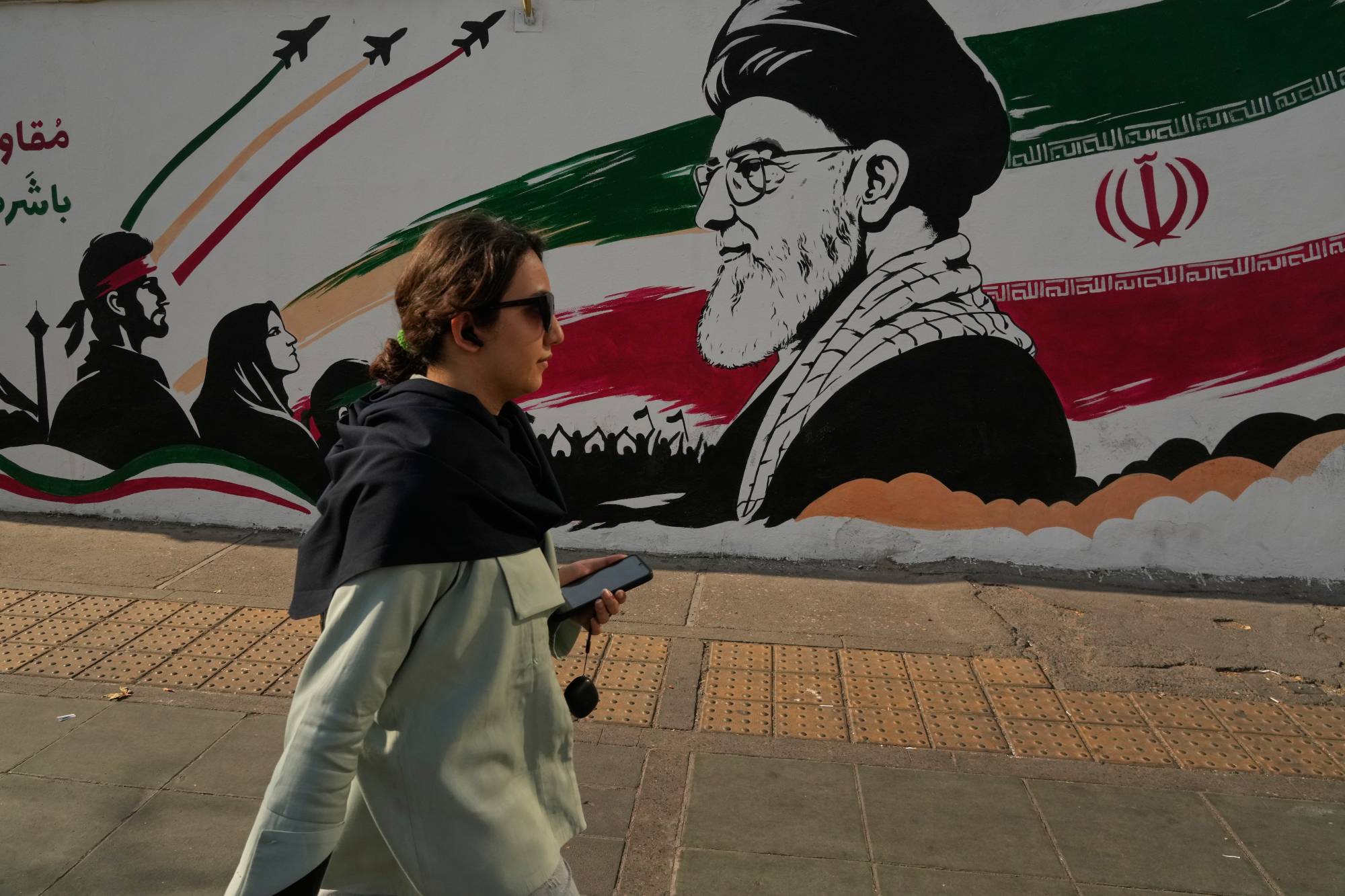
A woman walks past a mural depicting a portrait of the late Iranian Supreme Leader Ayatollah Ali Khamenei, who was killed in the US and Israel strike on Feb. 28, at Azadi (Freedom) street in Tehran, Iran, Wednesday, July 29, 2026. (AP Photo/Vahid Salemi)
A republic of dividing cells
If power did not pass from the elder Khamenei to his son, who remains out of sight, where did it settle?
The ready answer is that the Revolutionary Guards control everything.
At the very least, the Guards oversaw and managed his election by the Assembly of Experts on March 8, 2026. Their influence and security and economic networks extend into Middle Eastern capitals, parts of West Asia and farther afield.
Assembly members arrived at the election venue accompanied by Guards personnel. The dramatic scene recalled World War Two, when the British government met in Westminster shelters as German aircraft rained bombs on London.
“The latest war against Iran is the largest military confrontation the region has seen, almost surpassing the eight-year war with Iraq,” the Iraqi politician said.
Madan resists describing events in Iran as a smooth process of replacing one leader with another. He also resists describing the change as a shift from “rule by the supreme leader” to “rule by the Revolutionary Guards.”
That assumes a direct transfer that neither the system’s internal structure nor the challenges of war yet permit.
Wartime conditions may themselves be the key to understanding what has changed.
Most likely, the “Islamic Revolution” system that existed under Khomeini and Khamenei has dispersed without disintegrating, becoming a republic of interconnected organizations.
“Iran today does not need a supreme leader, but operational commanders who act like leaders of clandestine cells, whose sole task is survival,” the Iraqi politician said.
Foreign Minister Abbas Araqchi described Iran’s strategy during the latest war as “decentralized defense.” He was seeking to explain a shift from protecting senior leaders to ensuring survival during wartime.
That appears to involve multiple combat structures that are difficult to control or track.
There is no evidence that the elder Khamenei planned this organizational division. But the result is the same: Iran today is both “the state and the revolution.”
An Iranian reflection always emerges in Baghdad. This time, it reflects fragmentation.
In March 2016, the Iraqi government was negotiating a short, two-day truce with a faction. The Americans had secured a promise that attacks on their embassy in Baghdad would stop. Explosive-laden drones kept striking their facility.
Sources said communications between US and Iraqi officials were strained “because of the government’s failure to reach an agreement with a faction.”
Reliable sources said “a Revolutionary Guards officer working in Iraq did not respond to a senior Iraqi official’s inquiries about why the attacks continued despite the agreement.”
“One center and many strands”
From this sharp angle, the real changes become visible.
Under Khamenei, Iran had multiple institutions and centers of power. The Revolutionary Guards were among the most prominent. But the elder Khamenei’s experience and attributes allowed him to centralize their management and settle disputes among them.
After his departure, “decision-making appears to depend more heavily on interaction among the supreme leader’s office, the Supreme National Security Council, military and security leaders, the Revolutionary Guards and other state institutions,” Madan said.
He sees “a relative shift in Iran from highly pronounced personal centralization to a more complex institutional centralization.”
Within that structure, “security and military institutions have gained importance because of the war and the circumstances surrounding the succession.”
The Revolutionary Guards, for example, have shifted toward operating as separate “units.” Local and regional commanders enjoy a degree of operational autonomy, as though the “supreme commander” were perpetually dead.
For Madan, the question today is no longer who rules Iran. It is how decision-making is distributed after the disappearance of the figure who held all the strands together at one center.
It is “a stage of redefining the relationship between the leadership institution and the centers of power, a process still taking shape whose chapters remain unfinished.”
Iranian President Masoud Pezeshkian makes no secret of his concern about an “Iran of cells.”
“No group will be allowed to take Iran in any particular direction,” he said recently.
Many analysts see such statements as an Iranian tactic to construct a “good cop, bad cop” narrative. But developments on the ground reflect a country operating as separate parts.
Will Iran continue in this networked form, able to operate ambiguously, without a clear central head whose loss in half an hour could paralyze the whole system?
Different answers circulate among those following the issue. The more pressing question is whether Tehran can coordinate its separate “units.”
Has their autonomy within the system become excessive? More troubling still, has their autonomy become more frightening than external attacks; beyond anything the elder Khamenei would have accepted or endured?
Death Toll from Russian Bus Strike in Eastern Ukraine Jumps to 30https://english.aawsat.com/world/5327333-death-toll-russian-bus-strike-eastern-ukraine-jumps-30
Police officers look at the damages following a Russian drone strike on the Northern Bridge in Kyiv on October 4, 2026, amid the Russian invasion of Ukraine. (Photo by Mykola TYMCHENKO / AFP)
Death Toll from Russian Bus Strike in Eastern Ukraine Jumps to 30
Police officers look at the damages following a Russian drone strike on the Northern Bridge in Kyiv on October 4, 2026, amid the Russian invasion of Ukraine. (Photo by Mykola TYMCHENKO / AFP)
Thirty people were killed on Thursday when Russia struck two passenger buses in Kramatorsk, near the frontline in eastern Ukraine, local authorities said.
"As of now, the death toll from this morning's attack on buses has risen to 30. Eighteen people were wounded," the Donetsk regional prosecutor's office said. The governor's office gave the same toll and said public transport had been suspended.
Ukraine's national police said Russia had hit the buses with a glide bomb.
Kramatorsk is one of the key cities that Russia has not yet captured in the eastern Donetsk region, which Moscow claims as its own.
It has been a logistics and supply hub for the Ukrainian military for much of the war and is part of the so-called "fortress belt" which troops are fighting to keep hold of.
Russian forces have edged close to the city's eastern edge, which has prompted calls for civilians who remain to relocate to safer regions of Ukraine.
Thursday's strike, which happened at 10:00 am (0700 GMT), came a day after a Russian missile hit an apartment block in the northern region of Chernigiv, killing 22, including five children.
Kramatorsk City Council said it was "yet another horrific crime committed by the Russian army against the civilian population".
"Once again, the Russians have struck a location where there are absolutely no military targets," it added.
لم تشترك بعد
انشئ حساباً خاصاً بك لتحصل على أخبار مخصصة لك ولتتمتع بخاصية حفظ المقالات وتتلقى نشراتنا البريدية المتنوعة